Hello! Welcome to our final lesson in the course on Polycystic Ovary Syndrome.
In our last lesson, we focused on the management of the visible, dermatological symptoms of PCOS, discussing cosmetic and topical treatments for hirsutism and acne. We explored how these approaches, combined with systemic therapies, can help manage the immediate concerns many individuals face.
Today, we take a step back to look at the bigger picture. We will address the long-term health implications of PCOS, moving beyond immediate symptom control to a strategy of lifelong health preservation. As we've established throughout this course, PCOS is not merely a reproductive or cosmetic issue; it is a complex endocrine and metabolic condition with systemic effects that evolve over a person's lifetime.
Therefore, our final learning objective is to explain the importance of long-term monitoring for metabolic and cardiovascular risk factors. This lesson will tie together many of the concepts we've studied, from insulin resistance to hyperandrogenism, to build a clear case for why proactive, lifelong surveillance is the cornerstone of comprehensive PCOS care.
The Evolving Nature of PCOS
PCOS manifests differently across a woman's lifespan. While reproductive issues like irregular cycles and infertility are often the primary concern during adolescence and the reproductive years, the underlying metabolic disturbances become increasingly prominent with age.
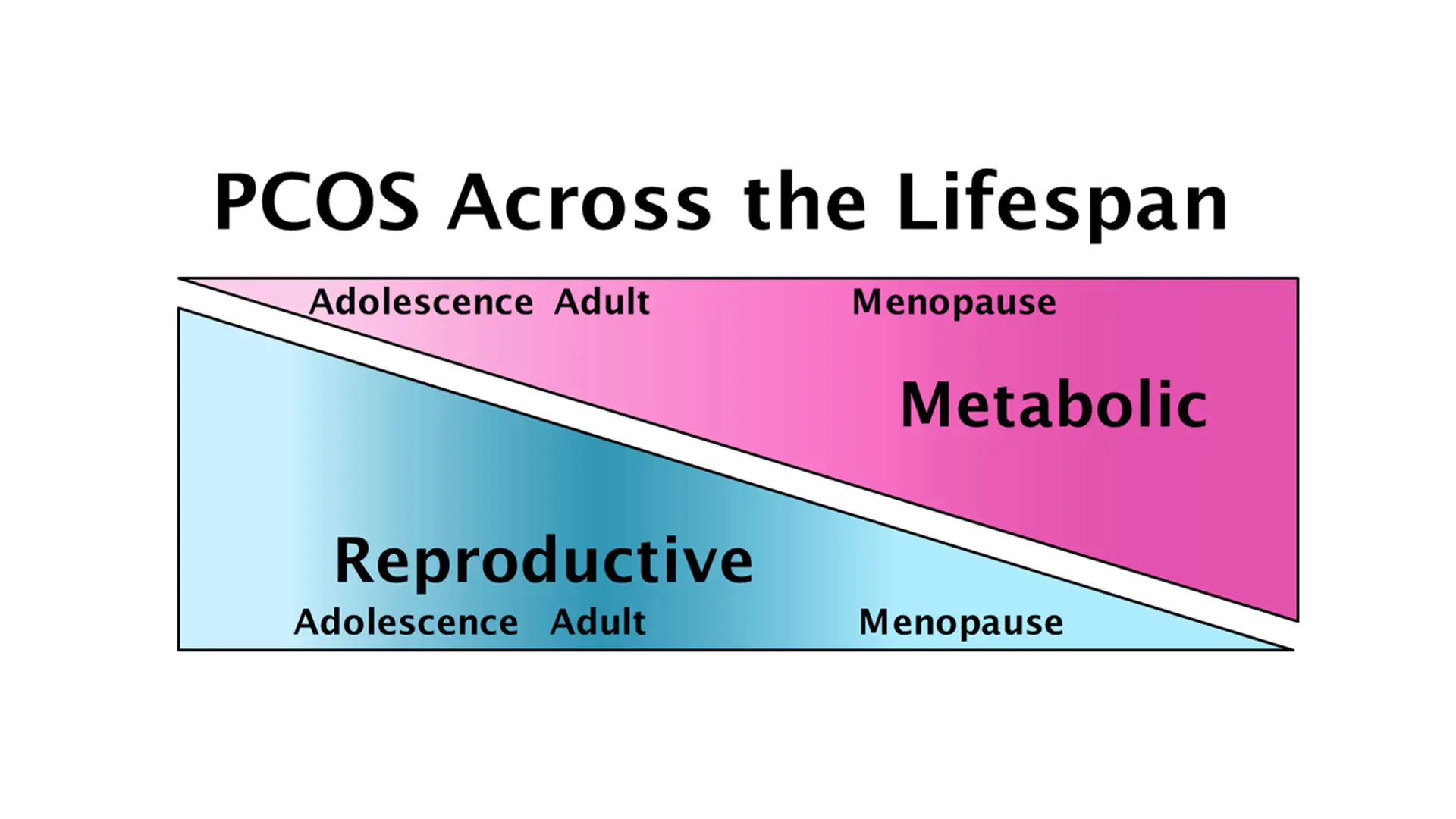
This shift underscores why a diagnosis of PCOS is not just about managing current symptoms, but also about mitigating future risks.
An Overview of Long-Term Health Risks
The metabolic and hormonal dysregulation inherent to PCOS predisposes individuals to a number of serious health conditions later in life. Let's start with a broad overview of these associated comorbidities.
Polycystic Ovary Syndrome (PCOS) | Overview of Associated Conditions, Diagnosis & Treatments
The video 'Polycystic Ovary Syndrome (PCOS) | Overview of Associated Conditions, Diagnosis & Treatments' by JJ Medicine provides a concise summary of the major health conditions linked to PCOS.
Please watch the segment from 05:27 to 08:18. Pay attention to the wide range of conditions mentioned, including metabolic syndrome, type 2 diabetes, endometrial cancer, and cardiovascular disease.
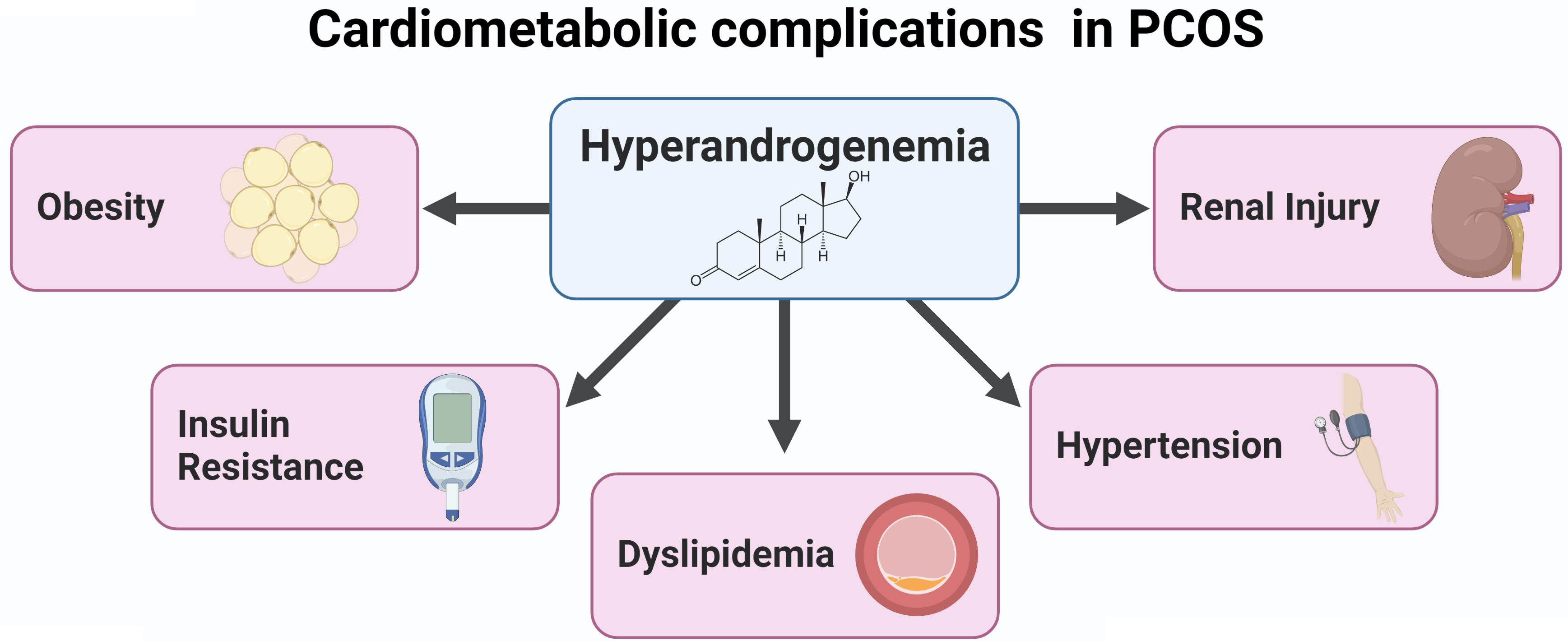
As the video highlights, the long-term risks are significant and span multiple organ systems. The central drivers for many of these risks are hyperandrogenism and insulin resistance, which we have discussed in detail in previous modules.
Now, let's delve into the specific risks and the corresponding monitoring strategies recommended by current international guidelines.
Key Areas for Long-Term Monitoring
For a detailed, evidence-based perspective on long-term risks and screening, we will refer to a recent review incorporating the 2023 International Guidelines and the established RCOG Green-top Guideline.
Screening and Diagnosis of Polycystic Ovary Syndrome...
The article 'Screening and Diagnosis of Polycystic Ovary Syndrome' and the 'Long-term Consequences of Polycystic Ovary Syndrome' guideline provide the foundation for our discussion. They detail the evidence behind each risk and the clinical recommendations for monitoring.
As we go through each topic below, I will refer you to specific parts of this article. For now, quickly skim the headings: 'Risk of Type 2 Diabetes', 'The Metabolic Syndrome and Cardiovascular Risk', 'Endometrial Cancer', 'Obstructive Sleep Apnea Syndrome', and 'Affective Disorders'. This will give you a map of what we'll cover.
1. Metabolic Risk: Type 2 Diabetes (T2DM)
- The Risk: Women with PCOS have a significantly increased risk of developing impaired glucose tolerance and T2DM. This risk is present even in lean individuals but is greatly exacerbated by obesity. The progression from normal glucose tolerance to diabetes can also occur at a younger age and more rapidly than in the general population.
- The Mechanism: As we learned in Module 6 and 10, insulin resistance is a key pathophysiological feature of PCOS. The body's tissues (especially muscle and fat) do not respond effectively to insulin, leading the pancreas to produce more insulin (compensatory hyperinsulinemia) to maintain normal blood glucose. Over time, the pancreatic beta-cells can become exhausted and fail, leading to overt T2DM.
- Monitoring Recommendations:
- Baseline Screening: All women with PCOS should have their glycemic status assessed at the time of diagnosis, regardless of their age or BMI.
- Screening Method: The gold standard is the 75g oral glucose tolerance test (OGTT), which measures fasting glucose and the glucose level 2 hours after a glucose drink. A simple fasting glucose test or HbA1c may miss cases of impaired glucose tolerance.
- Follow-up: Re-evaluation should occur every 1 to 3 years, with the frequency depending on the presence of other risk factors like obesity, family history of diabetes, or a previous abnormal OGTT result.
You can find these recommendations detailed in the 'Risk of Type 2 Diabetes in PCOS' section of the LINK article and section 6.1.2 of the RCOG guideline (LINK).
2. Cardiovascular Disease (CVD) Risk
- The Risk: PCOS is associated with a cluster of risk factors for cardiovascular disease, collectively known as metabolic syndrome. These include central obesity, high blood pressure (hypertension), and an abnormal lipid profile (dyslipidemia), typically characterized by high triglycerides, low HDL ("good" cholesterol), and elevated LDL ("bad" cholesterol). While the data on whether this leads to a definitive increase in heart attacks or strokes is still being studied, the presence of these risk factors is a serious concern.
- The Mechanism: Insulin resistance, hyperandrogenism, and chronic low-grade inflammation all contribute to CVD risk. They promote endothelial dysfunction (damage to the lining of blood vessels), arterial stiffness, and the development of atherosclerosis (plaque buildup in arteries).
- Monitoring Recommendations:
- Comprehensive Risk Factor Assessment: At the time of diagnosis and at regular intervals, all women with PCOS should be assessed for individual CVD risk factors.
- Specific Checks:
- Body Mass Index (BMI) and Waist Circumference: To assess for obesity, particularly central obesity.
- Blood Pressure: Should be checked at every visit.
- Fasting Lipid Profile: To measure cholesterol and triglyceride levels.
- Lifestyle: Continuous emphasis on lifestyle modification (diet, exercise, smoking cessation) is the primary strategy for risk reduction.
It is important to note that conventional CVD risk calculators (like the Framingham Risk Score) have not been validated specifically for women with PCOS and may underestimate their true risk. Therefore, managing each individual risk factor is key. This is covered in 'The Metabolic Syndrome and Cardiovascular Risk in PCOS' (LINK) and section 6.3 of the RCOG guideline (LINK).
Test your understanding!
A 28-year-old woman with PCOS has a normal fasting glucose level on a blood test. Why might her doctor still recommend an oral glucose tolerance test (OGTT)?
Show answer
A normal fasting glucose level does not rule out glucose metabolism problems. Due to insulin resistance, her body might be producing very high levels of insulin to keep her fasting glucose normal. The OGTT challenges this system by providing a large glucose load. An abnormally high 2-hour glucose level on the OGTT would reveal impaired glucose tolerance, an early warning sign for T2DM, even when the fasting level is still normal. This is why OGTT is the more sensitive and recommended screening test in PCOS.
3. Oncological Risk: Endometrial Cancer
- The Risk: Women with PCOS have a roughly three-fold increased risk of developing endometrial cancer.
- The Mechanism: This risk is directly linked to chronic anovulation. In a normal cycle, progesterone produced after ovulation counteracts the proliferative effect of estrogen on the uterine lining (endometrium). In women with PCOS who have infrequent or absent periods (oligo-/amenorrhea), the endometrium is exposed to unopposed estrogen. This constant stimulation can lead to excessive thickening of the lining (endometrial hyperplasia), which can progress to cancer.
- Monitoring and Management:
- No Routine Screening: Routine screening with ultrasound or biopsy is not recommended for all women with PCOS because the absolute risk is still low.
- Inducing Withdrawal Bleeds: The primary strategy is preventative. For women with oligo- or amenorrhea, it is crucial to induce a "withdrawal bleed" to shed the endometrial lining periodically. This is typically done with progestin therapy (e.g., for 12-14 days every 1-3 months) or by using combined oral contraceptives. The goal is to have at least 3-4 bleeds per year.
- Investigation: A transvaginal ultrasound to measure endometrial thickness should be considered if there is abnormal uterine bleeding or if withdrawal bleeds cannot be induced.
This topic is discussed in the 'Endometrial Cancer in PCOS' section of LINK and section 7.1 of LINK.
4. Other Important Comorbidities
- Obstructive Sleep Apnea (OSA): This is a condition where breathing repeatedly stops and starts during sleep. It's more common in women with PCOS, linked to both obesity (excess weight around the neck) and hyperandrogenism. OSA is a serious condition that worsens insulin resistance and hypertension. Monitoring involves asking about symptoms like loud snoring, daytime sleepiness, and witnessed pauses in breathing.
- Mental Health Disorders: There is a higher prevalence of depression and anxiety in women with PCOS. This can be related to the psychological stress of the diagnosis and symptoms (e.g., infertility, hirsutism, weight gain) as well as potential underlying neuroendocrine links. Guidelines recommend screening for depression and anxiety at diagnosis and periodically thereafter.
A Modern Tool for Personalized Metabolic Monitoring
While periodic blood tests are the standard of care, modern technology offers a more dynamic way to understand metabolic health. Continuous Glucose Monitors (CGMs) are small, wearable sensors that track glucose levels in the interstitial fluid 24/7.
How to Use & Interpret a Continuous Glucose Monitor (CGM) | Dr. Casey Means & Dr. Andrew Huberman
While originally developed for diabetes management, CGMs are increasingly used by people without diabetes to gain insight into their metabolic health. In this clip from the Huberman Lab, Dr. Casey Means explains what we can learn from a CGM.
Please watch from 00:02 to 10:23. This is a longer clip, but it provides a fascinating look into personalized metabolic health. As you watch, focus on understanding these concepts: What is the purpose of using a CGM? What do 'area under the curve' and 'glycemic variability' tell us about insulin sensitivity? How do lifestyle factors like sleep, stress, and exercise visibly impact glucose levels?
Using a CGM, even for a short period, can provide valuable, real-time feedback on how an individual's body responds to different foods, exercise, stress, and sleep. This data can empower individuals with PCOS to make more informed lifestyle choices to improve their metabolic stability long before problems would appear on a standard annual blood test.
Summary of Monitoring Recommendations
To consolidate, here is a practical summary of long-term monitoring based on the RCOG guidelines:
- At Diagnosis and Every Visit:
- Assess psychological issues (anxiety, depression).
- Measure BMI and waist circumference.
- Check blood pressure.
- Provide lifestyle advice (diet, exercise, weight management).
- At Diagnosis (and as needed):
- Assess for cardiovascular risk factors (including a fasting lipid profile).
- Perform a 75g OGTT for all overweight women, and for lean women with other risk factors (e.g., age > 40, family history of T2DM).
- Periodically:
- Repeat OGTT every 1-3 years.
- Ensure women with oligo-/amenorrhea have regular withdrawal bleeds (at least every 3-4 months).
- Routinely ask about symptoms of obstructive sleep apnea.
Conclusion and Course Wrap-up
This final lesson underscores a critical message: managing PCOS effectively requires a long-term perspective. While addressing immediate reproductive and cosmetic symptoms is important, the ultimate goal is to protect long-term health by proactively monitoring and mitigating the significant metabolic and cardiovascular risks associated with the condition.
Key Takeaways:
- PCOS is a lifelong condition where metabolic risks (Type 2 Diabetes, CVD) become more prominent with age.
- Long-term monitoring is not optional; it is essential for early detection and prevention of serious comorbidities.
- Monitoring should be structured and comprehensive, covering glycemic status (OGTT), cardiovascular risk factors (BP, lipids, BMI), endometrial health, and mental well-being.
- Lifestyle modification remains the first-line and most powerful intervention for reducing long-term risks.
- Modern tools like CGMs can offer personalized insights to further empower individuals in managing their metabolic health.
Congratulations on completing this comprehensive course on Polycystic Ovary Syndrome. We have journeyed from the fundamental building blocks of endocrinology and reproductive physiology, through the intricate pathophysiology of PCOS, to the evidence-based strategies for diagnosis and management. You have built a deep and robust theoretical foundation of this complex condition from a modern medical perspective. Your dedication to mastering this material is commendable, and I hope this knowledge serves you well.