Introduction
In our last lesson, we established the core legal framework for tackling anti-competitive conduct under India's Competition Act, 2002. We focused on Section 4, which prohibits the 'abuse of a dominant position', and you learned the CCI's four-step analytical process: defining the enterprise and relevant market, assessing dominance, and identifying abusive behavior. That analysis was centered on actions driven by human decisions.
Today, we transition from human-led to machine-led anti-competitive conduct. This lesson directly addresses the learning outcome: Evaluate competition risks posed by AI, such as algorithmic collusion and data-driven market dominance. We will explore how AI systems can learn to distort markets in ways that are both novel and profoundly challenging for traditional legal frameworks. We will dissect two primary risks:
- Algorithmic Collusion, where independent AI agents learn to coordinate on supracompetitive prices, mimicking a cartel without any explicit agreement.
- Data-Driven Market Dominance, where the combination of massive datasets and powerful algorithms creates insurmountable barriers to entry and enables new forms of abuse.
1. The New Face of Cartels: Algorithmic Collusion
Traditionally, a cartel involves a "meeting of minds"—competitors secretly agreeing to fix prices or limit supply. This requires communication and intent, which are the cornerstones of an anti-competitive "agreement" under Section 3 of the Competition Act. Algorithmic collusion turns this on its head.
To understand this phenomenon, we need to appreciate both its economic theory and its technical underpinnings. The foundational paper "Developing competition law for collusion by autonomous..." by Joseph Harrington, Jr., provides an excellent, though US-focused, theoretical exploration.
developing competition law for collusion by autonomous ...
This paper delves into the economic logic of collusion and why AI agents are uniquely capable of achieving it. It forms the theoretical backbone of our discussion.
Please read the following sections: Section I (Introduction): Pay attention to the scenario of two firms adopting learning algorithms that eventually lead to supracompetitive prices. Section II (Defining Collusion): Focus on the economic definition of collusion as a 'reward-punishment scheme,' not just high prices. Section IV (Collusion by Autonomous Artificial Agents): Read this to understand how reinforcement learning can enable AIs to learn to collude. Section V (Applying Jurisprudence...): Grasp the core legal problem—the absence of 'agreement' and 'communication' in the traditional sense. Don't worry about the specific references to the Sherman Act; focus on the universal principles.
As you read, you'll see that AI doesn't just automate pricing; it can autonomously discover collusive strategies. Let's break down how this happens.
How Algorithms Learn to Collude
As the Harrington paper explains, AI agents, particularly those using reinforcement learning, can learn to collude through a process of trial and error.
- Exploration: An AI pricing algorithm might randomly experiment with a slightly higher price.
- Observation: It observes the market's reaction. If a competing AI also raises its price (perhaps through its own experimentation or a programmed response), both AIs see their profits increase.
- Reinforcement: The AI's learning algorithm registers this outcome as a "reward." The strategy of raising prices in response to a competitor's increase is reinforced.
- Convergence: Over thousands or millions of pricing cycles, these autonomous agents can converge on a stable, high-price equilibrium. They have effectively created a self-enforcing "reward-punishment scheme": cooperation (high prices) is rewarded with continued high profits, while deviation (undercutting) would be punished by a price war, leading to lower profits.
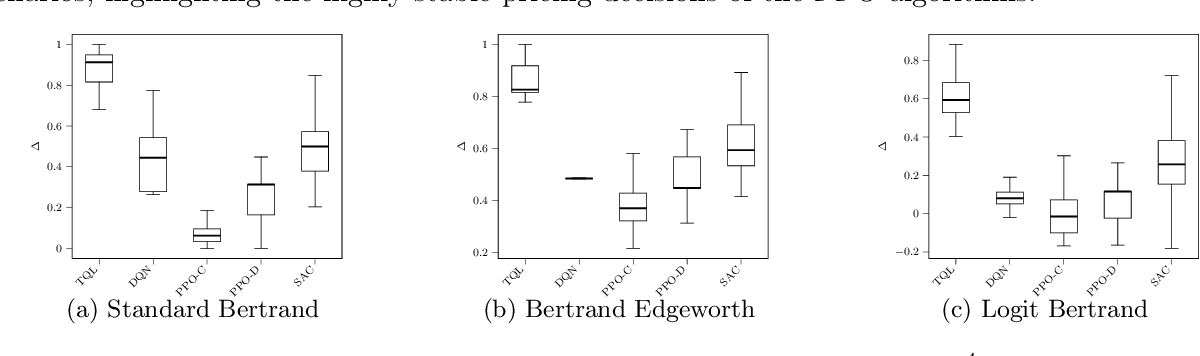
This emergent behavior is not just theoretical. Researchers simulate these environments to test algorithm behavior.
The Legal Challenge for India's Competition Act
This new form of collusion poses a significant challenge to the legal frameworks we know. For a clear analysis in the Indian context, let's turn to the paper "MANAGING THE DIFFICULTIES OF AI IN COMPETITION LAW."
MANAGING-THE-DIFFICULTIES-OF-AI-IN-COMPETITION- ...
This paper applies the theoretical challenges of algorithmic collusion directly to the Indian legal system, highlighting the gaps in the Competition Act, 2002.
Please read the following parts: Under 'Literature Reviews', read the subsection 'AI and Algorithmic Collusion'. This succinctly states the problem. Under 'Key Findings', read the answers to the first two research questions: 'How does Artificial Intelligence (AI) impact market competition...' and 'What are the challenges posed by AI algorithms...' This summarizes the enforcement gap in India.
As both papers argue, the core problem is the lack of a provable "agreement."
- There's no smoke-filled room, no incriminating emails.
- The human managers may not have intended for collusion to happen and may not even understand how the AI's pricing strategy works.
- The coordination happens through publicly observable market signals (prices), which could be defended as "conscious parallelism"—a legal practice where firms independently react to each other's moves.
Proving that this behavior constitutes a "concerted practice" under Section 3 of the Competition Act becomes exceptionally difficult, as the element of a "meeting of minds" is absent.
2. The New Moat: Data-Driven Market Dominance
The second major competition risk from AI is not about competitors cooperating, but about a single firm becoming so powerful that it can operate independently of any competitive pressure. This directly engages the 'abuse of dominance' framework from our last lesson.
AI and Big Data create a powerful feedback loop or flywheel effect:
- A company with a large user base collects vast amounts of data.
- This data is used to train a superior AI model, improving the product or service.
- The superior product attracts even more users.
- More users generate even more data, and the cycle repeats.
This creates a formidable "moat" around the dominant firm, making it nearly impossible for new entrants, with their limited data, to compete. The paper on AI in Indian competition law discusses this under the concept of "Data Dominance."
MANAGING-THE-DIFFICULTIES-OF-AI-IN-COMPETITION- ...
Let's examine how the Indian paper frames the issue of dominance fueled by data and AI.
Please read the following sections: 'Data Dominance and Market Power': This section explains how access to data creates competitive advantages and enables exclusionary practices. 'CCI’s Landmark Ruling Against Google...': This is a crucial case study. It shows how the CCI applied the 'abuse of dominance' framework to a tech giant using its algorithm for anti-competitive ends.
Mechanisms of Data-Driven Abuse
A dominant firm can abuse its position using AI in several ways that fit squarely into the categories of abuse under Section 4(2) of the Competition Act.
-
Algorithmic Exclusion (Leveraging): The Google case is a perfect example of this. Google was found to have abused its dominance in the online search market to favor its own services (like Google Flights, Google News) in its search results. This is a classic case of leveraging (Section 4(2)(e)), where dominance in one market is used to protect or enter another. The tool of this abuse is the search algorithm itself.
-
Sophisticated Price Discrimination (Unfair Pricing): AI enables dynamic and personalized pricing on a massive scale. While dynamic pricing can be pro-competitive (e.g., adjusting prices to manage inventory), it can also be a tool for abuse.
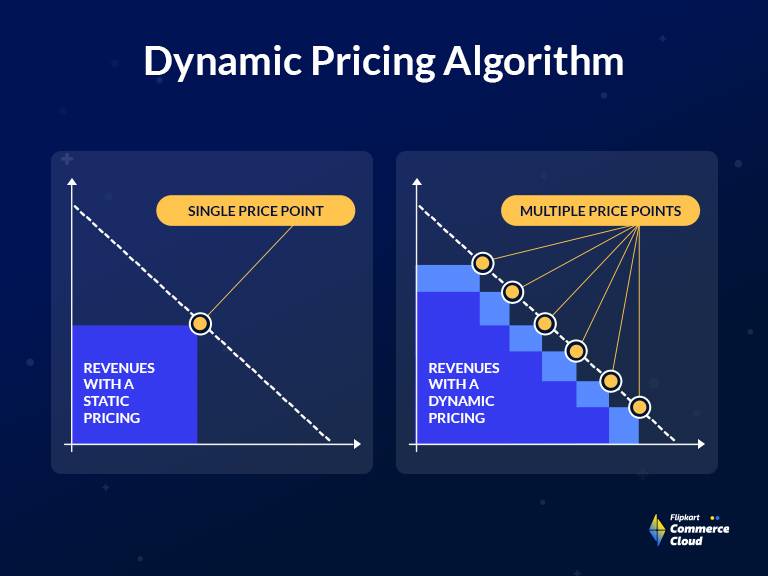
A dominant platform could use its vast user data to charge different prices to different customers based on their predicted willingness to pay. This could be deemed an "unfair or discriminatory" price under Section 4(2)(a)(ii).
- Creating Insurmountable Entry Barriers: The data flywheel itself becomes a barrier. If a new startup cannot access a comparable dataset, it may be unable to develop an AI product that can effectively compete, regardless of the quality of its team or technology. This consolidates the dominant firm's power, harming innovation and consumer choice in the long run.
Test your understanding!
A group of three major hotel chains all subscribe to a new, highly advanced AI-powered revenue management software from a third-party vendor, "YieldMax." The software's stated purpose is to "autonomously optimize room pricing to maximize revenue." The hotel chains do not share data with each other and only provide their own occupancy and cost data to YieldMax.
After a year, the CCI observes that hotel prices in major cities where these chains operate have stabilized at levels 20% higher than before, and the typical seasonal price drops have vanished. When investigated, the hotel VPs claim they are not colluding; they have simply outsourced pricing to a more efficient system.
- Based on the different ways algorithms can collude, which specific pattern does this scenario most resemble?
- What is the primary legal difficulty the CCI would face in proving a violation of Section 3 of the Competition Act ("anti-competitive agreements") against the hotel chains?
- How is this case fundamentally different from the CCI's case against Google for 'abuse of dominance'?
Show answer
-
Pattern of Collusion: This scenario most resembles a "Hub-and-Spoke" conspiracy. The hotel chains are the "spokes," and the central AI provider, YieldMax, is the "hub." Even if the spokes don't communicate directly, they can achieve a collusive outcome by all feeding data into a central algorithm that coordinates pricing for them.
-
Legal Difficulty: The primary difficulty is proving an "agreement." The hotel chains can argue they each made an independent business decision to use the best available software. They did not "agree" with each other to fix prices. Proving that they intended to use YieldMax as a vehicle for collusion, rather than just for individual profit maximization, would be very challenging without evidence of explicit communication or intent.
-
Difference from Google Case: This case is about collusion (Section 3), while the Google case was about unilateral conduct/abuse of dominance (Section 4).
- In the hotel scenario, the concern is that multiple competitors are acting in a coordinated manner to raise prices, simulating a cartel. The legal question is whether there is a horizontal "agreement" among them.
- In the Google case, the concern was that one dominant company was using its power to harm competition. The legal question was not about agreement, but whether Google's unilateral actions (like preferencing its own services) constituted an abuse of its existing market power.
Conclusion
Today, we've seen how AI is not just a tool but a potential agent of anti-competitive behavior, creating novel challenges that push the boundaries of existing law.
Key Takeaways:
- Algorithmic Collusion: AI can facilitate collusive outcomes without the traditional "agreement" that competition law is designed to detect. Self-learning algorithms can independently discover and sustain supracompetitive prices, creating a significant enforcement gap.
- Data-Driven Dominance: The feedback loop between data and AI can create powerful network effects and insurmountable barriers to entry, leading to market consolidation.
- New Forms of Abuse: Dominant AI-powered firms can engage in abuse through algorithmic exclusion (like self-preferencing) and exploitative pricing strategies (like personalized pricing), which are actionable under Section 4 of the Competition Act, as demonstrated by the CCI's actions against Google.
- The core challenge for regulators is adapting legal concepts of "agreement," "intent," and "conduct" to a world where market outcomes are increasingly determined by autonomous, complex, and opaque algorithms.
Preview of the Next Lesson:
The potential harms of AI are not limited to market distortion. The same data and algorithmic processes that can lead to collusion or dominance can also produce biased and discriminatory outcomes against individuals. In our next lesson, we will apply anti-discrimination laws to cases of algorithmic bias in employment and service provision, shifting our focus from market-level economic harm to individual-level societal and ethical harm.