Introduction
In our last lesson, we examined situations where AI systems cause harm due to flaws, applying the concepts of 'defect' and 'deficiency' from India's Consumer Protection Act. We focused on AI that doesn't work as intended. Now, we shift our focus to a more subtle but equally important issue: AI that functions exactly as designed, but with the explicit purpose of manipulating consumer behavior. Your consulting background in digital transformation has likely exposed you to the business pressures that can lead to prioritizing user engagement and conversion, sometimes through ethically questionable interface designs.
This lesson addresses the learning outcome: Analyze 'unfair trade practices' in the context of algorithmic manipulation of consumer choice. We will define the manipulative techniques known as 'dark patterns,' explore the cognitive biases they exploit, and analyze how AI amplifies their power. Most importantly, we will connect these practices to the legal concept of 'unfair trade practices' under Indian law and compare this with the evolving regulatory landscapes in the European Union and the United States.
1. Understanding 'Dark Patterns': Design as Manipulation
The term 'dark patterns' refers to user interface (UI) design choices that are crafted to trick users into making decisions they might not otherwise make. These are not bugs; they are intentional features designed to benefit the business at the expense of the user's autonomy.
To begin, let's watch a short news report that provides a concise overview of what dark patterns are and gives some common examples.
Tech Talk: What are Dark Patterns and how do they affect consent? | Latest English News | WION
This WION news report, 'What are Dark Patterns and how do they affect consent?', introduces the core concept and illustrates several types of manipulative designs you've likely encountered online.
Please watch from the beginning up to the 02:50 mark. As you watch, pay attention to: The definition of dark patterns as deceptive practices built into websites. The specific examples given, such as hidden fees, difficult opt-outs, and misleading 'free' trials. The core harm identified: the subversion or impairment of consumer autonomy.
The video highlights how these designs can trick you into sharing more data, paying more money, or signing up for services unintentionally. To understand the psychology behind their effectiveness, we'll turn to a UX designer's perspective.
Dark Patterns: How design seeks to control us | Sally Woellner | TEDxSydney
This TEDx talk by Sally Woellner, 'Dark Patterns: How design seeks to control us,' delves deeper into the specific design tactics and the psychological principles they leverage.
Watch the segment from 01:56 to 06:44. Focus on the four types of dark patterns explained: Confirmshaming: Using emotionally charged language to make you feel guilty for declining an offer. Misdirection: Hiding information or drawing attention away from less desirable options. Trick Questions & Addiction Mechanics: Using confusing language and dopamine-triggering notifications to compel engagement. Privacy Zuckering: Combining techniques to get you to share more personal data than you intend.
The 'confirmshaming' tactic is a powerful example of emotional manipulation. This cartoon illustrates it perfectly:

These design tricks are effective because they exploit well-understood cognitive biases—systematic patterns of deviation from norm or rationality in judgment. Your interest in mindfulness and applied ethics will find a strong parallel here, as these patterns intentionally subvert a user's conscious, deliberate decision-making process.
The following reading provides a rigorous academic foundation for this, connecting dark patterns to foundational concepts in behavioral economics.
The working paper 'Towards an Empowerment-Based Regulation of Dark Patterns' by Fabien Lechevalier from the Stanford-Vienna TTLF offers a deep dive into the psychological underpinnings of these techniques.
Please read section 1.2: 'Dark patterns, interfaces exploiting cognitive inequities'. This section starts by discussing the limits of human rationality. Focus on the discussion of: Bounded Rationality: The idea, pioneered by Herbert A. Simon, that our decision-making is limited by the information we have, our cognitive limitations, and time constraints. System 1 and System 2 Thinking: Daniel Kahneman's model of our two modes of thought—System 1 (fast, intuitive, emotional) and System 2 (slower, deliberate, logical). Dark patterns are designed to appeal to System 1 and bypass System 2. Cognitive Biases: Note the examples of biases exploited, such as the framing effect, default choice effect, and overchoice effect.
By exploiting these biases, dark patterns create an imbalance of power. They leverage information and power asymmetries to nudge users into choices that align with business objectives, often at the user's expense.
2. Algorithmic Manipulation: AI as a Supercharger
Traditional dark patterns are often static—hard-coded into a website's design. However, the rise of AI transforms this landscape by enabling dynamic, personalized manipulation. Instead of a one-size-fits-all manipulative design, AI can tailor the "dark pattern" to the individual user in real-time.
A prime example is algorithmic dynamic pricing. Given your background in data analytics, you can appreciate how this moves beyond simple A/B testing. Reinforcement learning models, for instance, can continuously experiment with and optimize pricing and presentation for millions of users simultaneously.
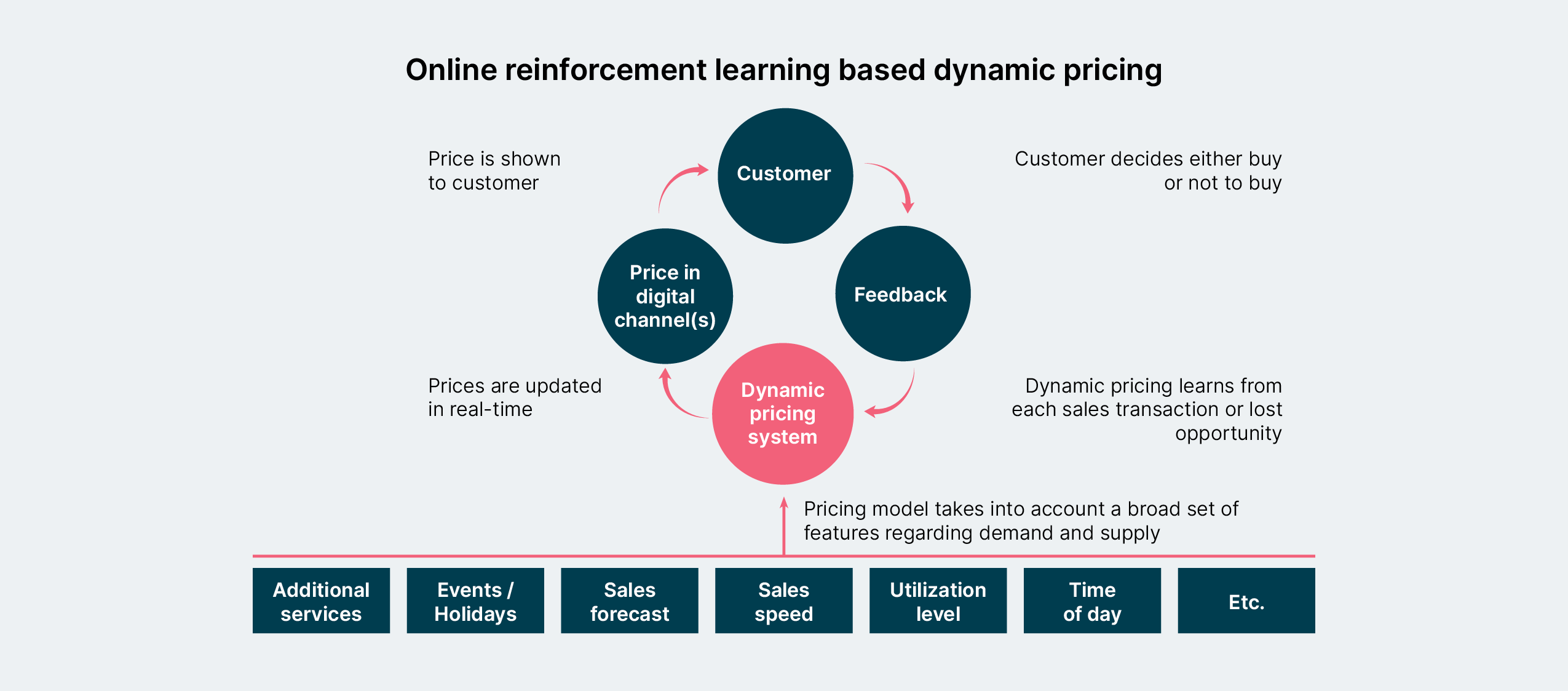
This is not just about finding the optimal market price. Such a system could learn that:
- A particular user is more likely to buy when shown an urgency cue (e.g., "Only 1 item left!").
- Another user responds to social proof (e.g., "25 people have bought this today").
- A user browsing late at night might be susceptible to a higher price, assuming they have fewer options or are experiencing decision fatigue.
This personalization of manipulative techniques is what makes algorithmic influence so potent and legally problematic. The following paper connects this technological capability to the Indian legal context.
Consumer Protection in Electronic Contracts
The article 'Consumer Protection in Electronic Contracts' by Rehman and Yadav directly addresses these emerging risks, linking algorithmic practices to consumer harm in India.
Please read the following sections: Introduction (Section 1): Note how it identifies 'dark patterns or misleading links' and 'algorithmic guidance of consumer options' as key challenges to consumer protection in e-contracts. Section 4's subsection 'AI in Consumer Contracts and Algorithmic Decision-Making': This part is crucial. It discusses how AI can be used for dynamic pricing and profiling, leading to 'algorithmic prejudice' and eroding 'informed consent.'
3. The Legal Response: Analyzing Unfair Trade Practices
How do legal frameworks grapple with this form of manipulation? The key concept in India is the 'unfair trade practice'.
The Indian Framework: Consumer Protection Act, 2019
The Consumer Protection Act, 2019 (CPA 2019) provides a broad definition of 'unfair trade practice' in Section 2(47). It includes "a trade practice which, for the purpose of promoting the sale, use or supply of any goods or for the provision of any service, adopts any unfair method or unfair or deceptive practice."
The definition is intentionally broad to capture novel forms of deception. Algorithmic manipulation and dark patterns can be analyzed as unfair trade practices because they:
- Are deceptive: They mislead consumers by hiding costs, creating false urgency, or obscuring terms.
- Impair free choice: They exploit cognitive biases to subvert a consumer's ability to make an autonomous, informed decision.
- Adopt an "unfair method": The systematic exploitation of a user's psychological vulnerabilities for commercial gain can be argued as inherently unfair.
Furthermore, the Consumer Protection (E-Commerce) Rules, 2020, issued under the CPA, explicitly prohibit e-commerce entities from "[manipulating] the price of the goods or services... to gain unreasonable profit" and from engaging in "any unfair trade practice." While not explicitly naming 'dark patterns,' these rules provide a direct hook for regulating practices like manipulative dynamic pricing.
A Comparative Perspective: The EU and US Approaches
Your goal of developing world-class expertise requires a comparative view. The EU and US have taken notably different paths in regulating these practices. The Stanford working paper you read earlier provides an excellent, detailed comparison.
We will now return to the Stanford TTLF paper to analyze its detailed breakdown of the EU and US regulatory frameworks. This will provide the comparative legal depth you are looking for.
Please read the following two major sections from Part 2, 'Dark patterns, a design regulation': Section 2.1.1 'General legislation' (under 'In Europe'): Focus on how the EU uses a multi-layered approach. Understand the roles of the Unfair Commercial Practices Directive (UCPD), the GDPR (especially regarding consent), and the newer, more explicit prohibitions in the Digital Services Act (DSA) and the AI Act. Section 2.2.1 'Federal legislation' and Section 2.2.2 'States legislation' (under 'In the United States of America'): Note the more fragmented US approach, relying on the FTC's authority to police 'unfair or deceptive acts' and the more recent, privacy-focused state laws like the California Consumer Privacy Act (CCPA), which explicitly define and prohibit dark patterns in the context of obtaining consent.
As the paper details:
- The EU has adopted a comprehensive, precautionary approach. The Digital Services Act (DSA) now contains a direct ban on "deceptive or manipulative online interfaces." This is a landmark provision that explicitly targets dark patterns.
- The US relies on a combination of the Federal Trade Commission's (FTC) enforcement powers and a patchwork of state laws. California's privacy laws (CCPA/CPRA) are leaders, defining dark patterns and stating that consent obtained through them is invalid.
This comparative view reveals a global trend towards regulating manipulative design, but with different legal philosophies and levels of specificity.
Test your understanding!
Imagine an Indian online travel agency that you are consulting for. Their website uses several tactics to increase sales:
- When a user selects a flight, the checkout page automatically adds "travel insurance" to the basket. The checkbox to remove it is small and greyed out.
- The site uses AI to personalize urgency cues. For users identified as 'hesitant,' it displays a prominent banner: "Prices for this route are increasing! Book now!" even when this is not based on real-time data.
- The process to cancel a booking requires calling a customer service number with long wait times, whereas booking takes three clicks.
Analyze this situation:
- Identify at least three distinct dark patterns being used.
- Explain how this conduct could be classified as an 'unfair trade practice' under India's Consumer Protection Act, 2019.
- How might the EU's Digital Services Act (DSA) address the cancellation process differently or more directly than the CPA?
Show answer
-
Dark Patterns Identified:
- Sneak into Basket: Automatically adding the travel insurance without explicit user consent.
- False Urgency/Scarcity: Displaying a misleading warning about price increases to pressure the user into a quick decision. The AI personalization makes this particularly deceptive.
- Roach Motel (Obstruction): Making it extremely easy to get into a situation (booking a flight) but very difficult to get out of it (canceling the booking).
-
Unfair Trade Practice under CPA, 2019: This conduct fits the definition of an unfair trade practice under Section 2(47). One could argue it is a "deceptive practice" because the AI-driven urgency cue is factually misleading and the insurance cost is added covertly. The overall process is an "unfair method" as it systematically exploits cognitive biases (defaults, fear of loss) to promote the sale, subverting the consumer's ability to make a free and informed choice.
-
Treatment under the EU's DSA: The DSA is more direct. Article 25 explicitly prohibits platforms from designing interfaces that deceive or manipulate users. More specifically, it lists as a prime example "making the procedure for terminating a service more difficult than subscribing to it." Therefore, the 'Roach Motel' tactic for cancellations would be a direct violation of the DSA, whereas under the CPA, it would be argued more generally as part of a broader unfair practice. The DSA's specificity provides clearer grounds for enforcement against this particular design choice.
Conclusion
In this lesson, we have moved from the concept of flawed AI to AI used as a tool for manipulation. We've seen how business objectives, user interface design, and powerful algorithms can combine to create environments that undermine consumer autonomy.
Key Takeaways:
- Algorithmic manipulation often relies on 'dark patterns'—interface designs that exploit human cognitive biases (like defaults, framing, and urgency) to nudge users into unintended actions.
- AI supercharges these techniques by enabling dynamic, real-time personalization, shifting from static manipulative designs to tailored algorithmic persuasion.
- In India, these practices are analyzed as 'unfair trade practices' under the broad definition in the Consumer Protection Act, 2019, which prohibits deceptive or unfair methods of promoting sales.
- The regulatory landscape is evolving globally. The EU has taken a direct approach with explicit prohibitions in the Digital Services Act, while the US relies on a more fragmented system of FTC enforcement and state-level privacy laws.
Preview of the Next Lesson:
The manipulative practices we discussed today harm individual consumers. But when these data-driven techniques are used by large, dominant companies, they can also cause harm at a market level by stifling competition. In our next lesson, we will broaden our scope to explain the core principles of the Competition Act, 2002, such as 'abuse of dominant position.' We will explore how data collection and algorithmic practices can not only manipulate consumers but also create insurmountable barriers for competitors.