Welcome back. In our last lesson, we focused on the art of the narrative payoff, ensuring the clues you plant culminate in a resolution that feels both surprising and inevitable. We discussed how a story is a contract with the reader, built on promises that must be fulfilled. Today, we'll explore one of the most direct and engaging ways to make and fulfill those promises.
Your goal for this lesson is to learn how to design and embed puzzles, riddles, or ciphers into a narrative as interactive elements. This is a technique central to the mystery and adventure stories you enjoy, like Harry Potter, and it directly addresses your interest in creating "tricks" that keep readers guessing. Puzzles turn a passive reading experience into an active one, inviting the reader to solve the mystery alongside your protagonist.
Puzzles as Interactive Storytelling
At their core, puzzles, riddles, and codes are a specific type of clue. In the previous module, we touched on different ways to present information to the reader. A puzzle is the ultimate "translucent clue"—a term used by mystery writing analyst The Tangled Web to describe a clue that is clearly visible but whose meaning is obscured.
How I write clues now *game-changer*
This video from The Tangled Web introduces a powerful way to categorize clues. Understanding this framework will help you see exactly where puzzles fit into your narrative toolbox.
Please watch the first two minutes, from the beginning until the end of the explanation of translucent clues. Pay attention to how a translucent clue makes the reader aware that a mystery exists, even if the solution is not yet clear. This creates immediate engagement.
When your protagonist finds a cryptic riddle or a coded message, the reader is immediately on alert. They know this piece of information is important, and they can start trying to figure it out themselves. This creates a powerful partnership between the reader and the character.
Part 1: The Art of the Riddle
Riddles are as old as storytelling itself. From the Sphinx challenging Oedipus to Gollum's game with Bilbo, they serve as tests of wit that reveal character and drive the plot forward. But a good riddle within a story isn't just a clever poem; it's a functional plot device.
A fantastic resource for understanding the mechanics is the website Constructed Adventures, which breaks riddle design down for creators of puzzle hunts. Their principles are directly applicable to fiction writing.
How to write a riddle that’s meant to be solved — Constructed Adventures
This article provides a superb, practical framework for building solvable and satisfying riddles. It moves beyond just writing clever lines to thinking about the riddle's function.
First, read the section "The Anatomy of a Riddle." This introduces the three core components: Premise, Structure, and Ask. Next, read the short but crucial section, "Last Thing First." This is the single most important piece of advice for writing plot-relevant puzzles. Then, read "A Premise Makes a Promise." This explains how to write clues that are both accurate and evocative. Finally, read "Structure Sets the Stage," which contrasts traditional descriptive riddles with "procedural" riddles that require calculation or action.
To summarize these key points for a fiction writer:
- Start with the Answer: Your riddle's solution must do something. It could be a password, the name of a hidden location, or the key to a cipher. By deciding the answer first, you ensure the riddle serves the plot.
- The Premise is Your Promise: The clues within the riddle must be true. If you cheat the reader with misleading details, the solution will feel frustrating, not clever.
- Structure Guides the Solver: A traditional "What am I?" riddle tells the reader to look for an object or concept. A procedural riddle ("Take the number of windows and add the number of crows...") tells the character they need to perform actions, which can make for a more dynamic scene.
Riddle-Writing Techniques
Once you have the answer and the basic structure, you can add stylistic flair. These techniques can help you develop a unique voice for your riddles, tying them to the world or the character who wrote them.
How to write riddle rhymes and puzzle poems – Berlie Doherty
Author Berlie Doherty offers several creative approaches to writing riddles, focusing on poetic devices that can make your puzzles more memorable and atmospheric.
First, read the section on Kennings. This ancient technique is perfect for fantasy or historical settings. Next, read through the various techniques presented in the section Tricks and techniques, specifically focusing on the "What am I?" and "My First is in" formats.
- Kennings: Compound metaphors like "whale-road" for the sea or "bone-house" for the body. A riddle composed of kennings can sound ancient and profound.
- "My First is in...": This format, which gives letters one by one, is a hybrid of a riddle and a cipher. It's a great way to spell out a password or name.
- Personification: As the Runesmith video on riddle writing explains, describing an inanimate object as if it were a living being (or vice-versa) is a classic way to create enigmatic descriptions. A cloud can have "sorrows" that "turn to tears" (rain).
This video from the channel Runesmith offers a clear, step-by-step process for crafting riddles, drawing from examples in fantasy and mythology.
Watch from this section, where the creator explains his method of starting with a subject, creating a "taboo list" of obvious words, and then using personification to create misleading but accurate clues.
Part 2: Ciphers and Coded Messages
While riddles test wit, ciphers test knowledge and observation. They are messages hidden in plain sight, waiting for the right key to unlock them. For a story, the cipher itself is often less important than the character's quest to find the key.
Simple Ciphers for Narrative Use
You don't need to be a cryptographer. Simple, classic ciphers are best for fiction because the reader can understand the logic and potentially solve it themselves.
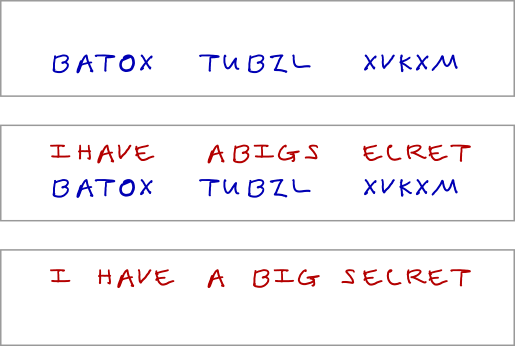
1. Substitution Ciphers: Each letter is replaced by another letter or a symbol.
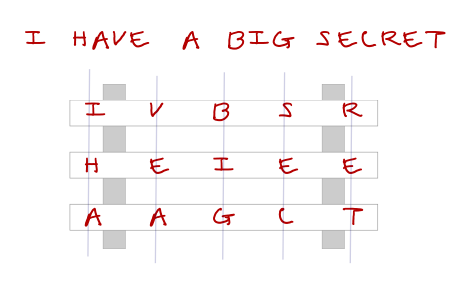
2. Transposition Ciphers: The letters of the message are rearranged in a specific pattern. A common example is the Rail Fence cipher.
The Key is Everything
A character rarely solves a cipher by pure brute force. Instead, the narrative becomes about finding the key. This key is the missing piece of information that makes sense of the puzzle.
The Tangled Web video provides two perfect examples of this "clue and key" dynamic in action.
How I write clues now *game-changer*
Let's return to The Tangled Web video to see how this "key" concept works in practice.
Watch the two examples presented, starting with the Frasier example at this timestamp, where the key is a new perspective. Then, continue with the Monk example from this timestamp, where the key is a specific piece of external knowledge (the victim used mnemonic devices).
In the Monk example, "Girls can't eat 15 pizzas" is the incomprehensible clue. The fact that the victim used mnemonics is the key. Once Monk has the key, the clue can be deciphered into the license plate "GCE15P". This transforms the puzzle from a static object into a two-part quest: find the clue, then find the key.
Part 3: Embedding Puzzles in Your Story
A puzzle should never feel like a homework problem dropped into your narrative. It must be woven into the fabric of the plot, setting, and character development.
Make it Integral: The puzzle must be an obstacle to a character's goal. They can't just walk around it. Maybe it's a riddle guarding a door they must pass through, or a coded diary holding the villain's plans.
Show the Solving Process: Don't just present the puzzle in one chapter and the solution in the next. Let the reader see the character work on it.
- Show them making incorrect guesses.
- Show them getting frustrated.
- Let them have that "aha!" moment when they connect the puzzle to another piece of information.
This process reveals character—is your protagonist logical, intuitive, or persistent?
Multi-Stage Puzzles: For a more complex plot, you can chain puzzles together. The solution to one riddle might be a clue that helps decode a cipher. This technique, mentioned in the Constructed Adventures article, is incredibly effective. The complex example from Elizabeth Peters' The Seventh Sinner, which involves four layers of distortion, is a masterclass in this.
How I write clues now *game-changer*
For a look at a truly advanced, multi-layered puzzle, let's look at the final example from The Tangled Web.
Watch the breakdown of the clue from The Seventh Sinner, starting at this timestamp. Notice how the initial clue ("seven") is distorted multiple times, requiring several different "keys" to finally unlock the true meaning. This is how you can build an entire mystery around a single puzzle.
Exercise: The Master's Lockbox
It's time to put these principles into practice. Let's design a multi-stage puzzle that a character might face in a fantasy story.
Scenario: Your protagonist, a young magic apprentice, finds a locked box left behind by their deceased master. There's a riddle inscribed on the lid.
- Design the Riddle: Write a short, 4-to-6-line "What am I?" riddle.
- The Answer: The answer to your riddle must be the word TIME.
- The Premise: Think of ways to describe time without using obvious words. Use personification. For example: "I have no legs, but always run," "I devour all things, kings and stone," "You can kill me, but never wound me."
- Design the Cipher and Key: The word TIME is the key to a coded message left on a separate scroll.
- The cipher is a simple substitution. Create a key by writing the alphabet and then writing it again underneath, shifted by a certain number of places. The number of letters in your riddle's answer (4, for TIME) is the number of places to shift the alphabet. (A becomes E, B becomes F, etc.).
- Write a short, one-sentence message that would be on the scroll. For example: "THE BOX OPENS TO A MEMORY."
- Encrypt your message using your 4-letter shift cipher. Write down both the original message and the encrypted version.
- The Final Step (The Payoff): How does the decoded message open the box? Briefly describe the action the apprentice must take. The message "THE BOX OPENS TO A MEMORY" is itself a small puzzle. A good solution would be that the apprentice must place their hand on the box and concentrate on a specific memory of their master.
This exercise will guide you through the process of starting with the answer, building layers of puzzles, and connecting them to a physical action and a narrative payoff.
Conclusion
Puzzles, riddles, and ciphers are more than just clever decorations. They are narrative engines that create suspense, reward attentiveness, and turn your reader into an active collaborator in your story. By mastering their design, you gain a powerful tool for crafting the engaging, plot-driven novels you aspire to write.
Key Takeaways:
- Puzzles function as translucent clues, making the reader aware of a mystery and inviting them to solve it.
- When designing a riddle or puzzle, always start with the answer to ensure it serves a purpose in the plot.
- The most compelling narrative puzzles involve a clue and a key. The quest to find the key that unlocks the clue creates a dynamic plot.
- Integrate puzzles by making them necessary obstacles and by showing the character's solving process, including their mistakes and breakthroughs.
In our next lesson, we'll continue this theme by looking at more subtle ways to play games with your reader. We will explore how to incorporate hidden messages or 'Easter eggs' to reward attentive readers, adding another layer of depth and fun to your world.