Introduction
Welcome to the final lesson of your course on designing for Bollywood. Over the past twelve modules, you have journeyed from the fundamental anatomy of the body to the intricate construction of a final sample garment. In our last session, you translated your corrected pattern into a physical reality, mastering the techniques required to work with performance fabrics and build structurally sound designs. You now hold a finished garment, the product of meticulous drafting, fitting, and construction.
This concluding lesson addresses the capstone of the entire design process: the final design review. This is the critical stage where you evaluate your creation not as a collection of seams and fabrics, but as a functional piece of storytelling. We will establish a systematic framework for this review, assessing your garment against the three core pillars of cinematic costume: aesthetics, movement, and durability. Your background in experimental design provides an excellent foundation for this, as the process mirrors the validation phase of a research project—evaluating the final outcome against the initial requirements. By the end of this lesson, you will have a comprehensive method to ensure your designs are not just beautiful, but truly ready for the screen.
1. The Final Review Framework
Before a garment appears on screen, it undergoes a rigorous evaluation. This isn't a simple pass/fail test but a comprehensive assessment to ensure it fulfills its purpose within the film's narrative. We can structure this review into three distinct but interconnected inquiries:
- The Aesthetic Review: Does the garment visually communicate the director's vision, the character's identity, and the scene's mood?
- The Movement Review: Does the garment function flawlessly with the choreography, enhancing the performer's movements rather than restricting them?
- The Durability Review: Can the garment withstand the practical demands of a film set, including multiple takes, environmental stress, and quick changes?
Let's explore each of these pillars in detail.
2. The Aesthetic Review: Evaluating Visual Storytelling
A costume in film is never just clothing; it is a key narrative tool. Every color, texture, and silhouette is a deliberate choice made to communicate information to the audience. Your design's first test is to succeed on this semiotic level. A scholarly paper on the role of costume in film provides an excellent theoretical grounding for this type of analysis.
[PDF] The Influence of Movement on the Perception of Costume in Film
This paper by Sophie Hoper explores how costume functions as a visual and narrative tool. It will help you develop a vocabulary for critiquing your own work from a cinematic perspective.
First, read the Introduction to understand the concept of costume as a fundamental element of storytelling that shapes audience perception. Next, move to Chapter One and read the section "Costume Design as a Semiotic Art." This explains how every element of a costume is a deliberate choice designed to build a character's background and personality. Finally, read the section "Costume and the Body." This emphasizes that a costume only achieves its full potential when worn by a moving actor, providing information that a static garment cannot.
With this framework in mind, you can conduct a systematic aesthetic review of your finished garment. Place it on a mannequin or, ideally, have it worn by a fit model. Step back and ask the following questions:
- Character and Narrative: Does the design align with the character's personality, social status, and emotional state in the scene? Does a vibrant, embellished choli broadcast the celebratory mood of a wedding dance, or does a muted, simple design reflect a character's introspection?
- Color and Light: How does the fabric and color interact with light? If you designed for a night scene, do the materials have the intended sheen? If it's a day scene, are the colors true? As seen in the Cinderella case study from the reading, Sandy Powell layered multiple colors of fabric to create a complex, watercolor-like effect that came alive under theatrical lighting.
- Silhouette and Form: From a distance, does the silhouette create the desired effect? Does it project power, vulnerability, or grace? Consider the way Queen Ravenna's costumes in Snow White and The Huntsman use dramatic collars and sharp lines to create an imposing, threatening silhouette.
- Visual Harmony: How does the garment relate to the set design and the costumes of other characters in the scene? As a designer, you must ensure your creation is part of a cohesive visual world, not an isolated object. It must stand out, but not clash without narrative purpose.
3. The Movement Review: Evaluating Dynamic Performance
For Bollywood, and especially for dance sequences, a static aesthetic review is insufficient. The garment's primary function is to perform. This is where your design must prove its engineering. It has to support the performer while interacting with the choreography to create a visual spectacle.

To evaluate your design in motion, collaboration and direct observation are key. The ideal setting is a rehearsal with the performer and choreographer.
The following resource provides a practical checklist from a professional dance costumer, outlining the critical dialogue between designer and choreographer.
Costume Collaborations: Tammie Merheb Talks About Designing for Dance
This interview with costume designer Tammie Merheb offers a concise, real-world perspective on the practical considerations of designing for dance.
First, read the initial two questions and answers, covering the specific demands of costuming dance. Next, focus on the checklist of questions a designer asks a choreographer. These are the exact questions you should be asking about your own garment's performance. Finally, review the section on fittings and rehearsals. Pay attention to the description of the progression from mock-up to final dress rehearsal. This reinforces the importance of checking for comfort, freedom of movement, and correlation with the choreography.
Using this practical framework, your movement review should address the following:
- Range of Motion: Does the garment allow for the full, intended range of movement? Have the performer execute the most demanding steps from the choreography. Are they able to lift their arms fully? Can they bend, leap, or perform floor work without restriction?
- Fabric Dynamics: How does the fabric behave? As discussed in the Crimson Peak case study, Lucille's billowy nightgown was engineered to exaggerate her frantic movements, visually representing her psychological breakdown. Does your fabric flow and float to create an ethereal feel, or is it crisp and sharp to accentuate percussive movements?
- Structural Integrity in Motion: Does the garment stay in place? Watch for straps slipping, bands riding up, or necklines gaping. In a high-impact routine, an ill-fitting bra is not only a costume malfunction but a risk to the performer's confidence and stamina. This is a direct test of the support structures you engineered in earlier modules.
- Performer Comfort: Is the performer comfortable? After a few minutes of movement, are there any points of chafing, pinching, or excessive pressure? Check the underarm, the band, and strap attachment points. An uncomfortable costume will distract the performer and detract from their performance.
4. The Durability Review: Ensuring Production Readiness
The final pillar of your review is brutally practical: can your garment survive a film shoot? A cinematic dance number isn't performed once; it's performed dozens of times, under hot lights, over long hours. Your design must be robust enough to look perfect on the first take and the last. Your background in analyzing systems for efficiency and potential failure points is directly applicable here.
Imagine your heavily embellished bra design from the previous lesson's case study.
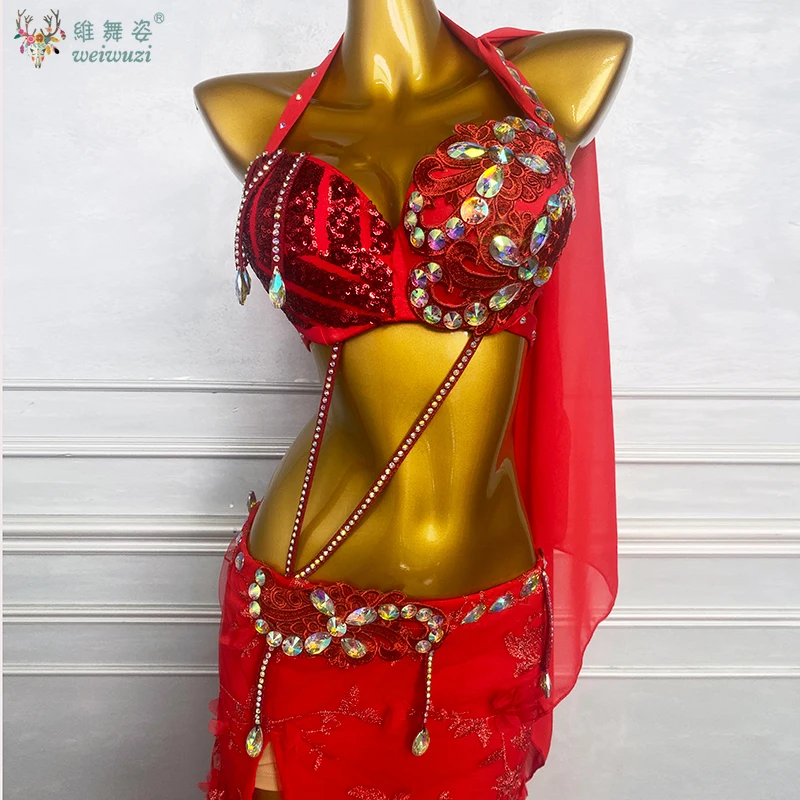
Your durability review is a final, holistic stress test:
- Seam and Fabric Strength: Re-examine the high-stress seams (underarms, strap joints, band connections). After the movement test, is there any sign of strain or popped stitches? Does the fabric show any signs of pulling or distortion, especially where heavy embellishments are attached?
- Embellishment Security: Perform a final "shed test." Have the performer do a few sharp spins or jumps. Do any beads, sequins, or crystals fall off? Run your hand over the surface. Are all elements secure? On a 4K screen, a single missing crystal can be a glaring continuity error.
- Environmental Resistance: Consider the scene's environment. Will the garment be subjected to sweat, stage fog, or even water (in a rain sequence)? Have you used materials that will not bleed, warp, or weaken under these conditions?
- Maintenance and Reset: How quickly can the garment be prepared for the next take? Can it be wiped down? Does it need to be steamed or pressed? Are there complex closures that will slow down a quick change? On a film set, time is money, and a high-maintenance costume can be a significant liability.
Conclusion
Congratulations on completing this comprehensive journey into the art and engineering of bra and bikini top design for Bollywood. Today, you have learned to perform a final design review, the crucial process of validating your finished work against the rigorous demands of cinematic production. This is the moment where your skills as a designer, engineer, and storyteller converge.
Key Takeaways:
- A Final Review is a Three-Part Inquiry: A successful garment must satisfy the requirements of Aesthetics (visual storytelling), Movement (dynamic performance), and Durability (production readiness).
- Costume is a Narrative Art: Your designs are not merely decorative. They are semiotic tools that communicate character, mood, and story. The aesthetic review ensures they speak the right language.
- Design for Motion: In a performance context, a costume is an active participant. The movement review validates that your garment enhances, rather than hinders, the choreography and the performer.
- Build for Endurance: A film set is an unforgiving environment. The durability review confirms that your construction techniques can withstand the repetition and stress of a professional shoot.
You began this course with a specific goal and a unique analytical background. You have now integrated that background with the specialized principles of pattern drafting, material science, and performance engineering. You possess a complete, systematic methodology to approach any design challenge the world of Bollywood presents, from an intricate choli for a dance number to a durable bikini top for an aquatic scene. You are equipped not just to create beautiful garments, but to engineer successful, screen-ready costumes.