Introduction
In our previous lesson, we meticulously engineered the 'wire line,' the crucial upper boundary of the bra's frame that dictates the shape and fit of the cups. We treated the underwire not as a simple accessory, but as a structural component, and learned to draft its corresponding pattern line by accounting for material properties like 'wire spring' and 'wire play'.
This lesson builds directly upon that foundation. We will now turn our attention to the lower boundary of the bra band, a curve often called the 'smile'. This curve is far more than an aesthetic detail; it is the anchor of the entire garment. You will learn to analyze the relationship between the shape of this curve and two critical performance factors: support and breast separation. For your work in Bollywood, where a bra must function flawlessly as both a costume piece and a high-performance athletic garment, mastering the engineering of this curve is essential for creating designs that are both beautiful and structurally sound.
The Band as the Foundation of Support
It is a common misconception that a bra's support comes primarily from the shoulder straps. In a well-engineered bra, the band provides up to 80% of the support. It acts as a cantilever system, lifting and holding the breast tissue. The bottom edge of the band is the interface where this system anchors to the torso. The shape of this edge determines how effectively the bra can resist gravity and the dynamic forces of movement.
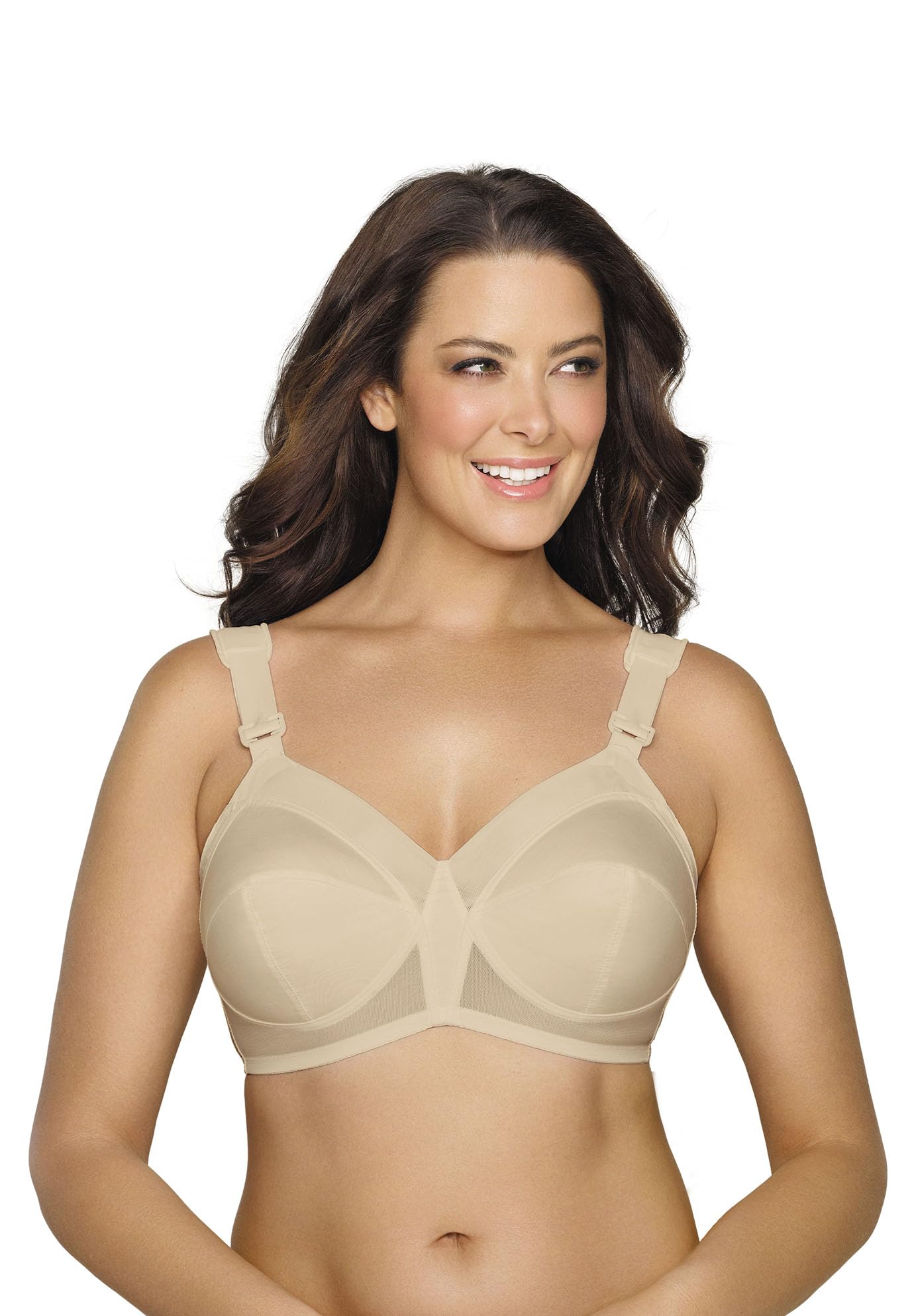
The upward curve at the front of the band, the 'smile,' is what allows the bra to nestle securely in the crease below the breasts (the inframammary fold). A straight band would be prone to flipping or rolling upwards, completely compromising its function as an anchor. The geometry of this curve is a deliberate design choice that has a direct impact on the garment's stability.
The Gore: A Structural Keystone
The most critical part of the band's curve is at the very front, the small panel that connects the cups, known as the bridge or gore. This component may be small, but its role is immense. To understand its function, we can turn to a patent document that delves into the biomechanics of bra design.
Bra engineering - WO2017096075A1 - Google Patents
This document provides a highly technical analysis of bra construction. It moves beyond simple sewing instructions to discuss the physics of support.
Read the section describing the bra bridge, starting from this paragraph. The key takeaway is the diagnostic test for good fit: the bra bridge, or gore, must sit flat against the sternum. If it floats away from the body, the engineering of the bra has failed.
The fact that a floating gore indicates a poor fit is fundamental. It means the underwires are not properly seated at the breast root and are being tilted forward by the breast tissue. The entire supportive frame is compromised.
This leads to a powerful engineering analogy. Think of the two cups of the bra as two arches. What holds two arches together? A keystone.

The patent document you just reviewed offers this precise analogy.
Bra engineering - WO2017096075A1 - Google Patents
Let's continue with the same "Bra engineering" document.
Now, read the section on arch technology. Focus on the paragraph beginning The 'center front'. This passage explicitly frames the gore as the 'keystone' of the bra's structure, which bears and distributes the majority of the stress.
This "keystone" concept is a powerful mental model. The dimensions of the gore directly control how the two "arches" (the cups) are positioned on the body. This is the mechanism by which a designer engineers breast separation:
- Height of the Gore: A taller gore provides more containment and central stability. It's ideal for full-coverage styles and for supporting larger busts during vigorous activity, as it prevents the breasts from spilling towards the center.
- Width of the Gore: A wider gore sets the cups further apart, accommodating naturally wide-set breasts and creating a more separated, natural silhouette. A very narrow gore pulls the cups—and therefore the breasts—closer together, creating cleavage.
The shape of the 'smile' curve is inextricably linked to the gore. A bra with a very low, narrow gore (like a plunge bra) needs a more pronounced smile curve in the band to compensate for the reduced central anchor point and prevent the band from riding up.
Adjusting the Band Curve for Different Geometries
The ideal band curve isn't universal. It must be adapted to the wearer's unique anatomy and the desired style. Your background in statistics involves adapting models to fit specific datasets; pattern drafting follows a similar logic, adapting a base pattern to fit a specific body.
In our last lesson, we referenced the Merckwaerdigh Blog's method for drafting a band. It provides an excellent example of how the band curve is adjusted for different bust-to-frame ratios.
How to draft the bra BAND master pattern in YOUR OWN measurements | Merckwaerdigh Blog
Let's revisit this article on drafting the bra band.
Review the section titled Are there any exceptions? Pay close attention to two key adjustments: one for breasts that are set wide apart (requiring more space at mid-front) and another for very large cup sizes on a smaller frame.
As the article explains, for larger cup-to-band size differences, the semi-circular wire line shape is transformed into a deeper, more oval shape. This change in the upper curve of the band necessitates a corresponding change in the lower curve to maintain the structural integrity and proportions of the band. This demonstrates that the wire line and the 'smile' curve are not independent variables; they are two parts of a single, integrated system.
The following video shows the practical application of drafting these curves. While you've seen it before, watch it now with a new focus on the bottom curve of the band.
Pattern Construction Underwire BRA (detailed) sup.1.1.5
This video from Katerina Ivanova shows the drafting of a complete bra band.
Watch the segment from drafting the back. Notice how the bottom edge of the band is not a straight line. It has a distinct upward curve towards the side seam (point 3) and a downward curve in the back wing. This back curve is the 'smile'. Then, observe how the curve at the center front is created from drafting the front. The drafter adds height at the gore and creates a smooth, curved line connecting to the rest of the band, forming the front part of the 'smile'.
Case Study: Engineering the Band for Cinematic Effect
Let's apply these principles to two contrasting Bollywood scenarios.
Scenario 1: The Romantic "Item Number"
The lead actress is performing in a signature dance number. Her costume is a modern, glamorous take on a lehenga, featuring a deep plunge choli. The choreography is fluid and sensual, but still athletic.
- Design Challenge: Create dramatic cleavage while ensuring the bra remains completely secure and supportive.
- Band Curve Solution:
- Gore: Very short and narrow. This is the 'keystone' that will pull the cups together. Its structural integrity is critical, so it would be made from rigid, non-stretch fabric.
- 'Smile' Curve: A pronounced, deep 'smile' curve along the bottom of the band. This provides a strong anchor under the bust to compensate for the minimal stability offered by the tiny gore. The curve helps lock the underwires in place against the ribcage.
Scenario 2: The Historical Epic's Battle Scene
An actress, portraying a warrior queen, is in a combat sequence. She wears a historically inspired costume that includes a structured, decorative choli over which armor is layered. The choli itself is heavily embellished with metalwork.
- Design Challenge: Provide absolute maximum support for both the breast tissue and the weight of the embellishments during high-impact, strenuous action (e.g., sword fighting). The aesthetic is one of strength and regal bearing, not cleavage.
- Band Curve Solution:
- Gore: Tall and relatively wide. This strong 'keystone' will ensure the breasts are separated and fully contained. It provides a large, stable area at the center of the chest.
- 'Smile' Curve: The band would likely be wider overall (a 'longline' style) to distribute the significant weight over a larger surface area of the torso. The 'smile' curve would be shallower but longer, designed to conform perfectly to the ribcage to prevent any possibility of the band rolling or shifting under the weight of the costume and the force of the action.
Conclusion
Today, we have analyzed the lower curve of the bra band, the 'smile', and its vital connection to support and separation. You've learned that this is not merely a style line, but a critical piece of engineering that anchors the entire garment to the body.
Key Takeaways:
- The band provides the majority of a bra's support, and its bottom curve ('smile') is what anchors it to the ribcage.
- The center gore functions as a structural 'keystone'. Its height and width are the primary controls for engineering breast separation and central stability.
- A gore that sits flat against the sternum is the hallmark of a well-fitted, supportive underwired bra.
- The shape of the band curve is systematically adjusted to accommodate different body types, bust sizes, and the functional and aesthetic requirements of the design.
In our next lesson, we will synthesize everything we've learned in this module. We will take the core components—the frame, bridge, cup, and band—and see how they come together as you learn to translate a set of body measurements into a complete preliminary 2D draft for a basic bra block.