Bonjour ! Welcome to your next lesson.
In our last session, you mastered superlatives, learning to express "the most" and "the least" (le plus, le moins, le meilleur). This skill is excellent for making strong, clear statements. Today, we will apply the grammar you've been learning to a very practical and social context: making and responding to invitations.
This lesson directly addresses your goal of becoming fluent in social and professional settings, where extending and handling invitations is a fundamental part of networking and building relationships. We will focus on using the conditional tense for politeness and the future tense to provide context, both of which you have encountered in previous lessons.
By the end of this lesson, you will be able to confidently invite someone to an event, and know how to accept or politely decline an invitation you receive.
A Quick Refresher: Conditional and Future Tenses
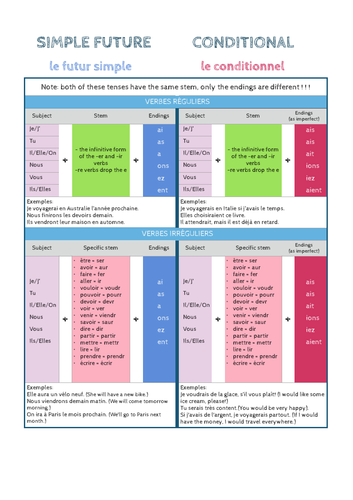
Before we dive in, let's quickly remember the difference between the future and conditional tenses. Both often use the same stem, especially for irregular verbs, but their endings and purposes differ.
- Futur Simple: Used for future plans and actions. Endings:
-ai,-as,-a,-ons,-ez,-ont. - Conditionnel Présent: Used for politeness, wishes, and hypothetical situations. Endings (from the imperfect):
-ais,-ais,-ait,-ions,-iez,-aient.
1. How to Make an Invitation
Making an invitation in French often involves using the conditional to sound polite and less direct. However, using the present tense is also very common and not considered rude. Let's explore the most useful phrases.
To start, let's watch a video that introduces the most common ways to propose something.
Cours de français B1 - Proposer, accepter et refuser une invitation
This video from French School TV provides excellent, practical examples for making an invitation. It starts with simple forms and moves to more polite and natural-sounding expressions.
Please watch from 02:07 to 09:36 and then from 13:43 to 16:11. Pay close attention to these key structures: Using vouloir in the present vs. the conditional: Tu veux...? vs. Tu voudrais...? The phrase proposer de + infinitive. The very common informal expression Ça te dit de...? and its more polite conditional form, Ça te dirait de...?
Let's break down the key structures from the video:
a) Using the Verb vouloir (to want)
While in English "do you want to..." can sound a bit blunt, in French it's a perfectly normal way to invite someone. Using the conditional (voudrais) makes it even more polite and a bit softer.
-
Present Tense (common and polite):
Tu veux déjeuner avec moi ?(Do you want to have lunch with me?)Est-ce que vous voulez prendre un café ?(Would you like to get a coffee?)
-
Conditional Tense (even more polite):
Tu **voudrais** aller au cinéma ce soir ?(Would you like to go to the cinema tonight?)Je **voudrais** vous inviter à la conférence.(I would like to invite you to the conference.)
The article "How to Make, Accept and Refuse an Invitation in French" reinforces this point, explaining that Est-ce que tu veux...? is the standard way to say "Would you like to...?".
b) The Expression Ça te dit / Ça vous dit de...?
This is an extremely common and friendly way to make a suggestion. It literally translates to "Does that speak to you?", but it means "How about...?" or "Are you up for...?".
- Informal:
Ça te dit d'aller au parc ?(How about we go to the park?) - Formal/Plural:
Ça vous dit de visiter le musée ?(Are you interested in visiting the museum?) - With the conditional (extra polite):
Ça vous **dirait** de nous joindre pour le dîner ?(Would you be interested in joining us for dinner?)
c) The Suggestion Et si on + imparfait?
The first video also introduced a very "French" way to make a suggestion: Et si on...? followed by the imperfect tense. While this doesn't use the conditional or future, it's essential for social fluency.
Et si on **allait** au restaurant ?(What if we went to a restaurant?)Et si on **prenait** un verre après le travail ?(How about we grab a drink after work?)
2. How to Respond to an Invitation
Now that you know how to invite someone, let's look at how to respond.
The video you just watched also covers accepting and refusing invitations. It provides a rich vocabulary for responding naturally.
Cours de français B1 - Proposer, accepter et refuser une invitation
Let's continue with the same video from French School TV to learn how to accept and refuse.
Watch from 24:57 to 38:21. First, listen for the many ways to accept an invitation, from a simple oui to more enthusiastic expressions. Then, pay attention to the phrases for politely refusing.
Accepting an Invitation
Here are the most useful phrases for saying "yes":
Oui, avec plaisir !orVolontiers.(Yes, with pleasure!) - Very positive and polite.Oui, d'accord.(Yes, okay.) - A simple agreement.Oui, je veux bien.- This is a key phrase. It means "Yes, I'd love to" and confirms your acceptance.C'est une bonne idée !(That's a good idea!)Ça marche.(Works for me.) - More informal.
Refusing an Invitation
Refusing politely is a delicate art in any language.
How to Make, Accept and Refuse an Invitation in French
This article from French Today offers more examples and a useful cultural insight on refusing invitations.
Read the section 'How To Politely Refuse an Invitation in French'. Notice the key phrase Je voudrais bien, mais... which, unlike Je veux bien, signals a refusal.
Here are the essential phrases for saying "no":
Désolé(e), je ne suis pas libre/disponible.(Sorry, I'm not free/available.)Merci, mais ça ne va pas être possible.(Thanks, but it's not going to be possible.)Je voudrais bien, mais...(+ excuse) (I'd love to, but...) - This phrase signals you are about to refuse. Example:Je voudrais bien, mais j'ai déjà quelque chose de prévu.(I'd love to, but I already have something planned.)Dommage, une autre fois peut-être ?(Too bad, another time maybe?)
Test your understanding!
Imagine a colleague asks you: Ça vous dirait de prendre un verre avec l'équipe vendredi soir ?
- How would you accept enthusiastically?
- How would you refuse politely because you have other plans?
Show answer
- To accept:
Oui, avec plaisir ! C'est une excellente idée.orOui, je veux bien, merci ! - To refuse:
Ah, dommage ! Je voudrais bien, mais je ne suis pas disponible vendredi soir. Une autre fois, j'espère !
3. An Invitation in Action
Let's look at a realistic dialogue where someone invites their new neighbor to a party. This will help you see how these phrases fit into a natural conversation.
6 Spoken French Situations You Need To Know to be More ...
This resource from Comme une Française provides a great annotated dialogue of an invitation.
First, read 'Dialogue 6: L’invitation'. Then, read the 'Analysis' and 'Vocabulary' sections that follow. Notice how Géraldine uses Ça vous dirait...? to invite her neighbor, and how Nadine accepts and they confirm the details.
This dialogue is a perfect model. Géraldine uses the future (On va faire une petite pendaison de crémaillère...) to set the context, then the polite conditional (Ça vous dirait...?) for the invitation itself. Nadine's response is positive (c'est une très bonne idée) but also practical (Yves est en déplacement). This is exactly how these conversations happen in real life.
Conclusion
Excellent work today! You've just learned one of the most important social skills for any language learner. Being able to navigate invitations is crucial for both your professional networking and your social life.
Key Takeaways:
- To invite politely, use the conditional:
Tu voudrais...?,Ça te dirait...?. Using the present tense (Tu veux...?) is also very common and acceptable. - To accept, use positive phrases like
Avec plaisir,Volontiers, or the decisiveOui, je veux bien. - To refuse, be polite and gentle. Start with
Désolé(e)...,Dommage..., or the phraseJe voudrais bien, mais...to soften the "no". - Context is key. Often, an invitation is preceded by a statement in the future tense explaining the event (e.g.,
Nous allons organiser un pot de départ...).
Next Lesson Preview:
In this lesson, we saw the difference between tu and vous in an invitation context. In our next lesson, we will begin Module 10: French for Professional Settings, by diving deeper into the formal 'vous' register. You will learn how to use it appropriately in various professional interactions, a critical skill for your career goals.
À la prochaine !