In the previous lesson, we investigated the technical consequences of poorly managed state, such as debugging nightmares and conflicting data across services. We saw how a lack of a single source of truth creates operational friction and leads to frustrating customer escalations. Today, we will quantify the "so what?" of these failures by examining their direct and often severe business costs.
This lesson will focus on identifying how state management failures translate into lost revenue, the hidden expense of manual intervention, and the erosion of customer trust. Understanding these tangible costs is the core motivation for adopting the disciplined, state-centric design approach we will be building throughout this course. By the end of this lesson, you will be able to connect specific system flaws to their financial and reputational consequences.
The Customer-Facing Costs: Lost Revenue and Broken Trust
The most immediate and visible impact of state management failures is on your customers and, by extension, your revenue. From your background in digital marketing, you know that acquiring a customer is expensive. All the investment in campaigns, content, and brand building can be nullified by a single negative post-purchase experience.
Consider the common reasons customers abandon their shopping carts.
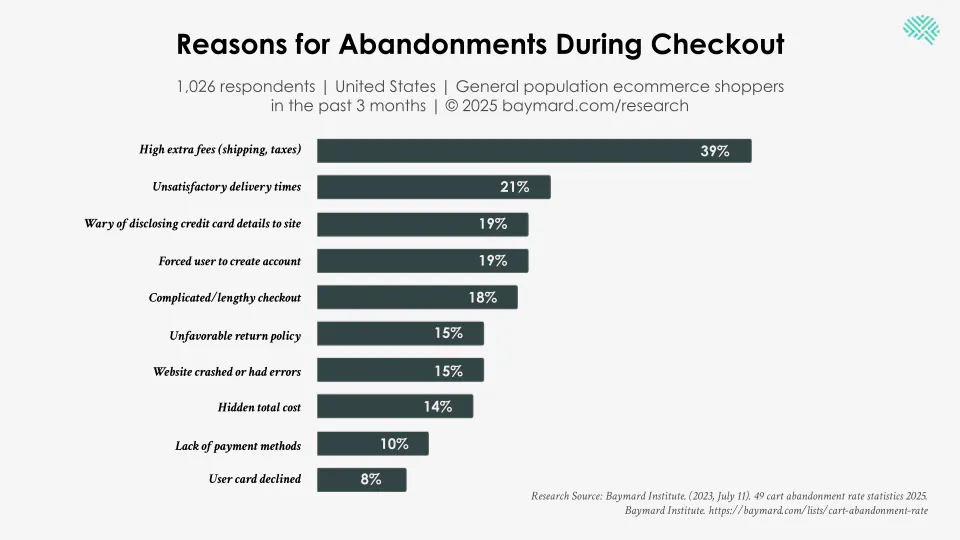
When a system struggles to calculate shipping, apply discounts, or verify stock in real-time, the checkout process becomes slow and complicated. When different services can't agree on the final price, "hidden costs" appear at the last second. These are not just user interface problems; they are manifestations of a system that lacks a coherent, trustworthy state. The result is lost sales and, more damagingly, a loss of trust.
When these failures become catastrophic, the financial impact can be staggering. Let's look at some real-world examples of major companies whose state management failures led to massive losses.
18 famous ERP disasters, dustups, and disappointments | CIO
This article from CIO magazine catalogs some of the most infamous Enterprise Resource Planning (ERP) system failures. These examples provide a stark illustration of what happens when the systems that manage a company's core state go wrong.
Please read the following three case studies from the article: The story of Mission Produce (case #2), where an ERP failure led to a loss of inventory control and a $22.2 million drop in gross profit. The Haribo example (case #6), which shows how an inability to track inventory led to a 25% decline in sales. The classic Hershey's disaster (case #18), where a rushed implementation made it impossible to process over $100 million in orders during their busiest season.
The cases of Hershey's, Haribo, and Mission Produce are powerful because they draw a straight line from an internal system failure—the inability to know the state of inventory—to a direct and quantifiable loss of revenue. Hershey's couldn't ship products it had in stock. Mission Produce didn't know which avocados were ripe. Haribo couldn't get its gummy bears to stores. In each case, a breakdown in state management led to a broken promise to the customer.
The Hidden Costs: Manual Intervention and the "Workaround Tax"
While lost sales are highly visible, they are often just the tip of the iceberg. Beneath the surface lies a massive, hidden cost: the human effort required to compensate for failing systems. This is the world of manual workarounds, spreadsheets, and institutional knowledge that keeps a "mostly working" system from collapsing entirely.
The scale of this problem is vast. Many companies operate without a clear, unified view of their own processes, a symptom of scattered and unmanaged state.
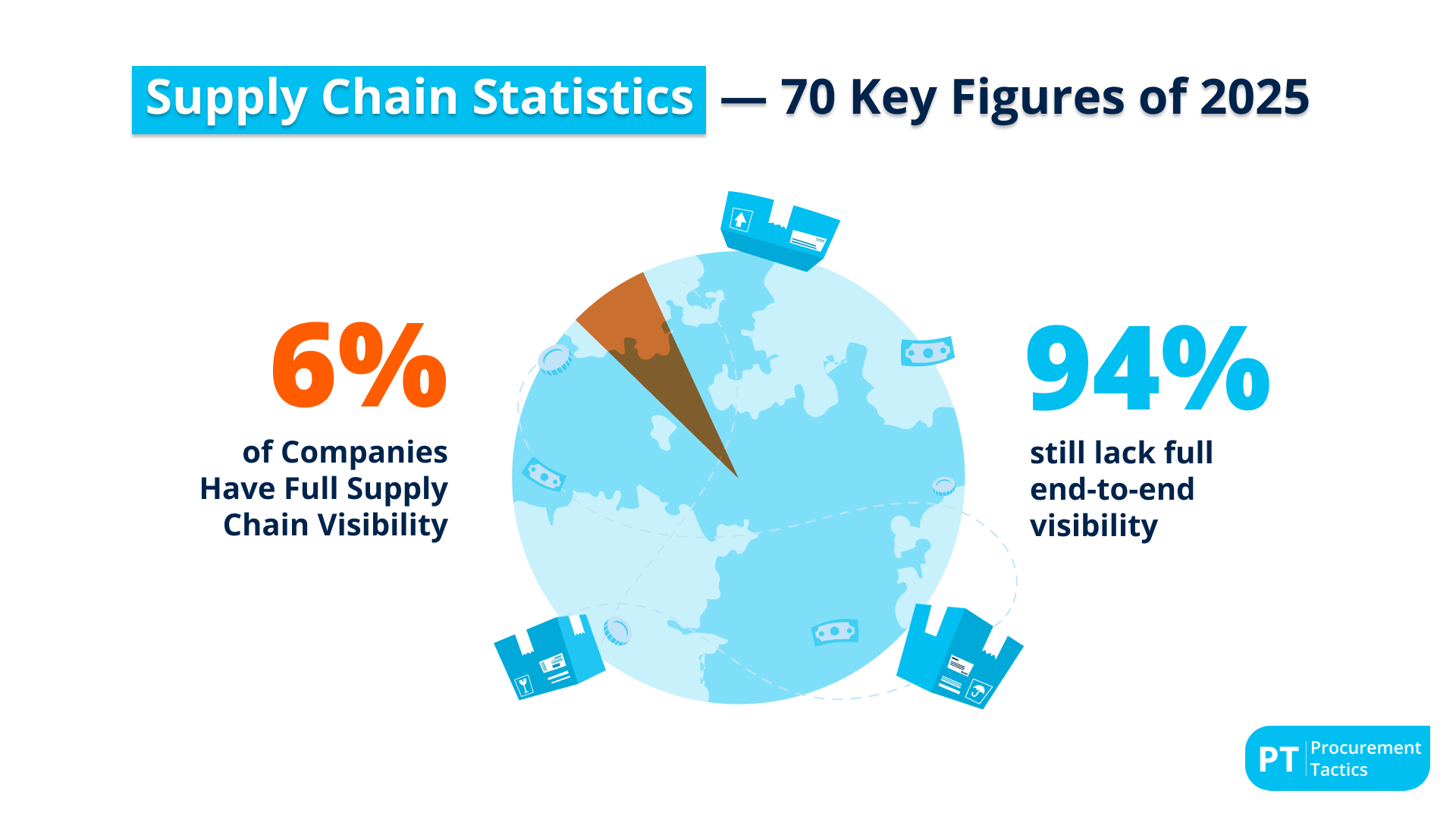
This lack of visibility forces employees to become human glue, holding broken processes together. The following article brilliantly dissects this phenomenon.
The Hidden Chaos Behind 'Mostly Working' Distribution Systems - Bizowie
This article from Bizowie explores the disconnect between what leadership sees as functional systems and the daily chaos experienced by operational staff. It provides an excellent breakdown of the manual processes that mask deep-seated system failures.
Please read the sections "The Illusion of Functionality" and "The Architecture of Workarounds." As you read, focus on the specific examples of workarounds, such as the "actual cost" spreadsheet and the "inventory location" tracker. These are real-world examples of state being managed outside the core system, leading to inefficiency and risk.
As the article describes, this "architecture of workarounds" creates a shadow IT infrastructure built on spreadsheets, email chains, and the memories of key employees. This isn't just inefficient; it's expensive. Every hour an employee spends manually reconciling data, cross-referencing spreadsheets, or chasing down information is an hour they aren't spending on value-adding work. This accumulated waste is what the author terms the "workaround tax."
The same article provides a framework for quantifying these hidden costs.
The Hidden Chaos Behind 'Mostly Working' Distribution Systems - Bizowie
Now that you've seen the types of workarounds, let's look at how they translate into measurable costs.
Read the section "The Accumulated Costs of Hidden Chaos." Pay close attention to the subsections "Labor Cost Premium," which quantifies the cost of wasted time, and "Error Costs That Compound," which details the financial impact of mistakes caused by bad data.
The costs break down into two main categories:
- Labor Cost Premium: This is the direct cost of salaries for time spent on non-productive work. As the article estimates, this can amount to hundreds of thousands of dollars annually even for a mid-sized company.
- Compounding Error Costs: Manual processes are error-prone. A picking error in a warehouse or a pricing mistake on an invoice creates a cascade of costs, including corrective shipping, customer service time, and customer goodwill.
These costs are insidious because they are rarely tracked on a balance sheet under "state management failure." They are buried in general labor costs, operational expenses, and cost of goods sold, making them invisible to leadership until a crisis occurs.
The Strategic Cost: Innovation Paralysis
Perhaps the highest and most overlooked cost of poor state management is the inability to evolve. When your current systems are a fragile mess of workarounds, any attempt at strategic innovation becomes prohibitively difficult and risky.
The "Hidden Chaos" article you just read touches on this under the heading "Innovation Paralysis." Initiatives like launching an e-commerce platform, expanding to new markets, or implementing warehouse automation become impossible. You can't build a real-time e-commerce site on top of an inventory system that relies on a daily-updated spreadsheet. You can't automate a warehouse where the system's location data is only 30% accurate.
The "ERP Disasters" article provides a stark example of this.
18 famous ERP disasters, dustups, and disappointments | CIO
Let's look at one final example that perfectly illustrates innovation paralysis.
Read the brief case study on Leaseplan (case #7).
Leaseplan wrote off over €100 million because their monolithic system "hindered its ability to make incremental product and service improvements." They were paralyzed, unable to adapt to a changing digital world because their core state management platform was too rigid. This is the ultimate cost: your business becomes frozen in time while your competitors, with more agile systems, race ahead.
In our previous lesson, you saw how the Saga pattern uses compensating actions to gracefully handle failures in multi-step processes (like cancelling a hotel booking if the flight booking fails). The companies in these examples lacked this capability. They couldn't logically "undo" parts of a failed process, leading to financial write-offs, lost inventory, and operational collapse. Their state was unmanaged, and the business paid the price.
Conclusion
In this lesson, we've moved beyond the technical symptoms of poor state management to its concrete and often staggering business costs. These consequences are not just abstract "technical debt"; they are real losses that impact revenue, operational efficiency, and long-term strategy.
Here are the key takeaways:
- Lost Revenue & Broken Trust: System failures that impact the customer experience, such as incorrect inventory or a clunky checkout, lead directly to lost sales and erode the trust you've built through marketing efforts.
- Manual Intervention & Wasted Labor: "Mostly working" systems are often propped up by a hidden army of employees performing manual workarounds. This "workaround tax" represents a significant and continuous drain on labor costs.
- Innovation Paralysis: The most strategic cost is the inability to grow and adapt. Fragile, chaotic systems make it impossible to pursue new initiatives like e-commerce or automation, leaving the business vulnerable to more agile competitors.
These high stakes are precisely why a disciplined approach to state management is not an optional engineering exercise but a fundamental business necessity.
Having firmly established the "why," our next lesson will begin to explore the "how." We will introduce the core concepts of a state machine, defining what constitutes an effective state, what triggers a transition, and the role of events. This will be our first step toward designing the robust eCommerce shipment engine that will serve as our project for this course.