In our last lesson, we traced the long and contentious journey that led to the updating of the National Register of Citizens (NRC) in Assam. We saw how it was born from a century of demographic anxiety, crystallized in the 1985 Assam Accord, and ultimately driven to completion by a Supreme Court mandate. You now have a firm grasp of the historical, political, and legal foundations of this massive exercise.
Today, we turn from the 'why' to the 'what next'. This lesson addresses the direct human consequences for the 1.9 million people who found their names missing from the final list published on August 31, 2019. Our goal is to understand the perilous legal reality they were thrust into. We will dissect the process they face, focusing on the controversial role of Foreigners' Tribunals and exploring the concept of "statelessness" not as a simple binary, but as a complex and precarious state of existence.
The Human Cost of a List
For the 33 million people in Assam who submitted their documents, the final NRC list was a moment of reckoning. For the 1.9 million who were excluded, it marked the beginning of a profound and terrifying uncertainty. It's crucial to understand that exclusion from the NRC did not automatically brand someone a "foreigner." Instead, it stripped them of the presumption of citizenship and forced them to prove their identity all over again in a new, and even more daunting, legal arena.
The immediate aftermath was one of chaos and heartbreak. The NDTV report, filmed on the day the list was released, captures this initial shock.
2 Million People From Assam Now "Stateless"
This video provides a sense of the scale of the exercise and, more importantly, offers ground-level stories of its arbitrary and painful outcomes.
Please watch the first few minutes. First, the introduction sets the scene, explaining that the 1.9 million excluded are not yet foreigners but must now approach the Foreigners' Tribunals. Then, pay close attention to the report from the ground, which shows the immediate human impact, such as a 71-year-old man being excluded while his siblings were included using the very same ancestral documents.
As the video illustrates, the NRC process, despite its seemingly bureaucratic nature, sliced through families and communities, often with little discernible logic. The struggle for citizenship in Assam is a battle fought with paper, where minor discrepancies in documents decades old can have life-altering consequences.
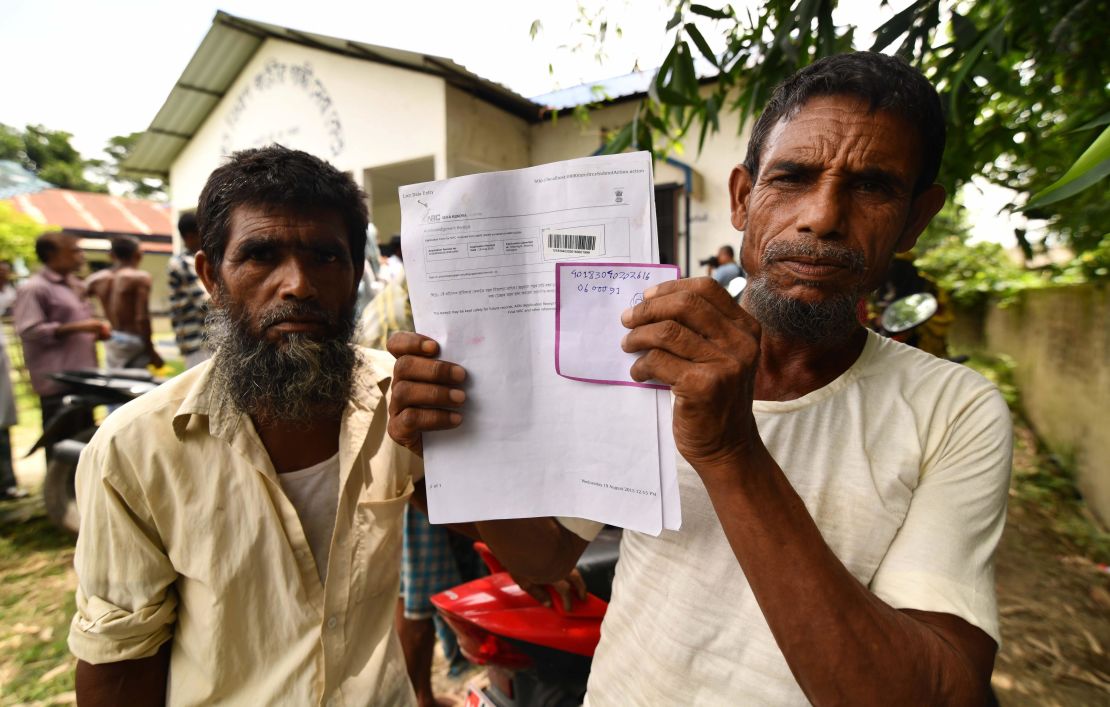
The next step for these 1.9 million individuals is an appeal to a unique set of quasi-judicial bodies: the Foreigners' Tribunals (FTs). This is where the definitive judgment on their citizenship is made.
The Foreigners' Tribunals: A System Under Scrutiny
To understand the fate of the NRC-excluded, we must critically examine the architecture and functioning of the Foreigners' Tribunals. These bodies are not part of the regular judicial hierarchy. As you'll see, their legal foundation, the composition of their members, and their operating procedures are a matter of intense legal and academic debate.
A detailed law review article, "An Assessment of Foreigner Tribunals in the Indian State of Assam," provides a rigorous critique of the FT system. Its analysis is key to understanding the institutional framework that the NRC-excluded must now navigate.
[PDF] an assessment of foreigner tribunals in the indian state of assam
This article dissects the legal and procedural basis of the FTs. Given your interest in structural analysis, this reading will provide a granular look at the institutional machinery deciding people's citizenship.
Please read the following sections: Start with "THE FT IN ASSAM" and read the subsection on establishment and member selection. Focus on two key arguments: The FTs are created by an executive order (the Foreigners (Tribunals) Order, 1964), not an Act of Parliament, which raises questions about their constitutional standing and lack of legislative oversight. The qualification for members is a vague "judicial experience," a standard that, in practice, has allowed retired bureaucrats and lawyers with little judicial training to preside over these life-altering cases. Note the critique that members' contract renewals can depend on the number of 'foreigners' they declare, compromising their decisional autonomy. Next, read the section "PROCEDURE FOLLOWED BY FTS", focusing on the subsection on due process. This part is critical. Pay attention to: The reverse burden of proof: Under Section 9 of the Foreigners Act, 1946, the onus is entirely on the accused person to prove they are not a foreigner. The state has no obligation to prove they are. The high number of ex parte decisions, where people are declared foreigners without even being present, often due to notices not being served properly. The arbitrary rejection of evidence for minor errors, like spelling mistakes in names on decades-old documents.
The picture that emerges from this analysis is of a system stacked against the accused. The combination of a reversed burden of proof, the immense difficulty in procuring and verifying decades-old documents, poor legal aid, and the questionable training and independence of tribunal members creates a process that many legal scholars argue is "designed to exclude."
Life in the "Zone of Statelessness"
What happens when a person fails to prove their citizenship before an FT? The immediate consequence is not necessarily deportation. Bangladesh has never officially acknowledged that these individuals are its citizens, and India has no repatriation treaty for them. As a result, those declared "foreigners" are cast into a legal void.
Scholar Angshuman Choudhury has termed this condition a "zone of statelessness". It is not a complete and final revocation of rights but a liminal state—a grey area of perpetual uncertainty and suspended rights, where one is neither a citizen nor, in a practical sense, a foreigner who can be deported.
The following flowchart illustrates the various routes into this precarious situation.

This "zone of statelessness" has severe, tangible consequences that go far beyond a legal designation.
- Civil Death and Economic Blockade: The most immediate impact is a kind of civil death. The blog post "Understanding the Zone of Statelessness in Assam" highlights a critical example.
Understanding the Zone of Statelessness in Assam
This piece introduces the analytical concept of a "zone of statelessness" and details its real-world manifestations.
Please read the section that begins with the heading "Beyond these, the “zone of statelessness” is also manifested in tangible material forms." Focus on the example of the Aadhaar biometric data being locked. This is a powerful illustration of how a legal status translates into an inability to access essential services, from subsidized food rations to bank accounts.
- Financial Ruin: The legal process itself is ruinous. Individuals, who are often daily wage labourers, must spend vast sums on lawyers and travel, often selling their land and meagre assets to fund the fight. The NDTV report on Chibita Begum, a woman who was declared a foreigner despite producing 15 different documents, powerfully illustrates this ordeal.
With Assam Citizens' List Stuck In Limbo, 19 Lakh Languish In Uncertainty
This follow-up report provides a heartbreaking case study of the human and financial toll of fighting a case in the FTs.
Watch the first three minutes of the video . Note how Chibita Begum, a daily wage labourer, had to sell her land to pay for legal fees, only to have all her documents rejected. This exemplifies the vulnerability of the poor and illiterate within this complex legal maze.
- Detention and Surveillance: For those formally declared as foreigners by the FTs, the next step is often indefinite detention in one of Assam's detention centers, which are typically housed within existing prisons. While the Supreme Court has allowed for conditional release after a certain period, those who are out on bail live under a regime of constant surveillance, often required to report to a local police station weekly, further disrupting their ability to earn a livelihood.
This entire system—the NRC exclusion, the flawed FT process, and the resulting state of limbo—creates not just stateless individuals, but a population living in a permanent state of fear, precarity, and social exclusion within their own homeland.
Conclusion
In this lesson, we have moved from the abstract legal history of the NRC to its concrete and devastating human impact. We have examined the machinery of disenfranchisement and the lives it has upended.
The key takeaways are:
- The 1.9 million people excluded from the NRC were not automatically made stateless but were forced into a perilous legal battle to prove their citizenship before Foreigners' Tribunals.
- The Foreigners' Tribunals are quasi-judicial bodies whose legal legitimacy and procedural fairness are heavily contested. They operate with a reverse burden of proof, placing an almost impossible evidentiary load on the poorest and most marginalized individuals.
- The outcome for those who lose their cases is not deportation but a descent into a "zone of statelessness"—a legal void characterized by the loss of rights, economic disenfranchisement, and the constant threat of indefinite detention.
Having explored the human consequences, our next lesson will shift to the political dimension. We will analyze the surprising political fallout of the Assam NRC, exploring why its final list, the product of so much effort and conflict, ultimately left every major political stakeholder—including the BJP, which had championed it—deeply dissatisfied.