Introduction
In our last lesson, we diagnosed the 'Accidental Adversaries' archetype, where two parties, often with shared interests, become locked in a cycle of unintentional opposition. We developed a communication strategy to resolve this dynamic within a Vee relationship by making the system's structure visible and realigning the parties toward a common goal.
Today, we scale up from a conflict between two parties to a systemic problem involving many. We will analyse the 'Tragedy of the Commons', a dynamic where multiple individuals, each acting rationally in their own self-interest, end up depleting a shared, limited resource, leading to a disastrous outcome for the entire group.
Your learning outcome for this lesson is to analyse a 'Tragedy of the Commons' dynamic and evaluate the suitability of education, regulation, or privatisation as a solution. Drawing on your background as a statistician, you'll recognise this as a multi-player game with a predictable, yet suboptimal, equilibrium. We will apply this archetype to the world of fashion and lingerie design, exploring how the relentless pursuit of individual brand success can erode the very foundations of the industry.
1. Understanding the 'Tragedy of the Commons' Dynamic
The 'Tragedy of the Commons' was popularised by ecologist Garrett Hardin in 1968. He used the metaphor of herders sharing a common pasture. Each herder, acting rationally, adds more and more animals to their herd to maximise their personal gain. While each herder reaps the full benefit of their own additional animal, the cost of overgrazing is shared among all. The inevitable result is the destruction of the pasture, leaving every herder worse off.
To get a clear and concise overview of this concept, please watch the following video.
What is the tragedy of the commons? - Nicholas Amendolare
This TED-Ed video, 'What is the tragedy of the commons?', provides an excellent introduction using a simple fish pond analogy to explain the core mechanics of the archetype.
Please watch from the beginning until 03:59. Pay attention to: The fish pond thought experiment and its mathematical logic. The definition of the tragedy: how short-term self-interest conflicts with the long-term common good. The real-world examples provided, such as antibiotic resistance and pollution.
The video illustrates the fundamental tension: what is rational for the individual is irrational for the group. This structure can be visualized with a causal loop diagram.

As you can see from the diagram, the system consists of:
- Reinforcing Loops (R): Each individual's activity generates gains for them, which incentivizes more activity. For herder A, more cattle lead to more profit, which funds the purchase of even more cattle.
- A Balancing Loop (B): The total activity from all individuals depletes a common resource. As the resource becomes scarcer, the gain from each individual activity diminishes, and eventually, the resource is exhausted, collapsing the gains for everyone.
The "tragedy" occurs because the reinforcing effects of individual gain are felt quickly and directly, while the balancing effects of resource depletion are delayed and distributed.
2. Application: The Fashion Industry as a Commons
The 'Tragedy of the Commons' isn't limited to physical resources like pastures or fish. It can apply to intangible resources as well. Let's analyse the fashion industry, your area of professional interest, through this lens.
The "commons" in fashion is not a single entity, but a collection of shared, limited resources:
- Environmental Capacity: The planet's ability to provide raw materials and absorb the waste from textile production and disposal.
- Consumer Attention and Trust: A finite pool of interest and belief in brands.
- Aesthetic Trends: The shared pool of styles and ideas that define an era.
- Ethical Labor: The global workforce available to produce garments under humane conditions.
The "herders" are the individual fashion brands, from fast-fashion giants to independent designers. Each brand acts in its rational self-interest to maximise profit and market share. They do this by:
- Increasing the volume and speed of production (fast fashion).
- Rapidly cycling through micro-trends to encourage constant consumption.
- Outsourcing to regions with the lowest possible labor and environmental costs.
The result is a classic tragedy:
- The commons is depleted: The environment is polluted with textile waste and toxic dyes. Consumers are overwhelmed and become cynical. Trends become meaningless and accelerate into obsolescence. Labor standards are driven down in a race to the bottom.
- The system collapses: The perceived value of clothing plummets, brand loyalty erodes, and the entire industry faces a crisis of sustainability and legitimacy.
This tension between commerce and sustainability is a major source of conflict and activism within the industry.
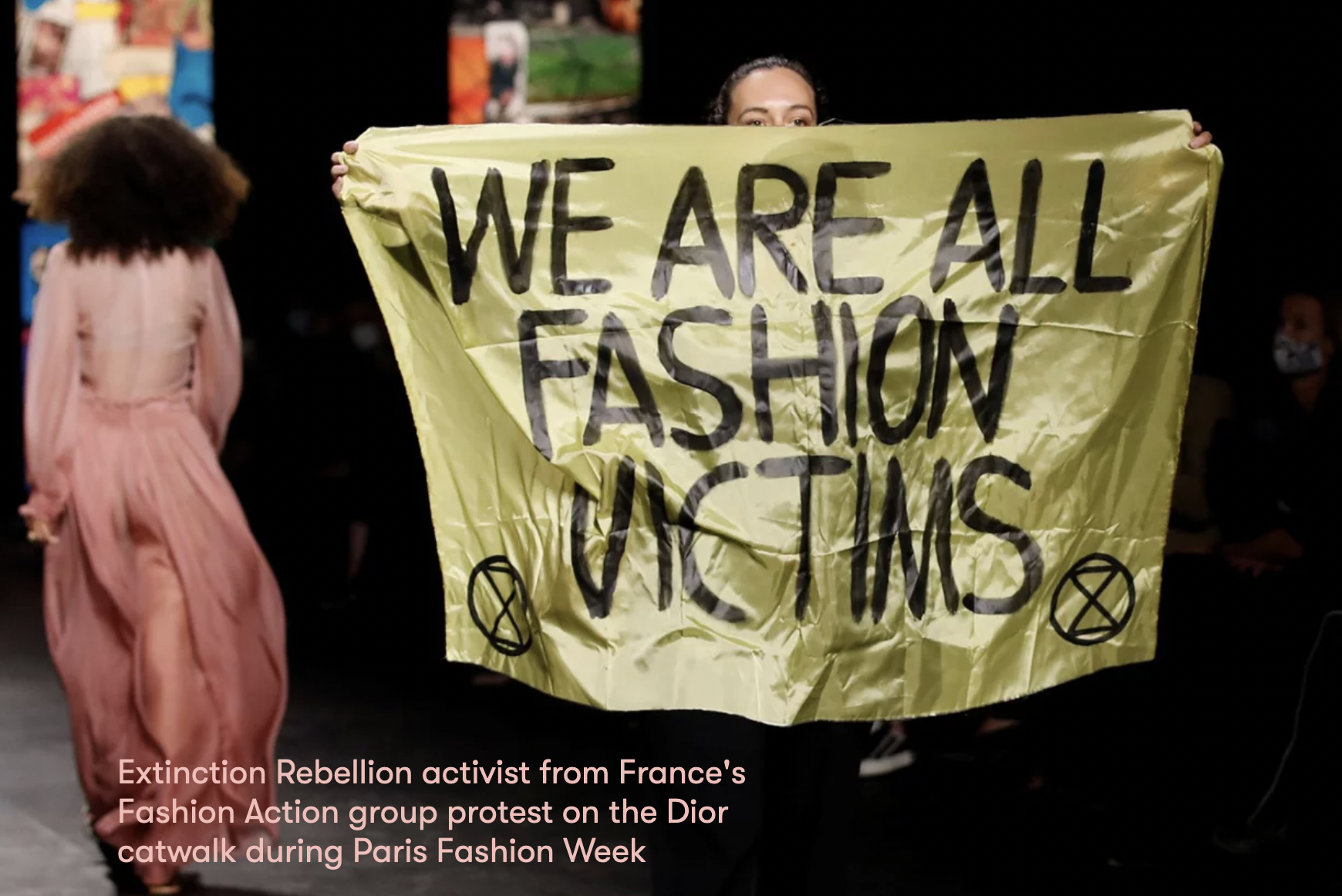
3. Evaluating the Solutions
Hardin bleakly concluded that "freedom in a commons brings ruin to all" and proposed two solutions: privatization or "mutual coercion, mutually agreed upon" (i.e., government regulation). Later, Nobel laureate Elinor Ostrom showed that a third way—community self-governance—is also possible.
Let's evaluate these three solutions in the context of the fashion industry's tragedy of the commons. For a robust framework, we'll consult an academic paper that summarises the advantages and disadvantages of each approach.
[PDF] Understanding Commons and Anticommons in different economic ...
This paper, 'Understanding Commons and Anticommons in different economic contexts', provides a concise and powerful comparison of the main solutions to the Tragedy of the Commons.
Please locate and study 'Table 3: Advantages and disadvantages of solutions to the Tragedy of the commons' on page 18 of the PDF. This table clearly lays out the pros and cons of solutions based on Markets, the State, and Institutional arrangements.
Now, let's use the insights from that table to evaluate each solution.
A. Privatisation (The Market Solution)
This solution involves assigning private property rights to the common resource, forcing the owner to internalize the costs of its use.
- How it applies to fashion: This is conceptually difficult for intangible commons like "trends." For tangible aspects, it could mean patents on sustainable materials or processes. For example, a company could develop and "own" a revolutionary closed-loop recycling technology.
- Advantages (from Table 3): If a brand owns a sustainable technology, its private costs (R&D) and social costs (less pollution) become aligned. It creates a market-based incentive for responsible behaviour.
- Disadvantages (from Table 3): This leads to a concentration of resources. If one company owns the patent for the only truly sustainable fabric, they could create a monopoly, making sustainability prohibitively expensive for others. It doesn't solve the core problem of overconsumption, it just changes who profits from it.
B. Regulation (The State Solution)
This approach involves a central authority (the government) imposing rules on everyone to limit the use of the commons.
- How it applies to fashion: This could take the form of:
- Bans on specific toxic chemicals used in dyeing.
- "Extended Producer Responsibility" (EPR) laws that make brands financially responsible for the collection and recycling of their clothes at the end of life.
- Carbon taxes on manufacturing and shipping.
- Strict import regulations tied to labor standards.
- Advantages (from Table 3): It imposes system-wide change and forces all "herders" to play by the same rules, preventing a race to the bottom. It can directly align private costs with social costs (e.g., a pollution tax).
- Disadvantages (from Table 3): It requires high monitoring and enforcement costs (how do you track every garment from every factory?). It can lack flexibility, imposing one-size-fits-all rules that may stifle innovation. For instance, a rigid regulation might unintentionally outlaw a new, even more sustainable process that wasn't anticipated by lawmakers.
C. Self-Governance (The Institutional / Education Solution)
This approach, championed by Elinor Ostrom, argues that communities can—and often do—create their own rules to manage a commons successfully, without needing a private owner or a top-down government.
Ending The Tragedy of The Commons | Elinor Ostrom | Big Think
To understand the power of this third way, let's hear from Elinor Ostrom herself. In this clip, she directly challenges Hardin's pessimistic outlook.
Please watch the first 1 minute and 43 seconds of this video. Notice how she reframes the problem: people are not 'trapped'. They can self-organize to create complex, polycentric solutions.
- How it applies to fashion:
- Industry-led Coalitions: Groups like the Sustainable Apparel Coalition where brands collaborate to create shared measurement tools (like the Higg Index) for environmental and social impact.
- Consumer Education: The "Slow Fashion" movement, which acts to educate consumers to buy fewer, higher-quality, more durable items, thereby reducing demand-side pressure.
- Shared Norms: Brands collectively agreeing to move away from destructive practices like destroying unsold inventory.
- Advantages (from Table 3): This approach is flexible and built on shared knowledge. It fosters collaboration rather than just compliance. By involving the users of the commons (the brands and designers) in creating the rules, the solutions are often more practical and effective.
- Disadvantages (from Table 3): This is very difficult to achieve and maintain at the global scale of the fashion industry. It relies on trust, monitoring by the community, and shared norms, which are easily undermined by "free-riders"—brands that ignore the voluntary rules to gain a short-term advantage.
As Ostrom suggests, there is no simple fix. A real solution likely involves a "polycentric" mix of all three: market incentives for new sustainable technologies, sensible government regulations to set a floor for behaviour, and strong industry institutions to foster collaboration and educate consumers.
Conclusion
Today we've unpacked the 'Tragedy of the Commons', a powerful archetype that explains how individual rationality can lead to collective disaster. By applying it to the fashion industry, we've seen how the competitive drive for profit can deplete the shared resources of environmental stability, consumer trust, and ethical production.
Key Takeaways:
- The 'Tragedy of the Commons' occurs when individuals, acting in their own self-interest, overuse a shared, limited resource. The structure involves reinforcing loops of individual gain that overpower a delayed, balancing loop of resource depletion.
- In fashion, the "commons" includes environmental capacity, consumer attention, and ethical labor, which are eroded by the pursuit of fast, cheap production.
- There are three primary solutions, each with trade-offs:
- Privatisation aligns costs but can concentrate power.
- Regulation enforces system-wide change but can be rigid and expensive to monitor.
- Self-Governance/Education is flexible and collaborative but is difficult to scale and vulnerable to free-riders.
- Effective solutions often require a polycentric approach, blending elements of market mechanisms, state regulation, and institutional cooperation.
Next Lesson Preview:
In our next lesson, we will examine the 'Shifting the Burden' archetype. This dynamic occurs when a simple, symptomatic "fix" is used to solve a problem, which diverts attention and resources away from a more fundamental, long-term solution. You'll see how some of the "solutions" to the Tragedy of the Commons, if not carefully designed, can themselves become examples of shifting the burden.