Hello and welcome back.
In our last lesson, we focused on "Put to Another Use," applying it to generate novel ideas for a cleavage-enhancing bra by repurposing existing materials and concepts. We've journeyed through S-C-A-M-P of our SCAMPER framework.
Today, we move to the sixth technique: Eliminate. The learning outcome for this lesson is to apply the Eliminate technique to simplify a concept by removing non-essential elements. As we alternate contexts, we will return to your interest in relationship dynamics and apply this technique to simplify a complex social structure.
1. Defining the "Eliminate" Technique
The "Eliminate" technique is a powerful tool for simplification and refinement. It prompts you to question every component, feature, rule, or step in a process, product, or idea. The goal is to identify and remove anything that is non-essential, leading to a more streamlined, elegant, and often more effective result.
To begin, let's read a concise definition of this technique.
A Guide to the SCAMPER Technique for Design Thinking
The following guide to SCAMPER provides a clear and practical set of questions for the 'Eliminate' technique. It will help frame our thinking for the rest of the lesson.
Please read the section under the subheading 'Eliminate or elaborate'. Pay close attention to the guiding questions, such as 'What would happen if we removed this part?' and 'Do we need this specific part?'.
As the reading suggests, elimination forces you to confront assumptions about what is truly necessary. It can be applied to:
- Physical parts: Removing a component from a product.
- Process steps: Deleting a stage in a workflow.
- Rules or constraints: Getting rid of a guideline or limitation.
- Abstract concepts: Questioning a core assumption or belief.
The principle is famously captured by Antoine de Saint-Exupéry: "Perfection is achieved, not when there is nothing more to add, but when there is nothing left to take away."
2. Elimination in Design and Analysis
In design, elimination is key to minimalism and elegance. In your hobby of lingerie design, for instance, removing seams, underwires, or excess ornamentation can lead to a more comfortable and modern garment. A study on fashion design students found "eliminate" to be one of the most dominant techniques for creating a "simple yet fascinating look."
Let's look at a concrete example of this in action.
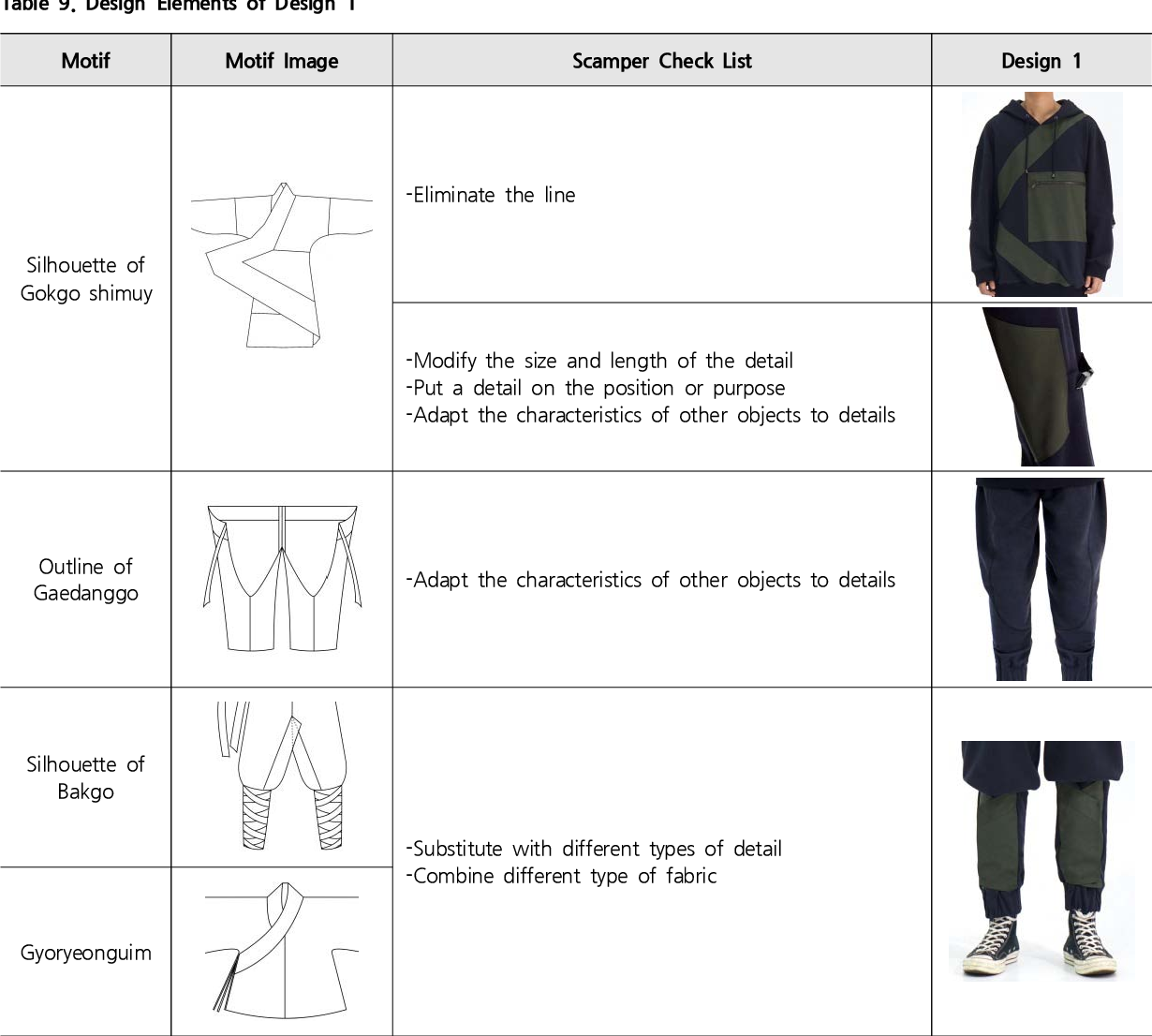
From your background in statistics, this is directly analogous to the principle of parsimony in model building. When you build a regression model, you often start with many potential predictor variables and then systematically eliminate those that are not statistically significant. This doesn't weaken the model; it strengthens it by reducing complexity, improving its ability to generalize, and making it easier to interpret. The "Eliminate" technique applies the same logic to creative and social problem-solving.
3. Application: Simplifying a "Vee" Relationship
Now, let's apply this to the complex domain of relationship dynamics. We will focus on the "Vee" relationship structure, which you've expressed interest in.
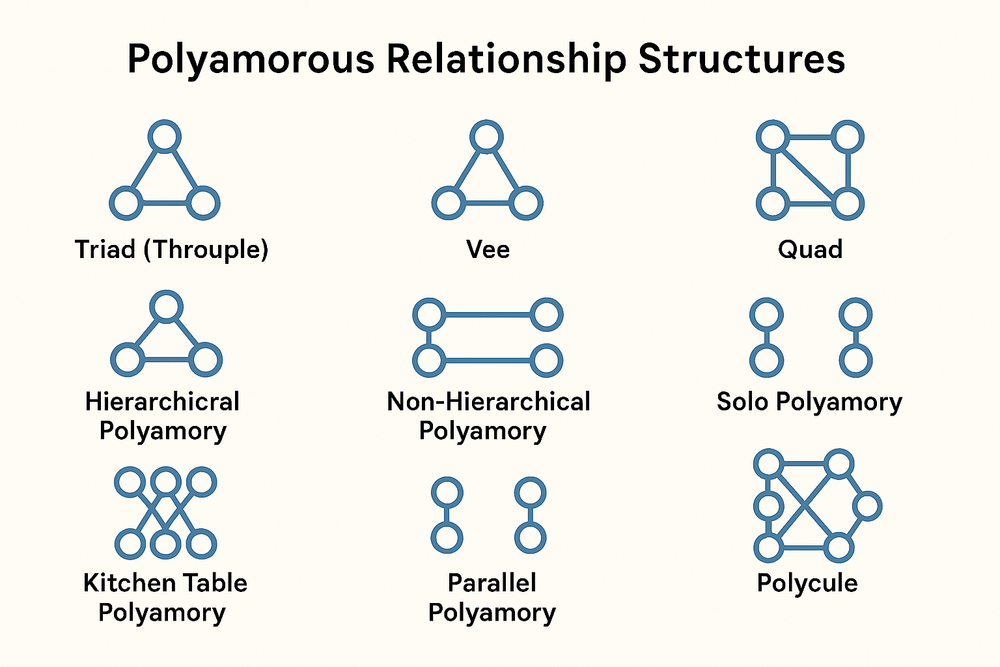
The Scenario
Imagine a Vee relationship consisting of a husband (Hinge), a wife (Partner A), and a metamour (Partner B). To manage potential jealousy and ensure fairness, they have established a detailed set of rules and expectations:
- A rigid, alternating weekly schedule for date nights.
- A rule that the hinge must not discuss problems from one relationship with the other partner.
- An unspoken expectation that the wife and metamour should become good friends to make holidays and social events easier.
- A rule that all communication between the wife and metamour must be facilitated by the hinge to prevent misunderstandings.
While well-intentioned, these rules have created a sense of rigidity, pressure, and emotional distance. The system is complex and burdensome.
Your Task: Ideation through Elimination
Using the "Eliminate" technique, brainstorm how removing some of these rules or expectations could simplify the dynamic and potentially improve the relationships. Consider the guiding questions: What would happen if we removed this? Do we really need it?
Take about 15 minutes to analyze the scenario and answer the following questions.
- Eliminate a scheduling rule: What might happen if the rigid, alternating schedule was eliminated in favor of more spontaneous or needs-based planning?
- Eliminate an expectation: What could be the positive and negative consequences of eliminating the unspoken expectation that the wife and metamour must become close friends?
- Eliminate a communication barrier: If you eliminated the rule that the hinge must mediate all communication, what new possibilities or challenges could arise for the wife and metamour?
- Eliminate an information barrier: What would happen if you eliminated the rule that the hinge cannot discuss relationship problems with the other partner? (Consider both positive and negative outcomes).
(Please take your time to complete this analytical exercise before moving on.)
Example Analysis
Let's compare your analysis with some potential lines of thought.
-
Eliminating the rigid schedule:
- Potential Outcome: Removing this rule could replace a feeling of obligation with one of desire and flexibility. Partners could spend time together when it feels most natural and needed, rather than because it's a designated day. This could reduce resentment if one partner needs more support during a given week. However, it could also create uncertainty and potential for conflict if one person feels consistently deprioritized. It shifts the problem from one of fairness to one of attunement.
-
Eliminating the "must be friends" expectation:
- Potential Outcome: This could be a significant source of relief. It removes the pressure to perform a friendship that isn't organic. It allows the wife and metamour to define their own relationship, which might be one of respectful distance (Parallel Polyamory) or a different kind of connection that isn't "best friends." This act of elimination validates their individual feelings and creates space for a more authentic relationship to emerge, whatever form it takes.
-
Eliminating mediated communication:
- Potential Outcome: This empowers the wife and metamour to build their own rapport, independent of the hinge. It reduces the hinge's emotional labor of being a constant go-between. They could establish their own communication style and boundaries, potentially leading to a stronger and more resilient "polycule." The risk is that miscommunications could escalate without the hinge to mediate, but it also creates the opportunity for a more mature and direct dynamic.
-
Eliminating the information barrier:
- Potential Outcome: This is a complex one. Eliminating this rule could foster a more open and integrated family-like system where partners can offer each other support and advice, creating a "team" feeling. It acknowledges that issues in one relationship inevitably affect the whole system. However, it could also severely breach privacy, making partners feel exposed or that their relationship issues are being triangulated. This act of elimination forces a deeper conversation about what boundaries around privacy and support are truly needed.
This exercise demonstrates that elimination isn't about thoughtless destruction. It's a precise analytical tool to test the necessity of each part of a system.
Conclusion
In this lesson, we explored the "E" in SCAMPER: Eliminate. We saw how this technique of simplification and reduction can be a powerful engine for creativity and problem-solving.
Your key takeaways are:
- Simplicity as a Goal: The "Eliminate" technique challenges you to find elegance and efficiency by removing non-essential elements, whether from a product, a process, or a social agreement.
- Challenging Assumptions: By asking "Do we need this?", you can uncover and dismantle outdated or counterproductive rules and assumptions.
- Application to Social Systems: We applied this to a "Vee" relationship, demonstrating how eliminating rigid rules and unspoken expectations can reduce pressure and create space for more authentic and resilient connections.
In our next and final lesson on the SCAMPER framework, we will cover the "R" for Reverse. We'll examine how inverting a process or reversing cause and effect can unlock startlingly new ideas. We will return to the context of lingerie design to put this final technique into practice.