Introduction
Hello! In our last lesson, we built a compelling case for investing in preventative quality control, even in the face of a very low defect rate. We focused on the Prevention Paradox, where the very success of a system can lead to its defunding. Your core task was to make the invisible benefits of prevention visible and financially tangible.
Today, we turn to a related but distinct challenge: what happens when, instead of a lack of negative events, we are faced with an overabundance of positive options? This lesson tackles the 'Paradox of Choice.' Your goal is to analyse this phenomenon and develop strategies to avoid the decision paralysis that comes with having too many options. We will explore how this paradox affects both professional decisions, like developing a product line, and personal ones, such as navigating relationship agreements.
1. Understanding the Paradox: When More is Less
The conventional wisdom in Western societies is that to maximise well-being, we must maximise individual freedom, and to do that, we must maximise choice. However, a wealth of psychological research suggests there's a tipping point where more choice stops being liberating and starts becoming debilitating.
To get a foundational understanding of this concept, please watch the following highly influential TED Talk by psychologist Barry Schwartz.
The paradox of choice | Barry Schwartz | TED
In 'The paradox of choice', Barry Schwartz outlines why the explosion of choice in modern life can lead to paralysis, regret, and dissatisfaction.
Please watch from the beginning until the 16:54 mark. Focus on the three main negative consequences of excessive choice that he details: Paralysis (the inability to choose at all). Reduced satisfaction (due to opportunity costs, escalating expectations, and regret). Self-blame (attributing a bad outcome to your own 'poor' decision).
As Schwartz explains, the negative effects of choice overload are not just a feeling; they are driven by distinct psychological mechanisms:
- Decision Paralysis: The cognitive burden of evaluating too many options becomes so great that we default to making no choice at all. This was demonstrated in the Vanguard retirement plan study, where more fund options led to lower employee participation.
- Opportunity Costs: Every choice we make is also a choice not to do something else. The more attractive alternatives we reject, the more their appealing features detract from our satisfaction with our chosen option.
- Escalation of Expectations: When you have 100 options, you expect to find a perfect one. When your choice turns out to be merely "good," it feels like a disappointment compared to the perfection you anticipated.
- Regret and Self-Blame: With only one or two options, a bad outcome can be blamed on the world ("what could I do?"). With hundreds of options, a bad outcome is squarely your fault for failing to choose correctly.
Let's apply this to your two areas of interest.
Application to Lingerie Design
Imagine you are launching a new cleavage-enhancing bra. To give customers maximum choice, you decide to offer it on your website with the following customisable options:
- 20 different colours
- 5 fabric types (satin, cotton, lace, mesh, microfibre)
- 3 underwire styles (plunge, demi, full-coverage)
A customer lands on the product page and is faced with possible combinations. How might this lead to decision paralysis and reduced satisfaction for the customer?
Click here for an analysis.
A customer faced with 300 combinations may feel overwhelmed. The sheer effort required to mentally process the options can lead to website abandonment (decision paralysis). Even if she does make a purchase—say, a red satin plunge bra—her satisfaction might be lower. She might experience post-purchase regret, wondering if the blue lace version would have been better (opportunity cost). Her expectations for a "perfect" bra would be sky-high, so any minor imperfection in the one she chose would feel like a significant failure (escalation of expectations).Application to Vee Relationships
Now, consider the modern dating landscape, especially within non-monogamous communities where the pool of potential partners can seem vast.

When someone is seeking a new partner to join a relationship structure, an app like this presents a classic Paradox of Choice scenario. The seemingly endless scroll of profiles can trigger:
- Endless "Shopping": The belief that a "better" match is just one more swipe away can prevent a person from committing to or investing deeply in any single promising connection.
- Decision Fatigue: The mental energy spent swiping, messaging, and evaluating numerous candidates can be so draining that it leads to burnout and a withdrawal from dating altogether.
- Unrealistic Expectations: After seeing hundreds of profiles, one might form a composite "perfect partner" in their mind that no real person can live up to, leading to dissatisfaction with otherwise good matches.
2. Strategies for Taming the Choice Monster
Analysing the paradox is the first step; developing strategies to overcome it is the second. The good news is that since you have a statistician's appreciation for frameworks and rules, there are several structured approaches you can take.
Strategy 1: Shift from Maximizer to "Satisficer"
One of the most powerful concepts in managing choice is understanding your own decision-making style. Barry Schwartz categorises people into two groups: Maximizers and Satisficers.
The Paradox of Choice: Summary & Review - The Power Moves
This summary of Schwartz's book, 'The Paradox of Choice', provides a clear and concise definition of these two crucial personality types. Understanding this distinction is key to managing your response to choice.
Please read the section titled 'Maximisers VS Satisficers'. Pay close attention to the definitions of each type and why maximizers are more likely to suffer from regret.
To recap:
- Maximizers feel compelled to examine every option to ensure they are choosing the absolute best. This exhaustive search makes them highly susceptible to paralysis and regret.
- Satisficers have a set of criteria or a threshold of what is "good enough." They do their research, but once they find an option that meets their criteria, they choose it and stop looking.
The most effective strategy for happiness and efficiency is to consciously adopt a satisficer mindset, especially for decisions that are not life-altering.
Application (Vee Relationship): When deciding on house rules or a schedule for a vee relationship, a maximizer approach would be to try and create a "perfectly optimal" schedule that balances everyone's time and happiness down to the minute. This is a recipe for endless, exhausting negotiations. A satisficer approach is more practical: define the core needs (e.g., "each partner gets at least one dedicated date night a week," "we have one dinner together as a group per week"). The first schedule that meets these criteria is adopted, even if it's not "perfect." It's good enough.
Strategy 2: Curate and Constrain
If you can't change your mindset, change your environment. This involves artificially limiting the number of options you consider. This is about creating what Schwartz calls a "fishbowl"—a set of constraints that makes freedom manageable.
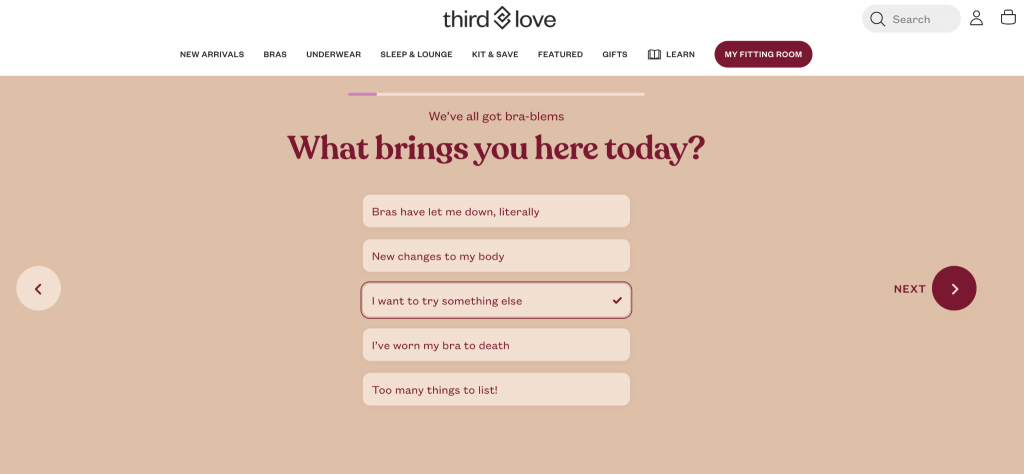
This "guided selling" approach is a form of curation. For yourself, you can apply this by:
- Defining non-negotiables first: Before you even look at options, write down your top 3-5 criteria.
- Filtering ruthlessly: Eliminate all options that do not meet your non-negotiables.
- Limiting your consideration set: Vow to only compare the first 3-5 options that pass your filter.
Strategy 3: The 37% Rule for Sequential Decisions
For certain decisions where options are presented one after another (like hiring, dating, or house-hunting), there is a mathematically optimal approach known as the "secretary problem" or the 37% rule. Given your background in probability, you may find this particularly interesting.
Why is this number everywhere?
This video from Veritasium, 'Why is this number everywhere?', explains the 37% rule in a clear and engaging way. It offers a powerful algorithm for balancing exploration with commitment.
Please watch from 12:03 to 16:35. The video explains the problem, the strategy, the underlying mathematics (which you might appreciate), and its application.
The rule is elegantly simple:
- Determine your search window (e.g., a number of candidates, a period of time).
- Explore and Reject: Spend the first 37% of that window exploring your options without making a commitment. This phase is purely for gathering data to set a benchmark for what "good" looks like.
- Commit: After the 37% mark, commit to the very first option you encounter that is better than any option you saw in the exploration phase.
Application (Lingerie Design): Imagine you're searching for a new lace supplier and have identified 20 potential vendors. According to the 37% rule, you would research the first vendors to establish your baseline for quality, price, and reliability. You would not sign a contract with any of them. Then, starting with vendor #8, you would select the very first one whose offering exceeds that of all the first seven you reviewed. This prevents both premature decisions and endless searching.
Conclusion
In this lesson, we dissected the Paradox of Choice, moving from the common belief that "more is better" to a more nuanced understanding of how too many options can be detrimental. We then developed a toolkit of practical strategies to manage this paradox effectively.
Key Takeaways:
- The Paradox of Choice: An abundance of options can lead to decision paralysis, reduced satisfaction, and self-blame.
- Psychological Drivers: This effect is caused by escalating expectations, opportunity costs, and the fear of regret.
- Strategic Solutions:
- Become a Satisficer: Choose what is "good enough" rather than agonising over finding the "best."
- Curate and Constrain: Artificially limit your options to a manageable number by defining your criteria upfront.
- Use the 37% Rule: For sequential decisions, use the first 37% of your search to explore and the remaining 63% to commit.
Next Lesson Preview:
We've explored paradoxes related to planning (Prevention) and options (Choice). In our next lesson, we'll shift our focus to paradoxes that challenge our very perception of problem-solving and risk. We'll begin with the Inventor's Paradox, which makes the counter-intuitive suggestion that solving a more general, ambitious problem can sometimes be easier than solving the specific, smaller one you started with.