Hello! Welcome to the third lesson in our module on Cross-Platform Strategy & Budgeting.
In our previous session, we designed a cohesive cross-platform remarketing sequence. We mapped out the "who," "when," and "where" of our advertising efforts, creating a logical path to guide potential guests from initial interest to booking.
Today, we're focusing on the "what." The goal for this lesson is to learn how to adapt your ad creative and messaging for consistency across different platforms and formats. A successful cross-platform strategy isn't about blasting the exact same ad everywhere. It's about telling a consistent brand story that is intelligently tailored to the unique environment of each platform and the mindset of the user at that specific moment.
The Central Challenge: Consistency vs. Adaptation
When advertising across multiple platforms, you face a fundamental tension:
- Consistency: Your core message, brand identity, and value proposition must be recognizable everywhere. A potential guest should immediately know an ad for your hotel is your ad, whether they see it on Instagram, YouTube, or a travel blog.
- Adaptation: Each platform has its own culture, user behavior, and technical specifications. An ad that works wonders on TikTok may fall completely flat as a Google Display banner.
The key to success is balancing these two forces. You need a unified brand experience, but one that speaks the native language of each channel.
To explore this idea, let's start with a short, high-energy video from marketing expert Gary Vaynerchuk. He argues that one of the biggest mistakes brands make is viewing social media as a uniform distribution channel.
Full Social Media Marketing Strategy In 8 Minutes | GaryVee Q&A Session
In this clip from a Q&A session, GaryVee explains the importance of creating 'native' content for each platform rather than just copying and pasting the same ad everywhere.
Please watch the segment from 02:37 to 03:13. Pay close attention to his distinction between viewing social media as 'distribution' versus understanding each platform's native environment.
As GaryVee highlights, treating every platform as a unique environment for creative allows you to achieve "relevance at scale." The article "2024 Cross-Platform Advertising: Strategies for Consistent..." reinforces this by stating that while it's "crucial to establish consistent messaging," it's equally important to "optimize content for each platform and customize campaigns to each platform’s posting requirements."
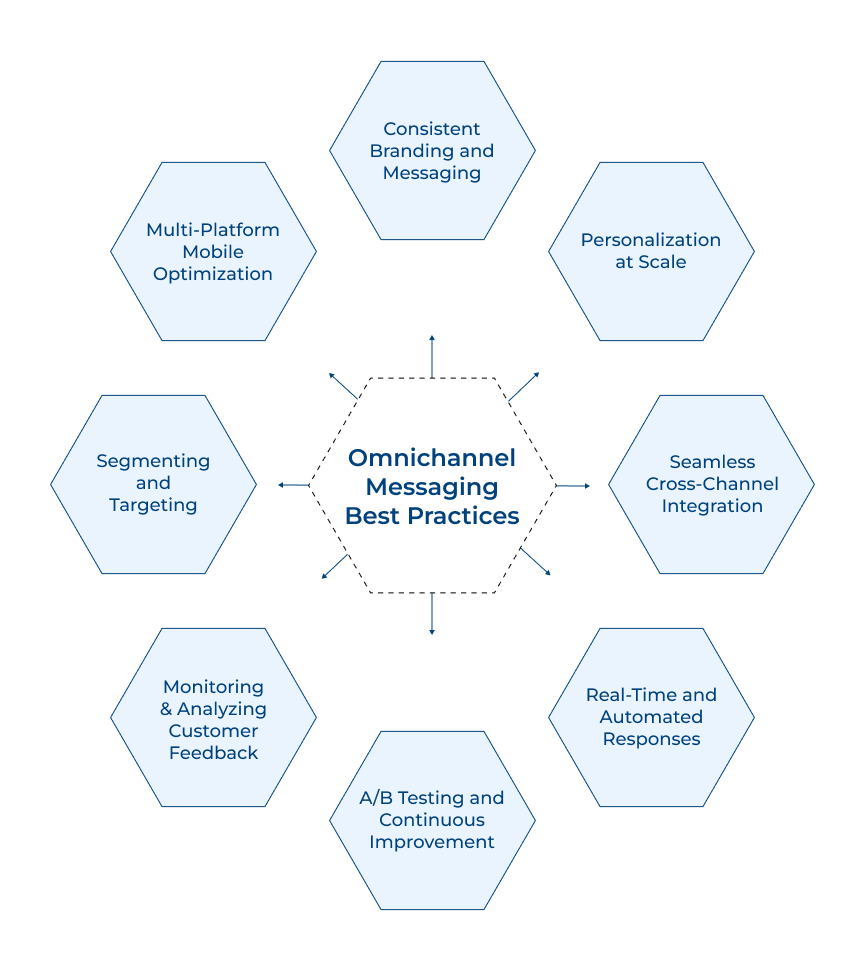
This diagram illustrates the key practices for effective omnichannel messaging. Notice how "Consistent Branding and Messaging" works in tandem with "Multi-Platform Mobile Optimization" and "Seamless Cross-Channel Integration."
A Framework for Adaptation: Angle, Hook, Format
So, how do we practically create ads that are both consistent and adapted? A useful framework is to break down each creative into three parts: Angle, Hook, and Format.
- Angle (The Core Message): This is the central idea or value proposition of your ad. This should remain consistent. For a hotel, an angle might be "the most romantic getaway," "the perfect base for city exploration," or "unforgettable family fun."
- Hook (The Attention-Grabber): This is the first 1-3 seconds of your ad designed to stop the scroll and create curiosity. This should be adapted to the platform and audience.
- Format (The Container): This is the type of creative you use—a static image, a carousel, a user-generated content (UGC) style video, a polished cinematic ad, a text ad, etc. This must be adapted to the platform's specifications and user expectations.
To see this framework in action, let's watch a detailed breakdown from a creative strategist.
How to make Meta Ad Creatives (in 2026)
In his video 'How to make Meta Ad Creatives', Fraser Cottrell provides a fantastic structure for generating and testing ad ideas using the Angle-Hook-Format system.
Watch from 06:11 to 10:12. Focus on how he defines the Angle, Hook, and Format, and how he uses different combinations to test what resonates with the audience. The examples he provides clearly illustrate the concept.
Test your understanding!
Imagine your hotel is launching a new "Wellness Weekend" package, including yoga sessions and spa treatments. Using the Angle-Hook-Format framework, brainstorm one core angle and two different hook/format combinations you could test.
Show answer
Here's one possible answer:
- Angle (Core Message): Escape the stress of daily life and completely recharge your mind and body.
- Combination 1 (for Instagram Reels):
- Hook: A fast-cut video starting with a relatable shot of a stressful work-from-home setup.
- Format: A fast-paced, UGC-style video showing quick clips of someone enjoying the yoga class, the spa, and the serene hotel environment, set to a trending audio track.
- Combination 2 (for Facebook Feed):
- Hook: A question in the text: "When was the last time you truly disconnected?"
- Format: A high-quality carousel ad.
- Card 1: A beautiful photo of the yoga session overlooking a garden.
- Card 2: A close-up of a relaxing spa treatment.
- Card 3: An image of the healthy menu options.
- Card 4: A clear graphic with the package details and a "Book Now" call to action.
Applying the Framework: Creative Across Platforms & The Funnel
Let's bring this all together by building out the creative assets for the remarketing sequence we designed in the last lesson. Our scenario was a user who looked at the 'King Suite with Ocean View' but didn't book. Our consistent Angle is: "Indulge in ultimate luxury and romantic relaxation."
Now, let's adapt the Hook and Format for each touchpoint.
Touchpoint 1: The Gentle Reminder (Meta, 1-24 hours post-visit)
- Funnel Stage: Middle of Funnel (MOFU). The user is problem-aware and solution-aware. They know they want a getaway, and they've seen your suite. Your goal is to build desire.
- Platform: Instagram & Facebook.
- Format & Hook: As we planned, a Carousel Ad is perfect here. It's visually engaging and lets you tell a small story.
- Hook: The first card image is a breathtaking, high-quality photo of the ocean view from the suite's balcony. The headline: "Still Dreaming of This View?"
- Content: Subsequent cards showcase other luxurious features—the plush bed, the deep soaking tub, the welcome champagne—each reinforcing the "luxury relaxation" angle. The creative is aspirational and emotional.
Touchpoint 2: The Top-of-Mind Presence (Google Display & YouTube, 1-7 days)
- Funnel Stage: MOFU. They are now browsing other travel sites or watching travel content. Your goal is to stay visible and reinforce brand recognition.
- Platform: Google Display Network (GDN) & YouTube.
- Format & Hook:
- GDN: This is where you adapt for a huge variety of ad sizes. Your core visual (the ocean view) and message ("Your Suite Awaits") stay the same, but the layout changes.

*This image perfectly demonstrates adapting a single concept—a hotel offer—across multiple Google Display Ad formats. The branding, offer, and call-to-action are consistent, but the layout is tailored to each ad size.*
*   **YouTube:** For someone watching a travel vlog, you could use a **6-second Bumper Ad**. This format demands simplicity.
    *   *Hook & Content:* A stunning, quick video clip of the sun setting over the ocean from the suite's balcony. A simple text overlay appears: "[Your Hotel Name] - The View Is Waiting." That's it. It's not a direct sales pitch; it's a beautiful, fleeting reminder.
Touchpoint 3: The Active Search (Google Search, Ongoing)
- Funnel Stage: Bottom of Funnel (BOFU). The user might search for "[Your Hotel Name] suite" or "luxury hotels in [your city]." They are actively seeking to book.
- Platform: Google Search.
- Format & Hook: The creative here is pure text. Your Responsive Search Ad needs to be direct and logical.
- Hook: The headlines are the hook. "Official Site: King Suite Ocean View" or "Book Your Luxury Suite Direct & Save."
- Content: The descriptions reinforce the angle ("Experience unparalleled luxury...") and provide a logical reason to act ("Guaranteed Best Rate. Free Breakfast When You Book Direct."). The messaging shifts from emotional to rational.
Touchpoint 4: The Final Nudge (Meta, 3-7 days)
- Funnel Stage: BOFU. They are highly interested but haven't committed. Your goal is to create a sense of urgency or provide a final incentive.
- Platform: Instagram & Facebook.
- Format & Hook: A Static Image Ad with an Offer.
- Hook: The image is the same stunning view, but this time with a bold text overlay: "Limited Time: 20% Off Suites."
- Content: The ad copy is short and direct: "Your ocean view suite is waiting. Book in the next 48 hours to save 20% on your stay. Don't miss out." The messaging is now transactional.
This video provides an excellent overview of matching ad formats to different funnel stages, which is exactly what we've just done.
How to make Meta Ad Creatives (in 2026)
Let's revisit the Fraser Cottrell video. This section specifically matches different ad formats—like UGC, street interviews, mini-VSLs, and static offer ads—to the top, middle, and bottom of the marketing funnel.
Please watch from 10:12 to 15:06. As you watch, think about how each format he describes could be used to promote different aspects of your hotel (e.g., a UGC ad for the fun pool area, a mini-VSL explaining the benefits of your business traveler package).
By using this approach, you create a journey where the story feels connected and the brand feels familiar, but the message is always perfectly suited to the context.
Conclusion
You now have a robust framework for creating ad content that works synergistically across your entire marketing ecosystem. This moves you beyond just "running ads" and into the realm of true creative strategy.
Key Takeaways:
- Effective cross-platform advertising balances brand consistency with platform-native adaptation.
- The Angle-Hook-Format framework is a practical tool for achieving this balance: keep your core message (Angle) consistent while adapting your attention-grabber (Hook) and container (Format).
- The most effective format and message depend on where the user is in the marketing funnel—from emotional, story-driven content at the top to rational, offer-driven content at the bottom.
- Always respect the platform: A 6-second YouTube bumper, an Instagram Story, and a Google Search ad are fundamentally different canvases that require different creative approaches.
What's Next?
We've now designed the strategic sequence (Lesson 2) and crafted the creative content for it (this lesson). The final piece of the strategic puzzle is money. In our next lesson, we will apply budget allocation models based on platform strengths and campaign performance, helping you decide how to invest your advertising dollars for the best possible return.