Hello! Welcome back to our journey through the history of astronomy.
In our last lesson, we delved into the sophisticated mathematical world of Babylonian astronomers. We saw how they leveraged centuries of observational data to create powerful predictive algorithms—using cycles, step functions, and even geometric concepts to forecast celestial events with remarkable accuracy. Their core motivation was predictive, driven by a belief in celestial omens.
Today, we shift our focus from Mesopotamia to the Nile Valley to address our learning outcome: Describe the role of astronomy in Egyptian calendar-making and monumental architecture. While the Egyptians were also keen skywatchers, their motivations and applications were strikingly different. Instead of building abstract models to predict the future, the Egyptians focused on creating systems to embody cosmic order in the present. For someone with your background, this is a shift from predictive algorithms to what we might call "embedded systems," where the rules of the cosmos were hard-coded into their calendars, religion, and even their most massive stone structures.
1. The Calendar: A System for Life and Order
The driving force behind Egyptian civilization and, consequently, its astronomy was the Nile River. The annual, predictable flood was the basis of all agriculture and life. The primary purpose of the Egyptian calendar was to anticipate this event.
To understand how the Egyptians developed their innovative calendar, please watch the following video.
Calendar Invented In 3000 BCE In Egypt?
The video 'Calendar Invented In 3000 BCE In Egypt?' from the channel History with Kayleigh explains the development from an early lunar calendar to the more practical civil calendar, which became one of Egypt's most enduring inventions.
Please watch from 01:49 to 04:04. This segment covers: The initial lunar calendar and its limitations. The creation of the 365-day civil calendar. The three agricultural seasons that formed the backbone of the Egyptian year.
As you saw, the Egyptians engineered a brilliant solution to the incompatibility of lunar and solar cycles. Let's break down their system:
- The Civil Calendar: This was a masterpiece of simplicity and practicality. It consisted of a 365-day year, structured as:
- 12 months of 30 days each.
- 5 extra days (epagomenal days) added at the end of the year, which were treated as religious holidays.
- The Three Seasons: The year was divided not into four seasons like ours, but into three seasons of four months each, perfectly mapping to the Nile's agricultural cycle:
- Akhet (Inundation): The flooding season.
- Peret (Going Forth): The planting and growing season after the waters receded.
- Shemu (Deficiency/Harvest): The low-water season when crops were harvested.
This calendar was directly tied to a key astronomical event: the heliacal rising of the star Sirius (known to the Egyptians as Sopdet). This is the first day of the year that a star is briefly visible on the eastern horizon just before sunrise. For the Egyptians, the heliacal rising of Sirius occurred just before the Nile began to flood, making it the perfect celestial harbinger of the new year and the return of fertility to the land.
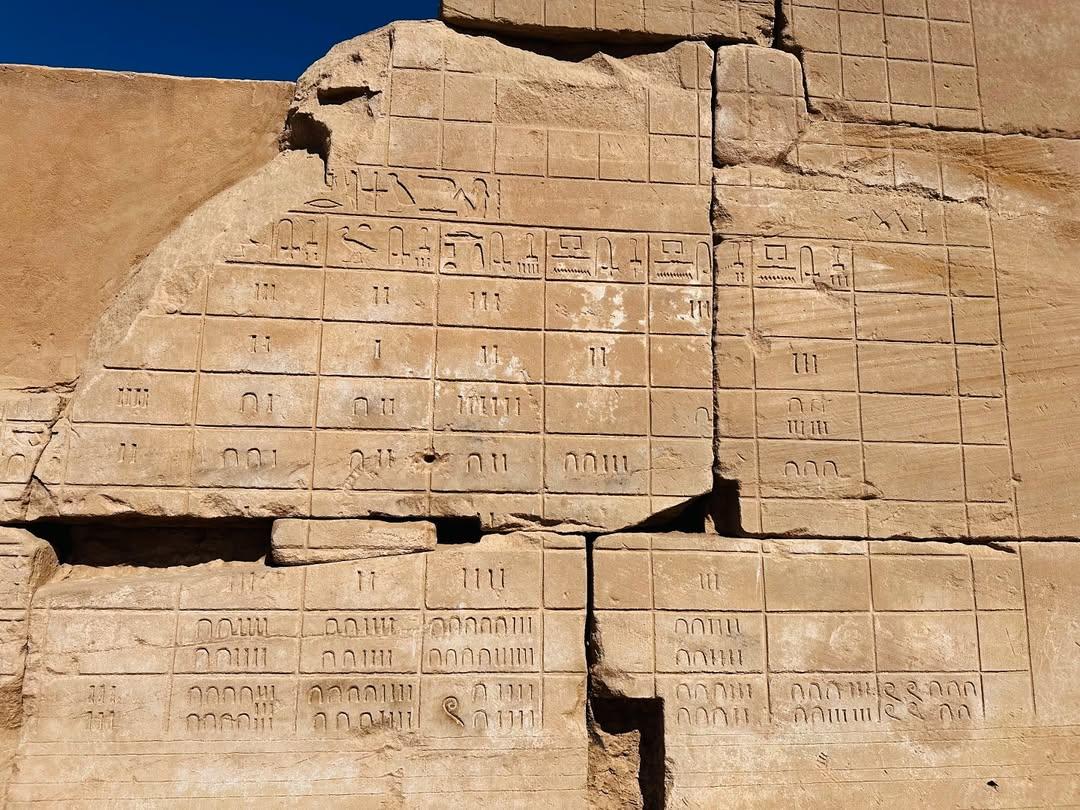
However, the civil calendar of exactly 365 days had a known flaw: the true solar year is about 365.25 days long. The Egyptians were aware of this discrepancy. Their calendar would slip by one full day relative to the seasons every four years. This meant that the start of the civil calendar would slowly drift through the actual seasons. It took 1,460 years for the calendar to realign with the heliacal rising of Sirius—a period known as a Sothic Cycle. Rather than adding a "leap day" as we do, they maintained this elegantly simple but drifting calendar for administrative purposes, while likely using direct observation of Sirius and the Moon for religious and agricultural timing. This resulted in the concurrent use of multiple calendar systems for different societal functions—a fascinating solution to a complex timekeeping problem.
2. Timekeeping by the Stars: The Decans
Just as they structured their year, the Egyptians also structured their nights. To tell time in the darkness, they developed a system of "star clocks."
Please read the following brief text to understand the principles of their astronomical practices.
This article from the UNESCO Astronomical Heritage project, 'Theme: Ancient Egypt', provides a scholarly overview of the cultural role of astronomy. It will introduce key concepts like decans and the motivations behind Egyptian sky-watching.
Please read the section under the main heading, starting from 'The ancient Egyptians were keen sky-watchers...' and ending at '...earthly and celestial aspects of reality.' This section summarizes their motivations and introduces stellar clocks and temple alignment.
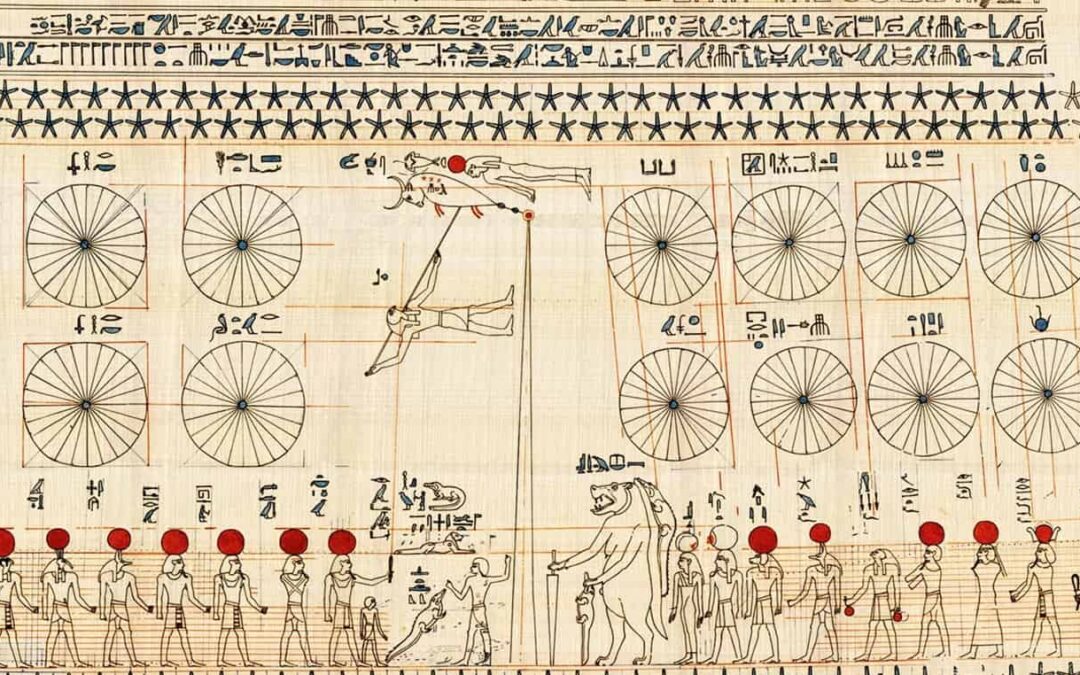
As the text mentions, one of their key innovations was a system of stellar clocks. At night, they used 36 specific stars or star groups called Decans. As the Earth turned, a different Decan would rise on the horizon roughly every 40 minutes, marking the "hours" of the night. This system, depicted on coffin lids ("diagonal star clocks") and tomb ceilings, served both as a practical clock for temple rituals and as a map for the soul's journey through the underworld.
3. Architecture as Cosmology
Perhaps the most dramatic application of Egyptian astronomy was in their monumental architecture. For the Egyptians, building was a sacred act, and the orientation and design of their temples and pyramids were meant to reflect the divine order of the cosmos, a concept they called Ma'at.
The following video provides an excellent overview of how astronomical alignments were built into some of Egypt's most famous monuments.
The Celestial Architecture of Ancient Egypt
The video 'The Celestial Architecture of Ancient Egypt' explores the direct links between constellations and the layout and orientation of major pyramids and temples.
Please watch these three segments: From 00:59 to 01:43, on the alignment of the Giza pyramids with Orion's Belt. From 02:15 to 03:01, on the symbolic connection between Orion (Osiris), the Nile (Milky Way), and the cycle of rebirth. From 03:35 to 04:08, on the pyramid shafts that point to specific stars.
Let's explore these architectural principles more systematically:
A. Stellar Alignments:
As the video highlights, the connection to the stars was central, particularly for funerary structures like the pyramids.
- The Orion Correlation Theory: This theory proposes that the layout of the three Giza pyramids on the ground was designed to mimic the three stars in Orion's Belt in the sky. The constellation of Orion was the celestial manifestation of Osiris, the god of the underworld and rebirth.
- Pyramid Shafts: The Great Pyramid contains several narrow shafts that are precisely angled. The southern shafts of the King's and Queen's chambers point towards Orion (Osiris) and Sirius (the goddess Isis, Osiris's consort) as they would have been positioned in the sky during the pyramid's construction. The prevailing theory is that these were not for ventilation but were pathways to guide the deceased pharaoh's soul to its celestial destination among the "immortal" stars.
- The "Stretching of the Cord" Ceremony: The deliberate nature of these alignments is confirmed by Egyptian records describing a foundation ritual called the "stretching of the cord." In this ceremony, the pharaoh and a priestess would use stakes and ropes to establish the temple's orientation by sighting on a specific star, often one in the northern constellation Meskhetyu (our Ursa Major).
B. Solar Alignments:
The Sun god Ra was the supreme deity for much of Egyptian history, and solar alignments were crucial, especially for temples.
- Hierophanies: Temple axes were often aligned to create a hierophany—a manifestation of the sacred—on specific days. For example, a temple might be oriented so that on the winter solstice, the rising sun's rays would travel down the main axis to illuminate the inner sanctuary. This created a dramatic visual spectacle reinforcing the pharaoh's connection to the gods.
- Abu Simbel: A famous example is the great temple of Ramesses II at Abu Simbel. It was carved out of a mountain such that twice a year (on dates thought to relate to his coronation and birth), sunlight penetrates the deep inner sanctum and illuminates the statues of the gods within.
Test your understanding!
A shaft in the Great Pyramid is angled at 45° and points directly to where the center of Orion's Belt was located in the sky around 2500 BCE. Based on what you've learned, what was the most likely purpose of this precise architectural feature? How does this reflect a different motivation for astronomy compared to the Babylonians?
Show answer
The most likely purpose of the shaft was religious and eschatological. Since Orion was the celestial form of Osiris, god of the afterlife, the shaft was intended to be a symbolic pathway for the pharaoh's soul to ascend from his tomb and join Osiris among the stars, thus achieving rebirth and immortality.
This reflects a motivation centered on cosmic integration and religion, rather than prediction. The Egyptians engineered the alignment to connect the physical structure to a divine, eternal concept. In contrast, a Babylonian astronomer would have been more interested in Orion's position to predict if its appearance foretold a flood, a famine, or a change in the kingdom, using their vast data records and mathematical models to do so.
Conclusion
In this lesson, we've seen how ancient Egyptian astronomy was intricately woven into the fabric of their society. It was a practical tool driven by the rhythms of the Nile and a sacred science used to align their world with the heavens.
Key Takeaways:
- Practical Motivation: The need to predict the Nile's annual flood drove the development of a highly effective 365-day civil calendar, which was astronomically anchored to the heliacal rising of the star Sirius.
- Cosmic Order: The core goal was to implement Ma'at (divine order) on Earth. This was expressed through systems that structured time (calendars, decans) and space (architecture).
- Architecture as a Map of the Cosmos: Monumental structures like the pyramids and temples were not just buildings. They were functional cosmic models, with layouts mirroring constellations like Orion and axes aligned to produce solar hierophanies on significant days. Their purpose was deeply religious, connecting the pharaoh and the kingdom to the eternal cycles of the gods.
Where the Babylonians were the ancient world's data scientists, creating predictive algorithms, the Egyptians were its celestial systems architects, embedding the cosmos directly into their civilization's hardware.
Preview of the Next Lesson:
We have now explored the astronomical traditions of both Mesopotamia and Egypt. In the next and final lesson of this module, we will bring these two threads together to formally "Compare the practical motivations for astronomy in Mesopotamian and Egyptian civilizations." We will synthesize what we've learned about their different goals, methods, and cultural roles to build a richer picture of astronomy in the ancient world before the rise of the Greeks.