Hello! Welcome to the first lesson in our course on the History of Astronomy.
This lesson begins our journey at one of the earliest starting points for systematic astronomy: ancient Mesopotamia. Our goal is to address the learning outcome: "Describe the astronomical observations and records kept by Babylonian astronomers." We'll explore the fundamental motivations that drove the Babylonians to watch the skies so meticulously, the types of celestial events they focused on, and the remarkable records they left behind.
Given your background in computer science, you'll likely appreciate the systematic and data-driven nature of their work. This is the origin story of astronomical data collection—a practice that, thousands of years later, remains the bedrock of cosmology and astrophysics. We'll focus today on the what and why of their observations, which will lay the groundwork for our next lesson on the how—their mathematical methods for prediction.
1. Why Watch the Sky? Astronomy as Divination
To understand Babylonian astronomy, we first need to recognize that for them, there was no distinction between astronomy and astrology. The movements of the stars and planets were not just physical phenomena; they were divine communications. Kings and priests believed that the heavens held clues to the future, foretelling everything from floods and famines to the fate of a royal dynasty.
This belief system was the primary driver for their intense and sustained observational program. To learn more about this crucial context, please watch the following segments from the video "Staring at Starry Skies" by History with Cy.
Staring at Starry Skies: Ancient Babylonian Astronomical Data and Greek Science
This video explains the inseparable link between astronomy and astrology in Mesopotamia and the primary motivation for their record-keeping: the interpretation of omens.
Please watch from the beginning at 00:34 to 02:04 to understand the cultural mindset. Then, watch the segment from 07:24 to 08:11, which specifically explains why eclipses and other events were recorded.
As the video highlights, events like eclipses weren't studied to understand orbital mechanics, but because they were considered powerful omens. This need to interpret divine will compelled Babylonian scribes to create detailed and long-lasting records of celestial events.

2. The Great Libraries of the Sky: What Did They Record?
The Babylonians developed several types of texts to document their astronomical knowledge. These records, inscribed on cuneiform clay tablets, were not just scattered observations but part of organized, systematic collections.
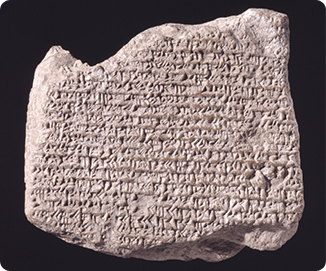
To understand the nature and structure of these key records, please read the following excerpt from the transcript of "The Song of Urania," a podcast on the history of astronomy.
Episode 4: The Astronomical Diaries
This reading from 'The Song of Urania' podcast transcript provides a detailed description of the three most important types of Babylonian astronomical records: the Enuma Anu Enlil, the Mul.Apin, and the highly detailed Astronomical Diaries.
Please read the section titled 'So what exactly are these Babylonian astronomical records?' which begins by describing the Enuma Anu Enlil and the Mul.Apin. Continue reading through the next section describing the Astronomical Diaries, ending just before the paragraph that starts 'The astronomical diaries are really quite a remarkable series of documents.'
Let's summarize the key types of records you just read about:
- Enuma Anu Enlil: This was a massive collection of some 7,000 celestial omens compiled over centuries. Its structure was formulaic: an "if-then" statement connecting a celestial phenomenon (the protasis) to a predicted event on Earth (the apodosis). For example: "If the moon becomes visible on the first day of the month: reliable speech; the land will be happy."
- Mul.Apin: This text served as an astronomical compendium or "textbook." It was more of a summary of knowledge than a list of raw observations. It included:
- Catalogues of stars and constellations.
- Dates of heliacal risings (the first day a star is visible before sunrise).
- A method for adding intercalary months to keep the calendar aligned.
- A formal 360-day "astronomical year" to simplify calculations—an elegant solution to the messy reality of a calendar with an irregular number of days and months.
- Astronomical Diaries: These are perhaps the most significant legacy of Babylonian astronomy. They represent a nearly continuous, systematic record of celestial phenomena spanning over 600 years. For each month, scribes would record:
- Lunar data: The length of the previous month, and key time intervals between moonrise/set and sunrise/set at the beginning and middle of the month.
- Planetary data: The position of planets relative to zodiacal signs and reference stars, as well as special events in their orbits.
- Other phenomena: Eclipses, comets, meteorological events like rain or clouds, and even commodity prices. This eclectic mix underscores their worldview, where the price of barley could be as connected to celestial events as the fate of the king.
3. Key Events: Planetary Stations and Retrograde Motion
The Astronomical Diaries show that the Babylonians weren't just casually noting where planets were. They were paying extremely close attention to specific, recurring points in each planet's journey across the sky. These are often called planetary stations or phases.
To understand these key observational targets, let's return to the transcript of "The Song of Urania."
Episode 4: The Astronomical Diaries
This excerpt details the specific 'planetary stations' the Babylonians systematically recorded for both superior planets (like Mars) and inferior planets (like Venus). It provides a clear description of what they were looking for, including the all-important phenomenon of retrograde motion.
Please read the section that begins 'Well, as I mentioned earlier, the Babylonians generally didn’t record the position of the planets in general.' You can read this entire section, which explains the planetary stations for both superior and inferior planets.
The key takeaway is that the Babylonians tracked the entire cycle of a planet's visibility and motion. For a superior planet like Mars, Jupiter, or Saturn, the cycle included:
- First Appearance: The planet becomes visible in the morning sky.
- First Stationary Point: The planet halts its normal eastward drift against the stars.
- Retrograde Motion: The planet appears to move westward for a period.
- Opposition: The point during retrograde motion when the planet is opposite the Sun in the sky.
- Second Stationary Point: The planet halts its westward motion and resumes its normal eastward drift.
- Last Appearance: The planet disappears into the Sun's glare in the evening sky.
By meticulously recording the dates and positions of these stations, the Babylonians compiled a massive dataset describing the complex behavior of the planets. This observational focus on retrograde motion is critical—explaining this strange backward dance would become the single most important problem in astronomy for the next 2,000 years.
Test your understanding!
An astronomer in Babylon records in a diary that Jupiter has reached its "first stationary point." What does this signify about the planet's apparent motion against the background stars, and why was this considered a noteworthy event to record?
Show answer
This signifies that Jupiter, which normally drifts eastward, has appeared to stop its motion. It is the moment just before it begins its period of westward "retrograde" motion. It was a noteworthy event because it marked a key transition in the planet's cycle. For a system based on interpreting omens from the heavens, any such deviation from normal behavior was highly significant and needed to be precisely recorded as part of the data used for divination and future prediction.
4. The Legacy of the Data
The Babylonians may not have developed a physical model of the cosmos, but their greatest contribution was this vast and enduring collection of observational data. Centuries later, this treasure trove of records was instrumental for Greek astronomers who sought to build the first comprehensive mathematical models of the universe.
The following clip from "Staring at Starry Skies" provides a perfect example of this legacy in action.
Staring at Starry Skies: Ancient Babylonian Astronomical Data and Greek Science
This segment shows how the great Hellenistic astronomer Claudius Ptolemy, writing in the 2nd century AD, used Babylonian eclipse records from nearly 900 years earlier to help construct his model of the cosmos in the Almagest.
Please watch the segment from 05:41 to 07:24.
Ptolemy's use of Babylonian data demonstrates a crucial step in the history of science: the separation of data collection from model building. The Babylonians were the premier data collectors of the ancient world, and their work provided the empirical foundation upon which the Greeks—and all who followed—would build their theories.
Conclusion
In this lesson, we have seen how the Babylonians created the first great astronomical database in human history. Let's summarize the key points:
- Motivation: Babylonian astronomy was driven by the belief that celestial events were omens from the gods, requiring careful observation and interpretation for divination.
- Records: They documented their findings on cuneiform tablets in systematic collections, most notably the Enuma Anu Enlil (omen catalogue), Mul.Apin (astronomical summary), and the long-running Astronomical Diaries.
- Observations: Their records were incredibly detailed, noting the timing of lunar phases, the positions of planets relative to reference stars, and the dates of key planetary stations, including the beginning and end of retrograde motion.
- Legacy: This centuries-long, continuous dataset was a foundational resource for later astronomers, particularly the Greeks, who used it to develop the first mathematical models of the cosmos.
Preview of the Next Lesson:
Now that we understand what the Babylonians observed, our next lesson, "Explain how Babylonians used mathematical methods to predict lunar and planetary cycles," will explore how they used this wealth of data to move beyond simple recording and develop sophisticated mathematical techniques to predict future celestial events.