Hello! Welcome to the second module of our course.
In the previous module, we built a solid foundation for our API using Spring Boot. You learned how to set up a project, create controllers, and handle configuration. Most importantly, in the last lesson, you implemented a HandlerInterceptor, creating a crucial "gatekeeper" that can inspect every request before it reaches your controller.
Now, we shift our focus from the mechanics of Spring Boot to the core principles of rate limiting. This lesson addresses the fundamental question: why do we need a gatekeeper in the first place? We will explore the critical role rate limiting plays in building robust, secure, and scalable applications.
Your learning outcome for this lesson:
By the end of this lesson, you will be able to explain the necessity of rate limiting for API protection and fair resource usage.
1. What is Rate Limiting?
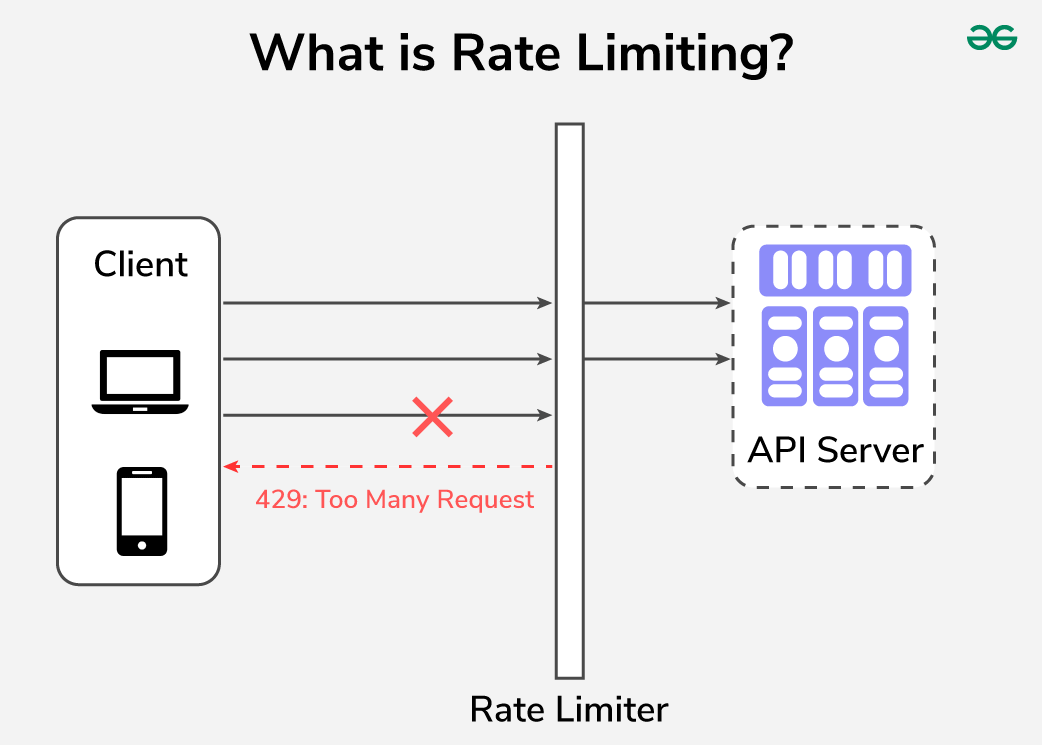
At its core, a rate limiter is a control mechanism. It governs the amount of traffic a client (or service) can send to an API within a specific period. If a client exceeds this predefined limit, the rate limiter steps in and blocks any further requests from that client until the period resets.
To start, let's get a concise overview from two excellent system design channels.
Rate Limiter System Design: Token Bucket, Leaky Bucket, Scaling
First, this clip from ByteByteGo introduces the concept and its primary purpose in protecting systems.
Watch the first 26 seconds of the video for a quick, high-level definition of what a rate limiter does.
Design a Distributed Rate Limiter w/ a Ex-Meta Staff Engineer: System Design Breakdown
Next, this clip from Hello Interview reinforces the definition and highlights its role in preventing system abuse.
Watch from 01:32 to 02:25 to get another perspective on the fundamental purpose of rate limiting.
As you saw, the core idea is to protect your backend services. Think of it as a bouncer at the door of a club, ensuring the venue doesn't get dangerously overcrowded.
2. The Pillars of API Protection
Why is this "shield" so critical? Without it, your application is vulnerable to a range of problems, from performance degradation to outright security breaches. Let's explore the key reasons why rate limiting is a non-negotiable feature for modern APIs.
What Is API Rate Limiting? Benefits, Methods, and Best Practices
The article 'What Is API Rate Limiting?' from Gcore provides a comprehensive list of benefits. We'll focus on a few key sections that detail the necessity of this mechanism.
Read the sections 'Why is API rate limiting necessary?' and 'What are the benefits of implementing API rate limiting?'. Focus on understanding each distinct benefit mentioned.
The article you just read outlines several compelling reasons for implementing rate limiting. Let's consolidate them into four main pillars:
a) System Stability and Fair Usage
An API without rate limits is like a highway with no speed limit or lane discipline. A single malfunctioning script or an overly aggressive client could flood your server with requests, consuming all available CPU, memory, and network bandwidth. This can slow down or even crash the service for all other users. Rate limiting ensures fair resource distribution, preventing any single client from monopolizing system resources and guaranteeing a baseline level of service for everyone.
b) Security
Rate limiting is a first line of defense against several common attack vectors:
- Denial-of-Service (DoS) Attacks: By limiting requests from a single source (like an IP address), you can mitigate simple DoS attacks aimed at overwhelming your service.
- Brute-Force Attacks: A malicious actor trying to guess a user's password or an API key can be thwarted by limiting the number of login or validation attempts they can make in a short time.
c) Cost Control
In a cloud-native world, resources are metered. Every API request might trigger database queries, function executions, and data transfer, all of which have associated costs. An unexpected spike in traffic, whether malicious or accidental, can lead to a surprisingly large bill. Rate limiting helps you control and predict operational costs by capping usage.
d) API Monetization and Business Logic
Rate limiting is also a powerful business tool. It's the mechanism that enables tiered pricing models for APIs. For example:
- Free Tier: 100 requests per hour.
- Pro Tier: 5,000 requests per hour.
- Enterprise Tier: Unlimited or custom high-volume limits.
This aligns directly with your project goal of supporting different client types (e.g., based on User ID or API key), allowing you to enforce different rules for different users.
3. High-Level Architectural View
Now that we understand why rate limiting is essential, let's briefly look at what a rate limiter needs to do its job and where it fits in a system.
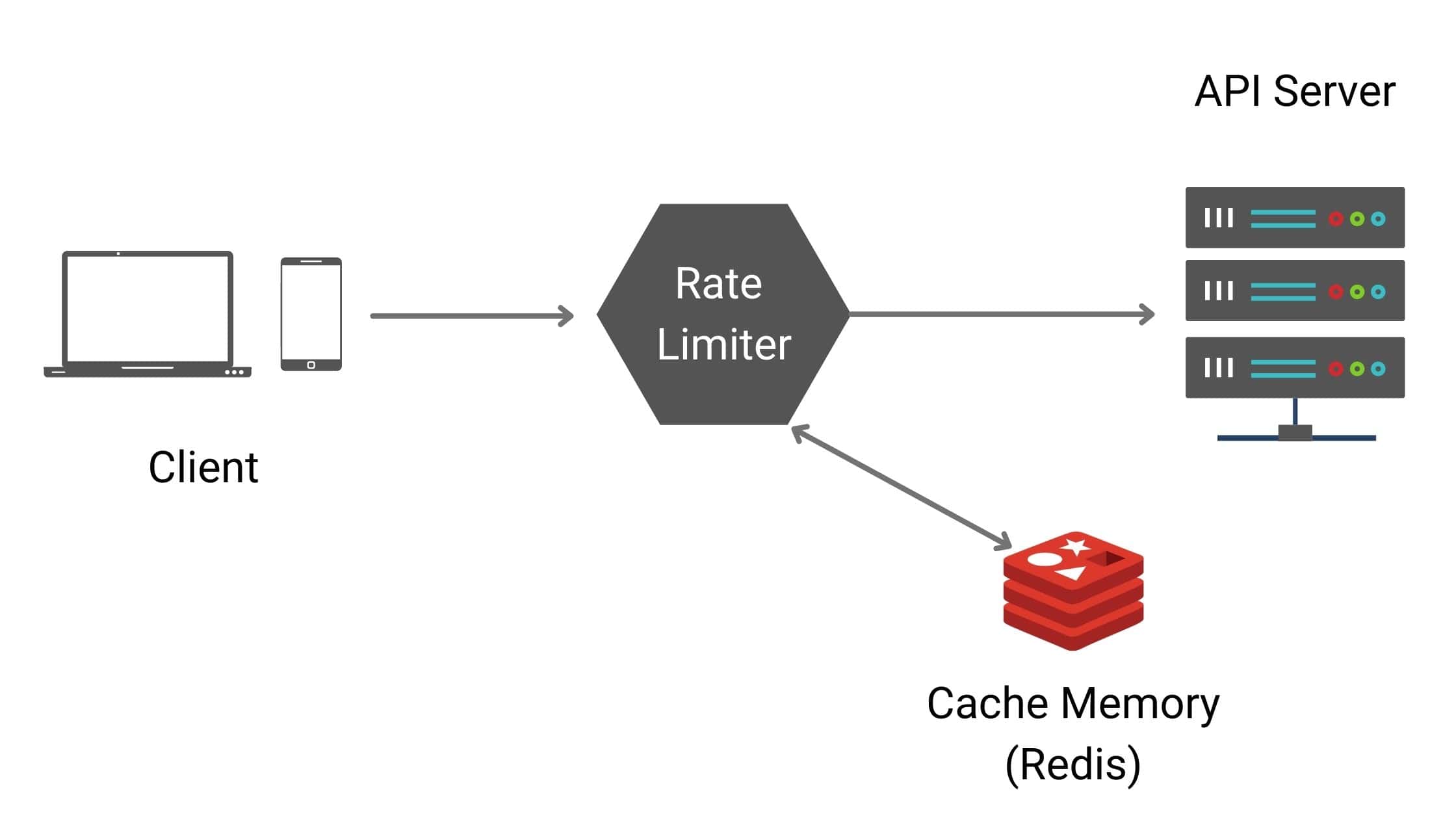
To make a decision, the rate limiter needs two key pieces of information:
- Client Identifier: Who is making the request? This could be the user's IP address, their User ID, an API key sent in a header, or even the endpoint they are trying to access. This is the "key" we will use to track requests.
- Configurable Rules: What is the limit for this client? For example, "100 requests per minute" or "10 requests per second."
When a request arrives, the rate limiter increments the count for the identified client. If the count is within the limit, the request proceeds. If not, the rate limiter rejects it.
But what does "rejecting" a request mean in practice? It's crucial to give the client clear feedback.
Design a Distributed Rate Limiter w/ a Ex-Meta Staff Engineer: System Design Breakdown
This final clip from the Hello Interview video explains how a rate limiter should behave when a limit is exceeded, including the specific HTTP status code to use.
Watch from 35:43 to 38:54. Pay close attention to the discussion of the 'fail fast' approach and the HTTP 429 status code.
As the video explained, the standard practice is to fail fast by immediately returning an HTTP 429 Too Many Requests status code. This unambiguously informs the client why their request was rejected, allowing them to implement proper back-off and retry logic instead of endlessly hammering your server. It's also best practice to include headers like Retry-After to tell the client when they can try again.
Key Takeaways
- Necessity: Rate limiting is not an optional feature; it's a critical component for ensuring your API is stable, secure, fair, and cost-effective.
- Protection: It defends against system overload from traffic spikes, prevents resource monopolization by any single client, and mitigates security threats like DoS and brute-force attacks.
- Mechanism: A rate limiter works by identifying a client, tracking their request count against a specific rule within a time window, and deciding whether to allow or block the request.
- Rejection Protocol: When a limit is breached, the standard response is to immediately reject the request with an HTTP
429 Too Many Requestsstatus code.
Next Steps
You now have a solid understanding of why we are building this rate limiter. We've moved from the abstract need for a "gatekeeper" to a concrete set of problems it solves.
In the next lesson, we will begin our journey into the "how." You will learn about the first and most straightforward rate-limiting algorithm: the Fixed Window Counter. We will explore its mechanics, its strengths, and its significant flaw—the "boundary burst" problem—which sets the stage for the more advanced algorithms to come.