Hello! Welcome back to our study of Snana (therapeutic bathing).
In our previous lesson, we established the critical principles of water temperature selection in Snana, emphasizing the different needs of the head versus the body, and how to adapt the practice based on season (Rutu) and constitution (Prakriti). This laid the groundwork for using bathing as a precise therapeutic tool.
Today, we will build upon that foundation to address our learning outcome: to explain the benefits of proper bathing on purity, vitality, and agni stimulation. The classical texts, or Samhitas, describe Snana not merely as an act of hygiene, but as a potent daily ritual (karma) that profoundly impacts our physical and mental well-being. By the end of this lesson, you will understand the multifaceted benefits that transform a simple bath into a cornerstone of preventative health.
Let's begin with a short video that introduces the holistic importance of Snana in Dinacharya.
AVOID THESE 11 BATHING MISTAKES | LEARN FROM SHLLOKA | AYURVEDA
This clip from the video 'AVOID THESE 11 BATHING MISTAKES' by SHLLOKA sets the stage by describing Snana as a therapeutic, preventive, and rejuvenating ritual for the body, mind, and soul.
Please watch the segment from 00:15 to 01:48. Note how bathing is framed not just for cleanliness, but for keeping one healthy, energetic, and rejuvenated.
As the video highlights, the effects of Snana are far-reaching. We will now explore these benefits through the three interconnected pillars of purity, vitality, and agni.
1. Purity (Shaucha): The Foundation of Health
The most apparent benefit of bathing is cleanliness. However, Ayurveda views this through a much deeper lens, encompassing both external and internal purification.
-
Physical Purity (Bahya Shaucha): At the most basic level, Snana is considered the best method for removing physical impurities. As Acharya Charaka states, it is highly effective in removing fatigue (shrama), sweat (sweda), and dirt (mala). This cleansing of the skin prevents blockages in the sweda vaha srotas (channels carrying sweat) and maintains the health of the integumentary system.
-
Subtle Purity (Abhyantara Shaucha): The benefits extend beyond the physical. The texts describe Snana as pavitram (sacred, purifying), suggesting it cleanses on a subtle level. It is said to remove drowsiness (tandra), mental fatigue, and even the lingering effects of negative experiences like bad dreams (duhswapna nashanam). This can be understood as the bath's ability to reset the nervous system, calm the mind, and wash away the day's mental and emotional residue.
To explore the classical descriptions of these purifying effects, let's consult a review paper that compiles views from the Brihattrayi.
A Review on Importance of Snana (Bathing) in Dincharya ...
The article 'A Review on Importance of Snana (Bathing) in Dincharya...' provides a concise summary of the benefits as stated by the ancient Acharyas.
Please read the section titled 'Benefits of Snana' and focus on the first paragraph under 'According to Acharya Charak'. Observe the terms used, such as 'purifying', 'removes sweating and dirt', and 'takes away sleep, burning sensation, tiredness'.
2. Vitality (Bala, Ojas, Ayushya): Enhancing Life Force
Once the body and mind are purified, the stage is set for enhancing vitality. A proper bath invigorates the system, builds resilience, and promotes longevity.
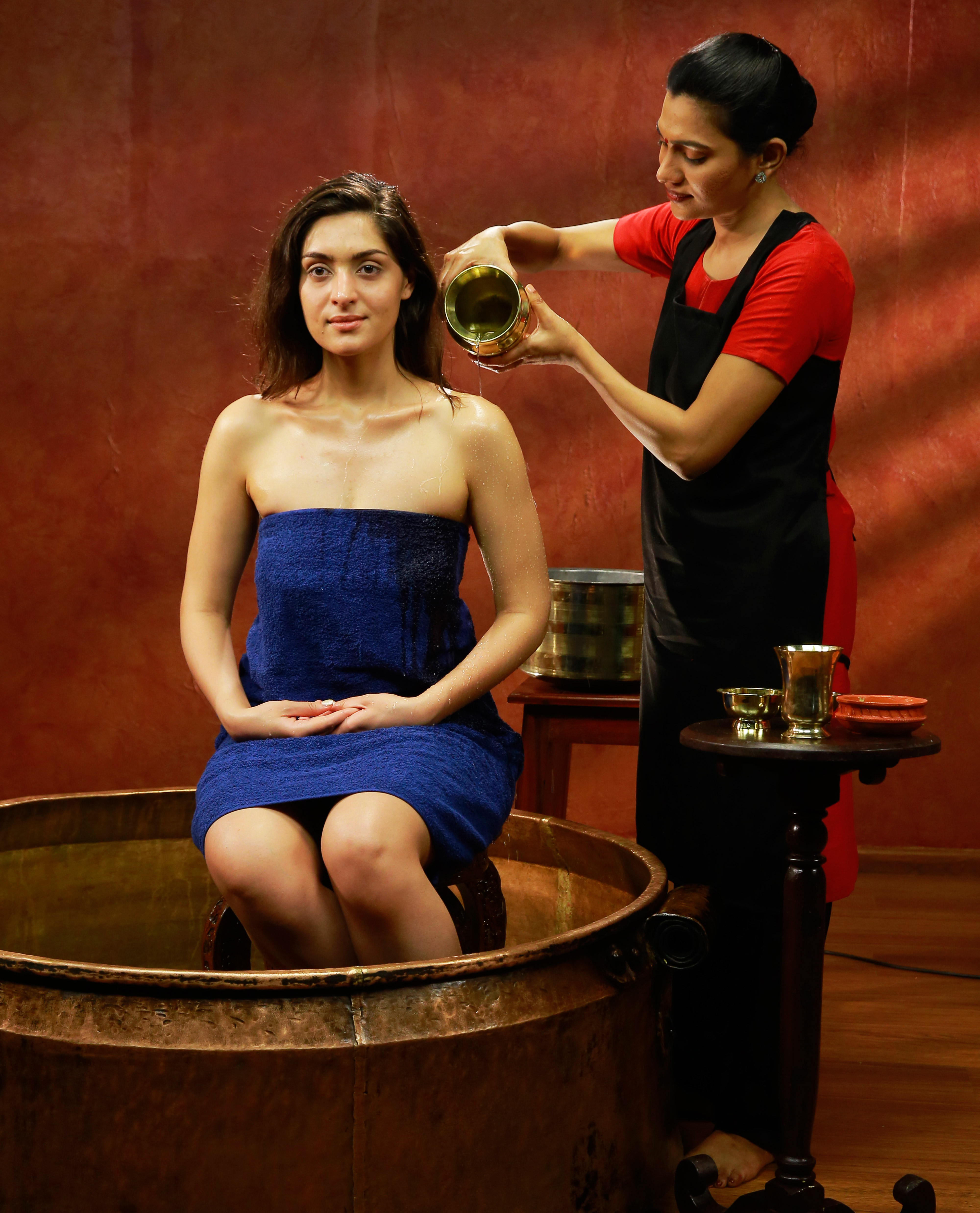
The classical texts attribute several vitality-boosting properties to Snana:
- Bala Vardhanam (Enhancement of Strength): By removing fatigue (shrama hara), Snana is considered restorative (balya). It brings strength and compactness to the body's tissues.
- Vrishyam (Aphrodisiac/Promotion of Virility): Proper bathing enhances reproductive health and libido. This is a direct outcome of improved circulation, reduced stress, and the enhancement of Ojas.
- Ayushya (Promotion of Longevity): By regularly purifying the body, calming the mind, and removing fatigue, Snana reduces systemic stress and wear-and-tear, thus contributing to a longer, healthier life.
- Ojo Vardhanam (Enhancement of Ojas): Perhaps the most profound benefit is the enhancement of Ojas, the subtle essence of all dhatus that governs immunity, vitality, and consciousness. A proper bath clears the channels (srotas), allowing Ojas to circulate freely.
The following resource provides a comprehensive list of these benefits, drawing from a wide range of classical texts.
Critical review of Snan (bathing), its effects on health
The paper 'Critical review of Snan (bathing), its effects on health' offers a consolidated list of benefits from multiple authoritative sources, including Charaka, Sushruta, and Vagbhata.
Please read section (A) 'Ayurvedic view' under 'Health Benefits of Snana'. This section systematically lists the benefits described in seven different classical texts. Pay special attention to recurring terms like 'purifying', 'aphrodisiac', 'promoter of life & Ojus', 'strength', and 'stimulates all the senses'.
3. Agni Stimulation (Deepanam): Igniting the Metabolic Fire
One of the most clinically significant benefits of Snana is its ability to stimulate Agni, the metabolic fire responsible for digestion and transformation. This may seem counterintuitive, but the mechanism is rooted in the body's physiological response to temperature changes.
- Mechanism of Agni Stimulation:
- Warm Water Bath: A warm bath causes peripheral vasodilation, drawing blood to the surface of the body. After the bath, as the body cools, this blood is shunted back towards the core. This reflex increase in circulation to the abdominal organs invigorates Jatharagni (the main digestive fire).
- Cold Water Bath: A cold water bath has a more direct and potent effect. The initial shock causes immediate peripheral vasoconstriction, powerfully shunting blood to the core and giving a strong stimulus to Agni.
Both Acharya Sushruta and Vagbhata explicitly state that Snana enhances digestive power (deepanam). This improvement in Agni leads to better appetite, digestion, and assimilation of nutrients, and prevents the formation of ama (metabolic toxins).
The following resources highlight this specific benefit.
AVOID THESE 11 BATHING MISTAKES | LEARN FROM SHLLOKA | AYURVEDA
Let's revisit the SHLLOKA video, which points out the agni-stimulating effect of cold water baths.
Please watch from 05:40 to 05:50. The video mentions that bathing with cold water stimulates the 'agni in the stomach'.
This benefit is also well-documented in classical literature, as confirmed by our review article. Sushruta mentions that Snana "purifies the blood and improves our digestive power," while Vagbhata notes that it "enhances digestive power." You can revisit these points in the article "A Review on Importance of Snana (Bathing) in Dincharya..." (Resource ID: LINK) in the paragraphs discussing benefits according to Sushruta and Vagbhata.
Test your understanding!
A patient with a predominant Kapha constitution complains of sluggish digestion, a feeling of heaviness after meals, and low morning appetite. Based on today's lesson, how could you explain to them, in physiological terms, why a specific type of bathing practice might help improve their Agni? What would you recommend?
Show answer
Explanation:
You could explain that the feeling of sluggishness and poor appetite is a sign of a weak digestive fire, or Agni. A warm water bath can help stimulate this fire. The warm water initially pulls blood to the skin, but after the bath, the body redirects blood flow back to the internal organs, including the stomach and intestines. This "rebound" effect increases circulation in the digestive tract, which helps to "kindle" the digestive fire, improving metabolism and appetite.
Recommendation:
For a Kapha individual, a warm water bath is generally recommended as it helps counteract their inherent cold quality. I would advise them to take a warm (not excessively hot) bath in the morning, ideally after exercise (Vyayama). This will not only cleanse the body but will also stimulate their Agni, helping them feel lighter and improving their appetite for their first meal of the day. A quick, cool rinse at the very end could further enhance the circulatory stimulus.
Integrating the Modern Perspective
As you prefer, let's connect these classical benefits to modern scientific understanding. The effects described by the Acharyas have clear physiological parallels.
Critical review of Snan (bathing), its effects on health
The 'Critical review of Snan' paper has an excellent section summarizing the modern scientific view on the benefits of bathing.
Please read the section titled 'Modern View'. Focus on how the points listed under i) to viii) correspond to the Ayurvedic benefits we've discussed.
As you read, notice the direct correlations:
- Purity (Shaucha) corresponds to the antimicrobial effect of washing away bacteria and dead skin cells.
- Vitality & Mental Clarity aligns with the action on mental health (reduced stress hormones, balanced serotonin) and cardiovascular benefits (improved hemodynamics).
- Agni Stimulation (Deepanam) is explained by the action on metabolism, where hyperthermic action and vasodilation improve oxygen/nutrient supply and waste removal.
This shows that the holistic benefits observed by Ayurvedic physicians are now being validated and explained through modern physiological and biochemical research.
Conclusion
In this lesson, we have moved beyond the simple idea of bathing for hygiene and explored its profound therapeutic potential as described in Ayurveda.
Key Takeaways:
- Snana promotes Purity (Shaucha): It offers both physical cleansing by removing sweat and dirt, and subtle purification by calming the mind and clearing sensory organs.
- Snana enhances Vitality (Bala, Ojas): It is restorative (balya), aphrodisiac (vrishyam), promotes longevity (ayushya), and ultimately enhances our vital essence (Ojas).
- Snana stimulates Agni (Deepanam): Through its effect on circulation, it invigorates the digestive fire, improving appetite and metabolism.
Understanding these benefits is crucial for you as a clinician. It allows you to confidently prescribe Snana not just as a routine instruction, but as a targeted therapeutic intervention to enhance purity, build vitality, and support the metabolic health of your patients.
In our next lesson, we will examine the other side of the coin: the contraindications for Snana. Knowing when not to bathe is just as important as knowing how to do it correctly.