Welcome back! In our previous lesson, we established a critical foundation by identifying the absolute contraindications for Snana—the conditions where bathing should be avoided entirely to prevent harm. We learned that factors like indigestion (ajirna), fever (jvara), and certain neurological conditions like facial paralysis (ardita) make bathing a harmful act.
Today, we move to a more nuanced level of clinical practice. Even when bathing is generally indicated, the method of bathing must be tailored to the individual. This brings us to our learning outcome: to assess the differential benefits and harms of shirohsnana (head bath) versus anga-snana (body bath) in various clinical conditions.
Understanding this distinction is key to unlocking the full therapeutic potential of Snana while safeguarding the sensitive structures of the head and sense organs. We will explore why Ayurveda treats the head and body differently during bathing and how to apply these principles to create precise, effective recommendations for your patients.
The Head (Shira) as a Sacred Site
In Ayurveda, the head is not just another body part. It is considered the root of the entire body and one of the three great vital points (Trimarma). It houses the brain, the central nervous system, and all the sense organs (indriyas). Due to this significance, it demands special care.
The classical texts recommend different water temperatures for the head and the body. Let's explore the fundamental principle and its rationale.
A critical review on Snana: An Ayurvedic way of bathing
The article 'A critical review on Snana' clearly explains the classical directive for using different water temperatures for the head and body. This passage provides the core reasoning you'll need for clinical decision-making.
Please read the paragraph under the sub-heading 'Order of pouring water during Snana – Head to Feet Or Feet to Head', starting from 'We all agree with the fact that cold temperature...' to the end of the paragraph. Pay close attention to the reasons given for avoiding hot water on the head and cold water on the body.
As you've just read, the guiding principle is:
- Head (Shirohsnana): Use cold or lukewarm water.
- Body (Anga-snana): Use warm or hot water.
Let's break down the benefits and harms of each practice in detail.
Shirohsnana (Head Bath)
A head bath involves washing the head and hair. Given the head's importance, the choice of water temperature is critical.
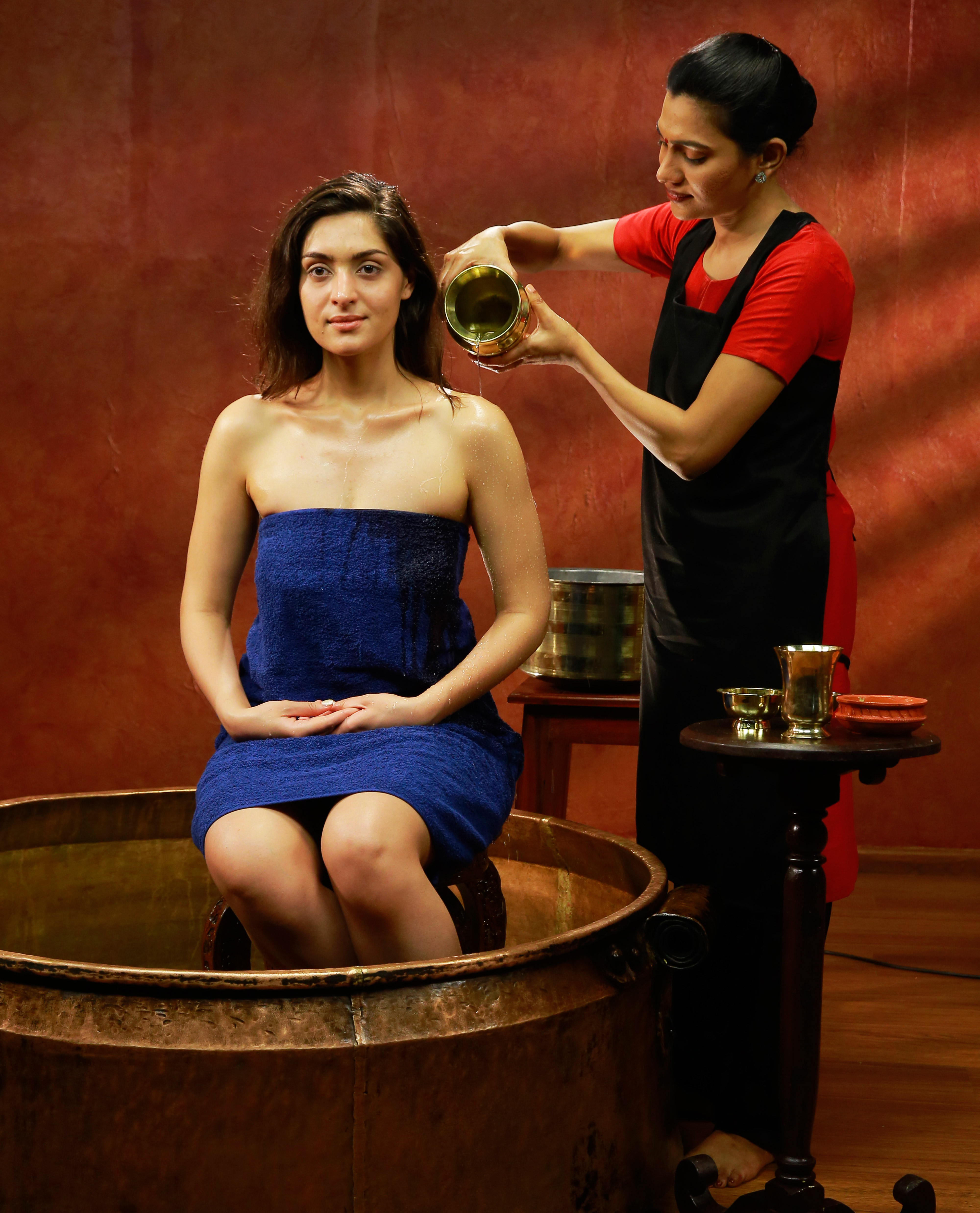
Benefits of a Proper Shirohsnana (with cool/lukewarm water)
Using cool water on the head is generally considered beneficial for the sense organs.
- Good for the Eyes (Chakshushya): The eyes are a primary site of Alochaka Pitta, which has a thermal quality. Cool water pacifies this Pitta, protecting and revitalizing vision.
- Pacifies Heat: It helps in conditions of excess heat in the head, such as certain types of headaches or a feeling of burning in the eyes.
- Beneficial in Bleeding Disorders (Raktapitta): As cold has a constricting and styptic quality (stambhana), a cold head bath can be supportive in managing bleeding disorders, especially those affecting the upper parts of the body.
Harms and Contraindications for Shirohsnana
The potential for harm is significant if the rules are not followed.
-
Using Hot Water on the Head: This is strongly prohibited in classical texts for a healthy individual.
- It is harmful to the eyes (Achakshushya), as the heat damages Alochaka Pitta.
- It is harmful to the hair (Akeshyam), leading to hair fall, loss of hair strength, and premature graying.
- It can weaken the power of all sense organs located in the head.
-
Using Cold Water in Vata/Kapha Conditions: In diseases of the head and neck caused by aggravated Vata or Kapha (which we discussed as general contraindications in the last lesson), a cold head bath can be detrimental.
- In Ardita (facial palsy) or Vata-type headaches: Cold will increase stiffness and pain.
- In Pinasa (sinusitis) or Pratishyaya (coryza): Cold will increase congestion and mucus accumulation.
The Clinical Exception
There is a crucial exception mentioned by Acharya Sushruta. For a detailed look at this, please review the resource again.
A critical review on Snana: An Ayurvedic way of bathing
Let's revisit the 'A critical review on Snana' article to understand the specific exception for using warm water on the head. This is a key clinical point.
Please read the section 'Benefit of using hot water for Snana'. Focus on the sentence that begins 'Acharya Sushruta recommends a warm water bath for the head...'. This highlights a specific therapeutic indication.
As the text states, Sushruta recommends a warm water head bath as a remedy for Kapha and Vata dosha aggravation. This is not a general rule but a targeted therapeutic action. For instance, in a case of chronic sinusitis where mucus is thick and stagnant (Kapha), a lukewarm head bath may help to liquefy and expel the doshas. This must be applied with careful clinical judgment.
Anga-snana (Body Bath)
This refers to bathing the body from the neck down. The rules here are quite different from those for the head.
Benefits of a Proper Anga-snana (with warm/hot water)
- Pacifies Vata and Kapha: Warm water is the best remedy for the cold, dry, and rough qualities of Vata and the cold, heavy qualities of Kapha.
- Increases Strength (Bala): It enhances circulation, relaxes muscles, and imparts a feeling of strength and vitality.
- Relieves Stiffness and Pain: It is highly effective in reducing body aches, joint stiffness, and muscle fatigue.
Harms and Contraindications for Anga-snana
- Using Cold Water: For individuals with a Vata constitution, during cold seasons, or when suffering from a Vata disorder, a cold body bath can be harmful. It can cause vasoconstriction, leading to stiffness, muscle pain, and aggravation of Vata dosha.
- Using Hot Water in Pitta Conditions: For a person with a Pitta constitution, during summer, or when suffering from a Pitta disorder (e.g., skin rashes, burning sensations, inflammation), a hot bath will aggravate Pitta and worsen the symptoms.
Synthesizing the Concepts for Clinical Practice
Let's summarize the differential effects in a table to guide your clinical decisions.
| Practice | Water Temp. | Benefits | Harms / Contraindications |
|---|---|---|---|
| Shirohsnana (Head Bath) | Cool/Lukewarm | Chakshushya (good for eyes), pacifies Pitta, promotes mental clarity. | Avoid in severe Vata/Kapha head conditions (e.g., Ardita, Pinasa). |
| Hot | Contraindicated. | Akeshyam (bad for hair), Achakshushyam (bad for eyes), weakens sense organs. | |
| Warm (Exception) | Therapeutic for Vata/Kapha aggravation (e.g., liquefies sinus congestion). | Apply with caution; not for general use. | |
| Anga-snana (Body Bath) | Warm/Hot | Pacifies Vata & Kapha, relieves stiffness, increases strength (bala). | Avoid in Pitta conditions and in summer; can aggravate heat. |
| Cool/Lukewarm | Refreshing for Pitta constitution and in summer. Pacifies Pitta. | Avoid in Vata conditions and in winter; can aggravate Vata (stiffness, pain). |
Test your understanding!
A 55-year-old female patient with a known history of Sandhigata Vata (osteoarthritis), primarily in her knees, reports increased joint stiffness and pain during the winter season. She has a Vata-Pitta prakriti. She also mentions experiencing occasional migraines with a burning sensation in her eyes. Her current routine is to take a very hot full-body shower, including her head, every morning to manage the stiffness.
How would you assess her current practice and what modifications would you recommend for her Snana? Justify your answer based on today's lesson.
Show answer
Assessment:
- Positive Aspect: The hot water on her body (Anga-snana) is correctly addressing the Vata-induced stiffness in her joints.
- Negative Aspect: The hot water on her head (Shirohsnana) is a major issue. It is Achakshushyam and likely a contributing factor to her migraines with burning eyes, as it aggravates the Pitta component of her constitution and the Alochaka Pitta in her eyes.
Recommendations:
- Educate the Patient: Explain the Ayurvedic principle of using different water temperatures for the head and body. Clarify that while the heat feels good for her joints, it is harming her head and eyes.
- Modify Anga-snana: Advise her to continue taking a warm/hot bath for her body (below the neck) to manage the Vata symptoms of stiffness and pain in her knees. This provides the desired therapeutic effect.
- Modify Shirohsnana: Instruct her to use only lukewarm or cool water for her head bath. This will help pacify the Pitta in her head, protect her eyes, and may reduce the frequency or intensity of her migraines. She should not use hot water on her head under any circumstances.
- Integrated Advice: Recommend she perform the head bath first with cool water, and then proceed to the warm body bath. This ensures the head is protected before the body is exposed to heat.
This modified plan respects her Vata condition (body) while protecting her from aggravating her Pitta condition (head/eyes), demonstrating a precise and personalized application of Snana Vidhi.
Conclusion
Today, you have learned to differentiate between Shirohsnana and Anga-snana, a crucial skill for refining your clinical recommendations. This moves beyond a simple "yes" or "no" to bathing and into the art of prescribing how to bathe for maximum benefit and minimum harm.
Key Takeaways:
- The head is a vital center that requires protection from heat; therefore, head baths should generally be done with cool or lukewarm water.
- Hot water on the head is detrimental to the health of the hair (Akeshyam) and eyes (Achakshushyam).
- The body benefits from warm water to pacify Vata and Kapha, relieve stiffness, and improve strength.
- Your clinical recommendations for water temperature must always be personalized based on the patient's prakriti, vikriti (current imbalance), season (rutu), and the specific body part being bathed.
In our next lesson, we will broaden our perspective by exploring the key principles of modern hydrotherapy. This will allow you to bridge the profound wisdom of classical Ayurveda with contemporary scientific understanding, enriching your ability to explain these concepts to modern patients.