Welcome back to our study of Snana. In the previous lesson, we delved into the modern scientific principles of hydrotherapy, exploring the profound physiological effects of water's temperature and pressure on the cardiovascular, metabolic, and nervous systems. You learned how cold water can trigger a hormetic stress response and how warm water promotes vasodilation and muscle relaxation.
Today, we will synthesize this knowledge. The goal of this lesson is to integrate modern hydrotherapy concepts with classical Snana Vidhi for comprehensive patient guidance. We will bridge the ancient wisdom of the Samhitas with contemporary physiological understanding, empowering you to create bathing recommendations that are not only effective but also explainable to your patients in a modern context. This is the capstone of our module on Snana, bringing together all the principles we have discussed.
Bridging Ancient Wisdom and Modern Science
Ayurveda's principles for Snana were developed through meticulous observation over centuries. Modern science, through its own methods, has often arrived at conclusions that validate these classical recommendations. Understanding these parallels is key to integrated practice.
Let's begin by reviewing the classical and modern perspectives on water temperature.
A Review on Dinacharya (Daily routine) ...
The article 'A Review on Dinacharya' provides a concise summary of both the classical effects of hot and cold water and the modern understanding of balneotherapy (a form of hydrotherapy). This will help us directly compare the two systems.
Please read the following sections: Start with the subsection titled 'Effects and indications of Ushna and Sheeta Jala Snana'. Focus on the differential effects of hot and cold water on the Doshas and the body. Next, read the list under the heading 'Eight ways balneotherapy heals'. Pay attention to how modern science describes the effects of thermal bathing on circulation, metabolism, and the nervous system. As you read, consider how the modern explanations provide a physiological mechanism for the effects described in the classical texts.
As you've just read, the parallels are striking. Let's formalize these connections:
| Classical Ayurvedic Principle (Snana Vidhi) | Modern Hydrotherapy Explanation |
|---|---|
| Ushna jala snana (hot water bath) relieves Vata and Kapha disorders. | Warm water causes peripheral vasodilation, increasing blood flow to muscles and joints. This reduces stiffness (Vata) and promotes the movement of fluids, helping to resolve stagnation (Kapha). |
| Sheeta jala snana (cold water bath) relieves Rakta-Pitta (bleeding/heat disorders). | Cold water causes peripheral vasoconstriction and has potent anti-inflammatory effects. This reduces blood flow to the surface, limits swelling, and calms the inflammatory processes associated with Pitta. |
| Ushna jala on the head "decreases the strength of hairs and eyes." | The head and brain have a sensitive thermoregulatory system. Excessive heat can cause vasodilation, potentially increasing intracranial pressure and being detrimental to heat-sensitive structures like the optic nerve and hair follicles. |
| Snana is Deepanam (improves appetite) and Kayagnideepanam (increases digestive fire). | Thermal bathing increases body metabolism. As noted in the resource, it stimulates secretions of the intestinal tract and liver, aiding digestion. The hormetic stress from cold can also boost metabolic rate via brown fat activation. |
| Snana is Hridya (good for heart) and improves circulation (Rakta Prasadanam). | Hydrostatic pressure increases venous return and cardiac output. Thermal effects cause vasodilation/vasoconstriction, which acts as a "workout" for the blood vessels, improving circulatory efficiency and nourishment of tissues. |
Crafting an Integrated Bathing Prescription
With this integrated understanding, you can now move beyond simply telling a patient what to do and begin explaining why it works in a way that resonates with their modern worldview. An effective bathing prescription considers several factors.
1. Water Temperature and Method
The choice of water temperature is your primary therapeutic tool.
- Warm/Hot Water: Best for conditions of Vata (stiffness, pain, anxiety) and Kapha (lethargy, coldness, congestion).
- Patient Guidance: "I'm recommending a warm bath to help with your joint stiffness. The warmth will increase blood flow to your muscles and joints, which helps to relax them and reduce that feeling of tightness. In Ayurveda, we say this pacifies Vata."
- Cold/Cool Water: Best for conditions of Pitta (inflammation, skin rashes, burning sensations) and for building resilience.
- Patient Guidance: "For this skin rash, taking a cool bath will be beneficial. The cold helps to reduce inflammation and constrict the blood vessels in the skin, which can calm the redness and itching. This is a primary way we pacify excess Pitta, or heat, in the body."
- Contrast Therapy (Hot & Cold): A powerful technique for stimulating circulation, boosting metabolism, and clearing stagnation (srotorodha). This involves alternating between hot and cold water (e.g., 3 minutes hot, 1 minute cold, repeat 3 times).
- Patient Guidance: "To improve your circulation and energy, I suggest trying a contrast shower. The rapid change from hot to cold acts like a pump for your circulatory system, which improves nutrient delivery and waste removal. This is an excellent way to invigorate the body and clear any sluggishness, which we call Kapha."
2. Localized Applications: Beyond the Full-Body Bath
Not all hydrotherapy needs to involve full immersion. Localized applications can be highly effective and are often easier for patients to incorporate. A prime example is a foot bath (Paada Snana).
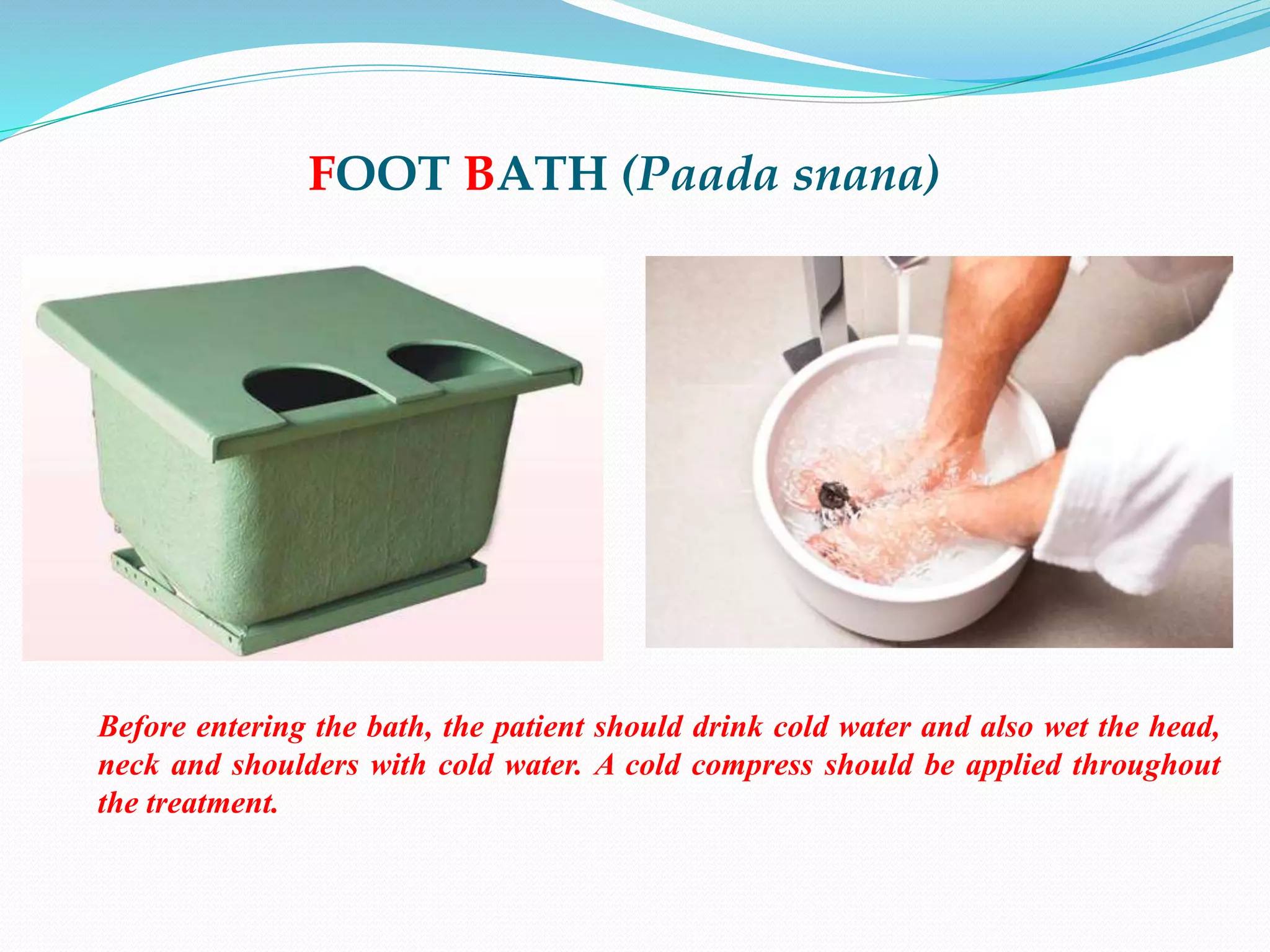
A hot foot bath is excellent for:
- Reducing Edema: The hydrostatic pressure of the water on the feet and ankles helps push interstitial fluid back into circulation, while the heat promotes local vasodilation.
- Improving Sleep: Drawing circulation downwards, away from the head, can have a calming effect on the mind, making it a wonderful practice before bed for those with insomnia or racing thoughts.
- Relieving Headaches: By a similar mechanism of drawing blood flow downwards (a reflex action), it can help relieve certain types of tension or congestive headaches.
3. Timing and Contraindications: The Physiological "Why"
Your BAMS training has taught you the contraindications for Snana. Now you can explain them with physiological reasoning. Let's review the most important ones.
Critical review of Snan (bathing), its effects on health
The paper 'Critical review of Snan (bathing), its effects on health' provides a clear list of classical contraindications. We will use this to ground our discussion on proper timing.
Please review the section titled 'Contraindication of Snana according to Ayurveda'. Focus on conditions like Ajeerna (indigestion), Bhuktavat (immediately after food), and Jwara (fever).
- Contraindication: Ajeerna (indigestion) or Bhuktavat (immediately after food).
- Integrated Rationale: After eating, the body naturally directs a significant amount of blood flow to the digestive tract to power Agni (digestive metabolism). Taking a warm bath causes peripheral vasodilation, shunting blood away from the gut and towards the skin. This "steals" the resources needed for proper digestion, leading to indigestion, bloating, and ama formation.
- Contraindication: Jwara (fever).
- Integrated Rationale: During the initial stages of fever (ama jwara), Agni is compromised and attempting to "cook" the ama. The body's core temperature is already elevated. An external hot bath can further raise body temperature, putting excessive strain on the cardiovascular system and disrupting the body's natural febrile response. Cool or tepid sponging might be appropriate, but full immersion is contraindicated.
- Contraindication: Atisara (diarrhea).
- Integrated Rationale: Diarrhea represents a hyper-mobile state of Apana Vayu and compromised Agni. A full bath, especially a warm one, can be overly taxing on a system that is already depleted and weak, potentially aggravating the condition.
Test your understanding!
A 50-year-old patient with a Pitta-Vata constitution complains of work-related stress, tension headaches, and mild burning feet at the end of the day. They currently take a quick, very hot shower every morning. Based on the principles of integrated Snana Vidhi, what two specific changes would you recommend for their bathing routine, and what is the dual (Ayurvedic & Modern) rationale for each?
Show answer
-
Change 1: Switch to a Lukewarm Shower and use Cool Water on the Head.
- Ayurvedic Rationale: Very hot water aggravates both Pitta (heat) and Vata (dryness). A lukewarm temperature is more balancing. Using cool water on the head is essential to protect the senses (indriyas) and brain from excess heat, pacifying Pitta's upward-moving nature which contributes to headaches.
- Modern Rationale: An excessively hot shower can over-stimulate the nervous system. A lukewarm temperature is more calming. Applying cool water to the head prevents overheating of the brain and sensitive ocular structures, and can help constrict scalp blood vessels, potentially easing tension headaches.
-
Change 2: Add an Evening Cool/Tepid Foot Bath.
- Ayurvedic Rationale: This practice directly pacifies the localized Pitta causing the burning sensation in the feet. It also helps ground and calm Vata, which is aggravated by stress, by drawing its energy downwards and away from the head, thus promoting relaxation before sleep.
- Modern Rationale: A cool foot bath provides direct relief for the burning sensation through thermal exchange. The practice has a sedative effect on the nervous system, helping to mitigate the physiological effects of stress (like high cortisol) and facilitating a transition into a more relaxed parasympathetic state, which is conducive to sleep and headache relief.
Conclusion
You have now connected the dots between classical Snana Vidhi and modern hydrotherapy. This synthesis elevates your ability to provide patient guidance from simple instruction to profound education.
Key Takeaways:
- Modern physiological principles (vasodilation/constriction, hydrostatic pressure, metabolic changes) provide a scientific basis for the doshic effects of Snana described in classical texts.
- An integrated bathing prescription considers water temperature, method (full vs. local, contrast), timing, and contraindications.
- Explaining the "why" behind your recommendations using both Ayurvedic and modern language enhances patient understanding, trust, and adherence.
- Simple techniques like foot baths can be powerful therapeutic interventions that are easy for patients to adopt.
By mastering this integrated approach, you can confidently guide your patients toward using the simple daily act of bathing as a powerful tool for maintaining health and managing disease.
Preview of the Next Lesson:
Our next module moves to another fascinating practice for the head and senses: Dhoomapana (medicated inhalation). We will begin by explaining the different types of Dhoomapana suitable for daily practice versus those reserved for therapeutic applications.