Welcome to the final lesson in our module on Dhoomapana.
In our previous lessons, we built a comprehensive understanding of Dhoomapana, covering its types, benefits, contraindications, and the severe health consequences of its excessive or improper use (atiyoga and mithyayoga). This knowledge of risks is the foundation for responsible clinical practice.
Today, we transition from classical understanding to modern application. Our learning objective is to critically assess the relevance and potential modifications of Dhoomapana in the context of modern respiratory health concerns. We will explore why this ancient practice is still relevant, the significant challenges it faces in the 21st century, and how we can innovate to preserve its therapeutic essence while enhancing its safety and acceptability.
1. The Enduring Relevance of Dhoomapana
In an era dominated by air pollution, chronic stress, and a high prevalence of upper respiratory tract ailments, the core purpose of Dhoomapana—to clear and strengthen the supraclavicular (urdhvajatrugata) channels—is more relevant than ever.
Classical texts indicate Dhoomapana for conditions involving vitiated Vata and Kapha in the head and neck, such as heaviness, sinus congestion, cough, and rhinitis. These are precisely the kinds of issues millions of people face today due to environmental factors and lifestyle.
A recent interventional study explored this very relevance.
international journal of scientific research
The paper 'Interventional Study on Effects and Issues Related to Use of Dhumapana' directly connects this classical procedure to modern problems.
Please read the introduction, specifically the paragraphs under 'Problems faced in this era-'. Note how the authors frame Dhoomapana as a potential solution for issues like upper respiratory tract infections, air pollution, and stress.
As the paper highlights, the practice is not just curative but also preventive, aiming to strengthen the respiratory tract's defenses. It also suggests a stress-relieving benefit, which aligns with the classical description of inducing lightness (laghavata) in the head. The study found Dhoomapana to be effective against common ailments like rhinitis, cough, and headaches.
2. Modern Challenges: From Practicality to Perception
Despite its relevance, advocating for traditional Dhoomapana in a modern clinical setting presents significant hurdles. These challenges can be divided into two main categories: practical usability and health perception.
A. Practical and User-Experience Challenges
For any Dincharya practice to be adopted, it must be reasonably convenient. The traditional method of Dhoomapana, as effective as it may be, poses several practical problems for a modern user.
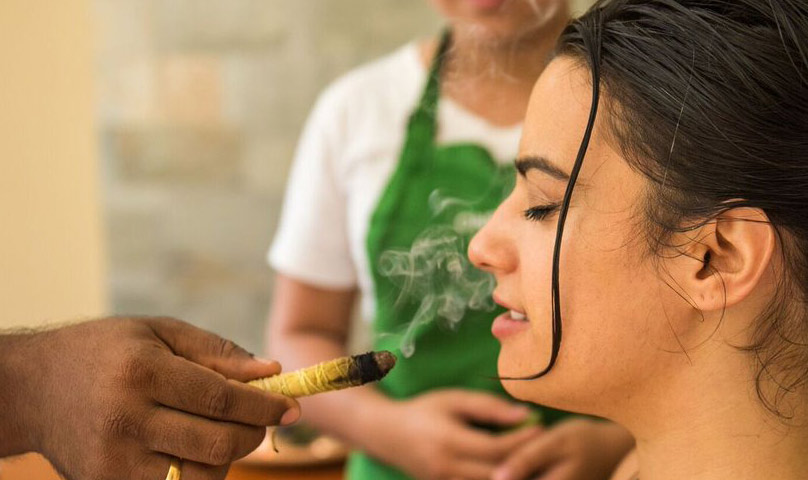
The study you just looked at provided valuable real-world feedback on this very issue.
international journal of scientific research
Let's revisit the same study to understand the practical difficulties faced by participants.
Please read the 'RESULT' and 'DISCUSSION' sections. Pay close attention to the 'Observations regarding Usage and Storage' and the conclusion that subjects struggled to get habituated due to these practical issues.
The findings are clear:
- Tedious Procedure: 50% of participants found lighting the dhumavarti tedious.
- Poor Compliance: Many subjects struggled to follow instructions regarding timing (on an empty stomach) and posture.
- Habituation Failure: The authors conclude that despite good effectiveness, subjects failed to adopt the practice due to these practical difficulties, including messy handling and storage.
As a clinician, this is a critical takeaway. A therapy is only effective if the patient actually performs it. These practical barriers are a major argument for seeking modifications.
B. Health and Perception Challenges
The most significant challenge is the "smoke" itself. In modern health discourse, inhaling smoke is unequivocally linked to respiratory and cardiovascular disease.
- Negative Connotation: The term "medicated smoking" can create immediate resistance from patients who associate any form of smoke inhalation with danger.
- Byproducts of Combustion: Traditional Dhoomapana involves burning organic matter. This combustion process, even with medicinal herbs, can produce tar, carbon particles, and other potentially harmful substances.
- Suboptimal Drug Delivery: From a modern pharmacokinetic perspective, smoke may not be the most efficient delivery system. The particle size generated by combustion can be inconsistent and often larger than what is ideal for deep lung penetration.
The paper "Modernizing the Tradition of Dhumapana by Nebulization" provides a sharp analysis of this issue.
modernizing the tradition of dhumapana by nebulization in ...
This paper critically examines the limitations of the traditional combustion method.
Please read the section 'Need of Integration of Dhumapana with Modern Inhalation Technology'. Focus on the discussion about particle size (the difference between what combustion produces and what is required) and the cautionary example of 'asthma cigarettes'.
This section makes two crucial points:
- Particle Size Mismatch: Combustion produces particles around 1-10 μm, whereas the ideal size for reaching deep into the lungs is 0.5–5 μm. This suggests that the traditional method may be more suited for the upper airways and less efficient for lower respiratory conditions.
- The Risk of Misuse: The history of "asthma cigarettes" serves as a powerful warning. A valid therapeutic concept (inhaling Datura stramonium) became dangerous when commercialized and stripped of proper medical supervision and procedural guidelines (vidhi).
3. Potential Modifications: From Smoke to Aerosol
Given these challenges, how can we adapt Dhoomapana for the 21st century? The key lies in separating the therapeutic intent (delivering herbal active principles to the respiratory tract) from the traditional method (combustion).
The most promising modification is the use of modern inhalation technologies, like nebulization, with Ayurvedic formulations.
The Nebulized Arka Concept
Instead of burning herbs to create smoke, we can use a distillation of herbs (Arka Kalpana) and turn it into a fine mist (aerosol) using a nebulizer. This approach preserves the core principle while overcoming the major challenges.
The paper on modernizing Dhoomapana explains this concept beautifully.
modernizing the tradition of dhumapana by nebulization in ...
Let's explore the proposed solution in the same paper. It explains how nebulizing herbal distillates can revolutionize this ancient practice.
Please read the sections 'Inhalation therapy over other methods of drug administration' and 'The scope of inhalation therapy by integrating with wisdom of Arka Kalpana'. Focus on how this modified approach offers advantages in terms of pharmacokinetics, safety (no combustion), and targeted delivery.
This modified approach provides several distinct advantages:
- Safety: It completely eliminates the byproducts of combustion (tar, carbon).
- Efficacy: Nebulizers are designed to produce particles in the optimal 1-5 μm range, ensuring the medicine can reach the smaller airways and alveolar spaces.
- Improved Pharmacokinetics: As the paper details, inhalation therapy provides rapid action and bypasses the first-pass metabolism in the liver, increasing bioavailability at the target site.
- Patient Acceptance: Nebulization is a familiar, trusted medical procedure. It is far more acceptable to a modern patient than being asked to inhale smoke.
- Purity and Stability: Arka (distillates) are sterile preparations that capture the volatile active compounds of herbs and have a long shelf life.
This evolution from smoke (dhuma) to aerosolized distillate (arka) is a perfect example of integrating Ayurvedic wisdom with modern technology to create a safer, more effective, and more acceptable therapy.
Test your understanding!
A 35-year-old software engineer complains of chronic sinus congestion and a feeling of heaviness in the head, which worsens when working in his air-conditioned office. He has a Kapha constitution. You identify him as a good candidate for a procedure to clear the channels of the head and neck. However, he expresses strong reservations, stating, "My grandfather had COPD from smoking, and I will not inhale any kind of smoke."
Based on this lesson, how would you critically assess this situation and what therapeutic approach could you propose? Explain your rationale.
Show answer
This situation requires a critical assessment that respects the patient's valid concerns while still addressing his clinical needs.
- Acknowledge the Patient's Concern: His fear is justified based on the known dangers of recreational smoking. It's important to validate his concern and differentiate the therapeutic goal from the harmful habit.
- Critique the Traditional Method in this Context: Forcing traditional Dhoomapana on this patient would be inappropriate and likely lead to non-compliance. His psychological barrier to "smoke" is a significant contraindication in practice. Furthermore, the practical difficulties of the traditional method make it a poor fit for a busy professional.
- Propose a Modified Approach: The ideal solution is to propose a modified form of therapy that retains the principle of Dhoomapana but uses a modern delivery system. I would explain the concept of nebulization with herbal distillates (Arka Kalpana).
- Rationale for the Proposal:
- Addresses Safety Concerns: Emphasize that this method is smoke-free. It uses a fine, cool mist (aerosol), not smoke from combustion, thus eliminating tar and other harmful byproducts.
- Aligns with Ayurvedic Principles: Explain that the goal is to deliver the gunas (qualities) of specific herbs (like Vacha, Pippali, or Haridra) that are Kapha-hara and srotoshodhaka (channel-clearing) directly to his respiratory tract. The Arka captures the essence of these herbs.
- Highlights Modern Benefits: Mention that the nebulizer creates optimally sized particles for better penetration into the sinuses and airways, potentially offering a more efficient effect than traditional smoke.
- Improves Convenience: Frame it as a modern, clean, and quick procedure he can easily perform at home, overcoming the practical barriers of the traditional dhumavarti.
By proposing nebulized Arka, you respect the patient's concerns, apply Ayurvedic principles, and leverage modern technology for a safer and more acceptable clinical solution.
Conclusion
Today we have bridged the gap between the ancient practice of Dhoomapana and the realities of modern clinical practice. We've seen that while its purpose remains highly relevant, its traditional form faces major hurdles.
Key Takeaways:
- Dhoomapana's classical indications for clearing Kapha and Vata from the head and neck are highly relevant for modern ailments related to pollution and lifestyle.
- The traditional method faces significant challenges: practical inconvenience leading to poor compliance, and the negative health perception associated with inhaling smoke.
- From a scientific viewpoint, the byproducts of combustion and suboptimal particle size are valid concerns with the traditional method.
- Modifications, particularly the use of nebulization with herbal distillates (Arka Kalpana), offer a scientifically sound and patient-friendly way to evolve the practice. This approach delivers the therapeutic agents without the risks of smoke, using a trusted and efficient modern technology.
Preview of the Next Lesson:
This concludes our module on Dhoomapana. We will now proceed to the next phase of the daily routine in Module 9: Ratricharya (Night Routine). Our first lesson will explain the principles of ahara (diet) during Ratricharya, focusing on dinner timing and food qualities to support agni and nidra (sleep).