Introduction
Welcome to your first lesson. Your goal is to increase your influence within your friend group, and this course is designed to give you the essential, practical skills to do just that. We'll begin by building the foundation for informal leadership. In this lesson, we will explore two powerful psychological principles: demonstrating initiative and applying social proof.
You've mentioned that you sometimes struggle with the confidence to speak up and the skills to persuade others. This lesson directly addresses that by breaking down not only what to do (the practical "how-to") but also why these methods work. Understanding these concepts will provide you with a mental toolkit to start subtly and effectively guiding your group's decisions.
The Power of Taking the First Step: Demonstrating Initiative
In any group without a formal leader, influence often gravitates toward the person who provides direction when there is none. This is the essence of taking initiative. It's not about being bossy or demanding; it's about being proactive and solving the small, constant problem of "What should we do?"
To understand this better, let's define what initiative really means and why it's so valuable.
Taking Initiative: A How-To Guide In 10 Steps
This article, from BetterUp, though written for a professional context, provides a clear and relevant definition of initiative and its benefits that apply perfectly to social dynamics.
First, read the sections that define initiative and explain its value. Focus on the opening paragraphs that answer what it means to take it and the idea of "ownership." Then, read the section Why should I care? to understand how this behavior makes you more influential.
Taking initiative positions you as a valuable member of the group—someone who is reliable and has direction. When you're the one suggesting plans, finding solutions, or simply getting the ball rolling, others naturally start looking to you for guidance.
But what does this look like in practice? The following short video offers some clear, actionable tactics.
How to Establish Yourself as a Leader - 9 Leadership Tactics
This video from the Practical Psychology channel breaks down leadership into simple, concrete actions. We'll focus on two of them that are forms of initiative.
Watch the segments on taking up more tasks and sharing your ideas. Notice how these actions make a person more "present" and central to the group's activities.
In your friend group, taking initiative might mean:
- Being the first to say, "Hey, I was thinking about what we could do this weekend. I saw this new place that looks cool, what do you guys think?"
- Organizing the details for a group outing, like buying tickets or booking a table.
- Voicing a clear opinion when the group is undecided: "I'd rather do X than Y, because..."
You mentioned that a lack of confidence can be a barrier. It’s a very common feeling. Taking initiative can feel risky, but recognizing the source of that hesitation is the first step to overcoming it.
Taking Initiative: A How-To Guide In 10 Steps
Let's return to the BetterUp article to address this specific challenge.
Read the subsection What causes lack of initiative. As you read about the "Internal causes," see if you recognize any of your own thought patterns. The key takeaway is that these feelings are normal and can be overcome with conscious effort.
Start small. Taking initiative doesn't have to be a grand gesture. A simple, well-thought-out suggestion is often all it takes to shift a group's direction.
The Science of "Following the Herd": Social Proof
Now let's turn to our second key concept: social proof. This is a deep-seated psychological trigger that makes us look to others to decide how to act, especially when we're uncertain.
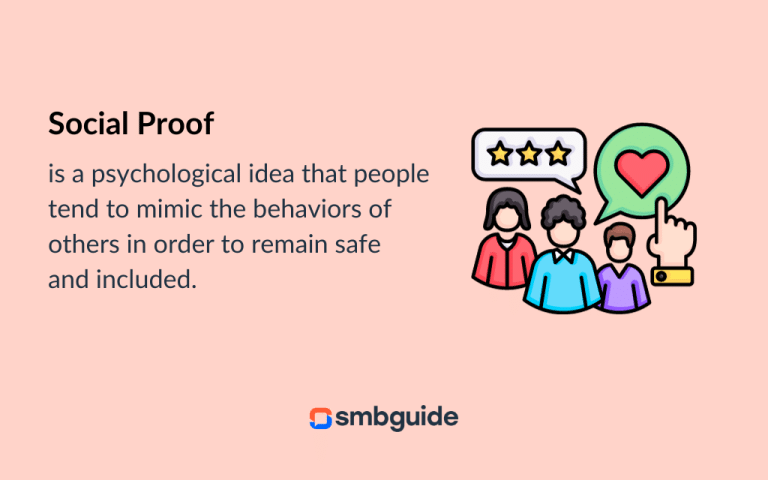
To see just how powerful and immediate social proof can be, watch this clip.
Words That Win: How To Instantly Influence Anyone (use ethically)
This video from Charisma on Command uses a compelling, real-world experiment to demonstrate social proof in action.
Watch the first part of the video, from the introduction to social proof. Pay close attention to the paparazzi example and the narrator's explanation: people wanted a photo with the YouTuber simply because they saw other people wanting a photo.
As the video shows, social proof can create perceived value out of thin air. In a situation of uncertainty (e.g., "Who is that person?"), people use the actions of the crowd as an information shortcut ("If others think he's important, he must be").
To understand the psychology behind this, let's explore the concept of "informational influence."
The Herding Effect: How Group Behavior Shapes Decision Making
This article from Leadership IQ delves into the science of group behavior, or "herding." It explains exactly why social proof is such a powerful force.
In the section "Why People Follow the Crowd," read the bullet point on Informational Influence. This is the formal psychological principle behind social proof, first named by psychologist Robert Cialdini. Then, to see how it applies in everyday life, skim the next section, Herding in Consumer Behavior, focusing on the examples of purchasing fads and best-seller lists.
In your friend group, social proof works in the same way. When a few people endorse an idea, it gains legitimacy. Others are more likely to agree, not necessarily because they’ve independently evaluated the idea, but because they trust the judgment of the early adopters. Your goal is to become the source of those initial endorsements.
Tying It Together: How Initiative Creates Social Proof
Initiative and social proof are not separate tactics; they are a powerful combination. Taking initiative is the action that sparks social proof.
When you're the first to propose a clear plan, you provide a starting point. When even one or two friends agree with your suggestion, you've created a small pocket of consensus. For the rest of the group, who are undecided, that consensus acts as powerful social proof. The path of least resistance is to go along with the emerging "herd," which you initiated.
This dynamic is common in all small groups, from corporate boardrooms to social circles.
The Herding Effect: How Group Behavior Shapes Decision Making
Let's look at one final passage from the "Herding Effect" article that connects these two concepts directly.
Find the subsection "Herding in Team and Organizational Decision Making." Read the final paragraph, focusing on the part that discusses how teams can benefit from a confident member.
This passage highlights the key link: a confident member takes initiative, and others cooperate. This cooperation is the social proof that solidifies your suggestion as the group's plan.
This creates a feedback loop:
- You take initiative by suggesting a plan.
- A couple of friends agree, creating early social proof.
- The rest of the group sees this and follows suit.
- The plan succeeds, reinforcing your status as someone who makes good decisions, making it even easier to lead the next time.
Conclusion
In this lesson, we've laid the groundwork for establishing informal leadership. You don't need a title or formal authority to influence your friends; you need to understand and apply the right psychological tools.
Here are the key takeaways:
- Taking Initiative: Be the one to provide direction when the group is undecided. Proposing ideas and solving the "what to do" problem makes you a valuable and central figure.
- Social Proof: People have a natural tendency to follow the actions and choices of others. This is a powerful shortcut for decision-making in uncertain situations.
- The Connection: Your initiative is the spark that creates social proof. By making a clear proposal, you give others something to follow. As soon as a few people agree, social proof kicks in and pulls the rest of the group along.
Start by looking for small opportunities to take initiative in your friend group this week. Suggest a movie, a place to eat, or an activity for the weekend. Notice what happens when you do.
In our next lesson, we will build directly on this foundation. Once you've taken the initiative to share an idea, how you say it matters immensely. We'll dive into the differences between passive, aggressive, and assertive communication to ensure your proposals are delivered with confidence and clarity.