Introduction
In the last lesson, you acted as a consultant, dissecting the broken workflows at the hypothetical "SyncLogistics" company. You created an opportunity map by identifying critical pain points—like the one-hour data lag in the CRM—and translating them into tangible business costs: wasted payroll, productivity loss, and the risk of customer churn. You have the raw intelligence.
Today, we weaponize that intelligence. Your analysis is useless if you can't get a decision-maker to listen. This lesson is about forging your findings into a sharp, powerful 30-second positioning pitch. This isn't a sales pitch to close a deal; it's a strategic tool to get your foot in the door with a COO, VP of Operations, or Head of Business Systems. Your goal is to convert your analysis into an executive's attention, securing the 15-minute meeting where you can make your case.
By the end of this lesson, you will have a battle-tested template and your own customized pitch, ready to deploy.
The Anatomy of a High-Impact Pitch
An effective pitch doesn't talk about "better UX" or "cleaner interfaces." It talks about money, time, and risk. Your audience, an operational leader, is measured on efficiency, cost savings, and stability. Your pitch must speak their language.
The core structure is simple: Problem, Solution, Value. You identify a pain they recognize, present yourself as the solution, and articulate the value in terms they care about.
A classic formula for this is "I help X achieve Y by doing Z." Let's see this in action.
The Perfect Elevator Pitch - Best Examples and Templates
This video from Patrick Dang breaks down the essential structure of a memorable elevator pitch. While his examples are from sales, the core psychology is identical. Pay close attention to the 'Problem, Solution, Value' sequence; we will adapt this for internal tools.
First, watch the section that introduces the 'I help X achieve Y by doing Z' formula (00:49 - 01:43). Then, focus on the detailed breakdown of how to structure a story using Problem, Solution, and Value (02:32 - 06:48).
From User Pain to Business Value
The "Value" component is where most designers fail. They describe features. You will describe business outcomes. This means translating the qualitative pain you've observed into quantitative results.
In our previous lessons, you've already learned the basis for this:
- Efficiency Gains: Faster task completion, fewer steps.
- Cost Avoidance: Reduced errors, lower training overhead.
- Risk Mitigation: Improved compliance, lower customer churn.
The key is to frame your proposed intervention as a direct path to one of these outcomes.
How to Sell UX: Translating UX to Business Value
This Nielsen Norman Group video provides the perfect mental model for this translation. It's about connecting what you, the UX professional, will do to what the business will get.
Watch the sections that explain the 'if we create this... then it will do that for the business' framework (00:26 - 01:07) and, most importantly, the part on calculating business impact (02:00 - 03:09).
As the video explains, you must connect a prescriptive metric (e.g., reduce manual data entry) to an outcome metric (e.g., cost savings). This is the language of investment.
Your 30-Second Pitch Template
Now, let's combine these concepts into a simple, repeatable template. A great pitch moves through three phases: Grab their interest, share your solution, and hook them for a follow-up.
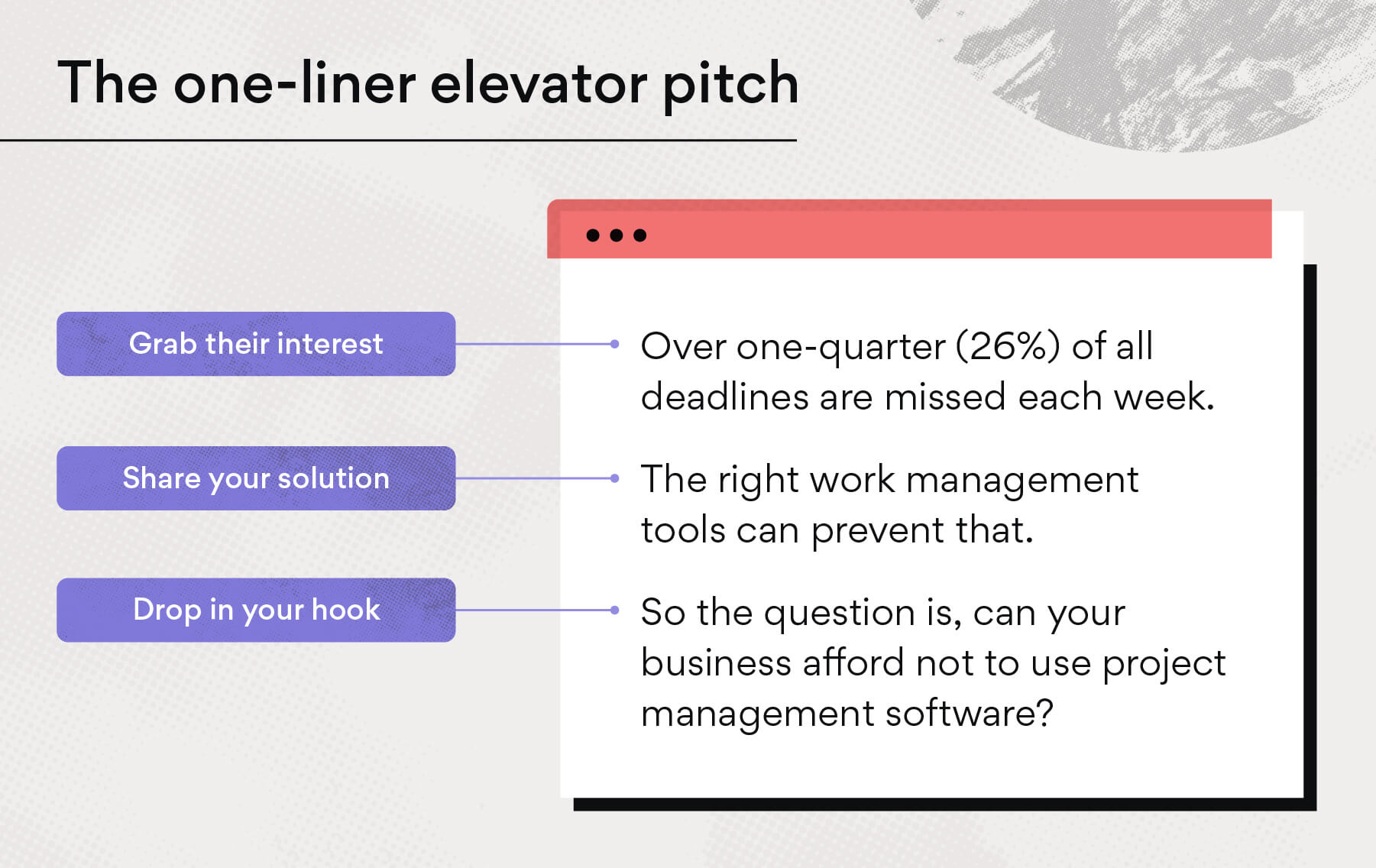
Here is your template. It's designed to be delivered concisely and confidently.
The Internal Tools UX Pitch Template
-
The Hook (Problem + Agitation):
- Start with a problem the leader likely knows they have.
"You know how your [Employee Role, e.g., 'support reps'] often have to [Painful Manual Action, e.g., 'put customers on hold to track down shipment information']?"- Immediately quantify the pain to show you understand the business impact.
"That delay not only hurts customer satisfaction but, from my analysis, that wasted time across the team costs you thousands each month in lost productivity."
-
The Solution (Your Positioning):
- Position yourself clearly using the "I help X achieve Y by doing Z" model.
"I'm a UX consultant who specializes in fixing those exact bottlenecks. I help logistics companies reduce operational drag by streamlining their internal software and data flows."
-
The Ask (Call to Action):
- Make a small, specific, low-risk request. You are not asking for a project; you are asking for 15 minutes.
"I have a few specific ideas for SyncLogistics that could cut your support call times significantly. Are you open to a 15-minute chat next week to walk through them?"
Your Deliverable: The SyncLogistics Pitch
Your turn. Using the "Opportunity Map" you developed in the previous lesson for SyncLogistics, complete the template above.
- Choose the most compelling pain point from your analysis (e.g., the CRM data lag, the manual CSV exports from
InventoryPro, etc.). - Fill in each section of the pitch template with the specific details of the SyncLogistics scenario.
- Write out the full, final pitch. Read it aloud to ensure it flows naturally and can be delivered in under 30 seconds.
This is not a theoretical exercise. This is the script you would use in a real-world encounter—whether in an email, a LinkedIn message, or a brief conversation.
Conclusion
You have now completed the full strategic arc of a consultant: you've analyzed a business process, identified the highest-value opportunities, quantified their financial impact, and forged that analysis into a powerful pitch to secure a meeting with a decision-maker.
Key Takeaways:
- Speak the Language of Business: Frame your value in terms of cost savings, efficiency gains, and risk reduction—not UX jargon.
- Problem-Solution-Value: Your pitch must quickly identify a known problem, present you as the credible solution, and articulate the business value of that solution.
- Sell the Meeting, Not the Project: The goal of your initial pitch is to earn 15 minutes of an executive's time. The call to action should be small, specific, and low-friction.
Preview of Next Lesson:
With this module, you've mastered the art of identifying and pitching an opportunity from the outside. In Module 2, Research Inside the Beast, we go deeper. You've gotten the meeting—now what? You'll learn how to structure and conduct research with internal stakeholders to gather the hard data needed to build an undeniable business case and design a solution that actually works. We'll begin by crafting the single most important tool in your research arsenal: the internal user interview script.