Hello. In the previous lesson, a consent check-in helped make a present choice clear: either person could say no, pause, or change their mind. This lesson addresses a different kind of uncertainty. Two friends might agree about what they want tonight but have different assumptions about texting tomorrow, spending time together, or telling others about the arrangement. You will see how to turn those assumptions into a mutual expectations agreement—a practical understanding about how to treat each other, not a promise of future sexual access.
Start with expectations, not a template
Friends-with-benefits arrangements do not come with standard rules. In this short video, people describe markedly different approaches: some have discussed what they want to know about other partners, while others rely on an unspoken sense that they understand each other. Notice how “honesty” can coexist with a wish not to hear intimate details.
Are We Exclusive? | Friends With Benefits | Side x Side | Cut
Watch “Are We Exclusive?” from Cut for contrasting examples of spoken and unspoken guidelines in friends-with-benefits arrangements.
Watch the guidelines, beginning when participants are asked whether they have any. Focus on the difference between having a particular preference and knowing that both people have agreed to it.
An expectation can feel obvious to the person holding it. “We’re friends” might mean frequent casual messages to one person and occasional plans without daily contact to the other. Neither has necessarily done anything wrong; the difficulty begins when an unstated preference is treated as a shared commitment.
The following reading distinguishes expectations from personal boundaries. Its examples concern relationships generally, but the distinction is useful here: an expectation describes what you hope will happen; a boundary identifies a limit on what is comfortable or acceptable for you. A mutual agreement is what two people decide they can both follow.
Healthy Relationships - Boundaries & expectations - love is respect
Read “Boundaries & Expectations” from love is respect to see why assumptions cause friction and why limits need to be communicated specifically.
Under “Expectations,” read the full discussion, from its opening explanation through the advice to talk about what to expect moving forward. Then, under “Boundaries,” read the explanation and examples, from how boundaries guide behavior through the observation that comfort can change. Continue through the end of “Boundaries,” focusing on why a mismatch calls for discussion rather than pressure.
For example, “I’d like us to reply to messages within an hour” is a proposed expectation. “I don’t check personal messages while I’m working” is a personal limit. A possible agreement is “We’ll use messages to suggest plans, and neither of us will assume a quick reply.” The agreement is useful because it reflects both people’s circumstances; it does not require either person to give up control of their time.
Cover ordinary life as well as intimacy
The most useful agreement addresses predictable points of friction without trying to regulate every moment. Scarleteen’s relationship-model guide treats time together, time apart, social ties, and privacy during conflict as matters people can discuss rather than infer from a relationship label.
Supermodel: Creating & Nurturing Your Own Best Relationship Models
Read selected parts of Scarleteen’s “Supermodel” for categories that can make an expectations agreement concrete, and for its reminder that a relationship model can evolve.
In “So, what might work – and what may not – for each of you?”, read the paragraphs headed “Time Together” on shared time and “Time Apart” on separate time. Read “You, Them & Everybody Else” on social ties. Later in the same section, read “Crisis Management” on conflict and privacy. Immediately after the divider below “Crisis Management,” read from the opening paragraph through the paragraph ending “renegotiate our agreements.” Focus on why the conversation continues after an initial agreement.
These categories can be made manageable by distinguishing four subjects:
- Contact: Which kinds of messages are welcome, at what times, and whether a reply is expected.
- Time together: Whether plans are usually made in advance, whether either person welcomes unannounced visits, and whether time together sometimes means simply being friends.
- Privacy: Whether the arrangement may be mentioned to others, whether photos or identifying details may be shared, and what each person needs to be able to discuss with a trusted friend or professional for support.
- Personal boundaries: Limits around space, touch, overnight stays, or other conduct that might otherwise be assumed.
Privacy deserves particular care. “Please don’t post about us or share intimate details” is more workable than “You may never talk to anyone about us.” Each person may need private support or advice, and neither should be required to keep a harmful situation secret. They can agree to avoid unnecessary identifying details while preserving the ability to seek help.
This agreement need not settle sexual-health precautions or exclusivity by implication. Those subjects require their own explicit conversation, which comes next in the course.
What a mutual draft sounds like
Imagine two friends discussing expectations. One enjoys spontaneous messages and sometimes wants to spend an entire evening together. The other likes hearing from them but needs quiet time after work and does not want visits without a plan. One is comfortable telling a trusted friend that the arrangement exists; the other does not want their name or intimate details shared.
A poor draft would copy one person’s preferences and call them the rules. A better draft records what they can both accept, while leaving room to revisit anything that does not work. For instance:
Our current understanding
Contact. We can message to chat or suggest plans. Neither of us owes an immediate reply. If one of us needs a quiet period, we can say so without having to justify it.
Time together. We will usually arrange visits in advance rather than drop by. We can also spend time together as friends without assuming it will become sexual. Either of us can decline an invitation without needing to offer a replacement date.
Privacy. We will ask before posting photos or telling others identifying or intimate details about the arrangement. Either of us may seek support or advice from someone we trust, while taking care with the other person’s private information.
Personal boundaries. We will ask before assuming an overnight stay or a change in how physically close we are. If either of us states a limit, we will respect it rather than debate it in the moment.
Reviewing this. These are our present expectations, not permanent rules. Either of us can raise something that is not working; we will discuss a change before assuming the old understanding still fits. If we cannot find terms we both want, we can stop the arrangement.
Notice what makes the draft mutual. It does not demand equal preferences: one person may want more contact than the other. It finds conduct both can accept—messages are welcome, but prompt replies are not owed. It also distinguishes a request from an entitlement. “We usually arrange visits” helps with planning; it does not grant access to someone’s home or time.
Writing something down can help people remember what they discussed, but it need not be a formal contract or an exhaustive list. A short spoken understanding may serve the same purpose if both people know what it means. What matters is that neither person silently substitutes “what I thought we meant” for “what we actually agreed.”
An agreement cannot give consent in advance
Expectations guide how people plan and communicate. Consent governs what each person freely chooses in a particular moment. The infographic below is a compact reminder of that distinction: consent is specific and ongoing, and someone can change their mind.
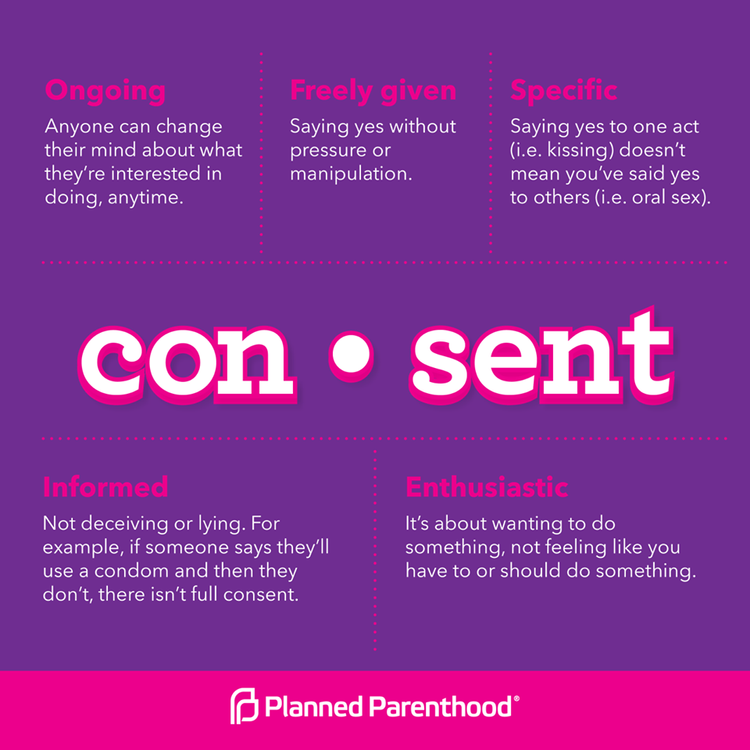
Even if both people wrote “overnight visits are welcome,” either can decline one tonight. Even if they agreed to discuss a boundary before changing their usual plans, a person can stop an activity immediately; they do not have to complete a review conversation first. Nor should “we agreed to be open with each other” become a reason to demand private information or argue someone out of a no.
This is why an expectations agreement is best treated as a revisable guide to everyday conduct, not a standing permission slip. It reduces avoidable surprises, while preserving each person’s freedom to make present choices.
Conclusion
A workable mutual expectations agreement makes assumptions discussable. It covers contact, time together, privacy, and personal boundaries in terms both people can follow; it also says how they will revisit terms that stop fitting. Its value is clarity, not permanence. No clause replaces a consent check-in, removes the right to decline, or obliges either person to continue the arrangement.
The next module turns to sexual-health precautions and exclusivity—subjects that likewise need explicit discussion rather than assumptions based on the friends-with-benefits label.