Hello. In the previous lesson, you assessed household responsibility by looking beyond the visible chore to the planning, decisions, and monitoring around it. That distinction matters when you ask for a change: “Please do the shopping” may leave the decision-making work exactly where it was.
This lesson focuses on the wording of that request. You will learn to describe what happened, explain its effect on you or the household, and name the change you want—without claiming to know whether the other person was avoiding responsibility, uncertain, or lacking a skill.
Turn an interpretation into a discussable event
Consider this opening: “You keep pretending you can’t make a simple shopping decision so I’ll do it for you.” It expresses a concern, but it also asserts a motive. Even if the concern is serious, the conversation can become a dispute about whether the person was pretending, rather than about who is making the decisions.
A more useful starting point is something both people can identify: “During the last two shopping trips, you messaged me to choose substitutes for items that were out of stock.” That sentence does not settle why it happened. It does establish which exchanges the request is about.
In this short excerpt from How to Complain Without Hurting Your Partner, Dr. Julie Gottman of the Gottman Institute describes three parts of a constructive complaint: a feeling, a specific issue, and a need. Notice that being direct about a problem does not require a judgment about the other person’s character.
How to Complain Without Hurting Your Partner | Dr. Julie Gottman | Relationship Advice
Watch How to Complain Without Hurting Your Partner for a compact model of how a complaint becomes a request.
Watch the feeling for the opening “I” statement, then the specific issue for the contrast between describing events and criticizing a partner. Finish with the need, where the speaker names an action that would address the issue.
The order can be flexible. You might begin with the event rather than the feeling, especially if you need to establish what you mean. The essential distinction is between “here is what happened and what I need” and “here is what kind of person you are.”
Separate behavior from impact
The Situation–Behavior–Impact model gives a way to make that distinction precise. It was developed for feedback more generally, but its three elements also work for a household conversation.
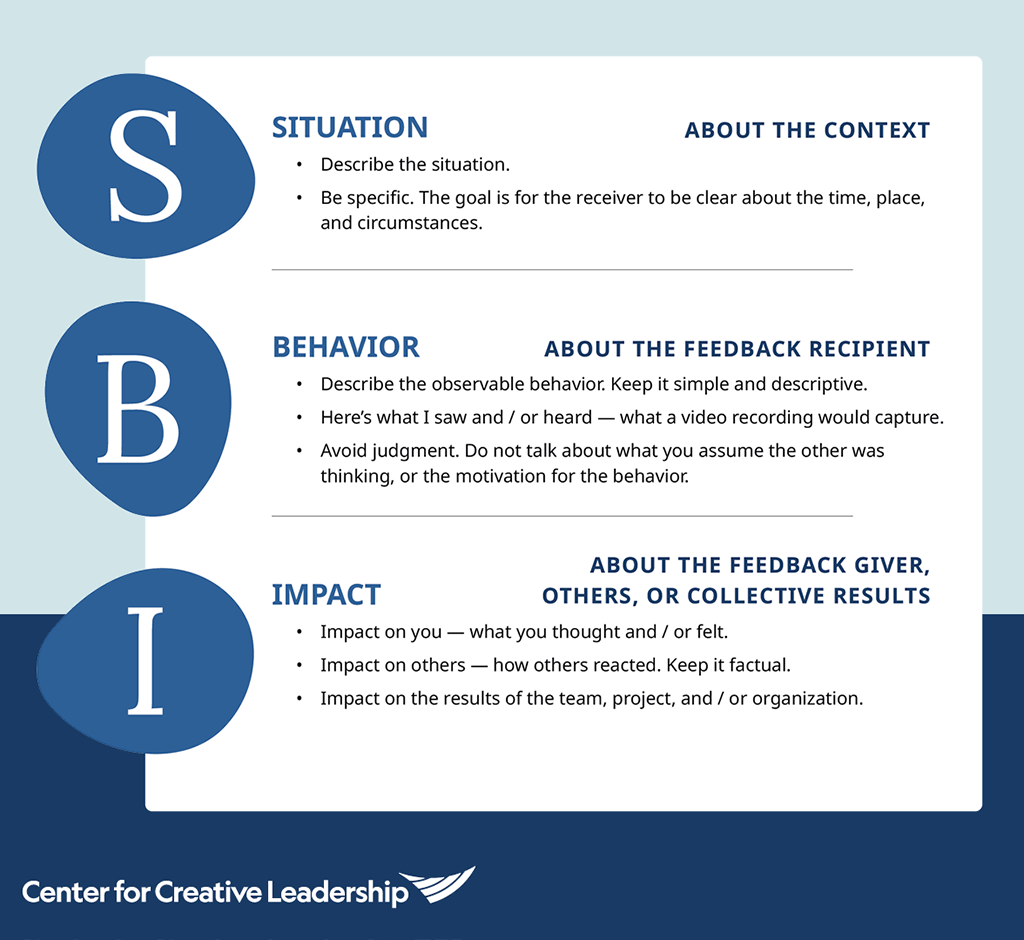
A situation locates the event: “During Sunday’s grocery trip.” Behavior describes what someone could have seen or heard: “You called twice to ask me which available vegetables to buy.” Impact explains what followed: “I stopped preparing dinner to compare the options, so I was still handling those decisions.”
Impact need not be limited to a feeling, though feelings can matter. In household work, the effect may be that you had to keep tracking a task, interrupt your own work, or check whether it was finished. Those effects make the mental load visible. State only effects you can speak to: “I spent twenty minutes choosing replacements” is different from “You wanted me to do the hard part.”
A statement can sound like an “I” statement and still smuggle in an accusation. “I feel that you are being lazy” is a judgment about the other person. “I felt frustrated when I had to make the substitutions during your shopping trip” names your experience and the event connected to it. You do not have to suppress frustration to be specific.
Accuracy matters more than forceful wording. “You always ask me what to buy” is vulnerable to a single counterexample. If the relevant events were the last two trips, say so. If you remember only one exchange, describe one exchange; do not turn it into a pattern by wording alone.
Ask for a change in the work, not just a different tone
An account of behavior and impact explains the problem, but it does not yet say what would improve it. “I need you to help more” could mean making a list, going to the store, or deciding what to buy. For a useful request, name the part of the responsibility you want handled differently.
Here is a complete request where the household has already agreed on a budget and basic food requirements:
“During the last two weekly shops, you messaged me to choose replacements for items the store didn’t have. I stopped what I was doing to compare options both times, so I was still making those shopping decisions. For the next two shops, please choose ordinary replacements yourself within the budget and food requirements we agreed on, and complete the purchase without sending me routine choices.”
The first sentence identifies the events. The second describes their effect, including the work that remained with the speaker. The last sentence asks for a specific, limited change. It leaves room for the shopper to exercise judgment rather than requiring them to follow an undisclosed list of “correct” choices.
That request depends on its context. If there is no agreed budget or standard, “decide yourself” may leave a real uncertainty unresolved. A more appropriate version might say:
“Yesterday, you asked me to choose between the available options while you were shopping. I ended up making the decision even though you were at the store. I’d like us to agree on the budget and any important food requirements before the next trip, then have you make the ordinary choices during it.”
This does not treat one question as proof of deliberate avoidance. Nor does it require the speaker to remain permanently available for every decision. It identifies what must be clear before independent decision-making is a fair expectation.
Notice also the difference between a specific request and a complete task agreement. The request opens a conversation about changing responsibility. The next lesson will address how to define end-to-end ownership, acceptable completion, and a review point so that the change does not depend on ongoing supervision.
Be clear without claiming certainty about intent
Avoiding an accusation does not mean minimizing repeated work or accepting an indefinite arrangement. You can say, “This has happened on several trips, and I cannot keep making shopping decisions while you do the trip,” if that is accurate. The sentence is firm about the pattern and its impact. It does not require you to prove what was in the other person’s mind.
Likewise, a response such as “I don’t know which substitute is acceptable” is information worth considering, not automatic proof that the request should be withdrawn. Perhaps a requirement was never explained. Perhaps the person needs to learn a routine choice. Perhaps the conversation reveals a disagreement about how much responsibility each person can reasonably take on. A request creates room to distinguish those possibilities while keeping the underlying workload in view.
A useful final check for your wording is whether it contains all three of these elements:
- Observable behavior: a particular event or accurately described pattern, not “you don’t care” or “you’re incompetent.”
- Impact: the work, interruption, result, or feeling you can describe from your own perspective.
- Desired change: an action specific enough that both people would recognize whether it happened, with any necessary standards made clear.
Good wording cannot guarantee cooperation. It can make the issue harder to misunderstand and easier to assess over time. If discussing an ordinary household request would put someone at risk of intimidation or retaliation, a better-crafted request is not the priority; safety and outside support matter more.
Conclusion
To request a fairer share of household responsibility, anchor the conversation in what happened, explain what work or effect followed, and state what you want to change. This lets you address a real burden without using a label such as “weaponized incompetence” to assert an intention you cannot establish from an exchange.
The next lesson builds on that request by turning a proposed change into a clear task-ownership agreement—one that specifies who handles the decisions as well as the visible task.