Introduction
Welcome to the first lesson of your course on the visual history of the bikini in Hollywood and music videos! The goal of this course is to build your personal "style repertoire" by analyzing the aesthetics and cultural impact of iconic on-screen swimwear.
As we discussed, the majority of this course will focus on contemporary styles from the last two decades. However, to fully appreciate modern trends, it's essential to first build a solid visual foundation. This first module does just that, looking at the pivotal moments that shaped the bikini's on-screen identity.
Today's lesson addresses your first learning outcome: to describe the key bikini visual milestones in Hollywood from the 1960s through the 1990s, including defining styles and associated actresses. We will trace the bikini's journey from a scandalous garment to a powerful tool for characterization and a definitive pop culture icon.
From Scandal to Silver Screen
Before the bikini could become a Hollywood staple, it had to overcome significant social resistance. Its invention in 1946 was met with more shock than celebration. To understand the context from which its cinematic journey began, please watch the following video segment.
Why Was the Bikini Invented? From Scandal to Icon
The video 'Why Was the Bikini Invented?' provides a concise overview of the bikini's controversial debut and its initial struggle for acceptance, setting the stage for Hollywood's intervention.
Watch the segment from 03:38 to 06:48. Focus on the reason for its scandalous reception and the key role early screen sirens like Brigitte Bardot played in changing public perception.
As the video highlights, the bikini was initially "banned in several countries" and deemed sinful. It took the rebellious glamour of European film stars to begin shifting its reputation. Brigitte Bardot's appearances in films like Manina, the Girl in the Bikini (1952) and at the Cannes Film Festival were instrumental. She demonstrated that the bikini could be a symbol of chic, youthful liberation, paving the way for its eventual embrace by Hollywood.
The 1960s: The Birth of an Icon
The 1960s was the decade the bikini truly arrived in Hollywood, largely thanks to one unforgettable cinematic moment. Stylistically, early '60s bikinis often featured more coverage than today's versions, with high-waisted bottoms and structured, longline tops, reflecting the pin-up aesthetic of the 1950s.
As the decade progressed, waistlines lowered and prints became bolder, aligning with the psychedelic and "flower power" movements. However, two specific on-screen moments defined the bikini's visual identity for years to come.
Case Study 1: Ursula Andress in Dr. No (1962)
This is widely considered the single most important moment in bikini history. Ursula Andress’s entrance as Honey Ryder didn't just popularize the bikini; it cemented a new archetype of the Bond girl—independent, capable, and unapologetically sensual.
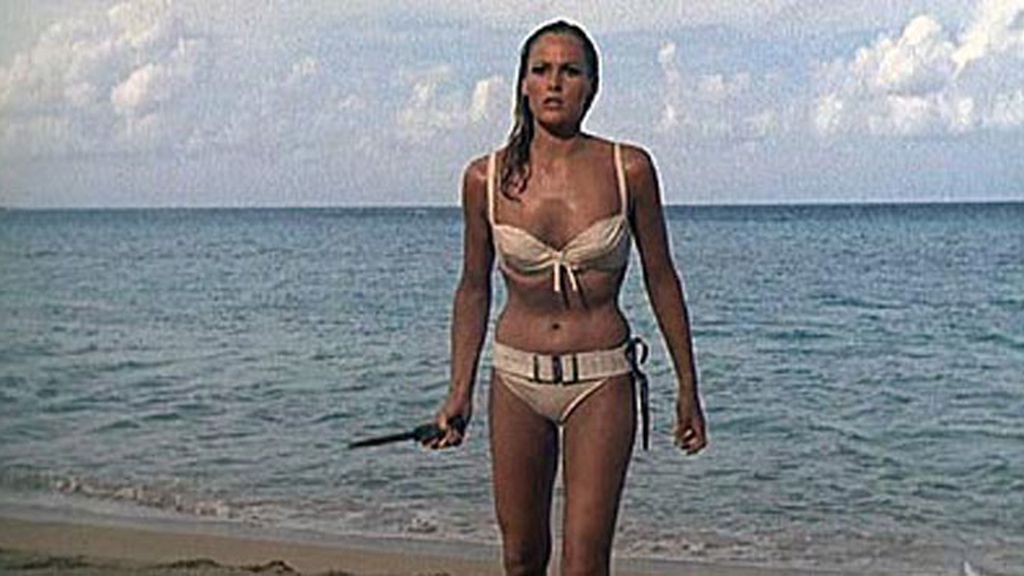
The visual statement was powerful. The bikini was a simple, functional white cotton, but the addition of a wide white belt with a large buckle and a scabbard for a diving knife transformed it from mere swimwear into a complete character costume. This look established a direct link between the bikini and on-screen action and adventure. We will analyze this bikini's legacy in much greater detail in our next lesson.
Case Study 2: Raquel Welch in One Million Years B.C. (1966)
If the Dr. No bikini signified glamour and adventure, Raquel Welch’s fur bikini four years later represented something far more primal.
Iconic bikini moments in Hollywood history
To understand the impact of this and other iconic moments, please read a brief section from 'The Ultimate Guide to Bikinis' from Sports Illustrated.
Read the section titled 'Iconic bikini moments in Hollywood history'. Start from the paragraph beginning 'In 1962, Ursula Andress...' and end with the paragraph about Raquel Welch concluding with '...mankind’s first bikini.' Focus on the descriptions of both Andress's and Welch's bikinis and their stated impact.
The deerskin bikini worn by Welch was not a practical piece of swimwear, but a hugely effective costume piece. A promotional poster featuring Welch in the outfit became an instant cultural phenomenon. The aesthetic was one of rugged, prehistoric sensuality, and it cemented Raquel Welch's status as a leading international sex symbol, further solidifying the bikini's power to create stars.
The 1970s: String Theory and Carefree Style
The 1970s saw a significant shift toward minimalism. Influenced by a more liberal and carefree social attitude, the defining silhouette of the decade was the string bikini. This style minimized fabric, emphasizing a natural physique and a sun-tanned look. Prints were often bold, floral, or psychedelic, echoing the wider fashion trends of the era.
An important cinematic milestone for this style came at the end of the decade with Bo Derek's appearance in the film 10 (1979). Her flesh-toned string bikini became an instant sensation, creating a look that was emulated globally and making her an overnight star. This moment underscored the bikini's power not just to reflect culture, but to create a fashion craze.
Other notable 70s moments include Pam Grier's crochet bikini in Coffy (1973). While impractical for swimming, it highlighted a trend of using different textures and materials to create unique visual statements, a concept that resonates with your own design background.
The 1980s: Athleticism, High-Cuts, and Teen Fantasies
The fitness boom of the 1980s directly influenced swimwear design. The most prominent trend was the high-cut leg, designed to elongate the legs and emphasize an athletic build. This look was famously popularized on television by Baywatch. Colors became brighter and bolder, with neon and primary color-blocking becoming common.
Case Study 1: Phoebe Cates in Fast Times at Ridgemont High (1982)
Perhaps the most legendary bikini scene of the decade is Phoebe Cates's slow-motion pool exit.

The visual power of this scene comes from its context. The bikini itself—a classic red triangle string top and bottom—is simple. However, its use within a popular teen film cemented it in the cultural imagination as the pinnacle of the "dream girl" trope of the era.
Case Study 2: Carrie Fisher in Return of the Jedi (1983)
A completely different, yet equally iconic, 80s bikini was Princess Leia's metal ensemble. While not a traditional fabric bikini, its design and impact are crucial to our survey. Made of brass, it was a piece of fantasy costuming that signified her enslavement by Jabba the Hutt. Visually, it communicated both vulnerability and defiance, as she ultimately uses the chain of her enslavement to liberate herself. This "bikini" has since become one of the most recognizable and referenced costumes in film history, demonstrating how the two-piece format could be adapted for any genre, even science fiction.
The 1990s: A Decade of Diversity
The 1990s didn't have one single defining bikini trend, but rather a diverse mix of styles that built upon previous decades. We saw:
- Athletic and Sporty Styles: High necklines and "boy short" bottoms gained popularity.
- The Tankini: A more modest two-piece option, with a tank-style top covering the midriff, debuted in 1998.
- The Femme Fatale: The bikini was used effectively in neo-noir and thriller films to characterize dangerous, seductive women.
A key example of this last point is Salma Hayek's role as a vampire queen in From Dusk Till Dawn (1996). Her dark crimson bikini, embellished with gold metalwork, was ornate and theatrical. Paired with a large snake, the look was pure spectacle, designed to be both mesmerizing and menacing. It perfectly characterized her as a predator, using the visual language of the bikini to convey danger. This style contrasts sharply with the "girl next door" look of the 80s, showcasing the bikini's versatility in creating character.
Conclusion
In this lesson, we traced the evolution of the bikini on screen from the 1960s to the 1990s. We've established a foundational timeline of key visual styles and the actresses who defined them.
Key Takeaways:
- 1960s: The bikini becomes a cultural icon, defined by Ursula Andress's adventurous glamour and Raquel Welch's primal sensuality. Styles evolved from high-waisted to lower-cut.
- 1970s: The string bikini dominates, reflecting a carefree culture and a move towards minimalism. Bo Derek's look in 10 was a defining fashion moment.
- 1980s: The aesthetic shifts to athleticism with high-cut legs and bold colors, immortalized by Phoebe Cates in teen cinema and Carrie Fisher in the realm of fantasy.
- 1990s: A decade of stylistic diversity, where the bikini was used to create a range of character archetypes, from the sporty girl to the dangerous femme fatale.
We began today by noting the profound impact of Ursula Andress's white bikini. In our next lesson, we will dedicate our entire session to a detailed case study of that single garment, analyzing its design, cinematic context, and enduring aesthetic legacy.