Introduction
Welcome to our fifth module, "Architectural Statements." In the previous module, we explored how swimwear can project "Action & Attitude," focusing on the blend of glamour and athleticism in halter and sport-inspired designs. We finished by analyzing how the Charlie's Angels franchise used these styles to define its heroines.
Now, we shift our focus from performance and energy to form and structure. This module is dedicated to bikinis that make a statement through their very construction. Our first lesson will establish the foundation by having you analyze the aesthetic principles behind cut-out, asymmetric, and one-shoulder bikini designs.
Instead of just covering the body, these styles treat it as a canvas. They are about creating visual tension, playing with negative space, and challenging traditional silhouettes. Given your own experience designing tops, you'll likely appreciate the clever pattern-making and conceptual thinking required to make these architectural pieces work both aesthetically and structurally.
1. The Principle of Negative Space: The Power of the Cut-Out
At its most basic, a cut-out is the removal of fabric from a garment. Aesthetically, however, it's more about what that removal creates. In design, this is often referred to as negative space—the empty area around and between subjects. Architectural bikinis masterfully use negative space to achieve several effects.
- Framing and Highlighting: A strategically placed cut-out acts like a frame, drawing the viewer's eye to a specific part of the body. A central cut-out on the sternum (a "keyhole"), cut-outs over the obliques, or small windows on the hips don't just reveal skin; they highlight the lines and curves of the torso.
- Creating New Silhouettes: Cut-outs can completely alter the perceived shape of a garment. A one-piece swimsuit with large side cut-outs can create the illusion of a high-waisted two-piece. This manipulation of form is a key element of architectural design.
- Suggestive Sensuality: Unlike a very low neckline or a micro-thong, the cut-out offers a more controlled and suggestive form of allure. It's a "peek-a-boo" effect that relies on the tension between what is covered and what is revealed. This deliberate choice often reads as more fashion-forward and confident.
The aesthetic seen in the TV series Euphoria is a prime example of this principle in wider fashion, where characters use daring, cut-out designs to project confidence and signal their awareness of high-fashion trends.

As you can see from the image, Maddy's style is defined by a fearless use of revealing and structurally interesting pieces. This same ethos drives the design of the most daring contemporary bikinis.
2. The Principle of Imbalance: Asymmetry and the One-Shoulder
The second core principle is asymmetry. While classic bikini tops like the triangle or bandeau are built on symmetry, architectural styles deliberately break this balance to create a more dynamic and visually interesting effect.
The most common form of this is the one-shoulder bikini top.
- Dynamic Lines: A one-shoulder design forces the eye to move diagonally across the body, following the line of the strap. This creates a sense of movement and energy that a static, symmetrical design lacks.
- Modern, Artistic Feel: Breaking from the predictability of a mirrored design immediately signals a more considered, "designed" object. It feels less like a basic piece of swimwear and more like a piece of wearable art.
- Evoking Elegance: The single-strap silhouette can also carry a hint of sophistication, echoing the lines of a classical Grecian toga or a formal evening gown. This allows it to occupy a space between a casual beach bikini and a more formal resort-wear top.
3. Synthesis: The Architectural Bikini
The most impactful designs are often those that combine these principles. A bikini can be both asymmetric and feature multiple cut-outs. This is where the term "architectural" becomes most fitting—the garment is constructed with deliberate lines, angles, and voids to create a sculptural effect.
Let's analyze a perfect example of this synthesis.
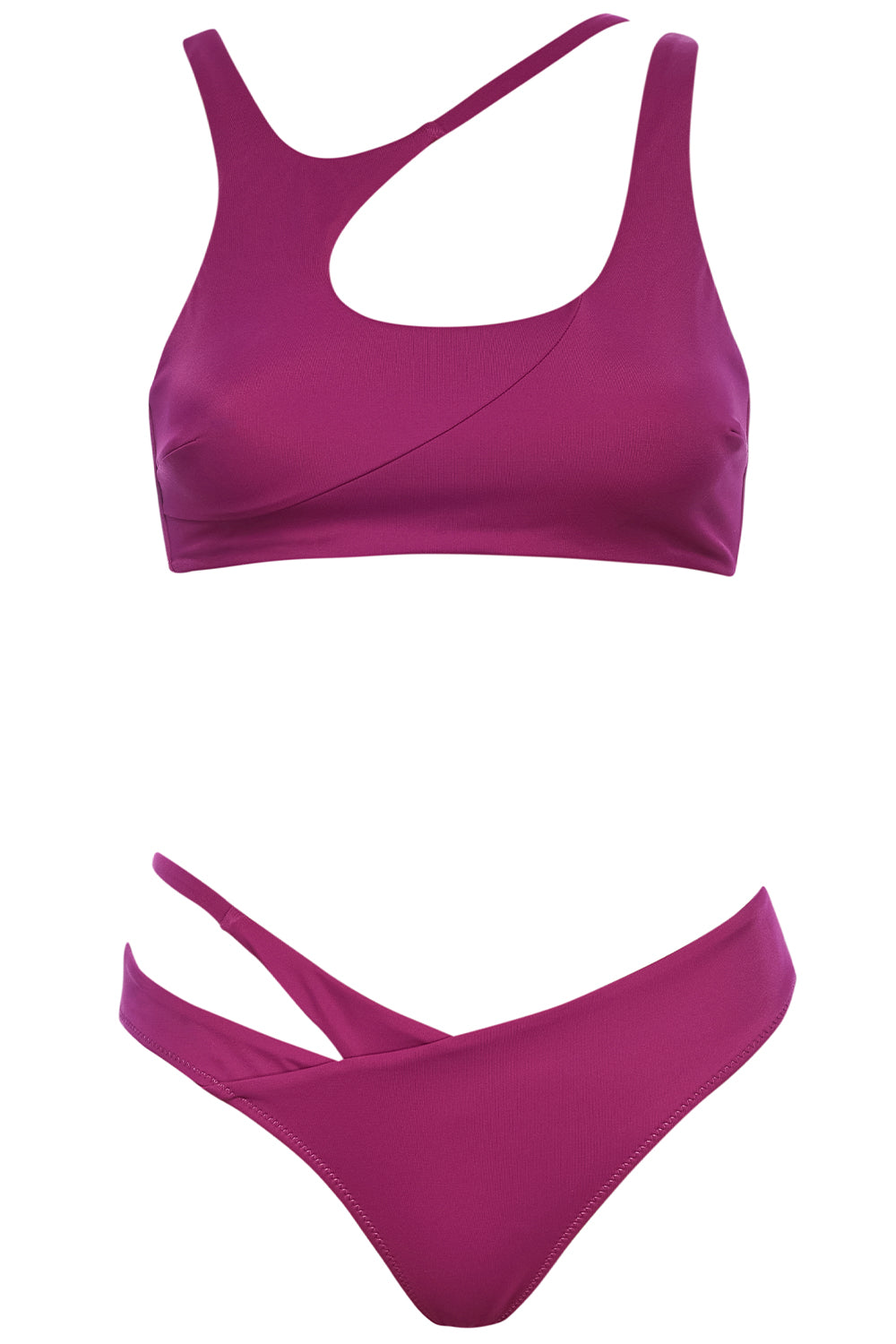
Look closely at this design and consider how the principles we've discussed are working together:
- Asymmetry: The top immediately establishes imbalance. There is one wide, structural strap and a second, much thinner strap. This is not a simple one-shoulder design; it's a more complex asymmetrical arrangement that creates a unique shape over the décolletage.
- Negative Space: The two straps work together to create a prominent triangular cut-out over the chest. On the bottoms, the wrap-around straps create similar negative space at the hips. These aren't just holes; they are carefully shaped voids that are integral to the overall design.
- The Resulting Aesthetic: The combination of these elements produces a look that is undeniably modern, edgy, and fashion-forward. The visual interest comes from the structure of the bikini itself. It's designed to be looked at as an object, not just as a piece of functional swimwear. It makes a statement of confidence and high-fashion sensibility.
As you build your style repertoire, think of these designs as a distinct category defined by this intentional manipulation of form, line, and space.
Conclusion
In this lesson, we have established the foundational aesthetic principles for a major category of contemporary swimwear. By moving beyond simple coverage, these designs make bold, architectural statements.
Key Takeaways:
- Cut-Outs utilize negative space to frame and highlight parts of the body, creating visual interest and a modern, suggestive sensuality.
- Asymmetric and one-shoulder designs break symmetrical balance to create dynamic lines that feel artistic and sophisticated.
- When combined, these principles result in architectural bikinis that function as sculptural pieces, making a strong fashion-forward statement through their very structure.
This foundational understanding of why these designs work will be crucial for our next lesson. We will build directly on these concepts to evaluate how strategic cut-outs are used in music videos to create high-impact, fashion-forward visual statements, moving from the principles of design to their application in popular media.