Introduction
Welcome back! In our last lesson, we established a framework for analyzing the triangle bikini by breaking down its core aesthetic appeal and its main visual variations—cut, material, color, and styling. We identified it as the minimalist archetype of swimwear, a blank canvas whose meaning is painted by specific design choices.
Today, we put that framework into practice. Our goal is to compare the use of triangle bikinis in 2000s-2020s beach films versus action films for character development. We will explore how the same basic garment can tell two very different stories depending on the cinematic genre and narrative intent. In one context, it signifies authenticity and lifestyle; in another, it becomes a costume of power and high-impact visual punctuation. This comparative analysis is a crucial step in building your style repertoire, as it moves from identifying a style to understanding its narrative function.
1. The Beach Film: Authenticity and Subculture
In beach films of the 2000s and beyond, the triangle bikini is often not just a costume but part of the environment. It functions to establish a character's authenticity within a specific subculture, most notably surf culture. Here, the bikini is practical, lived-in, and an expression of a lifestyle centered around the sun and sea.
Character Development through Styling:
- Authenticity: Characters are often portrayed as skilled athletes. Their bikinis are functional, allowing for movement without being overly ostentatious. A common styling choice is the mismatched bikini (e.g., a solid top with a printed bottom), which suggests a casual, effortless approach to dressing that prioritizes function and personal collection over a perfectly curated "look."
- Youthful Energy: Bright colors, neons, and simple patterns are used to convey energy, freedom, and the spirit of youth. The bikini is a uniform of summer and rebellion.
Case Study: Blue Crush (2002)
The quintessential example of this aesthetic is Blue Crush. The film uses triangle bikinis to immediately establish its female protagonists as dedicated, serious surfers, not as passive objects of beauty.
First, watch this clip from the film to see how the characters and their attire are introduced in an active, competitive context.
Blue Crush | Kate Bosworth and Michelle Rodriguez Surf to "Cruel Summer"
This scene from 'Blue Crush' introduces the main characters as they confront a group of male surfers. Notice how their bikinis are styled and how they function within this athletic, confrontational scene.
Watch the entire clip (0:03 - 7:19). Pay attention to how the women's mismatched triangle bikinis are part of their 'uniform' as surfers. They are functional and worn with an air of athletic confidence, not for decorative purposes.
Now, let's look at a key promotional image.

The styling choices in Blue Crush build character:
- Kate Bosworth's character, Anne Marie, is often in mismatched bikinis that look worn and loved, marking her as a local and a serious contender, not a tourist.
- The bikinis are simple triangle cuts, allowing for maximum freedom of movement, essential for the high-performance surfing depicted.
- As noted in a Complex article we'll review, this look helped "encourage a new generation of female surfers to get in the water," cementing the link between the triangle bikini and female athleticism.
2. The Action Film: Power, Seduction, and the "Bikini Moment"
In contrast, action films deploy the triangle bikini more strategically. It's rarely an everyday uniform. Instead, it appears in a specific, high-impact "bikini moment" designed to define a character's traits in a memorable way. Here, the bikini is a deliberate costume choice that often communicates a duality: seduction and danger, femininity and power.
Character Development through Styling:
- The Power Statement: Sleek, often monochrome (especially black or white) or a single bold color, the bikini is perfectly coordinated. This signals control, intention, and status. It's not casual; it's a declaration.
- The Modern Femme Fatale: The bikini highlights the character's physical prowess and confidence. It can be used as a tool of misdirection or as an overt display of power, showing that the character is both alluring and deadly.
Case Studies: Charlie's Angels: Full Throttle (2003) & Lara Croft: Tomb Raider (2001)
To understand this dynamic, let's examine a few key examples.
The 25 Most Iconic Bikini Moments in Movie History
Let's turn to the article 'The 25 Most Iconic Bikini Moments in Movie History' by Complex. It provides concise analysis of how bikinis are used to define characters in action-oriented roles.
Please read two entries: entry #13 on Demi Moore in 'Charlie's Angels: Full Throttle' and entry #11 on Angelina Jolie in 'Lara Croft: Tomb Raider'. Focus on how the bikinis are described in relation to the characters' power and intimidation.
The analyses in the article pinpoint the function of the bikini in action films:
- Demi Moore in Charlie's Angels: Full Throttle: Her appearance in a black triangle bikini serves as a major character reveal. As the fallen Angel Madison Lee, her physically formidable presence is meant to establish her as a powerful and intimidating antagonist. The article notes she "proved that not only does she still have it," framing the moment as a display of enduring power.
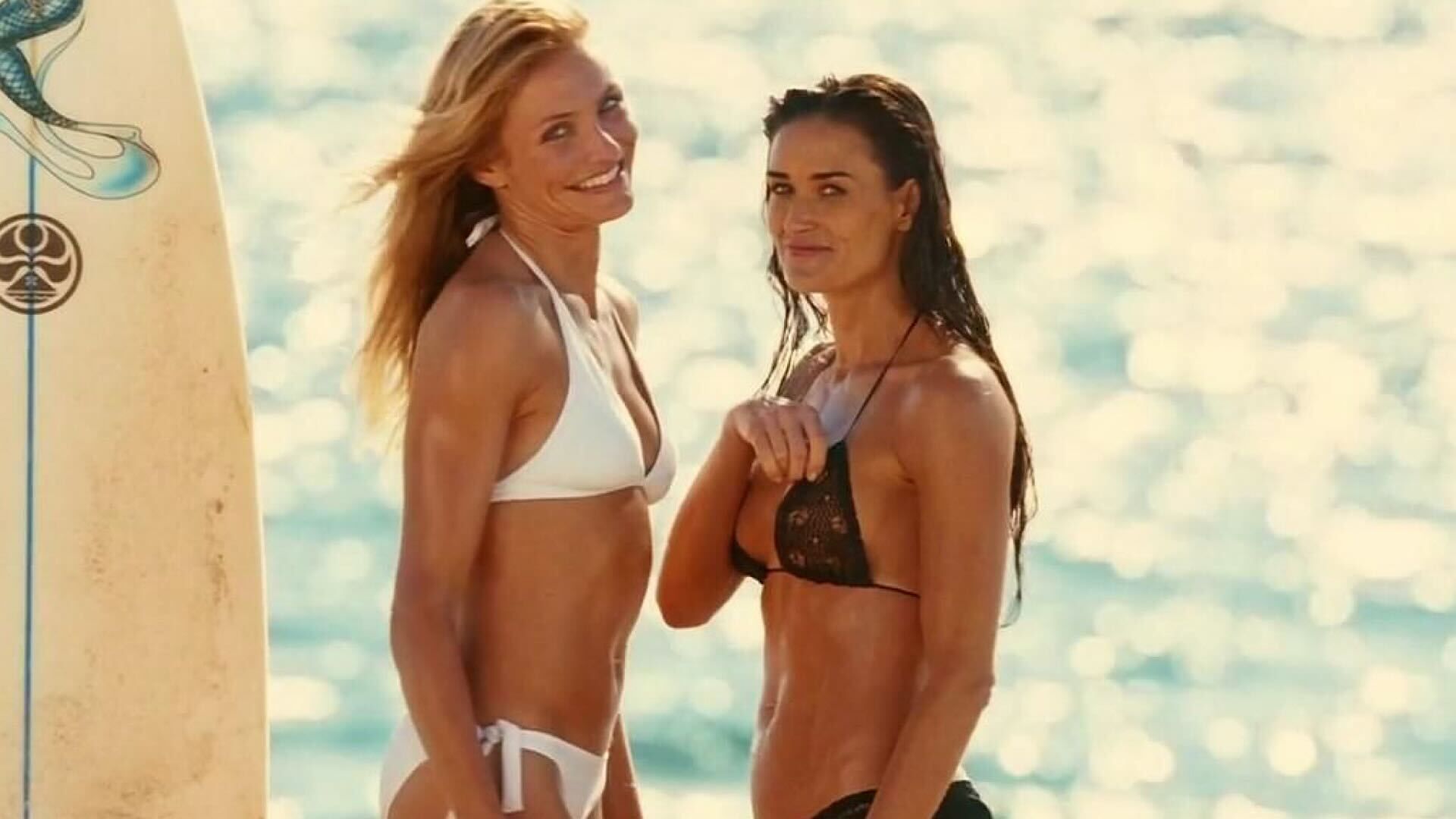
- Angelina Jolie in Lara Croft: Tomb Raider: Her simple black bikini in a jet-skiing scene reinforced her character's identity. The article states she proved an action heroine "can be incredibly sexy, feminine and still intimidating as hell." The choice of a minimalist black triangle bikini strips the character down to her essential attributes: capability and confidence.
In both instances, the bikini is not about fitting into a beach subculture. It's about defining the character as a powerful individual. The color choice (black) is classic for conveying sophistication, danger, and authority.
3. Comparative Analysis
Let's summarize the key distinctions in a table, using the aesthetic variables we learned in the last lesson.
| Feature | Beach Films (e.g., Blue Crush) | Action Films (e.g., Charlie's Angels) |
|---|---|---|
| Narrative Context | Environmental: Part of a character's natural lifestyle and subculture. | A "Moment": A deliberate, high-impact scene to define character. |
| Primary Function | Authenticity & Practicality: Establishes character as a skilled "local." | Power & Seduction: Establishes character as powerful, dangerous, or iconic. |
| Styling | Casual, functional, often mismatched tops and bottoms. | Intentional, sleek, and coordinated. A complete, polished "look." |
| Color Palette | Brights, neons, prints. Reflects youth, energy, and a casual vibe. | Often monochrome (black, white) or a single bold color for maximum impact. |
| Character Portrayal | The "skilled athlete," the "authentic free spirit." | The "femme fatale," the "intimidating heroine," the "powerful antagonist." |
This comparison makes it clear: while the garment is the same, its narrative purpose is entirely different. In beach films, the triangle bikini says, "I belong here." In action films, it says, "Look at me."
Conclusion
Today we've seen how cinematic context fundamentally changes the meaning of the triangle bikini. It can be a low-key symbol of an authentic lifestyle or a high-impact costume piece that defines a character's power.
Key Takeaways:
- Beach Films use the triangle bikini to integrate characters into a setting and subculture, using casual styling (like mismatched pieces) and bright colors to signal authenticity, athleticism, and youth. Blue Crush is the archetypal example.
- Action Films use the triangle bikini for iconic "moments" that punctuate the narrative. Sleek, coordinated designs in bold or monochrome colors are used to portray characters as powerful, confident, and often dangerously alluring. Charlie's Angels: Full Throttle and Lara Croft exemplify this.
- The difference lies in intent: one is for lifestyle integration, the other for character declaration.
In our next lesson, we will continue this contextual analysis by shifting our focus from film to music videos. The learning outcome will be to contrast the styling of string bikinis in pop music videos versus hip-hop music videos to convey different cultural messages, exploring how genre conventions shape the bikini's meaning.