Introduction
Welcome to the final lesson of your course on hydroponics. In our previous lesson, we built a simple revenue projection and saw how dramatically your potential income can be influenced by the market price of your produce. That price is not arbitrary; it's largely determined by where and how you sell your crops.
This lesson directly addresses the final learning outcome of the course: Identify potential sales channels for a small-scale urban farm. We will explore the different paths your produce can take from your hydroponic system to a paying customer. Understanding the pros and cons of each channel is one of the most important strategic decisions you will make as you plan your business.
By the end of this lesson, you'll be able to distinguish between the major types of sales channels, understand their respective advantages, and know what questions to ask to figure out which ones are right for your future venture.
1. The Two Main Categories of Sales Channels
When you sell a product, you can either sell it directly to the person who will ultimately use it, or you can sell it to another business that then sells it to the end user. In farming, this distinction is crucial and defines your primary strategy.
Urban Farming Business Opportunities: 10 Lucrative Models
The article 'Urban Farming Business Opportunities' provides a very clear framework for thinking about sales. We'll use it to establish our two main categories.
First, read the section 'Strategic Sales Channels to Maximize Margin'. Focus on the headings and descriptions for 'Direct-to-Consumer (DTC)' and 'Direct-to-Business (D2B)'. Then, read Question 10 in the FAQ at the end of the article, which provides a concise summary of this concept.
As the article explains, your options fall into two main buckets:
- Direct-to-Consumer (DTC): You sell your produce directly to the final customer. This channel offers the highest profit margin because there are no middlemen. However, it requires more of your time and effort in marketing, sales, and customer service.
- Direct-to-Business (D2B): You sell your produce to another business, such as a restaurant or grocery store. This channel generally offers more consistent, high-volume sales, but at a lower price per item (a lower margin) because you are selling wholesale.
A successful small farm often uses a mix of these channels. Let's explore the most common options within each category.

2. Exploring Direct-to-Consumer (DTC) Channels
DTC is about building a direct connection with the people who eat your food. This allows you to tell your story, justify a premium price for freshness and quality, and build a loyal customer base.
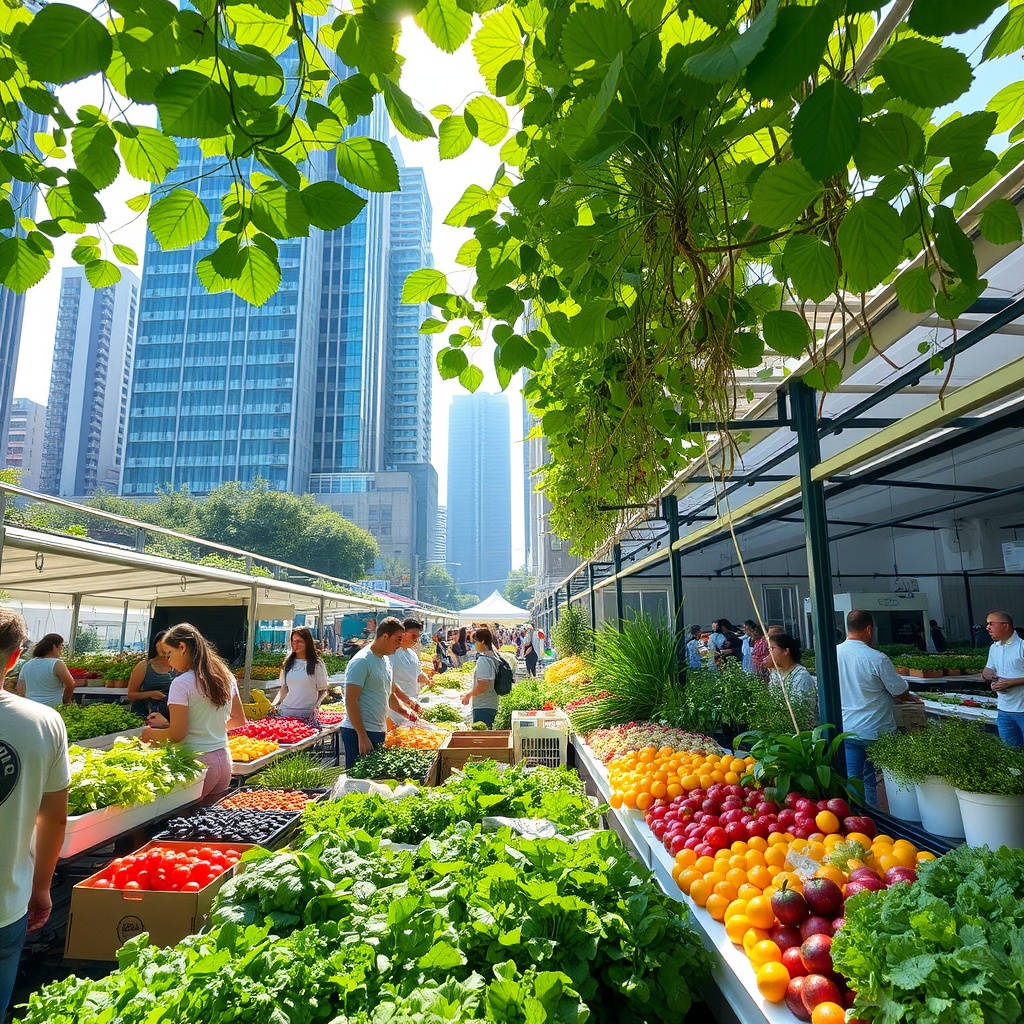
a) Farmers' Markets
This is the classic DTC channel. You set up a stall at a local market and sell your harvest directly to shoppers.
Pros:
- Excellent for building your brand and getting direct customer feedback.
- You can charge retail prices, maximizing your margin.
- Great for testing demand for new or unusual crops.
Cons:
- Can be very time-consuming (preparation, staffing the booth all day).
- Sales are weather-dependent and can be inconsistent.
- May require specific permits or certifications to participate.
b) Community Supported Agriculture (CSA) / Subscription Boxes
The CSA model involves customers paying upfront for a "share" of the farm's harvest, which they receive as a regular (usually weekly) box of produce. This has become a very popular and effective model for small-scale farms.
To see how this works in practice, let's watch a farmer who has built his business around this model.
The video 'How To Sell Your Vegetables' by Josh Sattin Farming provides a fantastic, ground-level view of running a subscription box service.
Watch the first part of the video, from the beginning to 09:18. Pay close attention to how he structures his 'greens box' program: pricing, delivery, what's included, and the pros and cons he mentions, like managing customer turnover.
As you saw, the subscription model provides predictable income and helps with crop planning. The main challenge is the logistics of packing, delivery, and constantly marketing to find new customers as others leave the program.
3. Exploring Direct-to-Business (D2B) Channels
D2B channels are your wholesale outlets. The goal here is to sell larger quantities in fewer transactions.
a) Restaurants and Chefs
Selling to local chefs can be a lucrative and prestigious channel. Chefs often seek out unique, high-quality, and ultra-fresh ingredients to make their menus stand out.
However, this is a demanding channel. Chefs require consistency in quality and volume, and they often want very specific products. The key to success here is to find a niche. A brilliant example of this strategy comes from analyzing the vertical farming industry.
Vertical farms are failing - what we can learn from their mistakes | Nicholas Varas | TEDxOshawa
This TEDx talk, 'Vertical farms are failing', explains why many large-scale vertical farms have struggled. More importantly, it highlights a company that succeeded by adopting a smart product-and-channel strategy.
Watch the segment from 05:36 to 06:17. Notice how the successful company, Oishi, didn't try to compete on commodity crops like lettuce. What did they grow, and who did they sell it to?
The Oishi example is a masterclass in strategy. Instead of growing low-margin leafy greens, they focused on a premium, hard-to-get product (Japanese strawberries) and targeted a specific D2B channel (high-end restaurants) that was willing to pay a premium for it. This shows how your choice of crop and your choice of sales channel must be aligned.
b) Local Grocery Stores and Retailers
Supplying local, independently-owned grocery stores or specialty food shops can be another great D2B option. This can provide steady demand for your core crops, like lettuce and herbs.
The trade-off, as mentioned in the LINK article, is that this requires more standardized packaging and a lower wholesale price. You are competing for shelf space, so your product needs to be consistent and professionally presented.
4. Making the Choice: The Importance of Market Research
You now know the main channels, but which are right for you? There is no single correct answer. The best strategy depends entirely on your specific location, your production capacity, and the local demand. You must do your homework.
[PDF] PLANNING FOR SMALL-SCALE CONTROLLED ENVIRONMENT ...
The planning guide from the British Columbia Ministry of Agriculture provides a fantastic checklist of questions to ask as you research your local market.
Read the sections 'PLAN FOR POTENTIAL MARKETS AND REVENUE' and 'WITH EACH OF THESE POTENTIAL PURCHASERS, ASK:'. Think of these bullet points as a script for your own market research.
Before you invest a single dollar in equipment, you should be able to answer the questions from that guide. Go to farmers' markets in your area. Talk to local restaurant owners. Look at the prices and quality of greens in local shops. This research is non-negotiable. As the presenter in the "How To Sell Your Vegetables" video stresses (from 11:26), you have to figure out what your specific market wants and is willing to pay for.
Finally, remember that you may also need to comply with local business licensing and food safety regulations, as highlighted in the BC government guide (LINK, section 2). Always check with your local authorities about the requirements for selling food.
Conclusion
This lesson, and this module, have equipped you with the foundational business concepts needed to turn a hydroponic hobby into a viable venture.
Key Takeaways:
- DTC vs. D2B: Your sales channels will either be Direct-to-Consumer (e.g., farmers' markets, CSAs), offering high margins, or Direct-to-Business (e.g., restaurants, retailers), offering higher volume.
- Channel Defines Strategy: The channel you choose influences everything from the crops you grow to your pricing and branding. A CSA requires logistical prowess, while selling to chefs requires unique products and consistent quality.
- Align Product and Channel: The most successful small producers often find a niche by matching a specific high-value product to a specific sales channel that values it (like Oishi's strawberries for high-end restaurants).
- Research is Essential: You cannot form a business plan in a vacuum. You must research your local market to understand demand, pricing, and competition before you start.
Your Next Step:
You have now completed the entire course, from plant biology to business planning. Your final challenge is to synthesize what you've learned. Using the frameworks from this last module, try to create a simple, one-page business plan for your hypothetical DWC system. It should include:
- A list of startup costs (CapEx).
- An estimate of monthly running costs (OpEx).
- A simple annual revenue projection.
- A list of 2-3 potential sales channels you would target, with a justification for your choice.
This exercise will solidify your understanding and give you a tangible document to guide your first real steps into the world of hydroponic enterprise. Congratulations on completing the course