Introduction
Welcome back! In our last lesson, we explored pH, learning how it acts as a "gatekeeper" controlling which nutrients your plants can absorb. You learned that maintaining a pH between 5.5 and 6.5 is crucial for nutrient availability.
Now, we'll turn our attention to the second of the two most critical parameters you'll manage in your hydroponic solution. While pH controls access to nutrients, today's topic, Electrical Conductivity (EC), tells you about the quantity of nutrients present.
This lesson directly addresses the learning outcome: Explain Electrical Conductivity (EC) as a measure of nutrient solution strength and how to measure it. Understanding EC is essential for your business goals. It allows you to feed your plants precisely, avoiding the waste of expensive nutrients and preventing crop damage from over or under-feeding, thereby maximizing your yield and profitability.
Part 1: What is Electrical Conductivity?
At its core, Electrical Conductivity is a measure of how well a material conducts electricity. How does this relate to hydroponics?
Pure water, like distilled water, is a very poor conductor of electricity. However, when you dissolve mineral salts—which are the fundamental components of your hydroponic nutrients—they break apart into positively and negatively charged ions. These ions act as charge carriers, allowing the water to conduct electricity.
The more ions present in the solution, the higher its ability to conduct electricity. Therefore, measuring EC gives us a direct indication of the total amount of dissolved salts in the solution.
Let's watch a short video that defines EC and introduces the key concepts.
What is Electrical Conductivity (EC/TDS)?
This video from Hanna Instruments, a major manufacturer of scientific equipment, provides a clear and concise definition of EC and the science behind it.
Please watch from the beginning to 02:34. Focus on: The definitions of conductance and EC. The explanation that EC is a concentration measurement of ionic substances (like salts), not non-ionic ones (like sugar). The introduction of Total Dissolved Solids (TDS) as a related, but different, measurement.
As the video explained, EC is measured in units of Siemens per centimeter (S/cm). For hydroponics, the values are much smaller, so we typically use milliSiemens per centimeter (mS/cm) or microSiemens per centimeter (μS/cm).
The relationship is simple:
- 1 S/cm = 1,000 mS/cm
- 1 mS/cm = 1,000 μS/cm
An EC of 1.8 mS/cm is a typical target for many hydroponic crops, which is the same as 1800 μS/cm.
Part 2: EC as a Measure of Nutrient Strength
Now that we know EC measures the total concentration of ions, we can see why it's the perfect tool for gauging the strength of our nutrient solution. Your hydroponic fertilizers are, by definition, a mix of mineral salts that provide all the essential nutrients for plant growth.
- Low EC indicates a weak, diluted nutrient solution. Your plants may be starving.
- High EC indicates a strong, concentrated nutrient solution. You risk "burning" your plants' roots and creating nutrient toxicities.
The goal is to maintain the EC within an optimal range for your specific crop and its stage of growth.
A Crucial Distinction: EC vs. PPM (TDS)
You will often see hydroponic nutrient charts that list targets in PPM (Parts Per Million), which is a measure of TDS (Total Dissolved Solids). While related, it's critical for you, as a future business owner aiming for precision and consistency, to understand why EC is the superior and more professional standard.
- EC is a direct measurement. An EC meter sends an electrical current through the solution and directly measures its conductivity. The reading is a universal physical property. An EC of 1.5 mS/cm is the same in the US, Europe, or Australia.
- PPM is an estimate. A PPM/TDS meter first measures the EC and then uses an internal conversion factor to estimate the PPM. This conversion factor is not standardized.
This next video explains this problem perfectly and is one of the most important concepts to grasp for reliable nutrient management.
A Beginners Guide: Electrical Conductivity (EC)
The ZipGrow channel offers a practical, grower-focused explanation of why using EC is preferable to PPM. This will save you a lot of confusion when comparing notes with other growers or reading different nutrient guides.
Please watch the segment from 02:15 to 06:00. Pay close attention to the discussion of different PPM conversion factors used by various meter manufacturers. This highlights why sticking to EC is essential for consistency.
As you just saw, relying on PPM can lead to significant errors if you don't know which conversion factor your meter (or the person giving you advice) is using. By working exclusively in EC (mS/cm), you eliminate this ambiguity entirely.
Interpreting Changes in EC
Your EC level is a powerful diagnostic tool that tells you how your plants are behaving. By monitoring it daily, you can understand the balance between your plants' water uptake and nutrient uptake.
What Is EC In Hydroponics? - Atlas Scientific
This article from Atlas Scientific provides an excellent text summary of how to interpret fluctuations in your EC readings.
Please read the section titled 'Why Is Electrical Conductivity Important In Hydroponics?' Focus on the three scenarios presented: what it means when EC is stable, when it drops, and when it rises.
To summarize the key diagnostic points:
- EC is stable: Your plants are using water and nutrients at roughly the same rate. Your nutrient solution strength is likely perfect.
- EC is dropping: Your plants are consuming nutrients faster than they are absorbing water. The solution is becoming too weak. This indicates you need to add more nutrients or use a more concentrated solution.
- EC is rising: Your plants are absorbing water faster than they are consuming nutrients. The solution is becoming too concentrated, which can lead to root burn. This tells you to add plain water to dilute the solution. This often happens in hot weather when plants transpire more.
EC Target Ranges
The ideal EC varies by plant and growth stage. Young seedlings require a much lower EC than mature, fruiting plants. For the leafy greens and herbs suitable for a small business, you will generally be working in the lower to middle part of the range.
- Seedlings and Clones: 0.4 - 0.8 mS/cm
- Young Vegetative Plants (e.g., small lettuce): 1.0 - 1.4 mS/cm
- Mature Leafy Greens (e.g., lettuce, spinach): 1.4 - 1.8 mS/cm
- Herbs (e.g., basil): 1.6 - 2.2 mS/cm
These are general guidelines. You will fine-tune them as you observe how your specific crops respond in your environment.
Part 3: How to Measure and Adjust EC
Now for the practical application. Managing EC involves a simple cycle: measure, interpret, and adjust.
The Tool: An EC Meter
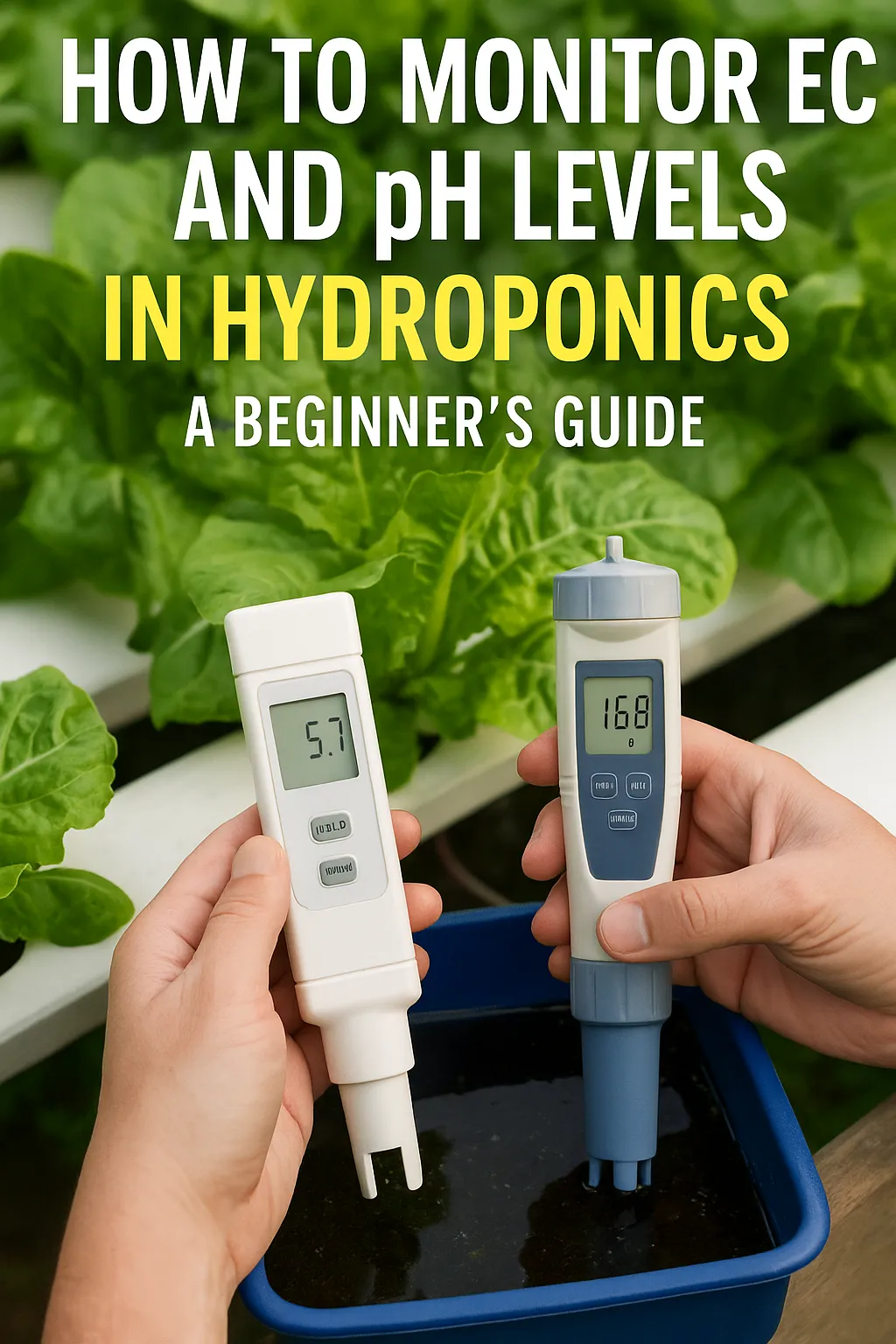
Just like with pH, your primary tool will be a digital meter. Many handheld meters, often called "pens," measure pH, EC, and temperature all in one device.

For a business, investing in a reliable meter from a reputable brand (like Hanna, Bluelab, or Apera) is non-negotiable.
The Measurement Process
Accuracy depends on proper procedure. The process is very similar to measuring pH.
- Calibrate Regularly: Your meter is only as good as its calibration. EC meters are calibrated using a standard solution with a known EC value (e.g., 2.77 mS/cm). Follow the manufacturer's instructions, but typically you calibrate weekly if the probe is in constant use, or before each use if used intermittently.
- Take a Sample: Collect a sample of the nutrient solution from your reservoir in a clean cup.
- Rinse and Read: Rinse the meter's probe with plain water (distilled is best) and gently shake off the excess. Place the probe into the sample, ensuring it's submerged to the correct depth.
- Wait for Stabilization: Swirl the probe gently to dislodge any air bubbles. Wait for the reading on the display to become stable before recording the value. Temperature affects EC readings, but most modern digital meters have Automatic Temperature Compensation (ATC) to correct for this.
The Adjustment Process
Adjusting EC is very straightforward:
- To INCREASE EC: Add a small amount of your concentrated nutrient solution to the reservoir.
- To DECREASE EC: Add plain, fresh water (ideally filtered or reverse-osmosis water with a low starting EC) to the reservoir.
Always follow the same rule as with pH: add a small amount, mix the entire reservoir thoroughly, and wait 15-30 minutes for the solution to circulate and stabilize before re-measuring. This prevents over-correction.
Conclusion
In this lesson, you've mastered the concept of Electrical Conductivity, the second pillar of environmental control in your hydroponic system.
Key Takeaways:
- EC measures the total concentration of dissolved nutrient salts in your solution by testing its ability to conduct electricity.
- For professional consistency, you should always measure and communicate in EC (mS/cm), not the estimated and non-standardized PPM or TDS units.
- Monitoring how your EC rises, falls, or remains stable provides powerful insight into your plants' water and nutrient uptake.
- Measurement requires a calibrated digital EC meter. Adjustments are simple: add nutrients to increase EC or add plain water to decrease it.
You are now equipped to monitor and manage the two most important properties of your nutrient solution: its potential for nutrient uptake (pH) and its overall strength (EC).
In our next lesson, "Describe the process of mixing a two-part hydroponic nutrient solution from concentrates," we will put this knowledge into practice. You will learn how to create a perfect nutrient solution from scratch, hitting your target EC right from the start.