Introduction
Welcome back! In our last lesson, you successfully assembled the physical structure of a Deep Water Culture (DWC) system. You now have the "house" for your future plants. Today, we will focus on preparing the "foundation" within that house where your seeds will begin their life.
This lesson addresses the learning outcome: Describe the process of preparing a growing medium for seed germination.
In hydroponics, the growing medium does not provide nutrients like soil does. Instead, its primary roles are to:
- Provide physical support for the plant.
- Hold moisture for the roots.
- Maintain a well-aerated environment to ensure roots get enough oxygen.
We will explore the most common types of growing media, understand why some require specific preparation, and walk through the step-by-step process for each. This knowledge is crucial for ensuring high germination rates and giving your seedlings a strong, healthy start—a key factor for a successful business operation.

1. Choosing Your Growing Medium
Before we get into preparation, it's important to understand the options available. The choice of medium involves trade-offs in cost, performance, and ease of use—all important considerations for your home business.
Let's start with a video that compares three common options: Rockwool, Oasis cubes, and a soil-based potting mix.
How to start seeds in Hydroponics
The video 'How to start seeds in Hydroponics' from the New Agrarian channel provides an excellent overview of the pros and cons of different starter media.
Please watch the following segments: 00:57 - 01:53: Introduction to Rockwool and its characteristics. 01:53 - 03:10: Discussion of Oasis cubes as a cheaper alternative. 03:10 - 04:57: An interesting look at using potting mix, noting its benefits (cost) and significant drawbacks (mess, clogging potential). 05:49 - 07:23: A very useful visual chart summarizing the comparison. \nAs you watch, consider how factors like cost per plant and user-friendliness might influence your business decisions.
To expand on this, let's look at a textual resource that introduces two other important media: Rapid Rooters and Coco Coir.
Rockwool, Rapid Rooters, or Coco?
The article 'Rockwool, Rapid Rooters, or Coco?' from Green Genius offers a concise comparison and introduces us to Coco Coir, a popular and sustainable option.
Please read the following sections: 'Quick Comparison': Review the table at the beginning of the article. It's a great summary. '2. Rapid Rooters Features': Learn about this user-friendly, pH-neutral option. '3. Coco Coir Characteristics': Read about its properties and note the 'Preparation Steps' listed, which we will discuss next.
From these resources, you can see the main decision comes down to a balance:
- Rockwool: High performance, but requires pH preparation and is not biodegradable.
- Coco Coir: Sustainable and excellent performance, but requires rinsing and buffering.
- Rapid Rooters/Oasis Cubes: Extremely easy to use (pH-neutral, no prep), but can be more expensive.
Now, let's dive into the preparation process for the media that require it.
2. How to Prepare Rockwool
Rockwool is one of the most popular media, but it cannot be used straight out of the bag. Its manufacturing process leaves it with a naturally high, alkaline pH.
How to use Rockwool Cubes for Growing
To understand why we must prepare Rockwool, let's turn to this article from Trees.com. It explains the science behind Rockwool's high pH.
Read the section titled 'How to Prepare Rockwool'. It clearly explains that lime deposits during manufacturing cause a high pH (around 8.0), which can lock out essential nutrients from your plants.
As you've learned, a pH that is too high prevents nutrient uptake. Therefore, the goal of preparing Rockwool is to lower and stabilize its pH to an optimal range for plant growth, typically between 5.5 and 6.5.
The following video provides a perfect visual demonstration of this process.
How To Prepare and Pre-soak Rockwool Cubes for Hydroponics—The Right Way!
This tutorial by Everest Fernandez, 'How To Prepare and Pre-soak Rockwool Cubes—The Right Way!', will walk you through the entire process from pH adjustment to planting the seed.
Watch the full video from 00:00 to 02:11. Pay close attention to each distinct step: Adjusting the pH of the soaking water to 5.5. Soaking the cubes. (Optional but recommended) Charging the cubes with a mild nutrient solution. The correct way to handle the cubes after soaking.
Let's summarize the key steps for preparing Rockwool:
- Prepare a Soaking Solution: Fill a bucket with water (distilled or reverse osmosis is best, but tap water is usually fine). Using your pH meter and pH Down solution, carefully adjust the water's pH to 5.5.
- Soak the Cubes: Submerge the Rockwool cubes in the pH-adjusted water. Let them soak for at least 15-60 minutes. Some growers prefer to soak them for up to 24 hours to ensure the pH fully stabilizes.
- Charge with Nutrients (Optional): For an extra boost, you can perform a second soak in a very mild (low EC) nutrient solution. This "charges" the cube with a small amount of food, which is beneficial for the seedling once it germinates. The video suggests a target of around 560 ppm, which corresponds to an EC of about 1.1.
- Remove Excess Water: This is a critical step. After soaking, remove the cubes and give them a few firm shakes to get rid of excess water. Do not squeeze or wring them out. Squeezing destroys the delicate fibrous structure, reducing its ability to hold oxygen and leading to a waterlogged environment that can drown roots.
Your Rockwool cubes are now fully prepared and ready for seeds.
3. How to Prepare Coco Coir
Coco coir is another fantastic medium, prized for being a renewable resource. It usually comes in compressed, dry bricks and also requires preparation.
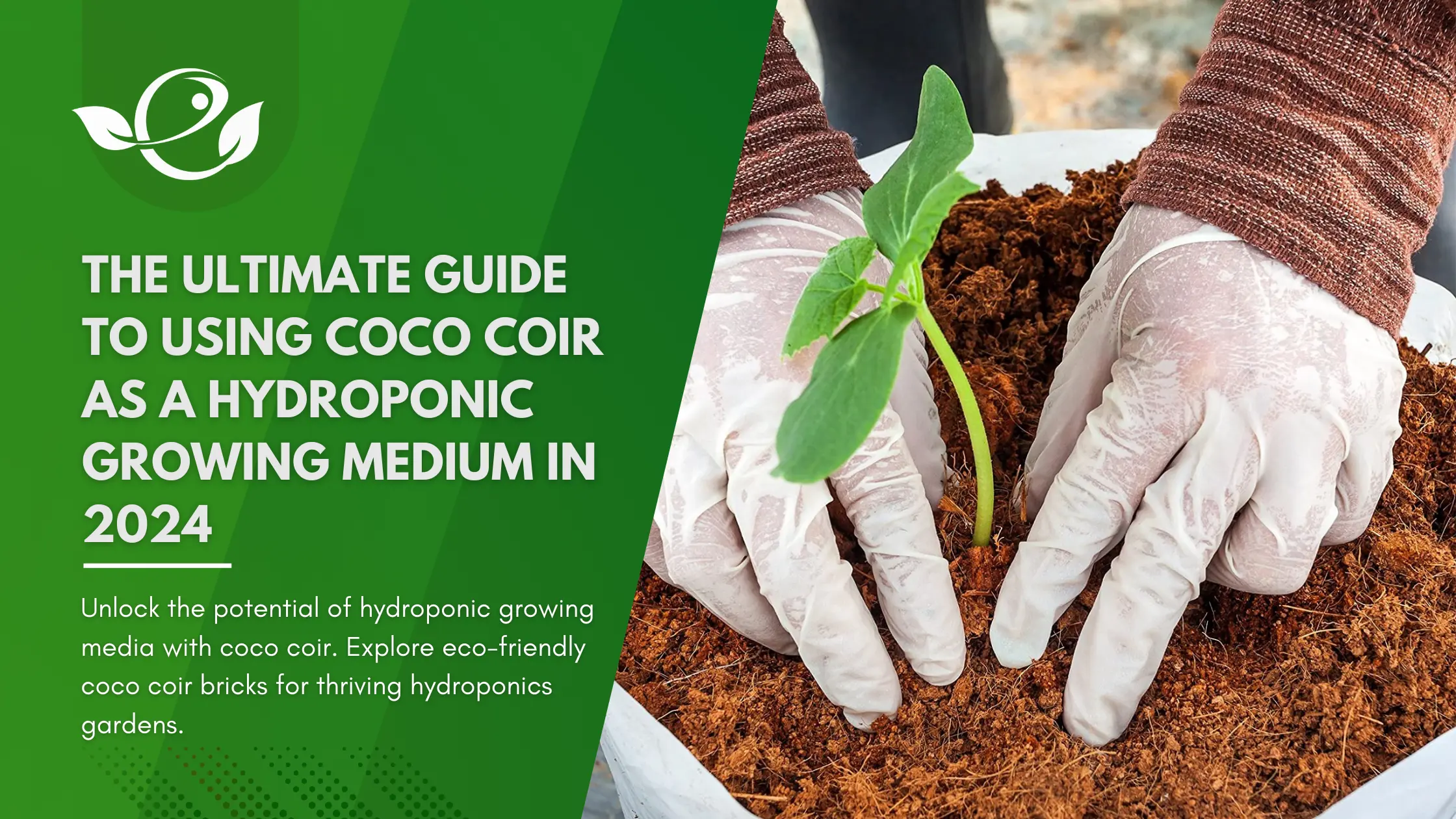
The preparation involves two main goals: rehydrating the brick and removing excess salts. Some coco coir can have a high salt content from the way it's processed, which can harm young seedlings. A process called "buffering" is also recommended for best results.
The article from Green Genius provides a clear guide.
Rockwool, Rapid Rooters, or Coco?
Let's revisit the 'Rockwool, Rapid Rooters, or Coco?' article, this time focusing on its FAQ section which details the preparation of coco coir.
Please read the FAQ titled 'How do I prepare coco coir for hydroponics...'. It outlines the key steps of soaking, buffering, and stabilizing the pH.
Here is a summary of the coco coir preparation process:
- Hydrate and Rinse: Place the compressed coco coir brick in a large container and add water. It will expand significantly. Break it up and continue to add water until it's fully hydrated and has a soil-like consistency. Rinse the coir thoroughly with fresh water to wash away any dust and excess salts.
- Buffer with Cal-Mag: This is a crucial step for high-performance growing. Coco coir has a tendency to bind with calcium and magnesium while releasing potassium. If you don't buffer it, the coir will "steal" the calcium and magnesium from your nutrient solution, leading to deficiencies. To buffer it, soak the rinsed coir for several hours (e.g., 8 hours) in a solution containing a calcium/magnesium supplement (commonly sold as "Cal-Mag").
- Final Rinse: After buffering, give the coco coir one last rinse. It is now ready to be placed in your net pots.
4. "Ready-to-Use" Media
Media like Rapid Rooters and Oasis Cubes are popular because they are designed to be pH neutral and ready to use immediately. Their main advantage is convenience. The only preparation needed is to moisten them with plain water or a very light nutrient solution before placing your seed inside.
Conclusion
In this lesson, you have learned not just the "how" but also the "why" behind preparing different growing media for seed germination. This foundational step is critical for avoiding common problems like poor germination and nutrient deficiencies.
Key Takeaways:
- The choice of growing medium is a strategic business decision, balancing cost, performance, and labor.
- Rockwool is naturally alkaline (high pH) and must be soaked in pH-adjusted water (pH 5.5) before use.
- Coco Coir must be hydrated, rinsed to remove salts, and ideally buffered with a Cal-Mag solution to prevent nutrient lockout.
- "Ready-to-use" media like Rapid Rooters and Oasis Cubes are pH-neutral and only require moistening, offering convenience at a higher price point.
You have now assembled your DWC system and prepared the growing medium. In our next lesson, we will tackle the next crucial step: Execute the steps to mix, pH-balance, and add a nutrient solution to your new system. This will be the lifeblood that fuels your plants' growth.