Welcome to your first lesson. This course is designed to provide you with a complete foundation for building a successful career in luxury interior design, tailored specifically for the high-end Indian market. Since you're starting with a fresh perspective, our first step is to build a solid understanding of what an interior designer truly does.
In this lesson, we will define the field of interior design by clearly distinguishing it from two closely related professions: interior decoration and architecture. Grasping these differences is fundamental. It will shape your understanding of your future role, the services you'll offer, how you'll collaborate with other professionals, and how you will present your business to clients. Let's begin by mapping out this professional landscape.
The Three Professions: Architect, Designer, and Decorator
At first glance, the work of architects, interior designers, and interior decorators might seem to blend together. They all contribute to creating beautiful and functional environments, but they operate with different scopes, skills, and legal responsibilities. A common mistake is to use the terms 'interior designer' and 'interior decorator' interchangeably, but as you'll soon see, their roles are fundamentally different.
To get a clear picture of how these fields relate, especially the two most commonly confused roles of architect and interior designer, let's look at a helpful visual.
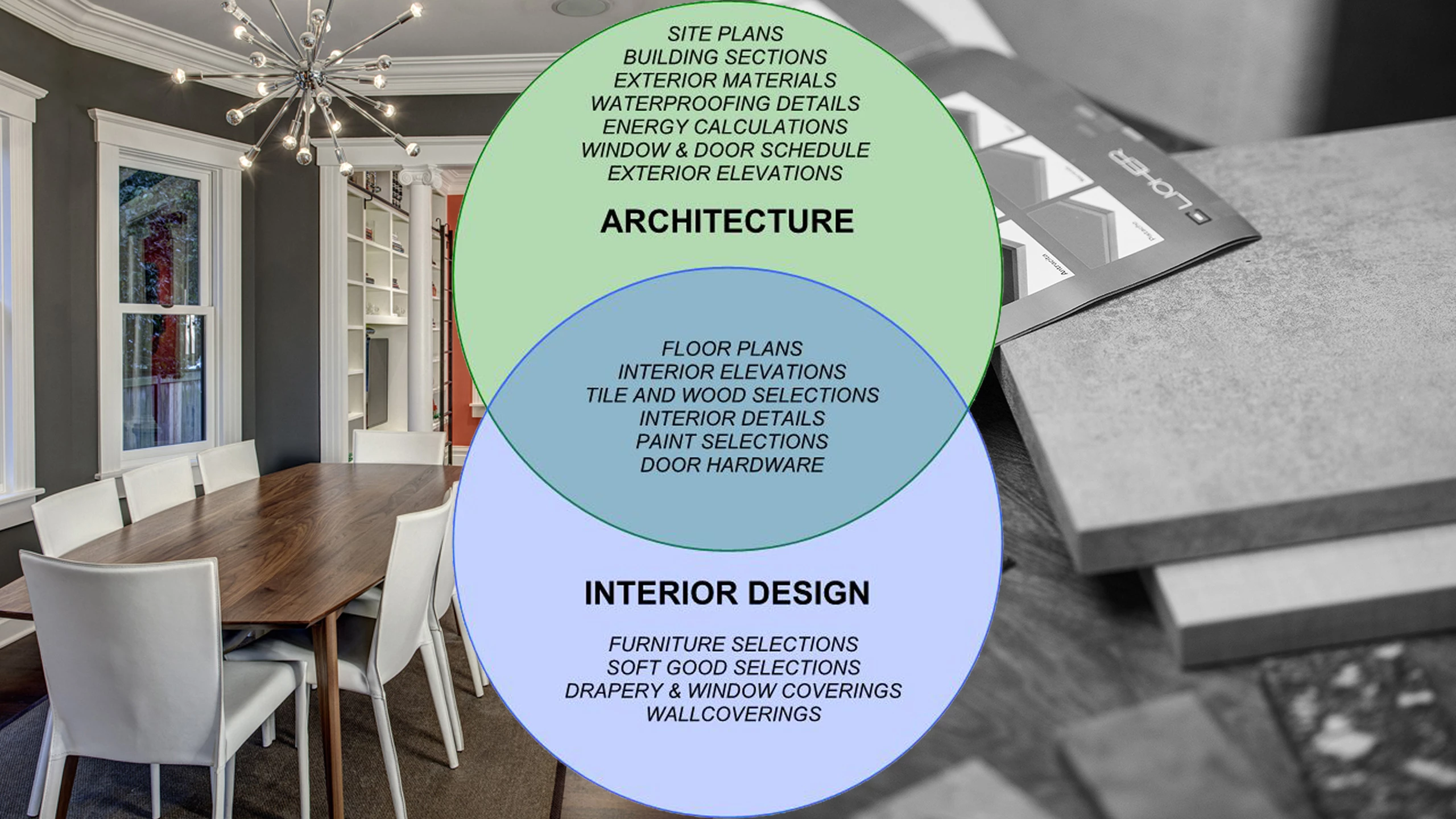
As the diagram shows, an architect is primarily concerned with the building itself—its structure, form, and relationship with its site. They design the "bones" of the building. An interior designer, on the other hand, focuses on the experience of the people inside that building. The overlap—where they both work on floor plans and interior elevations—is where their collaboration is most critical.
But where does an interior decorator fit in? Let's clarify that distinction now.
Interior Design vs. Interior Decoration: Art & Science vs. Aesthetics
The most significant point of confusion for the public, and for many aspiring designers, is the line between design and decoration.
- Interior Decoration is the art of furnishing or adorning a space with fashionable or beautiful things. It is almost exclusively focused on aesthetics. A decorator works with the existing space and enhances it using surface treatments and moveable items. This includes furniture, soft furnishings (like cushions and curtains), accessories, paint colour, and art.
- Interior Design, in contrast, is both an art and a science. A designer's work goes much deeper than aesthetics to address how people experience and use a space. This involves space planning, creating functional layouts, ensuring user safety and well-being, and understanding technical aspects like lighting, acoustics, and building codes. An interior designer can reconfigure an interior space, which might involve moving non-structural walls, to improve its function.
The following video provides an excellent breakdown of these roles. The presenter clarifies the common misconceptions often spread by television shows and explains the specific responsibilities of decorators and designers.
WHAT IS AN INTERIOR ARCHITECT ? // Interior Design vs. Interior Decoration vs. Interior Architecture
Watch these segments from the video "WHAT IS AN INTERIOR ARCHITECT ?" by Dantier and Balogh Design Studio. The presenter clearly outlines the responsibilities for each role.
First, watch the introduction where the presenter discusses common misconceptions. Then, focus on the section explaining the work of an interior decorator. Finally, pay close attention to the detailed breakdown of what an interior designer does, particularly the mention of technical drawings and building regulations.
As you saw in the video, becoming an interior decorator doesn't typically require formal education, whereas interior design is a profession that demands a degree or diploma due to its technical and legal responsibilities. A designer does everything a decorator does, but they also possess the technical skills to reshape the space itself.
This image offers a stylized, if somewhat oversimplified, contrast.

Think of it this way: the room on the left is defined by its strong spatial layout, the relationship between forms, and a deliberate use of empty space—hallmarks of a planned design. The room on the right is defined by its rich materials, textures, and decorative objects—the focus is on furnishing and adornment. A skilled interior designer can work in either style, but their process always begins with the functional plan, not just the surface finishes.
Interior Design vs. Architecture: Inside-Out vs. Outside-In
Now let's revisit the relationship between interior design and architecture. We've established that architects create the building's shell and designers work within it. A great way to think about their different approaches is by considering their starting point.
- Architects design from the outside-in. They start with the site, the building's overall form, the structural system, and the exterior materials. Their work must comply with extensive building codes, zoning laws, and structural engineering principles.
- Interior Designers design from the inside-out. They start with the person, or client. Their process begins by understanding the needs, desires, and behaviors of the people who will use the space. They then translate those human factors into a functional and aesthetically pleasing spatial arrangement.
To dive deeper into this, the following video offers fantastic analogies and a real-world example of how each professional would approach the same project.
The REAL Difference Between Interior Designer, Decorator and Architect
In "The REAL Difference Between Interior Designer, Decorator and Architect" from the Amelia Fenmore | Interior Design channel, the presenter clearly explains the distinct mindsets of each professional.
Please watch the section defining the role of an architect, focusing on their structural and code-based responsibilities. Next, watch her explanation of how an interior designer acts as a bridge, working from the "inside out." Finally, see how this plays out in the realistic example of a living room project.
To reinforce these concepts, please read the following article from Pearl Academy, a well-regarded design institute in India. It provides concise definitions and a practical comparison table that summarises the key differences.
Interior Designer vs Architect: Key Differences Explained
This article provides clear, India-specific context on the roles of architects and interior designers.
Start by reading the initial definitions of an architect and an interior designer. Then, scroll down to the heading "Interior Designer vs Architect: A Practical Comparison" and study the comparison table. This table is an excellent summary of their distinct goals, outputs, and client impact.
The Spectrum of Design: Introducing Interior Architecture
You may also hear the term 'Interior Architect'. This role further illustrates that these professions exist on a spectrum. An interior architect, as the name suggests, blends the skills of both fields. They possess the technical knowledge to make significant structural alterations to an interior (like moving non-load-bearing walls, staircases, etc.) and are deeply involved in the technical aspects of how a space is built and serviced, while still focusing on the human-centric design of the interior.
For your purposes, it's most important to understand that your path as an interior designer sits squarely between the purely aesthetic focus of a decorator and the building-focused work of an architect. You will be a problem-solver who uses aesthetics as a tool to create functional, beautiful spaces that improve your clients' lives.
Conclusion
In this introductory lesson, we have established the crucial distinctions between the key roles in the built environment. Let's summarize the key takeaways:
- Interior Decoration is about aesthetics and furnishing. Decorators beautify existing spaces without changing their structure.
- Architecture is about the design and construction of the building itself. Architects create the shell, ensuring it is safe, sound, and compliant with all regulations.
- Interior Design bridges these two. It is the art and science of understanding human behavior to create functional and beautiful spaces within the architectural shell. This role requires both creative vision and technical knowledge.
Understanding your position in this ecosystem is the first step toward building your professional identity. You are embarking on a path to become a specialist in the human experience of space—a role that is creative, technical, and deeply rewarding.
In our next lesson, we will build upon this foundation and delve into the specific roles and responsibilities an interior designer undertakes throughout a luxury residential project, from the initial client meeting to the final handover.