Welcome to the first lesson of our fourth module, Vocal Delivery and Tonality.
In the previous module, we focused entirely on the internal work of communication: organizing your thoughts into clear, structured, and simple sentences. You now have the tools to decide what you want to say. Now, we shift our focus to how you say it. The way you use your voice is just as important as the words you choose; it's what gives your message emotional texture, authority, and impact.
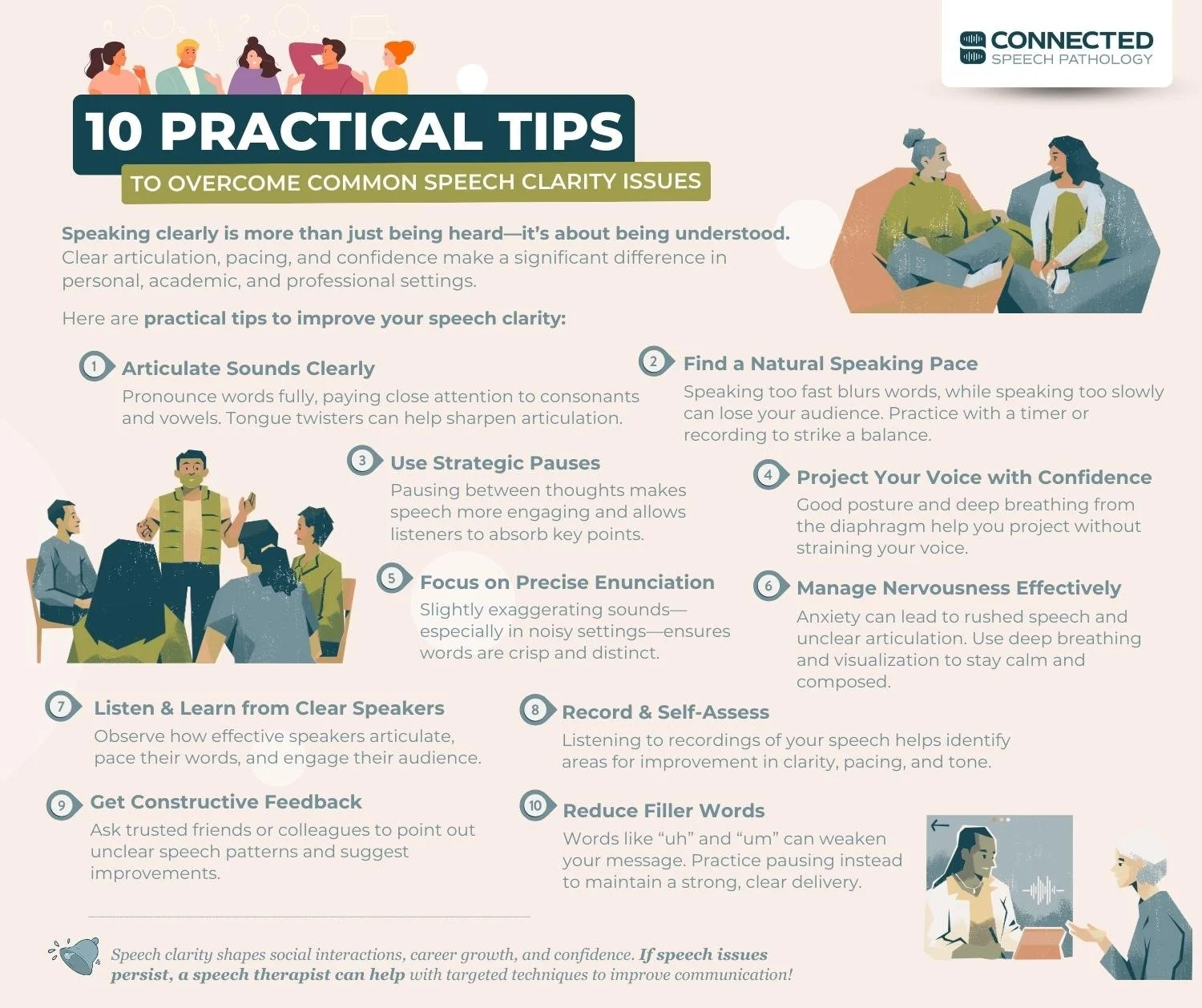
This lesson addresses a cornerstone of vocal delivery: your speaking pace. Many of us, especially when nervous, default to a single speed—often too fast—which can cause our thoughts to feel jumbled and our listeners to disengage. Our goal today is to identify your personal default speech pace and practice deliberate pace variation for emphasis and energy. By mastering your pace, you gain a powerful tool to control the flow of a conversation and ensure your intended message is not just heard, but felt.
1. The Single-Pace Trap: Why Constant Speed Dilutes Impact
Think of your speaking voice like a car. If you drive at a constant 100 km/h everywhere—in school zones, on highways, through scenic routes—you’re not only being inefficient but also missing the entire point of the journey. The same is true for speaking. A single, monotonous pace, whether fast or slow, makes it impossible for a listener to distinguish between a main point, a supporting detail, or a casual aside.
Communication expert Vinh Giang, whom you've mentioned, identifies this as a common trap. Many people, particularly when nervous or trying to convey a lot of information, speak too quickly. Let's watch a short clip where he explains why this is so counterproductive.
9 Habits for Clearer Speaking (I Wish I Knew Sooner)
In this segment from his video '9 Habits for Clearer Speaking,' Vinh Giang explains the common problem of speaking at one fast tempo and introduces the concept of using pace as a 'verbal highlighter.'
Please watch from 01:58 to 03:32. Pay close attention to his analogy of highlighting an entire page in a book and the demonstration he gives of how slowing down creates impact.
As Vinh demonstrates, when everything is spoken with the same urgency, nothing stands out. The key insight is that slowing down isn't a sign of weakness or hesitation; it's a strategic choice to add weight and importance to your words.
Vinh Giang reinforces this idea in a simple but powerful post.
How to improve your speech clarity with rate of speech
This short post, 'How to improve your speech clarity with rate of speech,' provides a clear, actionable rule for using pace.
Read the short text and the video transcript. The core idea is the 'highlighter' metaphor: slow down for important information and speed up for less important parts. This simple rule is the foundation of effective pace variation.
2. Finding Your Baseline: A Quick Pace Diagnosis
Before you can effectively vary your pace, you need to know your starting point. What is your natural, default speaking rate? We can measure this objectively using Words Per Minute (WPM).
Let's use a standard text to diagnose your current habitual pace.
Speech Rate: Do you speak too fast, too slow, or just right?
The article 'Speech Rate: Do you speak too fast, too slow, or just right?' from Write-out-loud.com provides a fantastic guide to understanding and measuring your speech rate. We will use its tools for a self-assessment.
First, read the sections 'What is speech rate? How is it calculated?' to understand the concept of WPM. Then, go to the section 'How to work out your own speech rate' and read the instructions for using 'The Rainbow Passage.' Finally, review the 'Speech rate guidelines' to see the benchmarks.
Activity: Measure Your WPM (10 minutes)
Now, let's put this into practice.
- Prepare: Get a timer (your phone is fine) and a way to record your voice.
- Use the Text: Here is the first part of "The Rainbow Passage" mentioned in the article.
When the sunlight strikes raindrops in the air, they act as a prism and form a rainbow. The rainbow is a division of white light into many beautiful colors. These take the shape of a long round arch, with its path high above, and its two ends apparently beyond thehorizon. (51 words)
There is, according to legend, a boiling pot of gold at one end. People look, but no one ever finds it. When a man looks for something beyond his reach, his friends say he is looking for the pot of gold at the end of the rainbow. (99 words)
Throughout the centuries people have explained the rainbow in various ways. Some have accepted it as a miracle without physical explanation. To the Hebrews it was a token that there would be no more universal floods. The Greeks used to imagine that it was a sign from the gods to foretell war or heavy rain. The Norsemen considered the rainbow as a bridge over which the gods passed from earth to their home in the sky. (175 words)
- Record: Set your timer for exactly 60 seconds. Start the timer and begin reading the passage aloud at your normal, comfortable speaking pace.
- Analyze: When the timer stops, mark where you were in the text. Count the number of words you read. This is your approximate WPM.
- Benchmark: Compare your result to the guidelines from the article:
- Slow: Below 110 WPM
- Conversational: 120-160 WPM
- Fast-conversational: 160-200 WPM
- Fast (e.g., commentators): 250+ WPM
This number is your baseline. There's no "good" or "bad" number—it's just data. Your goal is not to force yourself into the "conversational" range permanently, but to become aware of your tendency so you can adjust it deliberately.
3. Mastering Pace Variation: Your Vocal Gearbox
Knowing your WPM is like knowing your car is in third gear. Now, you need to learn how to shift to first for power and to fifth for speed. A flexible pace is what separates a monotonous speaker from a dynamic one.
This next video offers a practical framework for thinking about pace variation.
How to Control Pace in a Speech
In 'How to Control Pace in a Speech,' Brenden from MasterTalk breaks down how to think about pace, starting with aligning your conversational and 'presentation' voice, and then moving to deliberate variation.
Watch from 01:02 to 05:38. First, focus on the idea of aligning how you speak to a friend with how you speak in a more formal setting (01:02 - 02:54). Then, pay close attention to his advice on using pace variation to create different effects, like speeding up for an exciting story or slowing down for an important point (02:54 - 05:38).
Let's synthesize these ideas into a practical model for you:
- Slow Pace (First Gear): Use this for emphasis. This is your "verbal highlighter."
- When to use: Stating your main point (the "headline" from our last lesson), revealing a key number in a financial report, asking a powerful question, or making a concluding statement.
- Medium/Conversational Pace (Third Gear): This is your home base.
- When to use: Explaining context, telling a story, providing examples, general discussion. It feels natural and builds rapport.
- Fast Pace (Fifth Gear): Use this to build energy and excitement.
- When to use: Listing items quickly, conveying urgency, summarizing background information that isn't critical, or telling an exciting anecdote.
Test your understanding!
Imagine you are explaining the concept of a stock market index (like the S&P 500) to a client. The core idea is that it's a "basket" of stocks that represents the market's overall health. How would you use pace variation to explain this? Where would you slow down, and where would you maintain a conversational pace?
Show answer
A good approach would be:
- (Conversational Pace): "So, you often hear people talk about 'the market' being up or down. But what is 'the market'? It's thousands of companies. A great way to track its general health is by using an index, like the S&P 500."
- (Slow Down for Emphasis): "Think of it simply as... a shopping basket... that holds 500 of the largest companies in the U.S."
- (Conversational Pace): "So instead of tracking every single stock, we just look at the total value of this one basket. If the basket's value goes up, it's a good sign the overall market is doing well. If it goes down, it suggests the opposite."
By slowing down on the core analogy ("shopping basket") and the key fact ("500 of the largest companies"), you make the central concept memorable and clear.
4. Daily Drills: Building Pace Flexibility
Drill 1: The Gear Shifter (10 minutes)
- Pick a paragraph from any text—a news article, a book, or an email.
- First Read (Third Gear): Record yourself reading it at your normal, conversational WPM you identified earlier.
- Second Read (First Gear): Record yourself reading it again, but this time, imagine you are revealing a profound secret to a rapt audience. Slow down significantly. Use pauses. Aim for a WPM around 90-110.
- Third Read (Fifth Gear): Record it a final time as if you are a sports commentator describing a fast-paced, exciting play. Speed up your delivery. Aim for a WPM around 180-200.
- Listen to all three recordings. Feel the difference in energy and impact. This drill builds the muscle memory for modulating your pace on command.
Drill 2: The Verbal Highlighter in Action (5 minutes)
- Take one of the structured thoughts you developed in the previous module (e.g., using the "Point-Example-Point" or "What-So What-Now What" framework).
- Practice saying it out loud, deliberately applying pace variation.
- Slow down for your main "Point" or "What" statement.
- Use a conversational pace for your "Example" or "So What" explanation.
- Slow down again for your concluding "Point" or "Now What" call to action.
- This drill directly integrates your cognitive structuring skill with your new vocal delivery skill.
Conclusion
You've now taken the first critical step in mastering vocal delivery. By understanding and controlling your pace, you move from being a passive narrator of your thoughts to an active conductor of your message.
Key Takeaways:
- A single, monotonous pace—especially a fast one—dilutes the impact of your words and makes it hard for listeners to follow.
- Measuring your Words Per Minute (WPM) gives you an objective baseline of your natural speaking tendency.
- The goal is not one "perfect" speed, but pace flexibility.
- Slowing down is a power tool. Use it as a "verbal highlighter" to add emphasis to your most important ideas.
- Varying your pace to match your content—fast for energy, conversational for connection, and slow for emphasis—is key to keeping your audience engaged.
Preview of the Next Lesson:
Now that you have control over your speed, we'll address another subtle but powerful vocal cue. In our next lesson, we will focus on intonation, specifically how to recognize and correct upspeak (rising intonation) to project more certainty in your statements. This will further help you align your external delivery with your internal confidence.