Hello! Welcome back to our work on cognitive clarity.
In our last two lessons, we established two crucial habits. First, we practiced using a 3-second pause to create the mental space needed to organize a thought. Then, we learned the "headline first" approach to decide what to say in that space—stating our main point clearly and upfront.
Today, we focus on the delivery of that single, well-formed thought. The goal is to train ourselves to speak in complete ideas, eliminating the mid-sentence edits and backtracking that can make our speech sound hesitant and unclear. Our learning outcome is to practice completing sentences before starting new ones in a one-thought-at-a-time drill.
This lesson provides a physical, tangible method to build the mental discipline of sequential thinking, directly addressing your goal of translating clear internal thoughts into clear spoken words.
1. The Problem: Fragmented Speech and the Multitasking Brain
One of the core issues you've described is your "thoughts sometimes get twisted when spoken aloud." This often happens when your brain is multitasking: it's trying to articulate one thought while simultaneously planning, editing, or jumping to the next one. This creates fragmented speech that is difficult for a listener to follow and can make you sound scattered and unsure, even when your ideas are strong.
Communication coach Vinh Giang provides an excellent demonstration of what this sounds like and why it's so ineffective.
9 Habits for Clearer Speaking (I Wish I Knew Sooner)
In this clip from Vinh Giang, he explains and demonstrates the cognitive habit of finishing one thought at a time. Pay close attention to his 'rambling' example and notice how it forces the listener's brain to work overtime.
Watch from 11:53 to 14:07. First, listen to the chaotic example of jumping between thoughts. Then, notice the clarity and impact when he delivers the exact same ideas sequentially, one thought at a time.
As Vinh points out, even if your ideas are brilliant, fragmented delivery can obscure them. The solution is simple in principle but requires deliberate practice: Start a thought, finish it, pause, and only then move on to the next idea.
2. The Drill: Building Thoughts One by One
To turn this principle into a habit, we need a drill that physically prevents us from jumping ahead. We'll use a powerful kinesthetic exercise known as the "Brick Drill" (or Lego Drill). The physical action of handling an object for each thought creates a "hard stop," forcing your brain and mouth to work in unison.
This drill connects directly to your request for practical, non-motivational exercises. It's less about thinking "don't ramble" and more about physically doing something that makes rambling difficult.
This PDF from GK Training explains the 'Brick Drill' in detail. It's a simple but profound exercise for building precision and eliminating filler words by associating one thought with one physical action.
Please read the entire document. Focus on understanding: The core rule: 1 thought per brick. The step-by-step process of picking up, speaking, and placing the brick in silence. The psychological reason it works: it uses a physical pathway (kinesthetic learning) to interrupt unconscious habits.
How to Perform the Brick Drill (Your Daily Practice)
Time: 5-10 minutes daily.
You'll need: 4-6 stackable objects (Lego/Duplo bricks are ideal, but you can use books, coasters, or even Post-it notes as suggested in the PDF).
- Choose a Topic: Pick something you want to explain. It could be an update for a work project, a concept from your studies in financial markets (e.g., "What is a derivative?"), or simply what you did yesterday.
- Brick 1: Silently pick up your first brick.
- Thought 1: Holding the brick, state your first complete thought in a single sentence.
- Example: "A derivative is a financial contract between two or more parties."
- Pause: As soon as you finish the sentence, place the brick down on the table in silence. This silent pause is crucial.
- Brick 2: Silently pick up the second brick.
- Thought 2: Holding the new brick, state your next complete thought.
- Example: "Its value is derived from an underlying asset or group of assets."
- Pause: Finish the sentence and silently place the second brick on top of the first.
- Repeat: Continue this process, building a tower with your thoughts, one brick at a time.
Be strict with yourself. If you catch yourself starting a new thought before placing the brick down, stop and restart that step. The goal is to build muscle memory for pausing between complete ideas.
3. Mental Techniques to Support the Drill
While the Brick Drill is a practice tool, you can use several mental techniques to help you apply the "one-thought-at-a-time" principle in real conversations.
A) "Whisper Drafting" Before You Speak
In our first lesson of this module, we introduced the 3-second pause. But what should you be doing in that pause? "Whisper drafting" is a brilliant technique for using that time effectively. It allows you to create and revise a sentence in your mind before you say it aloud.
Why you can’t articulate like you think
In this video, Joseph Tsar explains a technique used by Teddy Roosevelt called 'whisper drafting.' It's essentially a silent, internal rehearsal of a sentence, which serves as a 'rough draft' before you speak.
Please watch from 05:32 to 07:02. Focus on how this technique allows you to 'color in your thoughts' before committing them to spoken words, effectively solving the revision challenge mid-sentence.
B) Energize to the End
An incomplete thought often sounds like an incomplete sentence—it trails off in volume and energy. A simple vocal cue can reinforce the cognitive habit of completing a thought. By consciously pushing energy through to the final word of your sentence, you signal to yourself and your listener that the idea is complete.
Most people want to speak with MORE clarity
This post from Vinh Giang offers a quick tip on enhancing clarity. He mentions the importance of energizing sentences from start to finish.
Read the transcript of the video in this post. Pay attention to his second point: 'you want to make sure you energize your sentences from beginning to end.' Notice his description of a 'trail off' and how it creates a lack of clarity.
C) Use the STOP Skill
When you feel the pressure to speak and the words start to jumble, you can use a quick, structured mental pause. The STOP skill from Dialectical Behavior Therapy (DBT) is a powerful tool for this. It aligns with your interest in psychologically grounded frameworks and nervous system regulation.
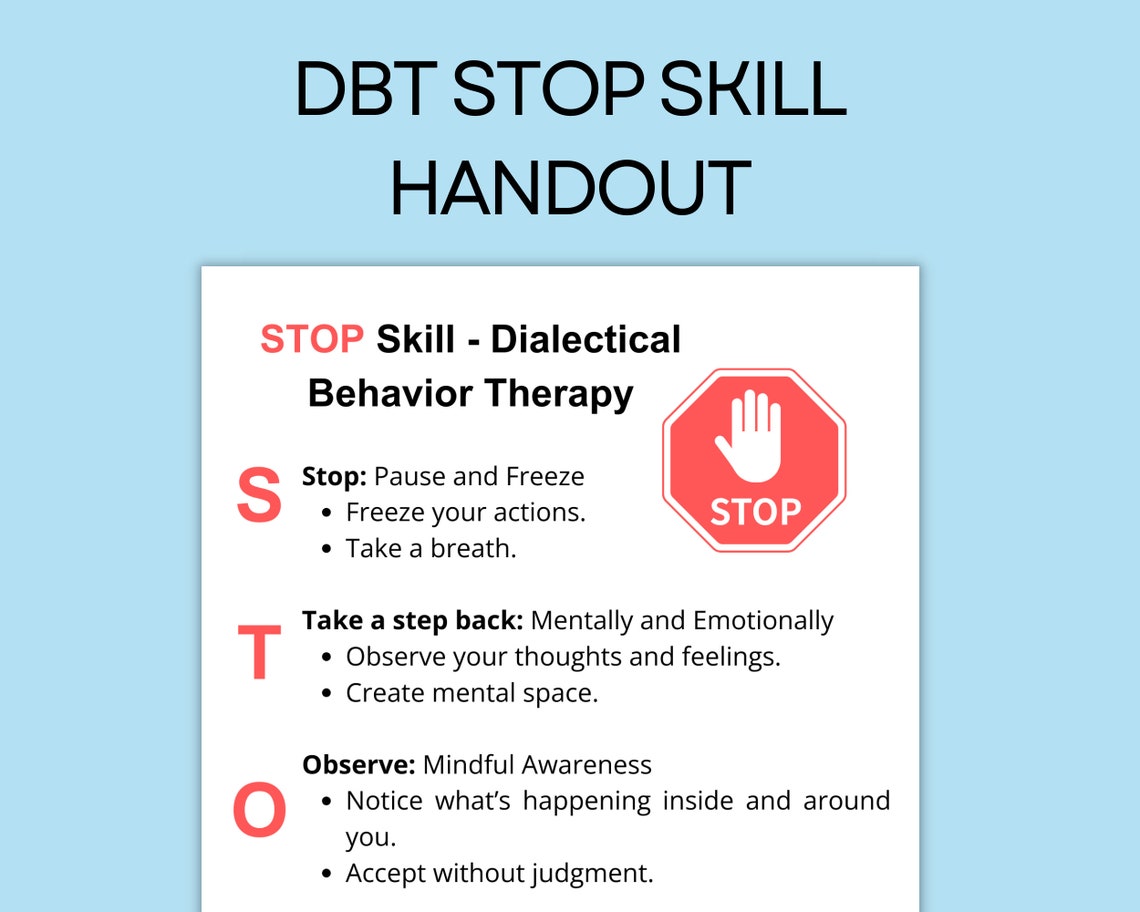
Here's how it works:
- S - Stop: Freeze. Don't say or do anything.
- T - Take a step back: Take a breath. Create some mental distance from the situation and your initial impulse.
- O - Observe: Notice what is happening inside you (racing thoughts, anxiety) and outside you (the other person's expression).
- P - Proceed Mindfully: Once you are calmer and have observed the situation, choose your response intentionally. (This is where you'd deliver your one complete thought).
Test your understanding!
Imagine a colleague at a networking event for your financial mixers initiative asks you, "So, what's your take on the current state of the private equity market?"
Your internal thought process is a jumble: "Well, there's a lot of dry powder, but deal flow is slow because of high-interest rates, which makes financing expensive. Valuations are still a bit mismatched between buyers and sellers, so a lot of firms are focusing on their existing portfolio companies instead of new acquisitions. It's a tricky environment."
Using the principles from this lesson, break this down into three distinct, complete sentences you could deliver one at a time, as if you were using the Brick Drill.
Show answer
Here is one possible way to structure the thoughts sequentially:
- (Brick 1): The private equity market is currently in a challenging 'wait-and-see' mode.
- (Brick 2): High interest rates are making new deals expensive, so deal flow has slowed down significantly.
- (Brick 3): As a result, most firms are focusing on improving their existing portfolio companies rather than making new acquisitions.
Each sentence is a complete thought. Each one builds on the last. After saying each one, you would pause, allowing the other person to absorb it or ask a clarifying question.
Conclusion
Today, we've moved from organizing our thoughts to delivering them with discipline. By treating each sentence as a complete unit, you build a foundation of clarity that prevents rambling and self-editing.
Key Takeaways:
- Fragmented speech happens when your brain multitasks, trying to speak one thought while planning the next.
- The core principle is one thought, one sentence. Start a thought, finish it, and then pause.
- The Brick Drill is your key daily practice. Use a physical object to train your brain to complete a thought before moving on.
- In conversation, use mental techniques like "whisper drafting" and the STOP skill to create space and form your sentence before you speak.
- Energizing your sentence to the very end vocally reinforces the mental act of completing the thought.
Preview of the Next Lesson:
You now have a method for delivering a complete sentence. But how you end that sentence vocally sends a powerful signal about your confidence and conviction. In our next lesson, we will focus on exactly that, learning to use the 'land the plane' technique to end sentences with clear, downward intonation. This will add an immediate layer of authority and certainty to your speech.