Hello! Welcome to Lesson 12, the first lesson in our final module, "Capstone: Integration and Spontaneity."
Over the past eleven lessons, you have diligently built an impressive toolkit of communication micro-skills. We started with regulating your nervous system, then moved to structuring your thoughts, calibrating your voice and body language, navigating conversational flow, and finally, building long-term professional relationships. You have done the hard work of practicing these skills in isolation.
Now, we shift our focus from practice to performance. This lesson is designed to help you achieve the learning outcome: Synthesize all learned skills in an unscripted conversation with a new person.
The goal is to move from conscious competence—where you have to deliberately think about each skill—towards unconscious competence, where these skills support you naturally and spontaneously. This is not about executing every technique perfectly. It's about showing up to a conversation, feeling grounded, and allowing your prepared skills to create a genuine connection.
1. The Synthesis Mindset: Trusting the Process
Before you step into a conversation, it's crucial to adopt the right mindset. The aim is no longer to analyze every little detail in real-time. Instead, it's to trust that the practice you've put in will surface when you need it.
As communication coach Vinh Giang says, "Don’t be so attached to who you are in the present, you don’t give the future version of you a chance." You've been building that future version for weeks. Now is the time to let it emerge.
Similarly, Stanford lecturer Matt Abrahams advises reframing spontaneous situations from threats to opportunities. Every new conversation is not a test of your worth, but an opportunity to connect, to learn, and to practice being the communicator you want to be.
2. Your Integrated Toolkit: A Quick Review
Let's do a high-level review of the key components you'll be integrating. Think of these not as a checklist to run through during the conversation, but as tools resting on your workbench, ready to be picked up as needed.
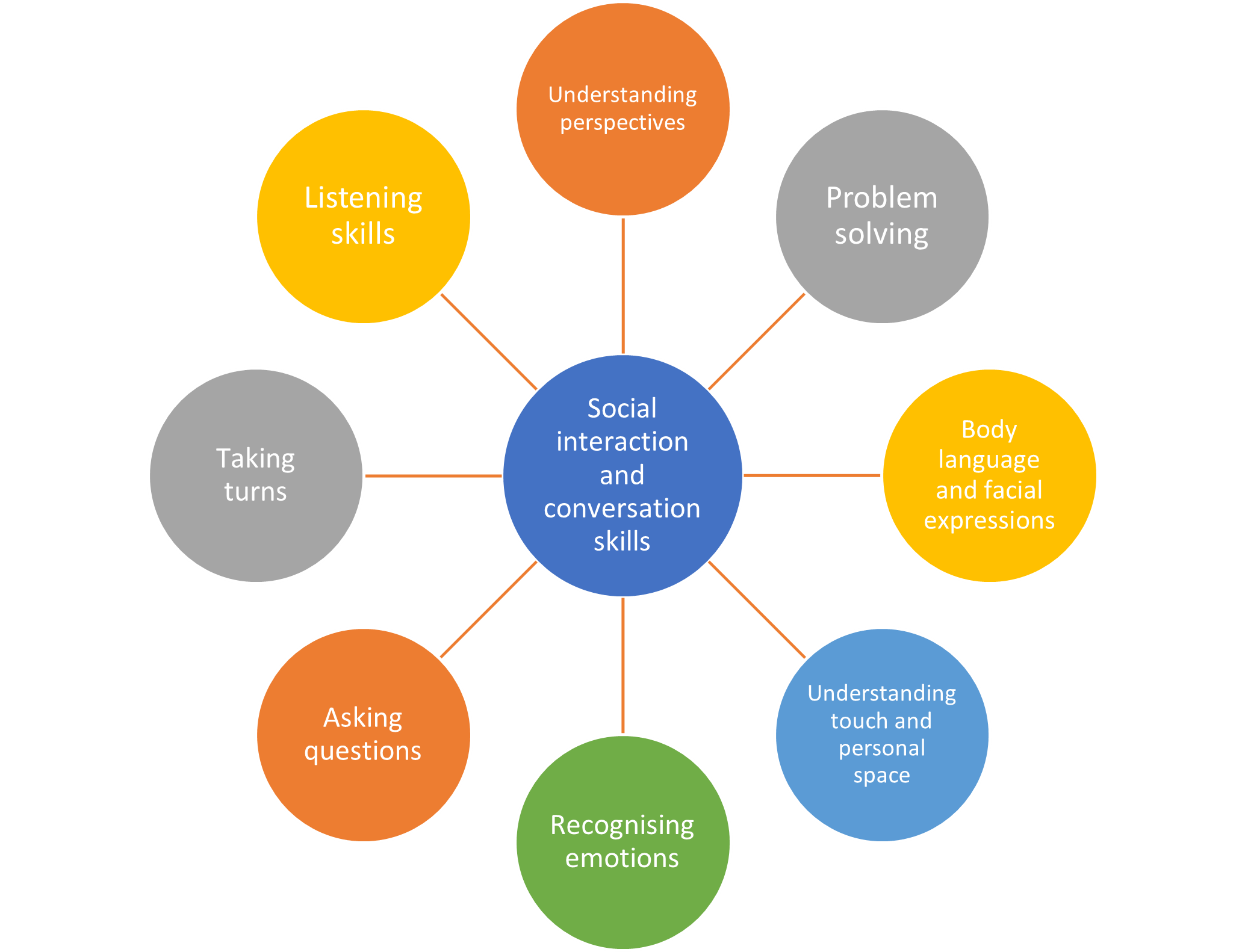
Your toolkit includes:
- The Foundation (Module 2): Your ability to stay grounded using breathing and anchoring techniques. This is your primary defence against nervous system hijacking.
- Cognitive Clarity (Module 3): Using mental pauses and frameworks like "Headline First" or "What? So What? Now What?" to structure your thoughts.
- Vocal Delivery (Module 4): Varying your pace, pitch, and volume, and using downward intonation to convey confidence.
- Nonverbal Signals (Module 5): Maintaining an open posture, using the 'triangle technique' for eye contact, and employing purposeful gestures.
- Conversational Flow (Module 6 & 7): Using low-risk openers, pulling on conversational threads, actively listening (mirroring, labeling), and exiting gracefully.
- Strategic Rapport (Module 7-11): Building connection through empathy, navigating disagreements, and being intentional in your follow-up.
This is your arsenal. Now, let's get you warmed up to use it spontaneously.
3. The Warm-Up: The Random Word Drill
To be a good spontaneous speaker, you need to strengthen your "mind-to-mouth connection." One of the best ways to do this is with a low-stakes drill that forces you to think on your feet.
How to Force Yourself To Speak Coherently
In this video, 'How to Force Yourself To Speak Coherently,' Vinh Giang introduces a powerful exercise to build your ability to articulate thoughts spontaneously. This is the perfect warm-up for our main task.
Watch from 01:02 to 07:08. Pay close attention to how he performs the 'Random Word Generator' exercise and, crucially, his emphasis that your first attempts will feel disjointed. The goal is repetition, not perfection.
Your Drill (5-10 minutes):
- Go to an online random word generator (like randomwordgenerator.com).
- Generate a word.
- Without overthinking, start speaking about that word. Try to talk for 60-90 seconds.
- Your goal is not to be profound, but simply to keep talking and connect one thought to the next.
- Do this for 3-5 different words.
This exercise directly targets the "blanking out" you've mentioned. By practicing pulling thoughts out of thin air in a safe environment, you train your brain to stay agile under pressure.
4. The Main Event: An Unscripted Conversation
Now it's time for the main event. Your task is to initiate and sustain a 5-10 minute conversation with someone you don't know. This could be a barista, a person at a professional mixer, or someone you meet while volunteering.
Here is a simple game plan to reduce anxiety and provide a loose structure.
1. The Opener:
Use a low-risk, context-based opener (Module 6).
- Observational: "This is a great turnout for the event."
- Situational: "I'm also here for the finance mixer. Is this your first time at one of these?"
- Compliment: "That's a really interesting point you made in the group discussion."
2. The Engine (Creating Conversational Threads):
Once the conversation has started, you need to generate topics. You have two excellent frameworks for this.
- The F.O.R.D. Method: As a mental checklist, remember you can always explore topics related to Family, Occupation, Recreation, and Dreams. This helps you move beyond just work-related talk.
- The "High Low Buffalo" Technique: If you're feeling courageous and the context allows for a more personal connection, this is a powerful tool for instantly deepening the conversation.
How To Build Rapport FAST And Skip The Boring Small Talk
Let's revisit Vinh Giang's 'High Low Buffalo' technique. It's a structured way to invite vulnerability and create multiple, meaningful conversational threads right away.
Watch the demonstration from 00:31 to 03:11 and the explanation from 04:13 to 06:30. Notice how it's framed as a 'game' to lower the barrier, and how it immediately opens up threads for deeper conversation ('pulling on the thread').
3. The Structure (Delivering Your Thoughts):
When it's your turn to speak at length, avoid rambling by falling back on a simple structure. The What? So What? Now What? framework you learned from Matt Abrahams is perfect for this.
- What? State your main point. ("The one thing I'm finding fascinating about private markets is...")
- So What? Explain why it matters. ("...because it's changing how companies think about long-term growth.")
- Now What? Conclude with a takeaway or a question. ("So I'm trying to learn more about its impact on valuation models.")
4. The Exit:
When you feel the conversation winding down, use a warm, clear closing that leaves the door open for future interaction (Module 6).
- "It was great speaking with you, [Name]. I hope you enjoy the rest of the event."
- "Well, I should let you go, but I really enjoyed our chat about [topic]. I'll connect with you on LinkedIn."
5. Post-Game Analysis: The Review Process
After the conversation, the learning continues. Instead of judging the interaction as "good" or "bad," you will analyze it to extract valuable lessons. Since recording a real conversation is often not feasible, you will do a mental "post-mortem."
No. 1 Communication Expert: This Speaking Mistake Makes ...
This article summarizes a podcast with Vinh Giang where he details a powerful three-step 'Record and Review' process. We will adapt this for a mental review of your unscripted conversation.
Read the section titled 'Improving.' Focus on the three review methods: auditory, visual, and transcribed. We will apply these principles to your reflection.
Your Reflection Exercise (15 minutes):
As soon as you can after the conversation, find a quiet space and reflect.
- The Auditory Review: Replay the conversation in your mind.
- How was my vocal delivery? Did I speak too fast? Was my volume appropriate? Did I use downward intonation at the end of sentences?
- Did I use filler words ('um', 'like')? When did they appear?
- The Visual Review: Visualize your body language.
- What was my posture? Was I open or closed?
- Where was my eye contact? Did I feel connected or avoidant?
- What did I do with my hands? Were my gestures purposeful or nervous fidgeting?
- The Content Review (The "Transcription"): Analyze the substance of the conversation.
- Did I listen effectively? Or was I just waiting for my turn to talk?
- Did I ask good questions and pull on threads?
- When I spoke, were my thoughts clear and concise? Or did I ramble?
- How did I manage moments of silence or uncertainty?
The goal here is awareness, not judgment. Just notice the patterns. This reflection is what turns a single experience into lasting improvement.
Test your understanding!
You've just used the "High Low Buffalo" opener with a new acquaintance at a professional event. They share their 'Low': "It's been a tough quarter, and our team leader just left, which is a shame because he was a great mentor."
How could you use the "thread pulling" technique (Module 6) and active listening (Module 7) to respond, demonstrating that you are listening to understand, not just to respond?
Show answer
A great response would integrate several skills to invite them to share more. Instead of immediately sharing your own story, you would pull on the threads they just offered.
- Labeling (Module 7): "It sounds like his departure was a real loss for the team." (This validates their emotion).
- Open-ended clarifying question (Module 6): "You mentioned he was a great mentor. What was the most valuable lesson he taught you?" (This is specific, shows you listened to their exact words, and invites a story, not just a 'yes/no' answer).
This response is empathetic, focused entirely on them, and opens the door for a much deeper, more meaningful conversation than if you had simply replied, "Oh, that's tough. My 'Low' is..."
Conclusion
This lesson is your bridge from the classroom to the real world. You've reviewed your comprehensive toolkit, warmed up your spontaneity muscles, and now have a game plan for initiating, sustaining, and learning from an unscripted conversation.
Key Takeaways:
- Adopt a Synthesis Mindset: Trust your training. View the conversation as an opportunity for connection, not a test.
- Warm Up for Spontaneity: Use drills like the "Random Word" exercise to make your mind-to-mouth connection more fluid.
- Have a Loose Game Plan: Know your options for opening, sustaining (F.O.R.D., High Low Buffalo), structuring (What? So What? Now What?), and closing a conversation. This provides a safety net, not a script.
- Review for Improvement: Use the mental post-mortem (auditory, visual, content) to turn every interaction into a powerful learning experience.
Preview of the Next Lesson:
No conversation is perfect. In our next lesson, we will focus on practicing how to recover from conversational mistakes in real-time without losing composure. You'll learn how to handle misspeaking, awkward pauses, or jokes that don't land, turning potential moments of panic into demonstrations of resilience and grace.