Introduction
Welcome to your third lesson. In our previous lessons, we built a timeline of Bollywood bikini fashion, noting the athletic, minimalist aesthetic of the 1990s and the dramatic shift towards a glamorous, globalized look in the early 2000s. You learned to identify key variables like silhouette, fabric, and styling level, which are crucial for your design catalogue.
Today, we will apply and refine those analytical skills. As per the course structure, our learning outcome is to conduct a comparative case study of two landmark pre-2000s Bollywood bikini appearances, contrasting their design and on-screen presentation. We'll step back to the 1960s and 1970s to deconstruct two pivotal moments that broke new ground and established swimwear as a powerful element of on-screen style.
This exercise is fundamental for building your design repertoire. By understanding the "DNA" of these early, influential designs, you'll gain a deeper appreciation for how modern styles evolved and how to reference these classics in your own work.
The Framework for Analysis
Before we begin, let's establish a simple framework to deconstruct each look. For each case study, we will analyze four key aspects:
- Silhouette & Construction: The cut and structure of the top and bottom.
- Fabric & Print: The material, color palette, and any patterns used.
- Styling & Accessories: How the look is completed with hair, makeup, and other elements.
- On-Screen Presentation: The context of the scene—the location, the character's actions, and the overall mood conveyed.
This structured approach will help us gather comparable data points for our final analysis.
Case Study 1: Sharmila Tagore in An Evening in Paris (1967)
Our first case study is Sharmila Tagore's appearance in An Evening in Paris, widely considered the moment the two-piece bikini truly arrived in mainstream Hindi cinema.
To understand the context and impact of this look, please start by reading the following article.
An Evening in Paris marked an iconic moment. Showed Indians the ...
The article 'An Evening in Paris marked an iconic moment' from The Print provides essential background on why this appearance was so significant. It also offers clues about the film's overall styling.
Read the beginning of the article, which describes the scene, and the section titled 'The glam quotient'. Focus on the description of the bikini and the notes on Sharmila Tagore’s overall styling (winged liner, puffed hairstyle).
Now, let's analyze the design itself using our framework.
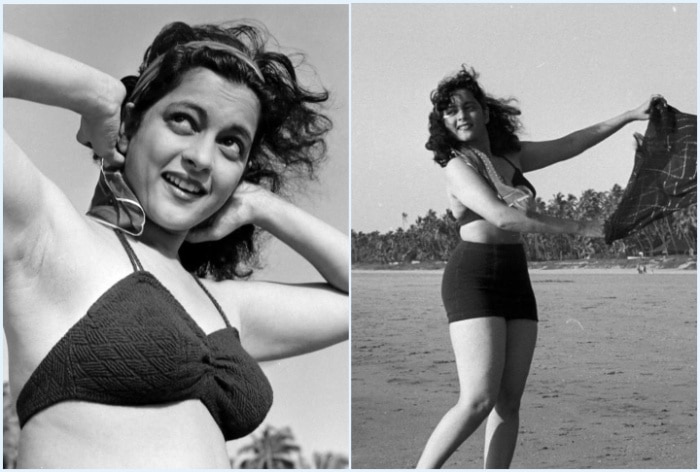
Analysis:
- Silhouette & Construction: The bikini top is highly structured, resembling the lingerie construction of the era. It features defined cups and a knotted center, providing significant support. The bottoms are distinctly high-waisted, sitting at or just below the natural waist. This silhouette is very characteristic of 1960s Western swimwear.
- Fabric & Print: As seen in the film, the bikini has a light blue base with a floral print. This choice adds a touch of playful femininity, contrasting with the "shocking" nature of the garment at the time.
- Styling & Accessories: The look is pure 1960s glamour. As the article mentioned, Sharmila Tagore sports her signature puffed bouffant hairstyle and a dramatic winged eyeliner. The styling is polished and aspirational, not casual.
- On-Screen Presentation: The bikini appears in a dynamic, high-energy song sequence where Tagore's character is confidently jet skiing. The setting is luxurious and foreign (filmed in Europe). The presentation frames the bikini not as beach loungewear, but as an outfit for glamorous, modern, and active leisure.
Case Study 2: Dimple Kapadia in Bobby (1973)
Just six years later, a 16-year-old Dimple Kapadia made her debut in Bobby, establishing herself as an instant style icon. Her bikini appearance in the film represents our second landmark moment.
Fashion Friday: Crop tops to two-piece bikini, 16-year-old Dimple ...
This India Today article, 'Fashion Friday: Crop tops to two-piece bikini...', captures the fashion impact Dimple Kapadia had in 'Bobby' and specifically details her famous orange bikini.
Read through the article, paying close attention to the text describing her 'orange two-piece bikini' and observing the accompanying images of her in the film. Contrast the overall feel of her outfits with the high glamour described for 'An Evening in Paris'.
Analysis:
- Silhouette & Construction: This design is visibly less structured than Tagore's. The top has softer, more triangular cups, closer to a modern string bikini top, though still offering moderate coverage. The key difference is in the bottoms: they are a standard bikini cut, sitting on the hips rather than the waist. This shift away from the high-waist marks a significant evolution in silhouette.
- Fabric & Print: The design makes a statement with a bold, solid bright orange color. There is no print, putting the focus entirely on the color and the silhouette against the actress's form.
- Styling & Accessories: The styling is much more natural and youthful. Kapadia's hair is worn long and loose, and the makeup is far less dramatic than Tagore's. The overall look is fresh-faced and accessible.
- On-Screen Presentation: The bikini appears during a pivotal scene where the young lovers meet. The mood is one of youthful romance, innocence, and a hint of rebellion. The look feels less like a costume for a fantasy sequence and more like an authentic expression of a young character's style.
Comparative Analysis
Now we can place our data points side-by-side to contrast the two landmark styles. This quantitative comparison highlights the rapid evolution of design and presentation in just a few years.
| Feature | Sharmila Tagore (An Evening in Paris, 1967) | Dimple Kapadia (Bobby, 1973) |
|---|---|---|
| Era / Aesthetic | Late 60s Sophisticated Glamour | Early 70s "Youthquake" / Naturalism |
| Silhouette (Top) | Structured, bra-style, knotted center | Soft cups, less structured, proto-triangle style |
| Silhouette (Bottom) | High-waisted | Standard hip-level bikini cut |
| Fabric & Color | Floral print on a light base | Solid, bold block color (orange) |
| Styling | High-glam: Bouffant hair, winged eyeliner | Youthful: Long, loose hair, minimal makeup |
| On-Screen Mood | Active, aspirational, luxurious fantasy | Intimate, romantic, youthful rebellion |
This comparison shows a clear trend: a move from structured to softer forms, from high-waisted to lower-cut bottoms, and from glamorous styling to a more natural presentation.
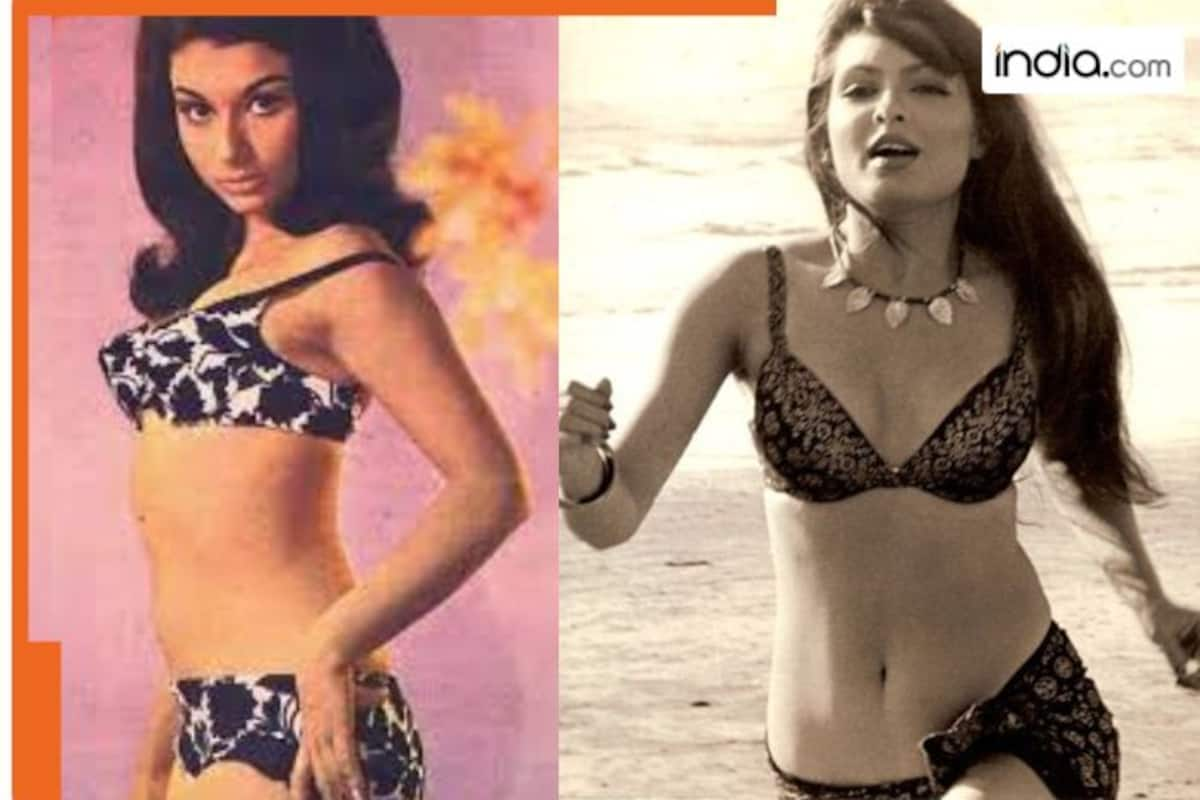
To add one more data point, consider Zeenat Aman's look from Qurbani (1980), which pushed the 70s aesthetic further.
Conclusion
In this lesson, you conducted a detailed comparative case study of two foundational bikini looks in Bollywood history. By deconstructing their design and on-screen presentation, you've practiced the analytical process essential for building your design catalogue.
Key Takeaways:
- Sharmila Tagore's 1967 look in An Evening in Paris was defined by 60s glamour, featuring a structured, high-waisted, printed bikini styled with high-fashion hair and makeup.
- Dimple Kapadia's 1973 look in Bobby reflected the 70s youth movement, with a softer, lower-cut, solid-color bikini and a more natural, accessible presentation.
- The evolution between these two points shows a clear design trajectory towards less structure and a more body-conscious silhouette, which paved the way for modern styles.
Having analyzed these historical precedents, you are now well-prepared to tackle the core silhouettes of the contemporary era. In our next module, we will begin our deep dive into post-2004 styles, starting with the most ubiquitous designs you'll encounter: triangle, string, and halter bikinis.