Introduction
Welcome back. In our previous lesson, we began our look into the "who" behind the styles by identifying several key Indian and international designers—like Shivan & Narresh, Louisa Ballou, and Saisha Shinde—whose specific creations have featured prominently in recent Bollywood films. You learned to spot their signature styles, from the fusion-wear innovation of the bikini sari to the hardware-heavy cutouts of contemporary cult brands.
This lesson builds directly on that foundation. We will now address the learning outcome: Describe how luxury brand aesthetics filter into Bollywood swimwear choices. We are shifting from identifying individual designers to understanding the broader process by which high-fashion looks and design philosophies make their way onto the screen. This involves more than just a famous name; it's about recognizing the visual language of luxury—specific materials, silhouettes, and production values—and how it's translated for cinema.
We will explore three primary pathways through which this influence occurs:
- Direct Placement: The use of identifiable, off-the-runway pieces from major international brands.
- Homegrown Luxury: The rise of Indian brands that consciously adopt and redefine luxury standards.
- Aesthetic Absorption: The adoption of the visual codes of luxury (e.g., specific colors, fabrics, and moods) even without using a specific branded item.
1. The Direct Approach: Strategic Brand Placement
The most straightforward way luxury aesthetics enter Bollywood is through direct placement. Stylists and costume designers select specific pieces from high-end international brands to create a character's look. This is often done to signal wealth, sophistication, or a high-fashion sensibility. The 2023 film Pathaan serves as an excellent case study for this, featuring a curated wardrobe of international designer swimwear.
Let's examine some of the specific brands chosen for the film.
Deepika Padukone Outfits In Besharam Rang (Pathaan) - Herzindagi
This article, 'Besharam Rang: 5 Dreamy Swimsuits Deepika Padukone Donned In The Pathaan Song' from Herzindagi, identifies the designers behind two of the most-discussed looks from the film.
Please read the first two sections, '1. Metallic Swimsuit' and '2. Yellow Swimsuit'. For each, note the brand name and the key design features mentioned.
From this reading, we can identify two key examples of direct placement:
- Norma Kamali: The golden metallic swimsuit is a piece from this iconic American designer. Kamali is a legendary figure in swimwear, known for her innovative use of materials (like parachute fabric) and creating timeless, sculptural silhouettes since the 1970s. The choice of her design signals a classic, powerful glamour.
- Louisa Ballou: The yellow monokini reinforces the point from our last lesson. Her brand is known for its distinctive asymmetric cuts and metal-ring hardware, representing a very current, edgy, and "it-brand" aesthetic.

The strategic use of both a legacy designer like Norma Kamali and a current cult favorite like Louisa Ballou shows a sophisticated styling approach, using specific brands to build different facets of a character's persona.
2. The Aspirational Approach: Building Homegrown Luxury
The influence of luxury isn't just about importing international brands. It's also about Indian designers consciously building brands that operate on a global luxury standard. Shivan & Narresh, whom we identified in the last lesson, are the foremost example of this.
Their approach involves adopting the principles of luxury—high-quality materials, couture techniques, and a strong brand story—and applying them within an Indian context.
How Shivan & Narresh's Indian roots inspire their bikini designs
Let's revisit the Vogue India interview with Shivan & Narresh. This time, we'll focus on the business and production side of their brand to understand how they construct a luxury identity.
Please re-read two specific sections from the interview: 'How did the idea of creating a swimwear label come to you?' and 'What have been some of the challenges of working in swimwear?'. As you read, look for their stated ambition for the brand and the specifics of their manufacturing process.
Two points from the article are crucial to understanding their luxury positioning:
- Stated Goal: Their explicit goal was to create "India's own global luxury brand" by taking on a global category (swimwear). This ambition frames their entire design and business philosophy.
- Production Standards: The detail that they "procure all of [their swimwear fabric] from Italy" is a key indicator of luxury. Italian mills are the global standard for high-performance, high-quality swimwear textiles. By choosing to source materials from there, they are aligning their product with international luxury benchmarks, even before the design process begins.
This shows how luxury aesthetics filter into Bollywood not just through finished products, but also through the standards adopted by the local high-fashion industry that supplies it.
3. The Indirect Approach: Aesthetic Absorption
Perhaps the most common way luxury aesthetics appear is through "aesthetic absorption." This is when a design captures the visual language of luxury without being a direct copy or even from a luxury brand. It's about embodying a mood.
Key visual codes for a luxury aesthetic in swimwear often include:
- Metallics and High Shine: Gold, silver, bronze, and sequined fabrics that catch the light and create a sense of opulence.
- Monochromatic Power: Solid blocks of color in clean, architectural silhouettes that emphasize form.
- Body-Conscious Glamour: Silhouettes like the monokini that use negative space and sleek lines to create a sophisticated, high-impact look.
An iconic example of this is Priyanka Chopra Jonas's gold monokini from the 2008 film Dostana.
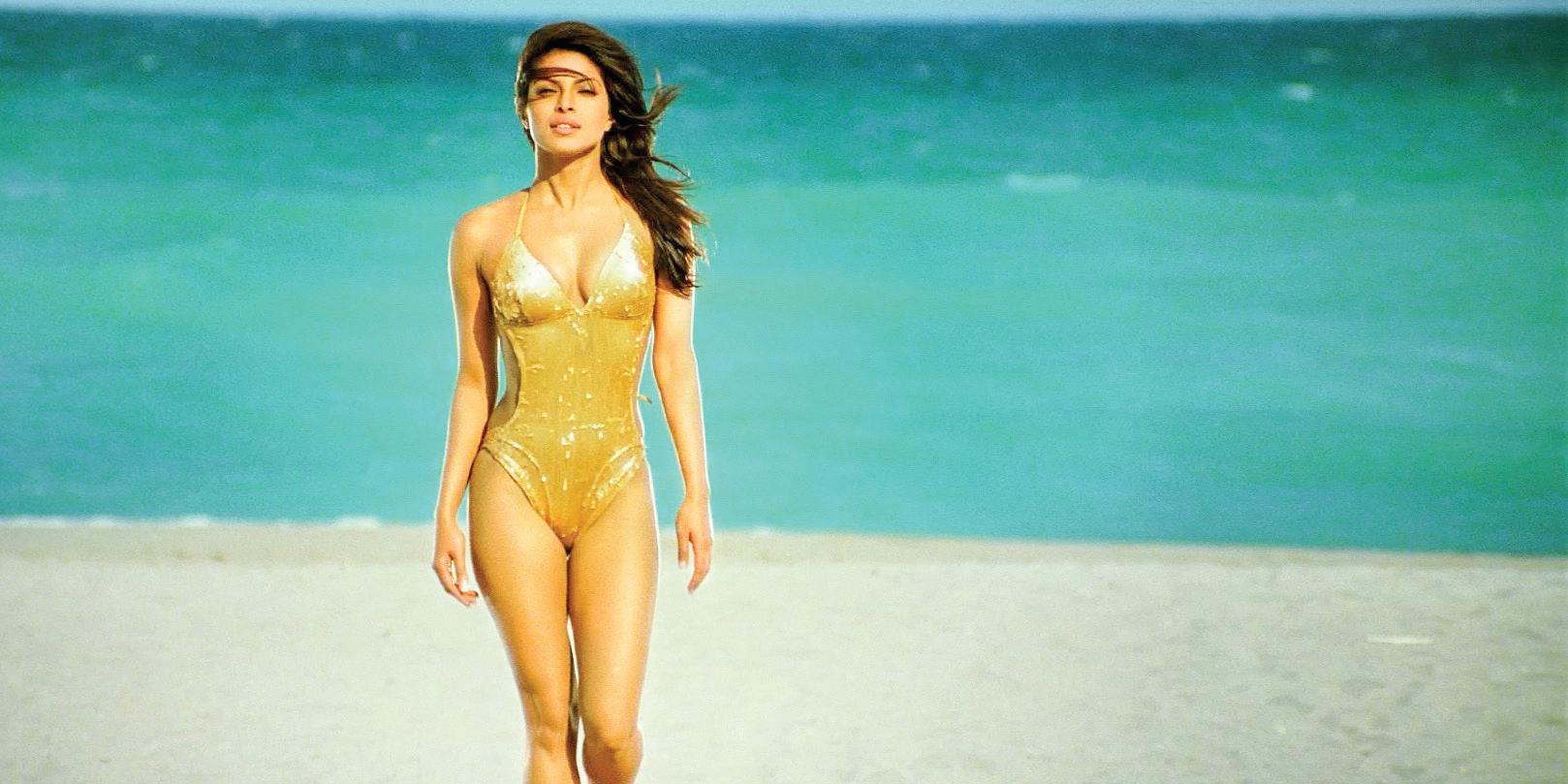
This look, designed by Manish Malhotra for the film, became a cultural touchstone. While not an international brand placement, it perfectly absorbed the global luxury aesthetic of the time. The combination of shimmering gold fabric and the daring-yet-chic monokini silhouette created an image of pure glamour that has been emulated countless times since. It demonstrates that a designer can evoke a luxury feel purely through the masterful use of color, material, and cut.
For your design repertoire, understanding these codes is essential. It allows you to create a "luxury" feel in your own designs by focusing on the right combination of elements, independent of a brand name.
Conclusion
In this lesson, you learned that the influence of luxury on Bollywood swimwear is a multi-faceted process that goes beyond simple product placement.
Key Takeaways:
- Direct Placement: Bollywood stylists use specific pieces from international luxury brands, like Norma Kamali and Louisa Ballou, to craft a character's identity and signal a high-fashion sensibility.
- Homegrown Luxury: Indian brands like Shivan & Narresh build a luxury identity from the ground up by adopting global standards in materials and production while creating a uniquely Indian design language.
- Aesthetic Absorption: Often, it's the visual codes of luxury—metallics, shine, clean lines, and glamorous silhouettes—that are absorbed into film costumes, creating an opulent look without relying on a specific brand, as exemplified by the iconic gold monokini in Dostana.
Preview of the Next Lesson:
Now that we have explored how designer and luxury aesthetics are integrated into films, the next logical question is how these on-screen looks become mainstream trends. In our next lesson, we will analyze the role of social media in accelerating the adoption of bikini styles from recent Bollywood films, bridging the gap between cinema and consumer behavior.