Introduction
Welcome to your final lesson for this module on retro and high-waisted styles. In our last session, we conducted a case study of a faithful recreation of a vintage look: Kangna Ranaut's 1970s bikini from Once Upon a Time in Mumbaai. We saw how silhouette, print, and styling were meticulously aligned to achieve historical accuracy for a period film.
Today, we will analyze the other side of the retro coin. This lesson is our second case study, where you will analyze a Bollywood look that reinterprets retro elements into a modern, fashion-forward bikini design. Instead of copying the past, this approach uses it as a creative starting point. Understanding this distinction is crucial for a designer, as it allows you to draw from a rich history of fashion while creating something new and commercially relevant.
Our case study will focus on the evolution of the "statement gold swimsuit," comparing a modern classic from 2008 to its 2021 reinterpretation.
1. The Modern Classic: A Reference Point
To understand reinterpretation, we first need a baseline. Priyanka Chopra's gold sequined one-piece from the 2008 film Dostana is a landmark in modern Bollywood swimwear. While contemporary for its time, it drew heavily on the glam aesthetic of the 1970s and 80s, becoming a "modern classic" that subsequent designs would reference.
Let's examine the original look.
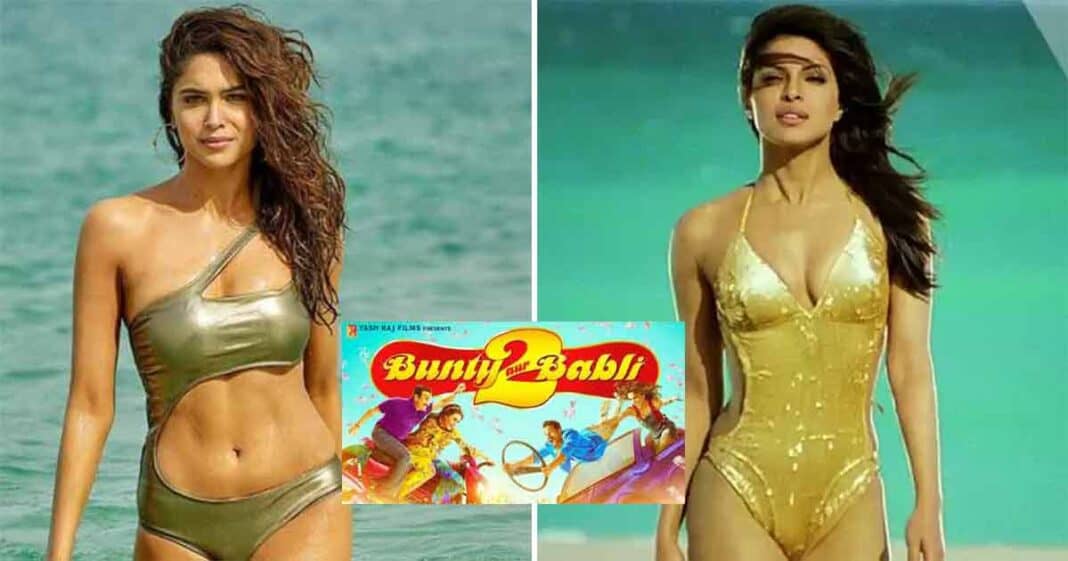
Focus on Priyanka Chopra's swimsuit on the right side of the image. Let's break down its key design features:
- Silhouette: A halter-neck one-piece. This is a timeless silhouette, but the fit is body-conscious in a way that feels more modern than its 1970s predecessors. It maintains full torso coverage.
- Fabric and Finish: The use of all-over gold sequins is the defining feature. This is a direct nod to the disco-era glam of the 1970s, designed for maximum visual impact on screen. The texture is dense and light-catching.
- Overall Aesthetic: The look is pure glamour. It established a benchmark for luxurious, high-impact beachwear in Bollywood, moving beyond simple prints or solid colors. The styling is kept minimal to let the statement swimsuit dominate.
Priyanka Chopra's look serves as our reference point: a modern (post-2004) design that successfully integrated retro glamour.
2. Case Study Deconstruction: The Fashion-Forward Reinterpretation
Now, let's shift our focus to the left side of the image: Sharvari Wagh's gold monokini from the 2021 film Bunty Aur Babli 2. This look clearly references the gold swimsuit archetype but updates it with over a decade of new design trends.
By analyzing the changes, we can pinpoint exactly how a retro concept is reinterpreted into a fashion-forward design.
Component 1: Silhouette Transformation
The most significant changes are in the silhouette. Where the Dostana suit was a classic one-piece, the Bunty Aur Babli 2 look is a monokini. As we covered in Module 3, this hybrid style is defined by its use of cutouts.
- Asymmetry: The swimsuit features a one-shoulder design, a stark contrast to the symmetrical halter neck of the original. Asymmetry is a key characteristic of many contemporary designs from the late 2010s and 2020s.
- Negative Space: The design incorporates large cutouts at the waist and torso. This transforms the garment from a full-coverage one-piece into a design that strategically reveals skin, playing with negative space to create a new shape on the body. This is a fundamentally modern design principle in swimwear.
Component 2: Fabric and Finish Evolution
While both swimsuits are gold, the execution is different, reflecting shifts in fabric technology and aesthetic preference.
- Texture: The 2021 version uses a sleek, metallic-finish fabric rather than sequins. This provides a similar high-shine, glamorous effect but with a smoother, more liquid-like surface. It feels less "disco" and more futuristic, aligning with contemporary trends.
- Effect: The sequined look is about dense, sparkling texture. The metallic look is about fluid, reflective sheen. The choice to update the fabric is a subtle but critical part of the reinterpretation.
3. Analyzing the Reinterpretation Framework
This case study provides a clear framework for how designers reinterpret retro concepts. You are not just changing one element, but updating a cluster of features to align with current trends.
Let's organize this evolution in a way that speaks to your background in statistics and classification. We can map the transformation of key design variables over time.
| Design Variable | Modern Classic (Priyanka, 2008) | Modern Reinterpretation (Sharvari, 2021) |
|---|---|---|
| Core Concept | Statement Gold Swimsuit | Statement Gold Swimsuit |
| Silhouette Type | Symmetrical One-Piece | Asymmetrical Monokini |
| Key Cut Detail | Halter Neck, Full Coverage | One-Shoulder, Waist Cutouts |
| Fabric Finish | Sequins (Textured Glam) | Metallic (Sleek Glam) |
This table codifies the process. The core concept remains constant, providing the "retro" anchor. However, the variables of silhouette type, cut detail, and fabric finish are all updated to reflect over a decade of fashion evolution.
This analytical approach is directly applicable to your design goals. When you want to create a "retro-inspired" piece, you can consciously decide which variables to keep for a nostalgic feel and which to update for a modern edge. For example, you could take a 1970s print and apply it to a contemporary monokini silhouette, or use a vintage high-waisted cut but render it in a modern, neoprene-like fabric.
This process of selective updating is the essence of fashion-forward reinterpretation.
Conclusion
In this case study, we deconstructed how a modern Bollywood look can reinterpret a retro concept for a contemporary audience. By comparing the gold swimsuits from Dostana and Bunty Aur Babli 2, we identified the specific design choices that transform a classic idea into a fashion-forward statement.
Key Takeaways:
- Reinterpretation vs. Recreation: Unlike faithful recreation, reinterpretation uses retro elements as a starting point for innovation.
- Modernization Levers: Key elements to modernize a design include updating the silhouette (e.g., adding asymmetry, cutouts) and changing the fabric finish (e.g., from sequins to metallic).
- The Power of the Core Concept: Maintaining a strong core concept (like the "gold swimsuit") provides a recognizable anchor, even as individual design features are radically changed.
- Analytical Design: You can break down any look into its component variables (silhouette, color, fabric, cut) to understand how it achieves its overall effect.
Preview of the Next Lesson:
You have now completed the module on retro and high-waisted styles, having analyzed both faithful recreations and modern reinterpretations. In our next module, we will explore another powerful source of design inspiration: The Desi Touch. We will begin by identifying traditional Indian design motifs like paisleys and mirror work and see how they are adapted for modern bikini designs, adding a unique fusion element to your growing style repertoire.