Hello! Welcome to the final lesson in our module on "Foundations of Clinical Research and Biostatistics."
In our last session, we distinguished between statistical significance (the p-value) and practical significance (the effect size). We learned that a truly valuable finding is not just unlikely to be due to chance, but also large enough to matter in the real world. Now that we can evaluate if a treatment works and how well it works, we must ask an even more fundamental question: Was it right to conduct the study in the first place?
This brings us to today's crucial learning outcome: to describe the core ethical principles governing human research, including informed consent, beneficence, and justice. For your goal of bringing scientific rigor to Ayurveda, mastering these principles is non-negotiable. Any research, whether on a new drug or a traditional herbal formula, must be built on an unshakable ethical foundation to be considered valid and credible by the global scientific community.
1. The Belmont Report: A Foundation for Ethical Research
In the past, some researchers conducted studies that caused serious harm to participants. The most infamous example is the Tuskegee Syphilis Study in the United States, where researchers withheld known effective treatment (penicillin) from a group of poor African-American men for decades to study the natural course of the disease. In response to such abuses, a commission was formed that created a landmark document in 1979: The Belmont Report. This report established the three core ethical principles that now guide all research involving human subjects.
Let's begin with a short video that introduces the Belmont Report and its three principles.
The Belmont Report: Respect for Persons, Beneficence, and Justice | Research Ethics
This video from the MedCat channel, 'The Belmont Report: Respect for Persons, Beneficence, and Justice', provides a concise overview of the three foundational principles we will be studying today.
Please watch from 00:53 to 03:55. This will introduce you to the core concepts of Respect for Persons, Beneficence, and Justice.
As the video explained, these three principles—Respect for Persons, Beneficence, and Justice—form the ethical framework for human research. Let's explore each one in more detail.
2. Principle 1: Respect for Persons
This principle is based on two core convictions:
- Autonomy: Individuals should be treated as autonomous agents, meaning they have the right to deliberate and make their own decisions about what they participate in.
- Protection: Persons with diminished autonomy (e.g., children, individuals with cognitive impairments, prisoners) are entitled to special protection.
The most important application of this principle is informed consent. True informed consent is not just about getting a signature on a form; it is an ongoing process with three essential components:
- Information: Participants must be given full information about the study's purpose, procedures, potential risks, and potential benefits. They must also know they are free to withdraw at any time without penalty.
- Comprehension: The information must be presented in a way the participant can understand. This means using clear, simple language and avoiding technical jargon. For someone who is illiterate, for example, a written form is not enough.
- Voluntariness: The decision to participate must be freely given, without coercion or undue influence. Offering excessive payment or threatening the loss of services can compromise voluntariness.
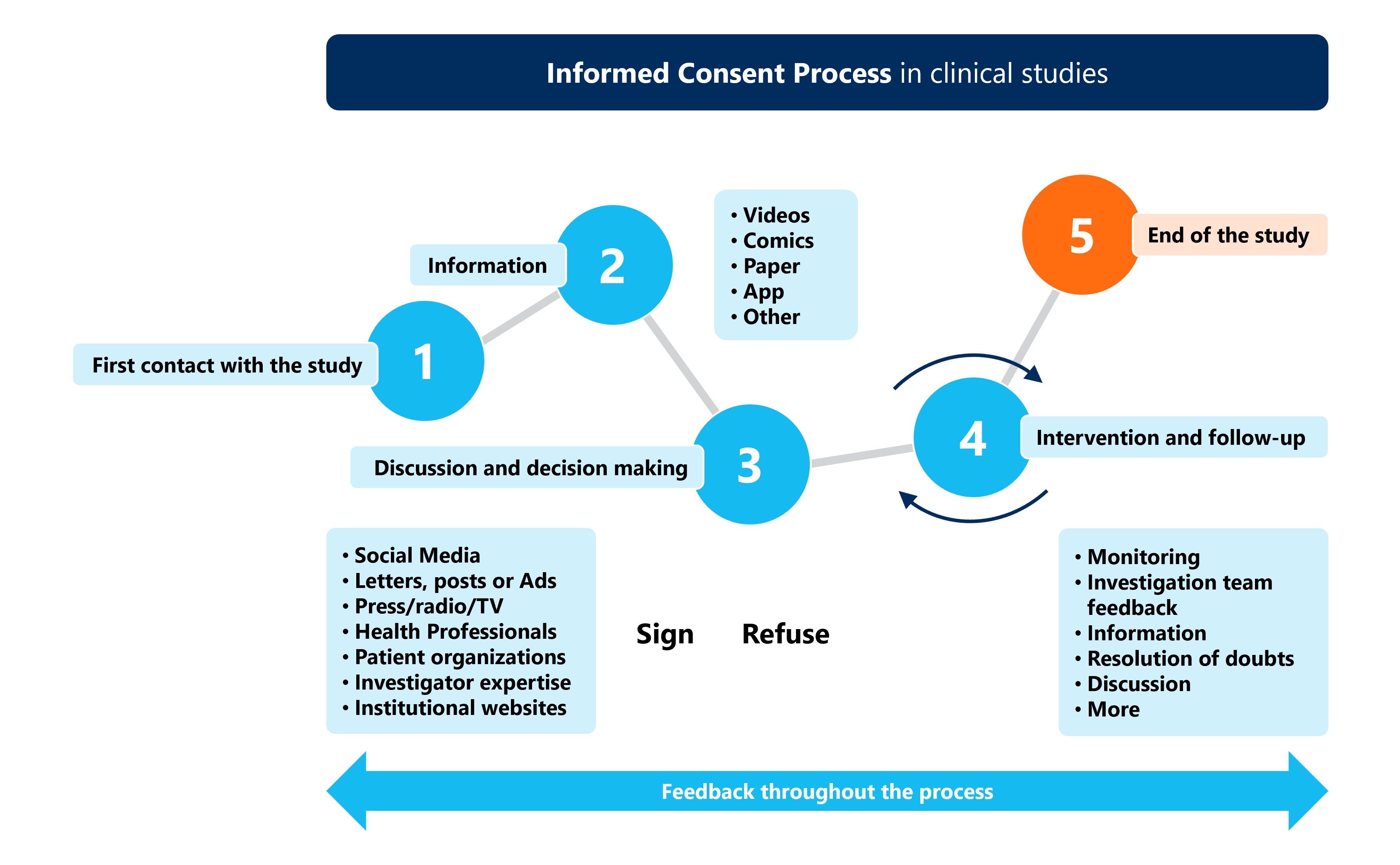
To understand the profound real-world implications when this principle fails, please watch the beginning of this powerful TEDx talk.
Exploitation and ethics in clinical trials | Boghuma Kabisen Titanji | TEDxGoodenoughCollege
In 'Exploitation and ethics in clinical trials', Dr. Boghuma Kabisen Titanji shares the story of a patient named Seline. This story is a moving illustration of what happens when the principles of ethical research are ignored.
Watch the first part of the talk, from 00:03 to 02:21. As you watch, consider the principle of 'Respect for Persons'. Did Seline give true informed consent? Did she comprehend what the trial involved or what would happen after?
Seline's story is a heartbreaking example of failed informed consent. She signed a form, but she clearly did not comprehend the implications of the research or what would happen to her after it ended. Her autonomy was not respected.
3. Principle 2: Beneficence
The principle of beneficence can be understood as two obligations:
- Do not harm.
- Maximize possible benefits and minimize possible harms.
This goes beyond the individual participant to also consider the benefits to society. However, the well-being of the individual participant can never be sacrificed for the good of the study or for society. The application of this principle is the assessment of risks and benefits.
Researchers must conduct a careful analysis:
- Risks: Are there physical, psychological, social, or economic risks? Are they minimized as much as possible?
- Benefits: Are there direct benefits to the participant? What are the potential benefits to society from the knowledge gained?
- The Balance: Do the potential benefits justify the risks? The risks to participants must always be outweighed by the sum of the anticipated benefits to the participants and society.
In Seline's case, the research ended, and she was left "very ill" without access to the life-saving drugs she had been receiving. The researchers failed in their obligation to "do no harm" and did not ensure a plan was in place to provide a clear benefit to her after her participation.
4. Principle 3: Justice
The principle of justice addresses the question: Who ought to receive the benefits of research and who ought to bear its burdens? It requires that the selection of research participants be fair and equitable.
Historically, the burdens of research (the risks, the time commitment) were often placed on vulnerable groups (like the poor or institutionalized individuals), while the benefits (new treatments, scientific knowledge) flowed to more privileged groups. The principle of justice forbids this.
- Fair Selection: Researchers cannot select a group of people simply because they are easily available or compromised (e.g., using patients in a charity hospital for risky research that will lead to an expensive drug only the wealthy can afford).
- Equitable Distribution: The groups who are likely to benefit from the research should also be the ones considered to participate.
The TEDx talk you watched touches on this directly, questioning why so many clinical trials are conducted in developing countries where populations are vulnerable due to poverty and inadequate healthcare. This raises serious questions of justice: are these populations bearing an unfair burden of research for treatments they may never have access to?
To solidify your understanding of these three principles and their applications, please read the following summary.
Belmont Report — Plain Language Summary
This document, 'Belmont Report — Plain Language Summary' from Harvard Law School, breaks down the core principles and rules in very accessible terms. It's a great way to review and reinforce what we've just discussed.
Please read Part B, 'Basic Ethical Principles for Researchers', and Part C, 'Rules'. This will cover the three principles and their direct applications: Informed Consent, Assessment of Risks and Benefits, and Selection of Subjects.
Test your understanding!
A research team wants to study a traditional Ayurvedic detoxification therapy (Panchakarma) that requires a strict, week-long residential regimen. They decide to recruit participants from a low-income, rural community by offering free meals and a small daily payment, which is significant for this community. The stated goal of the research is to develop a high-end, expensive 'detox kit' to be sold in urban wellness centers.
Analyze this proposal using the three ethical principles of the Belmont Report.
Show answer
- Respect for Persons: While participants would be informed, the voluntariness of their consent is questionable. The offer of free meals and significant payment could be an "undue influence" for a very poor community, making it difficult for them to refuse.
- Beneficence: The direct benefit to participants (meals and payment) is temporary. The primary risk is the detoxification procedure itself, which can have side effects. The balance of risk and benefit for the participant is not clearly favorable.
- Justice: This is the most significant violation. The burdens of the research (time, potential side effects, inconvenience) are borne entirely by a vulnerable, low-income group. The primary benefits (a profitable product) are explicitly targeted at a different, more affluent group. This is a classic example of injustice in the selection of subjects.
Based on this analysis, the research proposal is ethically problematic.
Conclusion
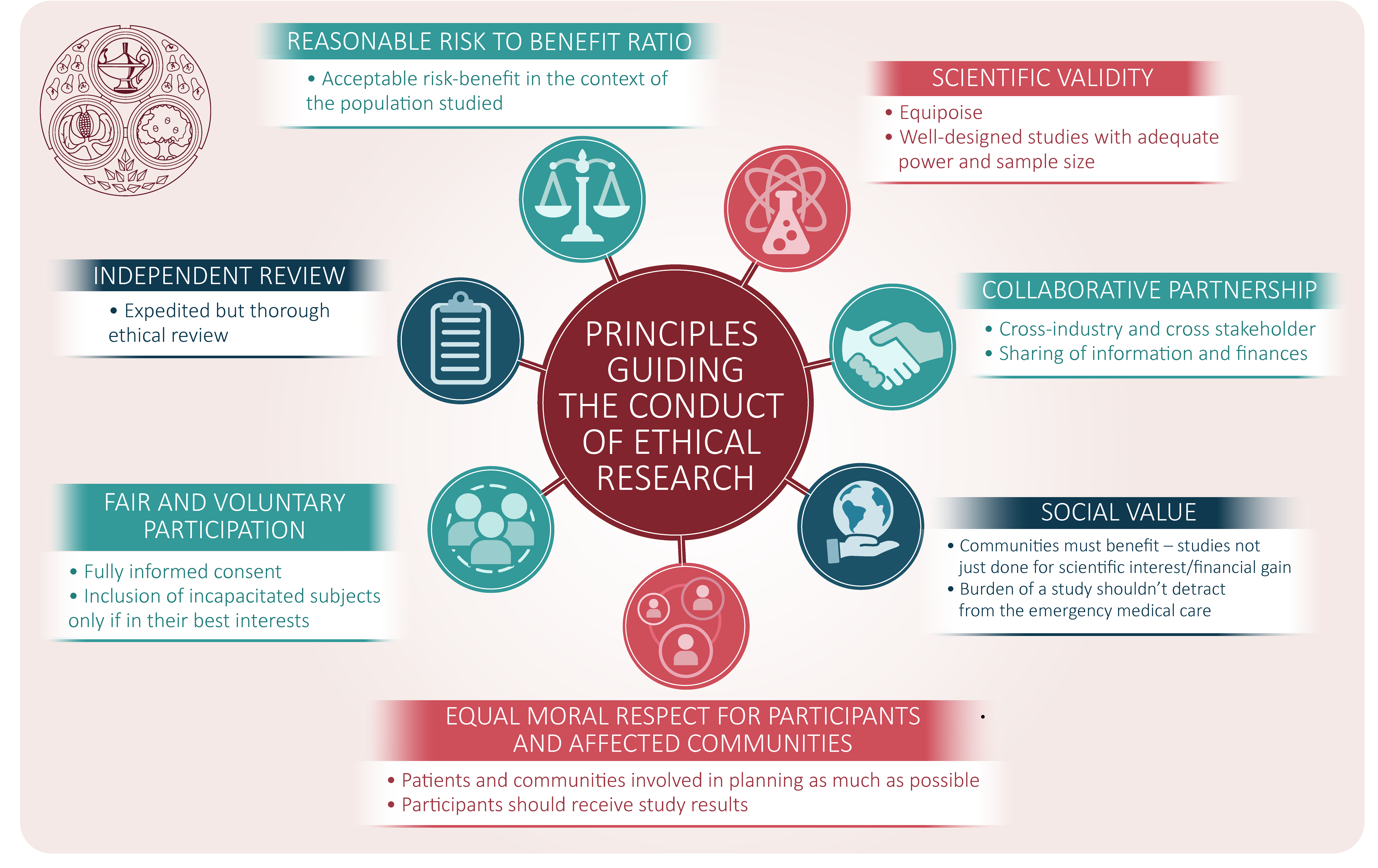
Today, we have established the ethical bedrock of all human research. Any study you design, conduct, or critically appraise must be held up to these standards.
Key Takeaways:
- All human research is governed by three core ethical principles outlined in the Belmont Report.
- Respect for Persons demands that we honor individual autonomy through a robust process of informed consent and provide special protection for the vulnerable.
- Beneficence requires us to "do no harm" and to systematically ensure that the potential benefits of research outweigh the risks.
- Justice demands fairness in the selection of participants, ensuring that vulnerable groups are not exploited and that the burdens and benefits of research are distributed equitably.
For your goal of bridging Ayurveda and modern science, these principles are your moral and scientific compass. Following them will ensure that your work is not only scientifically sound but also worthy of the trust of both patients and the scientific community.
Preview of the Next Lesson:
With these ethical principles as our guide, we are ready to move into the practical design of clinical trials. In our next lesson, we will begin Module 7, "Clinical Trial Design and Critical Appraisal," by describing the phases of clinical drug development (Phase I-IV). You will see how concepts like risk/benefit assessment and participant safety are systematically built into the very structure of modern clinical research.