Hello! Welcome to the fifth lesson in the Foundations of Arithmetic module. In our last session, we delved into partnership problems, applying our knowledge of ratios to distribute profits based on investment and time.
Today, we move on to another fundamental topic for the SSC CGL exam: Averages. The learning outcome for this lesson is to calculate averages and, more importantly, to solve problems where the average changes due to the addition or removal of elements. We will start with the basic definition and then, in line with your goal of mastering both concepts and shortcuts, we will explore powerful techniques that allow you to solve these questions much faster than the traditional methods.
1. Understanding the Average
The most common type of average you'll encounter is the Arithmetic Mean. At its simplest, it's the sum of all values divided by the count of those values.
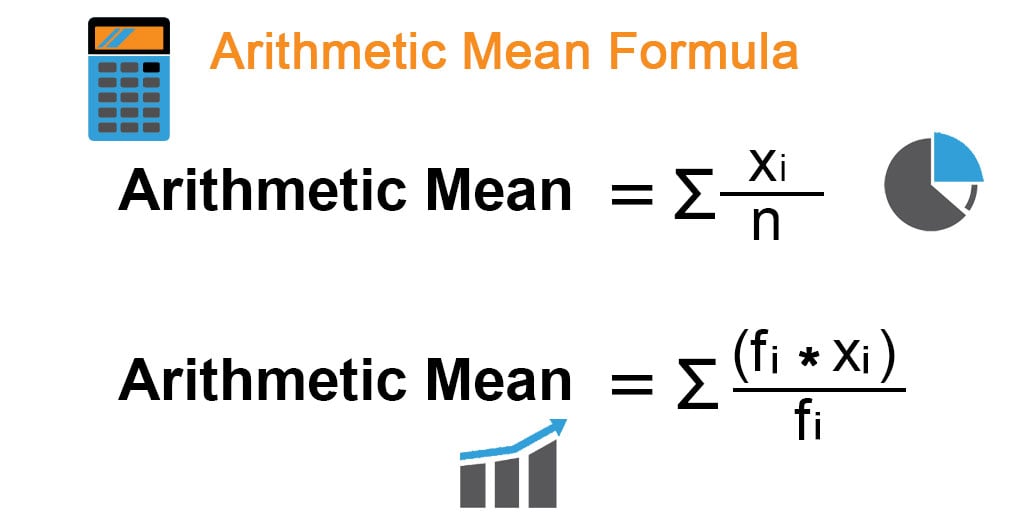
The formula is:
From this, we can also derive the formula for the sum:
While this formula is the foundation, a more intuitive way to think about the average is as equal distribution. Imagine you have a set of numbers; the average is the single value that each number would be if the total sum were distributed equally among them. This concept is the key to understanding the shortcuts we'll discuss next.
2. The Traditional Method vs. Shortcuts
Let's consider a typical exam problem:
The average age of 36 students is 14 years. If the teacher’s age is included, the average increases by one. What is the teacher's age?
Traditional Method (Formula-based):
- Initial Sum: The total age of the 36 students is .
- New Sum: When the teacher is included, there are 37 people, and the new average is . The new total age is .
- Find the Difference: The teacher's age is the difference between the new sum and the initial sum: years.
As you can see, this method involves multiplication with large numbers, which is slow and prone to errors under exam pressure. We need a faster way.
3. Shortcut 1: The "Money Problem" Analogy
A brilliant way to visualize these problems is to think of them in terms of money and equal distribution. This method builds strong intuition. Let's read through a few examples from an excellent article by Mrunal Patel that explains this technique.
This article explains a very intuitive shortcut by converting average problems into "money problems." It compares the lengthy formula method with this quick, logical approach.
First, read the two sections titled "Case: Avg age of Students + Teacher" and "Case: Avg salary workers+manager". These sections cover the exact type of problem we just discussed, where a new person joins and the average increases. Focus on the logic: The new person must bring enough "money" (value) for themselves to match the new average. They must also bring extra "money" to distribute to the original members to raise them all to the new average. Read from the teacher example to see a side-by-side comparison of the shortcut and the formula method. Then, review the manager example to solidify your understanding.
The logic is powerful:
Value of New Person = (New Average) + (Number of Old Members × Change in Average)
In our example:
Teacher's Age = years.
This calculation is much simpler and faster.
4. Shortcut 2: The "LHS-RHS Difference" Method
For pure speed, there is a mechanical shortcut that works for all cases of addition and removal. It's a structured way of applying the same logic we just saw. Chandan Venna explains this technique very clearly in his video.
Average Shortcut Concept &Tricks PART-1 For SSC CGL/CHSL| IBPS PO/Clerk|RRB-NTPC|SI By Chandan Venna
This video demonstrates a fast, procedural shortcut for solving average problems involving addition or removal of elements.
First, watch the demonstration of the technique from this segment. The core idea is: Set up the problem with 'before' and 'after' values. Find the difference on the left side (number of people) and the right side (average). Cross-multiply: (LHS difference × RHS bottom number) + (RHS difference × LHS top number). Then, see it applied to two SSC CGL-style problems: a teacher joining a class and a mother joining a family.
Let's apply this to our example:
| Persons (LHS) | Average (RHS) |
|---|---|
| 36 | 14 |
| 37 | 15 |
- LHS Difference:
- RHS Difference:
- Calculation:
This method is systematic and extremely fast once you get the hang of it.
5. Handling All Scenarios: Addition and Removal
These shortcuts are versatile and work for all variations of the problem. Let's see how they apply when elements are removed or when the average decreases.
A. When an Element is Removed
Imagine a person leaves a group.
- If the average decreases, the person who left had a value higher than the original average. They took their "extra contribution" with them.
- If the average increases, the person who left had a value lower than the original average. They were "dragging the average down," and their departure allows it to rise.
Let's see an example of removal from the RBE channel, which uses a similar deviation-based logic.
Average(औसत) for SSC CGL 2024 Practice🔥| SSC CGL 2023 all 18 Questions with basics & Tricks
This video solves a problem where a student leaves and the average weight drops. It explains the logic both intuitively and with a basic formula breakdown.
Watch the problem explained from this segment. Notice the thought process: the person who left must have had their own share of the average (40 kg) plus the amount they were contributing to lift everyone else's average. Since the average of the remaining 14 students fell by 0.5 kg each, that contribution was 14 \times 0.5 = 7 kg. So, the person's weight was 40 + 7 = 47 kg.
B. When the Average Decreases
The same logic applies in reverse. What if a new, younger person joins a group, and the average age decreases?
- Using the "Money Problem" analogy: The new person has less "money" than the new average. To reach the new average, they must "borrow" from the other members, effectively reducing everyone's share.
- Using the "LHS-RHS" method: The change in average will be negative, which automatically adjusts the final calculation.
Let's see this in action.
Average Shortcut Concept &Tricks PART-1 For SSC CGL/CHSL| IBPS PO/Clerk|RRB-NTPC|SI By Chandan Venna
This video provides two excellent examples of the average decreasing.
Watch these two clips to see how the shortcut handles a decreasing average: A new person joins, and the average age drops from 50 to 49. A baby is born into a family, and the average age drops significantly. Pay close attention to how the negative difference on the right-hand side correctly adjusts the final result.
6. Extending the Concept: More Than One Element
What if a group of people joins or leaves? The logic remains the same. You simply calculate the total value of the group that joined or left. If asked for the average of that group, you divide the total value by the number of people in that group.
Let's see a quick example.
Average Shortcut Concept &Tricks PART-1 For SSC CGL/CHSL| IBPS PO/Clerk|RRB-NTPC|SI By Chandan Venna
This clip shows how to solve a problem where a group of 10 new students joins a class.
Watch from this example. The LHS-RHS method is used to find the sum of the ages of the 10 new students (which comes out to be 160). To find their average age, this sum is simply divided by 10.
Conclusion
In this lesson, we've explored the core concept of averages and, crucially, the efficient methods required to solve related problems in the SSC CGL exam. You now have a toolbox of techniques, from the foundational formula to intuitive analogies and rapid procedural shortcuts.
Key Takeaways:
- The basic formula for average is Sum / Count.
- For problems involving adding or removing elements, the traditional formula method is too slow for competitive exams.
- The "Money Problem" analogy provides a strong conceptual understanding of why the shortcuts work. The incoming/outgoing person's value is based on the new average plus/minus the change they cause to the rest of the group.
- The "LHS-RHS Difference" method is a fast, mechanical shortcut that handles all cases (addition, removal, increase, decrease) systematically.
- When a group of people joins or leaves, the same methods can be used to find the sum of their values, which can then be used to find their average.
In the next lesson, we will build directly on this foundation to tackle Weighted Averages. This is used when you combine groups of different sizes or when certain items in a set have more importance than others. It's a concept that appears frequently in problems on mixtures, another important topic for your exam.