In our previous lesson, we discovered the origin of the word 'pink,' tracing its journey from a 14th-century verb to a flower's name, and finally to a color term in the 17th century. Now that we understand where the name came from, we can turn our attention to the physical substance of the color itself. How did artists and dyers actually create pink before the age of synthetic chemistry?
Today, we will investigate the natural materials used to produce early pink dyes and pigments. Since pink is a tint of red, our exploration will focus on the most important historical sources of red. You will learn to identify two key materials mentioned in the learning outcome: madder root, a humble plant that colored textiles for millennia, and cochineal, a tiny insect that produced a red so vibrant it became a source of global wealth. Understanding these materials is fundamental to appreciating the cost, status, and aesthetic qualities of pink in art and fashion, a theme we will explore throughout this course.
Dyes, Pigments, and the Power of Red
Before we look at specific materials, it's helpful to understand a basic distinction. Early colorants were generally one of two types:
- Pigments are colored powders, often from ground minerals, that are insoluble. They are mixed with a binder (like oil, egg, or wax) and sit on the surface of a material. Think of paint on a canvas.
- Dyes are soluble substances, typically from plants or animals, that chemically bond with the fibers of a material, coloring it from within. Think of coloring a wool sweater.
To create the color pink, dyers could use a diluted red dye, while painters might mix a red pigment with a white one. The quest for a powerful, permanent, and brilliant red was one of the driving forces in the history of color technology.
The following video from The Metropolitan Museum of Art provides an excellent introduction to historical red colorants, distinguishing between mineral pigments and organic dyes.
Cochineal Red: The Art History of a Color
This excerpt from "Cochineal Red: The Art History of a Color" sets the stage by explaining the different types of historical red colorants and their cultural importance.
Please watch the segment from the beginning of the overview. Pay close attention to the distinction the speaker makes between inorganic pigments and organic dyes, and listen for the first mention of madder root.
From the Ground Up: The Matter of Madder
As you just heard, one of the most widespread organic dyes in the ancient world came from the madder plant (Rubia tinctorum). For thousands of years, this perennial herb was the workhorse for producing reds, oranges, and pinks. The color itself comes not from the leaves or flowers, but from the plant's sprawling root system.
The following article from the Getty provides a detailed look at the science and history of madder. It introduces key concepts like 'lake pigments'—a clever way to turn a soluble dye into an insoluble pigment for painting.
The Matter of Madder in the Ancient World | Mummy Portraits of Roman Egypt
This scholarly article explores the botanical origins, chemical properties, and historical use of madder as a dye and pigment.
First, read the introductory section, which defines madder and lake pigments. This will clarify how a single plant source could be used for both textiles and painting. Next, in the main text, read the two paragraphs that describe the plant and extraction process. Finally, jump ahead to the section on historical evidence and read about madder's ancient use, which confirms its long history in Egypt and the Middle East.
As you've read, the process was straightforward: the roots were harvested, dried, and crushed into a powder. Soaking this powder in hot water released the colorant compounds, primarily alizarin and purpurin.
The final color depended heavily on the dyeing process. By using chemical fixatives called mordants—most commonly alum (an aluminum salt)—dyers could create a stronger, more permanent bond between the dye and the textile fibers. The choice of mordant and the acidity of the water could shift the color from a brilliant scarlet to a soft rose pink. When made into a lake pigment for painting, madder could produce a beautiful, translucent pink, highly valued for creating lifelike skin tones and delicate fabrics.
To get a better visual sense of the raw material, the short video below shows madder in its modern, powdered form and the plant itself.
HOW TO NATURAL DYE WITH MADDER | BOTANICAL COLOUR | SHADES OF RED
This clip from a natural dyer at BillyNou offers a quick look at madder powder and a living madder plant.
Watch the first few seconds to see the madder powder. Then, you can skip to the plant itself, where the creator explains that the roots must mature for several years before they can be harvested for dye.
Crimson Gold: The Cochineal Insect
While madder was a reliable source of red, the most vibrant, intense, and sought-after reds in history came from an entirely different kingdom of life: insects. Before the 16th century, Europeans and Asians relied on several types of scale insects, such as Kermes and Polish cochineal, to produce brilliant crimson dyes. But the discovery of the Americas introduced a new world insect that would change color history forever.
This was the American cochineal (Dactylopius coccus), a tiny parasite living on the nopal cactus of Central and South America.

This tiny creature produced a dye so potent and colorfast that it became one of the most valuable commodities exported from the New World, second only to silver and gold.
To understand the global impact of this insect, let's return to the lecture from The Met.
Cochineal Red: The Art History of a Color
This video provides a comprehensive narrative of cochineal, from its pre-Columbian origins to its conquest of the global textile market.
First, watch the brief introduction to cochineal. Next, watch the segment on other insect dyes to understand why American cochineal was such a revolutionary improvement over existing sources like Kermes and Polish cochineal. Then, learn about the cultivation of the insect in Mexico and Peru. Finally, two key moments link cochineal directly to pink. Watch the mention of a strong pink hue in an ancient Peruvian textile, and the description of the 18th-century European relish for "hot pink" cochineal.
The secret to cochineal's success was the high concentration of carminic acid in the female insects, which yielded a dye thirty times more powerful than its Old World competitors. The Spanish established a fiercely guarded monopoly on the trade, and for centuries, most European dyers had no idea that their most precious red dye came from a dried insect.
Like madder, cochineal could be used with different mordants to produce a spectrum of colors, from deep crimson and scarlet to vibrant purples and, of course, brilliant pinks. Its versatility and intensity made it the luxury dye of choice for silks, tapestries, and the lavish red coats of British officers.
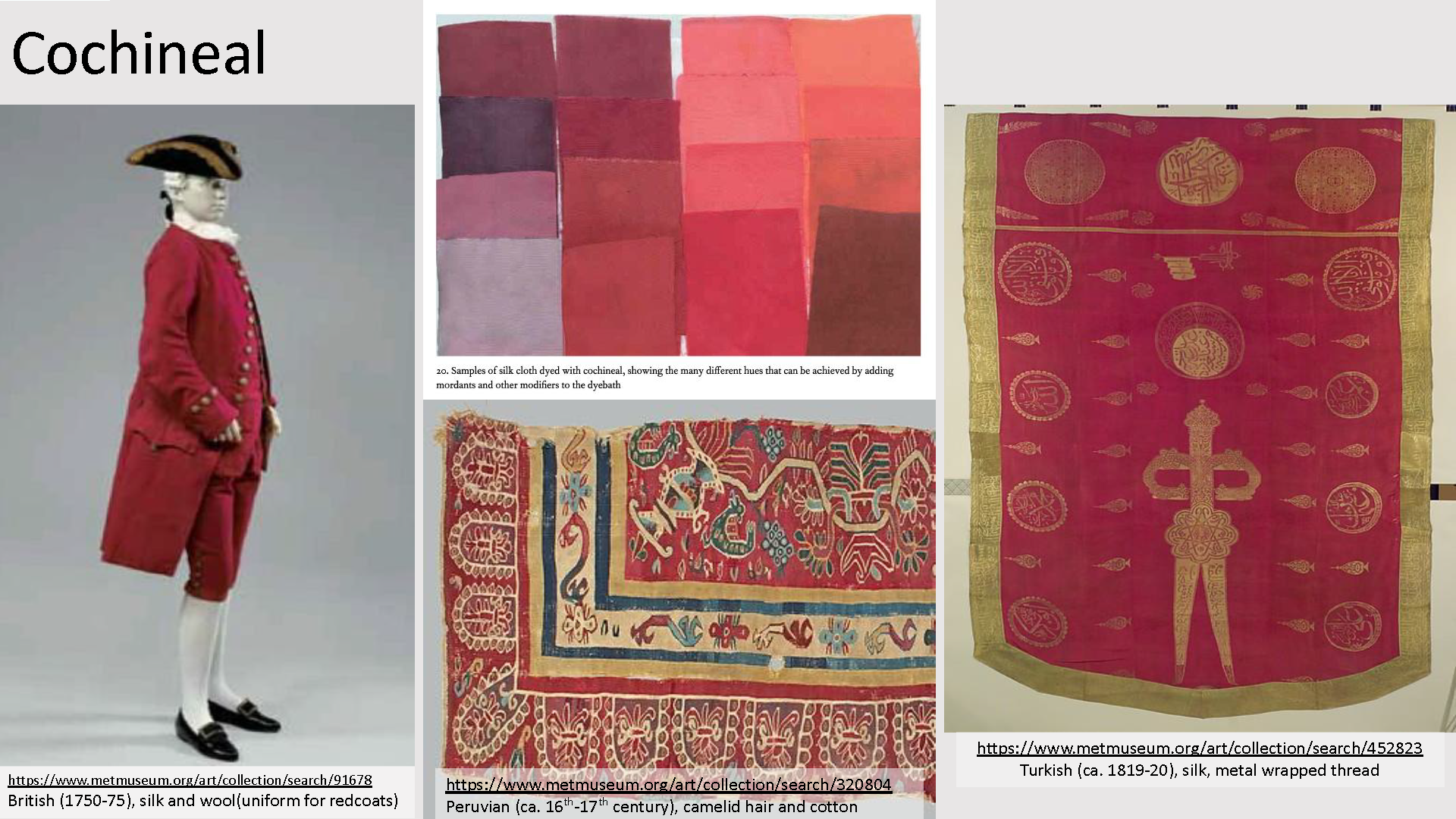
The following text provides more detail on the various red dyestuffs available before cochineal's arrival and reinforces the insect's dramatic impact on the global market.
The Red Craze | Fashion History Timeline
This article from the Fashion History Timeline contextualizes the arrival of cochineal by first outlining the Old World dyes it would eventually supplant.
First, read the list of pre-sixteenth century dyes. You will recognize madder and various insect dyes like Kermes and Polish cochineal. Next, briefly review the three dyeing procedures described, especially mordanting, which was key to creating colorfast dyes. Finally, read the section on Cochineal to understand why it was considered "the closest thing Europe had ever seen to a perfect red."
Conclusion
In this lesson, we have moved from the name 'pink' to its material substance. You've learned how, for centuries, the color was created not in a lab, but by processing natural materials harvested from the earth and from insects. The key takeaways are:
- Early pinks were produced using natural red colorants, with the final shade depending on dye concentration and the use of mordants.
- Madder root was a crucial, widely available plant-based dye, used for thousands of years to create a range of colors from orange-red to rose pink.
- Cochineal, an insect native to the Americas, produced a uniquely powerful and vibrant red dye that revolutionized the European textile market in the 16th century and became the source of the most desirable "hot pinks."
- Dyers could also turn soluble dyes into insoluble lake pigments, allowing colors from sources like madder to be used in paints.
We now have the final piece of our origin story: the material itself. In our next lesson, we will see how the brilliant pinks made possible by cochineal became central to the expression of wealth, power, and high fashion in 18th-century Europe, with a special focus on the influential tastemaker Madame de Pompadour.