Introduction
In our previous lesson, we assembled a preliminary roster of focus-friendly pieces from the Baroque and Classical eras, identifying works by Bach, Mozart, and Beethoven that exemplify structural integrity and clarity. We saw how musical forms like theme-and-variations and fugue provide an ideal scaffold for concentration.
This lesson serves as the capstone for our module on Western classical music. We will synthesize everything we've explored into a practical, personalized "curator's cheat sheet." Before we build this guide, however, we need to address two crucial points that will sharpen your curatorial judgment: first, we'll critically examine the famous "Mozart effect" to understand what's really happening in the brain; second, we'll establish a clear distinction between the focus-supporting qualities of Baroque/Classical music and the generally distracting nature of the Romantic era that followed.
Deconstructing the "Mozart Effect": Myth vs. Mechanism
The idea that listening to Mozart makes you smarter is a pervasive pop-psychology trope. While it has sold countless CDs and shaped parental anxieties for decades, the reality is more nuanced and, for our purposes, more useful. The following video debunks the myth and offers a compelling scientific explanation for why certain types of music aid concentration.
This video from the channel Sideways, titled "The Mozart Effect," expertly traces the history of the concept and explains the underlying cognitive science.
Please watch two key segments: First, watch the opening section from the beginning, which details the 1993 study that started it all and how it was misinterpreted by media and marketing. Next, jump to the neuroanatomical explanation starting around the science. This part is crucial. It explains the roles of Broca's and Wernicke's areas in language processing and introduces the concept of sub-vocalization—the "inner voice" you use when reading or thinking. Focus on the core argument: non-lyrical, structurally complex music like Mozart's can provide an engaging backdrop that doesn't overload the brain's language centers, thereby "drowning out" distractions and allowing your inner voice to focus more clearly.
The key takeaway is not that Mozart's music has a magical property, but that instrumental music with sufficient complexity and a lack of lyrical content can serve as a form of "auditory masking." It occupies the brain's sound-processing regions just enough to prevent them from being hijacked by distracting external noises or internal chatter, without competing for the same resources needed for thought and reading (sub-vocalization). This principle is the scientific bedrock for our curation efforts.
The Great Divide: Why Not Romantic Music?
To build an effective focus playlist, knowing what to exclude is as important as knowing what to include. The music of the Baroque and Classical periods shares core characteristics that support focus, but the Romantic era (roughly 1830-1900) represents a fundamental shift in aesthetic goals.
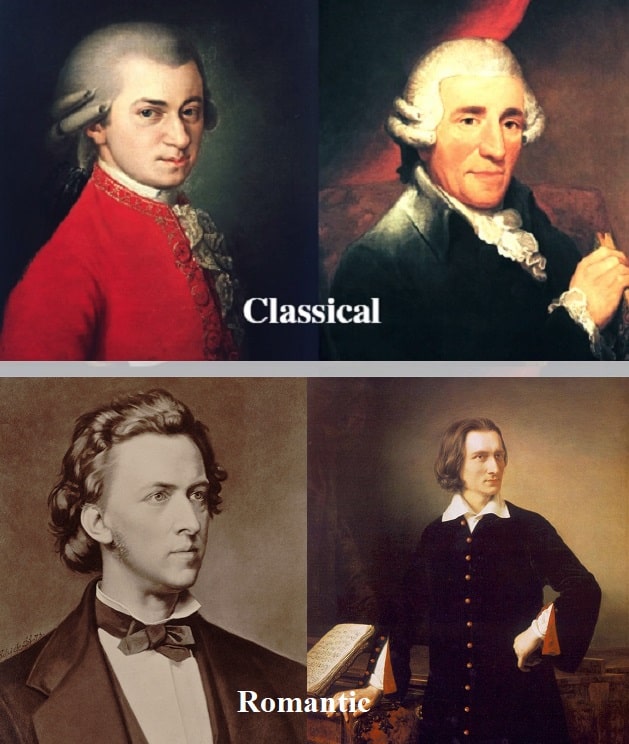
Let's explore the defining sounds of these three periods to understand why this shift makes Romantic music generally unsuitable for our purpose.
How to Identify Classical Music
The video "How to Identify Classical Music" provides excellent, concise auditory summaries of the Baroque, Classical, and Romantic styles.
Please listen to the descriptions and musical examples for each of the three eras: Baroque (Baroque characteristics) Classical (Classical characteristics) Romantic (Romantic characteristics) As you listen, note the descriptive words used for each period. For Baroque, you'll hear "steady," "regular," "complex," and "layered." For Classical, "lighter," "clearer," "neater," and "ordered." For Romantic, "emotional," "expressive," "bigger," and "longer."
The Romantic composers sought to express the full, often turbulent, range of human emotion. This objective led to musical choices that are directly opposed to creating a stable environment for focus.
Classical vs Romantic Music (Differences Between Classical And Romantic Music) - CMUSE
This article from CMUSE provides a detailed comparison that reinforces the points from the video.
Read through the article, paying attention to the sections that describe the differences in philosophy, instrumentation, form, and harmony. Focus on these contrasts: Philosophy: The move from Classical elegance and control towards expressing the "great range of human emotions." Orchestration: The expansion from a Classical orchestra of around 50 performers to a Romantic one of over 100. Form: The evolution from concise, structured Classical forms to sprawling, program-driven Romantic works. Harmony: The departure from clear, tonal Classical harmony towards the intense chromaticism and ambiguity of composers like Wagner.
In short, Romantic music is designed to grab your attention and take you on an emotional journey. Its use of dramatic dynamic shifts, massive orchestral textures, complex and often unresolved harmonies, and flexible tempo (rubato) makes it a powerful and moving art form, but a poor partner for concentration.
The Curator's Cheat Sheet for Western Classical Music
Here is a synthesis of our findings, structured as a practical guide for your curation process.
Principle 1: Manage Cognitive Load (The "Why")
The primary goal is to provide a sonic environment that is engaging enough to prevent mind-wandering but stable enough not to demand active listening or emotional processing. It must not compete with your "inner voice" (sub-vocalization).
Principle 2: The Stylistic Litmus Test (The "What")
Use these criteria to evaluate any potential piece.
-
Rhythm & Tempo:
- YES: A steady, discernible pulse (a "motor rhythm"). Consistent tempo.
- NO: Frequent, dramatic tempo changes (accelerando, ritardando) or expressive flexibility (rubato).
-
Texture:
- YES: Clarity is key. This can be the horizontal clarity of Baroque counterpoint (multiple independent melodic lines, like in a Bach fugue) or the vertical clarity of Classical homophony (a clear melody over a subordinate accompaniment).
- NO: Thick, dense orchestral textures where individual lines are blurred.

-
Harmony:
- YES: Primarily diatonic harmony with clear, predictable cadential patterns. This creates a sense of stability and resolution.
- NO: Intense chromaticism, ambiguous tonality, and frequent use of unresolved dissonances that create tension and expectation. (As a jazz musician, you can think of this as favoring functional harmony with clear V-I resolutions over highly altered, non-functional, or modal harmony that creates a sense of suspension).
-
Dynamics & Instrumentation:
- YES: Consistent dynamic levels. Baroque "terraced" dynamics (sudden but block-like shifts) or graceful Classical crescendos are manageable. Solo instruments (keyboard, cello) and small chamber ensembles (string quartets, trios) are ideal.
- NO: Extreme and sudden dynamic shifts (pianissimo to fortissimo). Massive orchestral forces (large brass and percussion sections).
Principle 3: The Go-To List (The "Who & What")
This is your starting roster, categorized by the type of focus they best support.
-
For Intense Analytical Tasks (High engagement, low distraction):
- Composer: J.S. Bach
- Works: The Well-Tempered Clavier, Goldberg Variations, Sonatas and Partitas for Solo Violin, Cello Suites.
- Why: Unmatched contrapuntal complexity within a rigid structure. It engages the analytical mind without emotional distraction.
-
For Creative Work or General Study (Uplifting & orderly):
- Composers: W.A. Mozart, Joseph Haydn
- Works: Mozart's Piano Concertos (especially slow movements), Divertimentos, and Symphonies (e.g., No. 40, No. 41 "Jupiter"); Haydn's String Quartets (e.g., Op. 76 "Emperor") and Symphonies (e.g., "Surprise," "Clock").
- Why: The epitome of clarity, balance, and formal elegance. The music is optimistic and structured, creating a positive and orderly mental space.
-
For Relaxed, Sustained Focus (Low arousal, calming):
- Composers: Vivaldi, Corelli, Handel, Albinoni, Pachelbel
- Works: Slow movements (Largo, Adagio, Larghetto) from Baroque concerti grossi. Pachelbel's Canon in D.
- Why: The combination of a slow, steady pulse (often 40-60 bpm), simple textures, and gentle melodies is deeply calming and hypnotic.
Principle 4: The "Avoid" List (The "Who Not")
When a task requires focus, be wary of the high Romantic and late-Romantic composers.
- Composers to Avoid: Richard Wagner, Gustav Mahler, Pyotr Ilyich Tchaikovsky, Franz Liszt, Hector Berlioz, Richard Strauss.
- Why:
- Wagner/Strauss: Extreme chromaticism, massive orchestras, and goal of creating overwhelming Gesamtkunstwerk (total work of art).
- Mahler/Tchaikovsky: Symphonies as epic emotional narratives, with huge dynamic swings and dramatic turmoil.
- Berlioz/Liszt: Pioneers of "program music" that explicitly tells a story, demanding you follow along.
- Use with Caution: Transitional figures like Ludwig van Beethoven (middle and late periods), Franz Schubert, and Johannes Brahms. Their work often contains moments of perfect Classical balance, but can quickly erupt into Romantic passion. They are best curated on a track-by-track basis rather than listening to a full work.
Conclusion
You have now constructed a robust framework for curating Western classical music for focus. This cheat sheet, moving from the "why" (cognitive load) to the "what" (stylistic tests) and the "who" (go-to composers), provides a powerful and repeatable methodology.
Key Takeaways:
- The "Mozart effect" is less about Mozart and more about how non-lyrical, structured music provides an optimal auditory background that doesn't interfere with our internal thought processes.
- Baroque and Classical music are ideal for focus due to their emphasis on order, clarity, steady rhythm, and predictable structures.
- Romantic music, with its focus on emotional expression, dramatic contrast, and narrative, is generally counterproductive for concentration.
- Your curation strategy should favor solo and chamber music and be highly selective with orchestral works, prioritizing structural integrity over emotional volatility.
In our next module, we will journey further back in time and shift our focus from the concert hall to the cloister and the court. We will explore Western contemplative traditions, examining how the monophonic purity of Gregorian chant and the intimate clarity of Renaissance lute music create profound states of meditative focus and relaxation through entirely different means.