Welcome to the first lesson in our module on electronic soundscapes. In our last module, we explored how the natural world provides a rich source of sound for shaping our mental state. We concluded by creating a curator's guide for selecting and using natural soundscapes. That guide was based on a key principle: the acoustic characteristics of a sound (its rhythm, complexity, and frequency) determine its functional use.
Today, we transition from found sound to composed sound. We will explore how musicians and composers intentionally design auditory environments from the ground up to achieve similar goals. Our journey begins with the quintessential genre for functional listening: ambient music. This lesson will address the core question: what are the defining characteristics of ambient music that make it so effective for focus, relaxation, and altering our environment? We will explore its philosophy, its sonic signature, and its practical applications.
The Architect and the Philosophy: Brian Eno
Any discussion of ambient music must begin with its principal architect, Brian Eno. While precedents existed, it was Eno who coined the term and articulated the philosophy that guides the genre to this day. A musician, producer, and visual artist, Eno's work spans from rock bands like Roxy Music to producing legendary albums for David Bowie and U2. His contribution to ambient music, however, was a deliberate step away from the conventions of popular music.
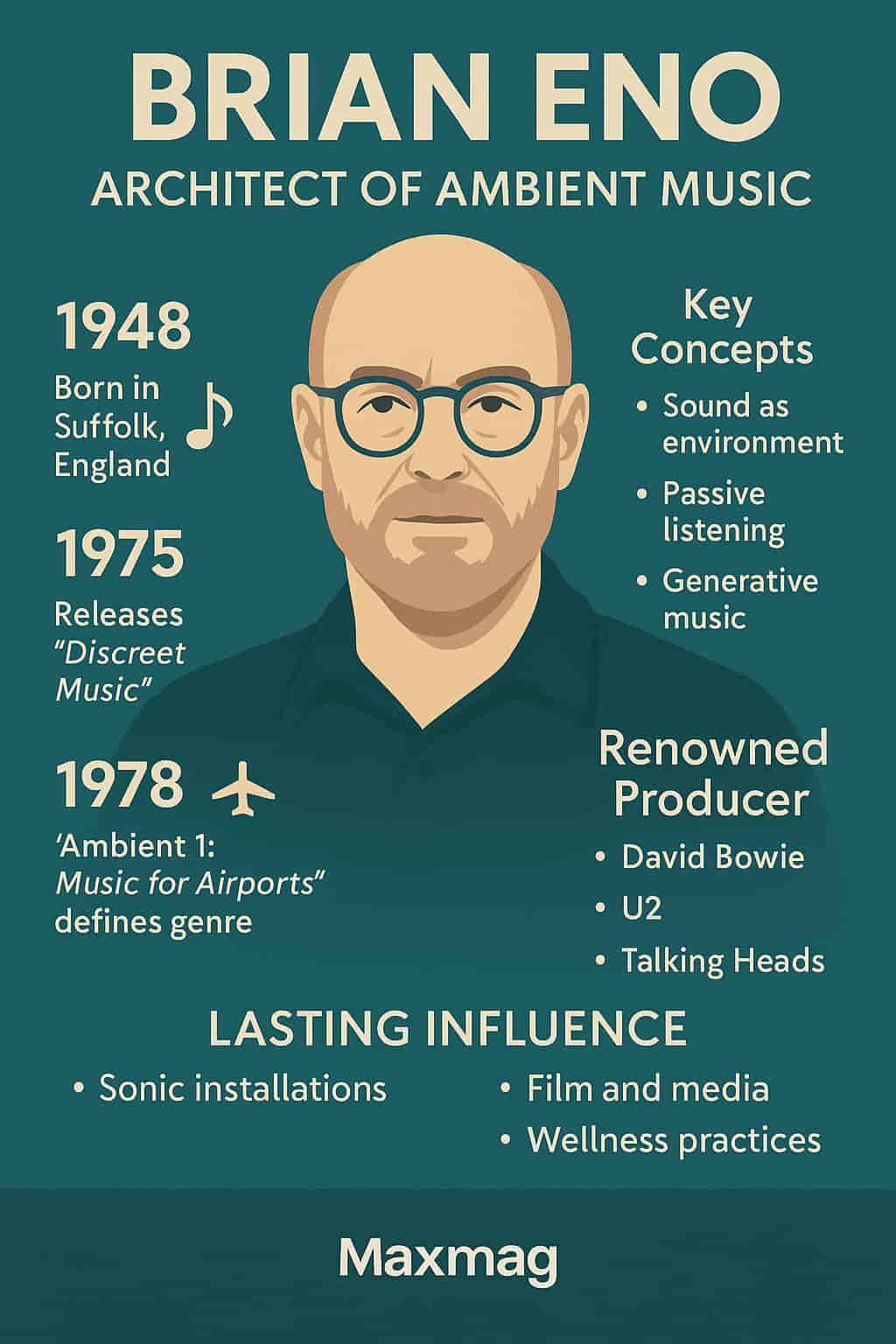
At the heart of Eno's vision is a fascinating paradox. He defined ambient music as being "as ignorable as it is interesting." This single phrase captures the genre's unique duality. It is music designed to exist in the background, subtly coloring the sonic atmosphere without demanding your attention. Yet, if you choose to listen closely, it should reveal layers of detail and texture that reward focused listening.
To understand the origin of this idea, let's explore the story behind Eno's innovation.
How Brian Eno Invented Ambient Music
This video from Album Affairs provides an excellent narrative of the circumstances and thinking that led Eno to formalize the concept of ambient music.
First, watch the opening segment to hear Eno's famous defining quote in the context of his 1978 album, Ambient 1: Music for Airports. Next, jump to the section from the origin story. This part details the happy accident that sparked his initial thoughts on passive listening and led to his early experimental albums. Finally, watch the clip explaining Eno's vision. This clarifies that ambient music was conceived as a thoughtful alternative to the generic, uninspired background music known as "Muzak," aiming instead to create "calm and a space to think."
This idea of creating a "space to think" introduces a core function of ambient music: to modify an environment. It’s not about emotional catharsis in the way a powerful ballad or a driving rock song might be. Instead, it's about creating a sonic tint, a gentle influence that makes a space more conducive to a particular state of mind, whether that's focus, calm, or contemplation.
The Sonic Signature: What Makes Music "Ambient"?
Now that we understand the philosophy, let's deconstruct the sound itself. What musical characteristics allow a piece to be both "ignorable" and "interesting"? For you as a jazz musician, this involves a significant shift in perspective, moving away from rhythmic drive, harmonic complexity, and melodic improvisation towards texture and atmosphere.
A great way to frame this is that ambient music often emphasizes sonics over structure. The "what" of a sound (its timbre, its decay, its place in the sonic field) becomes more important than the "when" or "why" of traditional harmonic progression or rhythmic patterns.
The following characteristics are central to the ambient sound:
- Atmosphere and Texture: The primary goal is to create a mood or a sense of place. This is achieved through lush synthesizer pads, long reverb tails, and layered drones that create a feeling of space and depth.
- Slow or Ambiguous Tempo: Many ambient pieces have a very slow tempo (around 60 BPM, aligning with a resting heart rate) or no discernible pulse at all. This avoids creating the physical drive to move or tap along, which can be distracting.
- Sustained and Evolving Sounds: Instead of the percussive attack and decay of a piano or guitar, ambient music favors sounds that swell, sustain, and fade slowly. This creates a sense of safety and predictability, as there are no sudden changes to startle the listener.
- Simple or Static Harmony: While jazz thrives on complex chord changes, ambient music often relies on simple, consonant harmonies or even a single, unchanging drone. This minimizes cognitive load, as the brain isn't constantly working to process new harmonic information.
- Repetition and Generative Variation: Loops are a fundamental building block. Hearing a musical phrase repeat allows the brain to stop trying to predict what comes next and enter a more relaxed state. However, to remain interesting, this repetition is often combined with subtle, slowly unfolding variations—a technique known as generative music, which we will explore later in this module.
Making ambient music: the science behind the calm
This article from Signal Sounds does a great job of connecting these musical characteristics to their psychological effects, providing a practical guide to the "why" behind the sound.
Please read through the main sections of the article, starting from the six key principles. As you read, pay attention to these points: The concept of 'entrainment'—how our bodies can synchronize to external rhythms. The dual roles of repetition (which allows the brain to 'switch off') and controlled change (which prevents boredom). The importance of a simple and consistent sonic palette to avoid pulling the listener out of a state of flow.
The Experience: From Airports to Video Games
The principles outlined above give ambient music its functional power. It can create a bubble of focus in a noisy café, transform a sterile office into a calming space, or provide a non-intrusive soundtrack for reading or sleeping.
This functionality has allowed the genre to flourish in many different contexts. Its most obvious application is in soundtracks for film and video games, where it can provide atmosphere without interfering with dialogue or gameplay. A modern, ubiquitous example is the soundtrack to the game Minecraft, which perfectly embodies the principle of fading in and out to enhance the player's experience without being intrusive.
To truly grasp the breadth of ambient music, it's best to listen to how different artists use these core principles to evoke distinct feelings.
A Brief Guide to Ambient Music
This guide from the channel It's Boundo. provides a wonderful tour of the genre, focusing on the experiential and emotional qualities of different artists' work.
First, watch the overview from the main definition. It offers a poetic summary of the genre's focus on sonics and mood. Next, see a prime example of its functional use in the segment on soundtracks, and then skip to the specific discussion of the Minecraft soundtrack. Finally, to connect with your interest in the 'feel' of music, listen to the descriptions of two distinct artists who create very different ambient experiences: Hiroshi Yoshimura: Listen from this section to understand how his work is described as instilling a "peaceful mood" and "blissful release." Stars of the Lid: Watch from this section, which contrasts two of their albums—one that makes the listener feel "grounded" and another that evokes "pure mental clarity" and a feeling of leaving the body.
These examples show that while the core principles remain consistent, the emotional palette of ambient music is vast, ranging from serene and pastoral to vast, cosmic, and introspective.
Conclusion
In this lesson, we have defined the core characteristics of ambient music that make it a powerful tool for functional listening. We've seen that it is more than just "relaxing music"; it is a design philosophy for sound.
Here are the key takeaways:
- Purpose-Driven Philosophy: Originating with Brian Eno, ambient music is intentionally designed to enhance an environment rather than demand attention. It is "as ignorable as it is interesting."
- Focus on Atmosphere: It prioritizes texture, timbre, and mood over traditional melody, harmony, and rhythm.
- Key Sonic Traits: Its effectiveness comes from specific musical choices, including slow or absent tempos, sustained sounds, simple or static harmony (drones), and a delicate balance of repetition and gentle, evolving variation.
- Functional and Experiential: Its applications are broad, from providing focus to aiding relaxation, with different artists and sub-genres evoking a wide range of feelings, from groundedness to transcendence.
In our next lesson, we will dive deeper into one of the most popular sub-genres for relaxation and sleep: ambient space music. We will analyze the specific harmonic and textural strategies used by artists to create feelings of weightlessness and cosmic expanse.