Welcome to the final lesson of our module on electronic soundscapes. Over the past several lessons, we've journeyed from Brian Eno's foundational definition of ambient music to its modern-day expressions, exploring its unique textures, generative nature, and the vast constellation of sub-genres and artists. We've built a strong conceptual understanding of why this music is so effective for functional listening.
In this capstone lesson, we will synthesize all of that knowledge into a single, practical tool. Our goal is to create a "curator's cheat sheet"—a framework you can use to confidently select the right ambient music for any given purpose. This will serve as your personal reference guide for building playlists for focus, relaxation, and sleep, directly addressing your core goal.
From Mood to Music: A Curator's Framework
At its heart, curation is about matching a desired state of mind with the right sonic ingredients. Different activities and moods call for different types of music. While this seems intuitive, formalizing the connection is a powerful step for a curator.
Best Music Genres for your Mood: Focus, Relax, Energy | CORRD
This article from CORRD provides a simple but effective model for mapping moods to genres. It's a great example of the kind of structured thinking we'll apply specifically to the world of ambient music.
Please read the sections on Relaxing & Stress Relief and Working & Focus. Then, review the quick reference table. Notice how it distills complex choices into a clear, actionable guide. This is precisely the structure we will build for our ambient cheat sheet.
The Building Blocks of Functional Ambient Music
Before we construct the final cheat sheet, let's briefly revisit the core musical elements we've discussed and how they contribute to a functional listening experience. Your background in jazz theory will make these connections clear. Ambient music achieves its effects by deliberately manipulating these parameters to manage cognitive load.
To create these moods, ambient producers often use specific harmonic and textural techniques. The following video offers a glimpse into this process from a creator's perspective, which provides valuable insight for a curator.
Music Theory for Ambient (theory you can actually use!)
The video "Music Theory for Ambient" by S1gns Of L1fe demonstrates some of the core compositional techniques used to create ambient's signature sound.
Please watch the following segments: Foundations: Watch the section on using simple chords within a single key from building a foundation. This highlights the principle of minimizing harmonic movement to create a stable sound field. Chord Voicings: Watch the explanation of 'neutral' chords like sus2 and sus4 from using specific chord types. These chords avoid the strong emotional pull of major/minor tonality, making them ideal for background listening. Creating Movement: Watch the section on inversions and static root notes from creating subtle shifts. This demonstrates how to create a sense of evolution without causing distraction, a key technique in generative music.
These techniques—staying in one key, using harmonically ambiguous chords, and creating motion through subtle shifts rather than big changes—are the tools that produce the sonic characteristics we will now organize into our cheat sheet.
The Ambient Curator's Cheat Sheet
Here is a synthesized framework based on our exploration of ambient sub-genres. It's designed to be your go-to reference when building playlists. We will categorize by Goal, identifying the most suitable Sub-genres and their Key Sonic Characteristics. We'll also include artist examples and note potential "Curator's Traps" to avoid.
For a broader list of modern artists within each sub-genre, you can refer to the "Modern Genres of Ambient Music" article we've provided.
Modern Genres of Ambient Music
This article provides a concise overview of several key ambient sub-genres with lists of modern artists. It's a useful resource for discovering new music that fits the categories in our cheat sheet.
Skim the descriptions for Drone Ambient, Dark Ambient, Field Recording, Neoclassical Ambient, Noise Ambient, and Techno Ambient.
Goal: Deep Focus
(For tasks requiring high concentration like coding, writing, or analysis)
| Primary Sub-genres | Key Sonic Characteristics | Key Artists/Albums (Examples) | Curator's Traps |
|---|---|---|---|
| Ambient Techno | Submerged 4/4 pulse, hypnotic loops, layered textures, often minimal harmony. The beat acts as a metronome for the mind. | Gas (Pop), The Orb (U.F.Orb), Deepchord, Yagya | Overtly "dancey" tracks with prominent hi-hats or basslines. The rhythm should be felt, not demanding attention. |
| Drone Ambient | Sustained tones, slow evolution, rich harmonic overtones, absence of rhythm. Fills the sonic space, masking distractions. | Stars of the Lid (The Tired Sounds of...), Eluvium, Celer | Drones that are too static can become monotonous. Look for subtle internal movement and textural shifts. |
| Dark Ambient (for specific moods) | Dissonant but stable textures, low rumbles, industrial hums. Creates a powerful, isolated environment. Can be intense. | Tim Hecker (Ravedeath, 1972), Deathprod, Lustmord | Music that is actively "scary" or features sudden, startling sounds. The goal is somber isolation, not anxiety. |
| Generative/Algorithmic | Non-repetitive, ever-evolving patterns, often based on simple melodic or textural rules. Prevents habituation. | Brian Eno (Music for Airports, Reflection), artists using systems like Wotja | Systems that are too random or chaotic. Effective generative music has an underlying coherence. |

Goal: Relaxation & Unwinding
(For de-stressing, meditation, reading, or gentle creative work)
| Primary Sub-genres | Key Sonic Characteristics | Key Artists/Albums (Examples) | Curator's Traps |
|---|---|---|---|
| Space Ambient | Vast, shimmering synth pads; sense of weightlessness; major-key or modal harmony; a feeling of wonder and calm. | Steve Roach (Structures from Silence), Michael Stearns (Planetary Unfolding), Brian Eno (Apollo) | Overly dramatic or "cinematic" pieces that tell too much of a story. The feeling should be open and exploratory. |
| Post-Classical / Piano Ambient | Acoustic instruments (piano, strings) treated with reverb/delay, gentle melodies, emotionally resonant but not demanding. | Harold Budd, Ryuichi Sakamoto (async), Nils Frahm, Max Richter | Pieces with complex melodic development or strong emotional arcs that can be distracting. Look for sparsity and repetition. |
| Nature-Inspired / Field Recordings | Integration of natural sounds (water, wind, birds), organic textures. Connects the listener to a restorative environment. | Hiroshi Yoshimura (Green), Biosphere (Substrata), work of Chris Watson | Poor quality or obviously looped recordings. The goal is immersion, which requires high-fidelity, natural-sounding sources. |
| Vocal Ambient / Dreampop | Vocals used as an ethereal texture; often wordless, processed with heavy reverb; creates an intimate, human-centric calm. | Grouper (A I A: Alien Observer), Julianna Barwick, Cocteau Twins | Prominent lyrics or clear narrative vocals. The voice should be another instrument in the wash of sound. |
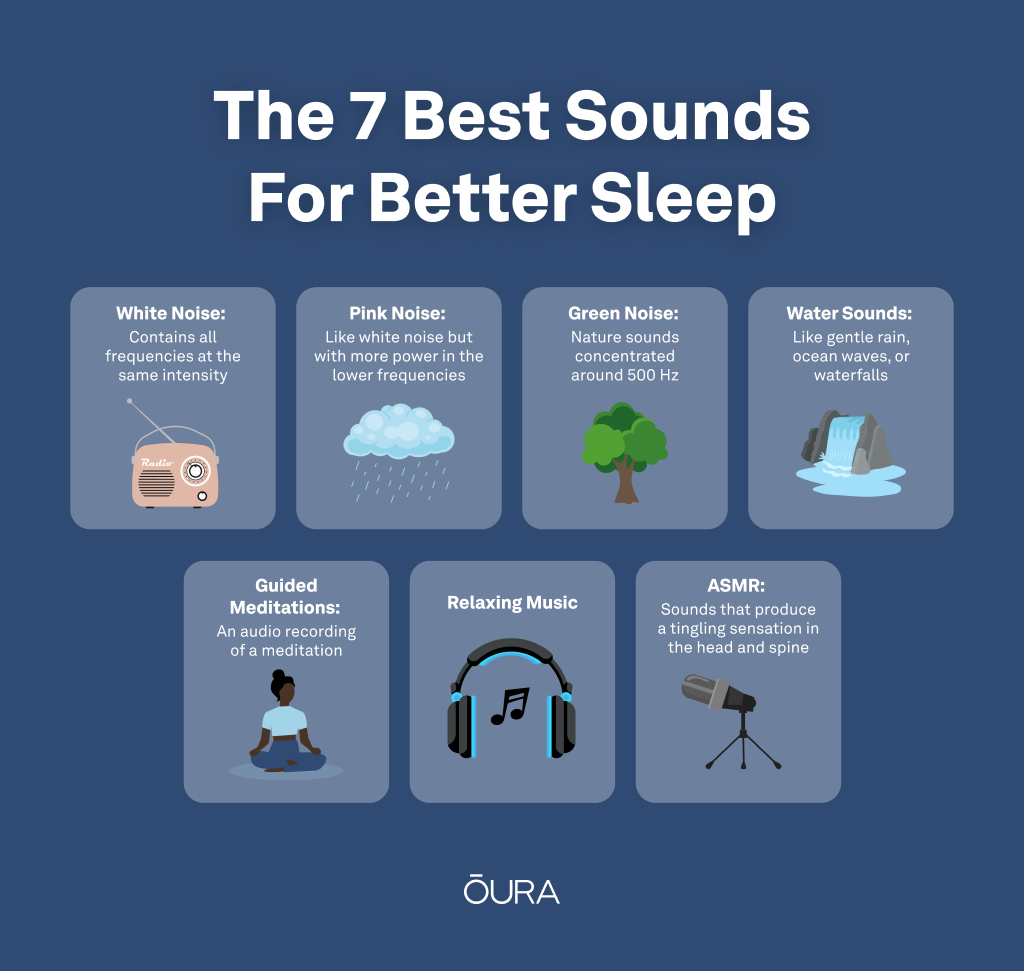
Goal: Sleep
(For preparing for sleep, masking noise, and combating insomnia)
| Primary Sub-genres | Key Sonic Characteristics | Key Artists/Albums (Examples) | Curator's Traps |
|---|---|---|---|
| Minimal Drone | Extremely slow-moving or static tones, very low dynamic range, focus on low-mid frequencies. The audio equivalent of a weighted blanket. | William Basinski (The Disintegration Loops), Stars of the Lid's most minimal work | Any abrupt changes in volume, texture, or frequency. The sound should be almost entirely predictable and unchanging. |
| Deep Space Ambient | The most minimal end of space ambient. Low, warm, humming drones that feel infinite and stable. | Steve Roach (Quiet Music), Robert Rich's "sleep concerts" | High-frequency "shimmering" sounds or twinkling arpeggios that can keep the brain alert. Focus on the low-end pads. |
| Dedicated Sleep Music | Compositions explicitly designed for sleep, often very long-form, following psychoacoustic principles. | Max Richter (Sleep), Marconi Union (Weightless) | Most "regular" ambient music isn't long or stable enough for an entire night. Dedicated works are designed for this purpose. |
Conclusion
You now have a comprehensive "cheat sheet" that synthesizes the core principles of this module. It connects specific functional goals—focus, relaxation, and sleep—to ambient sub-genres, their sonic signatures, and key artists. This framework is not a rigid set of rules but a flexible guide. Your own ear and personal response will always be the final arbiter, but this tool gives you a powerful starting point for curating effective and personalized listening experiences.
This lesson concludes our exploration of electronic soundscapes. We've seen how artists use technology and a specific musical philosophy to create immersive environments that can profoundly influence our mental state.
In the next module, we will shift our attention to a related but distinct genre: Lo-fi and Chillhop. We'll explore how the incorporation of a gentle, steady beat and a different textural palette creates another highly popular and effective type of music for focus and relaxation.