Welcome to a new module focused on resonant instruments. In our last lesson, we concluded our exploration of wind and vocal traditions by creating a curator's cheat sheet for panpipes, the didgeridoo, and overtone singing. You learned how each instrument's unique acoustic properties—from ethereal melodies to visceral drones—can be harnessed for specific meditative goals.
Today, we begin our study of instruments that create their powerful effect through the physics of resonance itself. We will investigate the world of singing bowls, specifically comparing the sound and overtone characteristics of traditional Tibetan and modern crystal bowls. By the end of this lesson, you will be able to describe their distinct sonic signatures and understand how these differences result in unique effects on relaxation, providing a foundational understanding for their use in curation.
Two Traditions, One Purpose
Singing bowls, whether ancient metal or modern crystal, are idiophones—instruments that produce sound primarily by the vibration of the instrument itself, without the use of strings or membranes. While their purpose in sound healing is shared, their origins, materials, and sonic qualities are profoundly different.

To get a comprehensive overview, let's start with a reading that maps out the landscape of these two traditions.
Crystal vs Tibetan Singing Bowls
This article from Alchemy Sound Studio provides an excellent, balanced comparison of the two bowl types. It will serve as our foundation for this lesson.
Begin by reading the introduction, from the start to the end of the second paragraph. Then, move to the section "Sound Characteristics" and pay close attention to the comparison table. Finally, read the section "What You Feel", which describes the experiential differences.
The reading introduces a key dichotomy that we will explore throughout this lesson:
- Tibetan (Himalayan) Bowls: Forged from metal alloys, these ancient instruments produce a warm, complex, and grounding sound.
- Crystal Bowls: A modern invention made from quartz crystal, they produce a clear, luminous, and expansive sound.
Let's dissect the acoustic properties that create these distinct experiences.
The Sound of Metal: Pulsating Complexity
The signature sound of a Tibetan bowl is its rich, multi-layered, and pulsating quality. This isn't just one note, but a dense chord of interacting frequencies. To understand this, we need to look at the concepts of sound partials and a phenomenon called monaural beats.
The following resource explains this beautifully. While it uses the phrase "hacking the brain," you can think of it in music theory terms: it's about how a complex harmonic structure can command a listener's attention in a unique way.
The Secret of Singing Bowls Explained
This article from the Sound Medicine Academy dives into the acoustics of Himalayan bowls, explaining exactly why they have such a unique, pulsating timbre.
First, read the section on Sound partials for a refresher on timbre and harmonics. Next, read from the heading "Listening to Overtone-Emitting Instruments". This section explains how the multiple, isolated sound partials in a singing bowl affect our perception. Finally, read the section titled "The Pulsating Effect" and the "FAQs" question, "What makes the sound of Himalayan singing bowls so unique?". This is the core of the concept: the "pulsating" effect is caused by tiny imperfections in the handmade bowl, leading to the creation of monaural beats within each overtone.
The key takeaway is that the "wobble" or "pulse" in a Tibetan bowl's sound is not a flaw, but its defining feature. Each overtone is actually a pair of slightly different frequencies interfering with each other, creating a rhythmic beat. This dense, pulsating, and harmonically complex sound is what gives the bowl its "earthy" and "grounding" quality. It feels ancient and alive because, acoustically, it is incredibly dynamic.
The Sound of Crystal: Resonant Purity
Crystal bowls offer a stark contrast. Instead of a dense tapestry of pulsating overtones, they produce a remarkably pure and stable tone with a very long sustain.
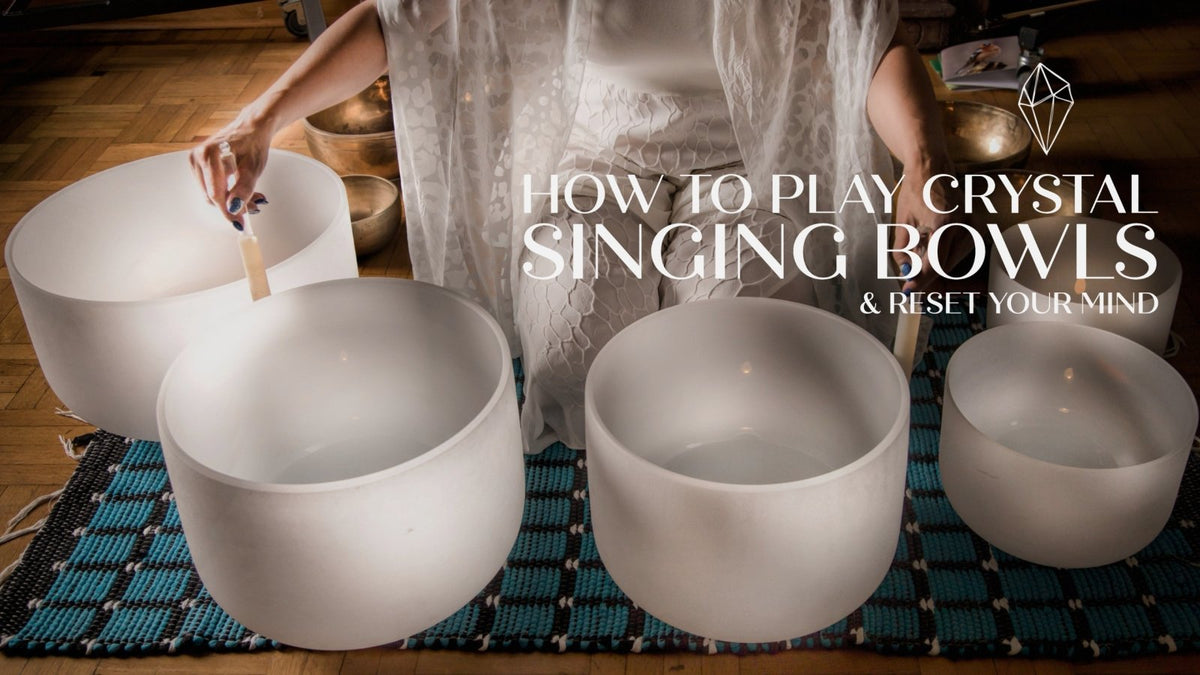
Where a metal bowl speaks in complex, layered conversation, a crystal bowl speaks in a single, luminous, and unwavering phrase. This clarity comes from the highly uniform molecular structure of the quartz crystal itself. It vibrates with fewer prominent overtones, and the primary tone can resonate for minutes from a single strike. This creates the "expansive" and "celestial" feeling described in the first reading—a sense of open, clear space.
A Direct Comparison: Hearing the Difference
Now, let's hear and see these differences side-by-side. The following video uses audio demonstrations and spectrograms to analyze the sound of both bowl types. Given your background in statistics, you may find the visual representation of the frequency data particularly insightful.
Crystal vs. Metallic Singing Bowls
This video from the "Sound Meditation" channel provides a clear, analytical comparison of the sonic signatures of crystal and metallic bowls.
Watch the segment comparing a frosted crystal bowl and a metallic bowl when struck, from the first comparison to the summary. Notice how the spectrogram for the crystal bowl shows a very steady, stable fundamental frequency, while the metallic bowl's frequencies visibly "warble" or modulate. The narrator points out a fascinating music theory distinction: the primary overtone in the crystal bowl is about a perfect fourth above the fundamental, while in the metallic bowl, it's around a tritone. This intervallic difference is a core part of their distinct characters. This is summarized clearly from this point in the video.
This direct comparison makes the theory tangible. The crystal bowl's sound is clean and predictable. The metallic bowl's sound is rich with the unpredictable, pulsating life of its monaural beats and complex overtone structure. These differences directly map to their potential for relaxation:
- Tibetan Bowl: The complex, pulsating sound can be deeply hypnotic, anchoring attention and grounding a scattered mind in the body. The experience is visceral.
- Crystal Bowl: The pure, sustained tone creates a feeling of spaciousness, allowing the mind to float and expand. It's less of an anchor and more of a sky to drift in. The experience is ethereal.
Nuances in Crystal: Frosted vs. Clear
Just as "jazz" isn't one sound, "crystal bowl" isn't a monolithic category. The most common type is the frosted bowl, which has a textured, white surface. There are also clear crystal bowls, which are smooth and transparent. They have different sonic properties, which is crucial for curation.
This video offers a wonderful, experiential way to understand the difference.
Comparing Clear and Frosted Crystal Singing Bowls
The presenter in this video from The Sound Journey Store uses a great analogy to describe the difference between frosted and clear crystal bowls.
Watch the first part of the video, from the beginning to the end of the first comparison. The presenter describes frosted bowls as "Haagen-Dazs ice cream" (rich, thick, pure tone) and clear bowls as "sherbet" (light, refreshing, with a longer-lasting overtone). Then, continue watching from this point, where she discusses the practical difference in volume and projection.
This adds an important layer to your curator's knowledge:
- Frosted Bowls: Louder, richer, with a strong fundamental. The sound is very pure and direct.
- Clear Bowls: Quieter, lighter, with more prominent and longer-lasting overtones. Their sound has a bit more complexity and shimmer, approaching the character of a metallic bowl while retaining the purity of crystal.
Conclusion
Today we've deconstructed the sounds of two powerful resonant instruments. You've learned that their distinct effects on relaxation are not arbitrary but are a direct result of their material, construction, and resulting acoustic properties.
Key Takeaways:
- Tibetan (Metallic) Bowls: Are ancient instruments whose complex, pulsating sound comes from a rich array of overtones that produce monaural beats. This creates a grounding, earthy, and visceral experience.
- Crystal Bowls: Are modern instruments that produce a pure, stable, and long-sustaining tone due to the uniformity of quartz. This creates an expansive, celestial, and ethereal experience.
- Intervallic Character: The dominant overtone relationship often differs, with crystal bowls featuring a perfect fourth and metallic bowls a tritone, contributing to their unique feel.
- Subtypes Matter: Frosted crystal bowls offer a rich, pure fundamental, while clear crystal bowls are lighter with more overtone presence.
In our next lesson, we will build on this foundation to explore the practice of "sound baths," where multiple bowls are played together. We will analyze how practitioners combine the grounding properties of metal bowls with the expansive qualities of crystal bowls to create enveloping and transformative sonic journeys.