Welcome to the final lesson of our module on the Curator's Palette. Over the last few lessons, we have deconstructed music into its core components—rhythm, texture, timbre, dynamics, and harmony—and examined how each can be manipulated to influence a listener's mental state. You've explored how a simple change in mode can alter an entire emotional landscape and how ambiguous harmonies can create a sense of calm suspension.
In this lesson, we will synthesize all these music theory principles into a single, comprehensive framework: your personal 'curator's rulebook.' The goal is not to create a rigid set of laws, but to build a powerful analytical tool that will guide you in evaluating any piece of music for its potential to support focus, relaxation, or sleep. As a jazz musician, you are already an expert at analyzing music for performance and improvisation; here, we will pivot that skill towards analyzing for functional listening.
Why Analyze? The Curator's Perspective
Before we build the rulebook, it's worth asking: what is the point of analyzing music in this context? For a performer, analysis informs interpretation. For a curator of functional music, analysis reveals a piece's likely psychological impact. You are moving from interpreting the composer's intent to predicting the listener's experience.
A superb video from musician and composer Nahre Sol explores the many ways one can approach musical analysis, moving fluidly between the technical and the descriptive.
Please watch these selections from Nahre Sol's "How to Analyze Music and WHY." She provides a wonderful perspective on analysis as a means of gaining clarity and developing a personal relationship with the music, which is precisely our goal.
As you watch, consider how these different analytical lenses could be applied to curating functional playlists: The 'Why': Start with the introduction, where she frames analysis as a way to gain "clarity and insight" beyond initial impressions. Technical Analysis: Watch her breakdown of genre and form (the Mazurka), melodic direction, and harmony and structure. Your jazz training makes you fluent in this language of keys, chords, and forms (like ABA or sonata form). Descriptive Analysis: Pay close attention to the section on narrative and illustrative ways to describe music, using words like "longing," "daydream-like," or even colors and shapes. This approach is key to capturing the "feel" we've discussed. Personal Approach: Finally, watch her thoughts on personal preferences and the idea that analysis is about "paying attention... in different ways that you prefer." This validates our goal of creating a personal rulebook, not a universal law. Note the audience comments at the end ("to understand why it moves you," "to connect my emotional response to music with the notes on the page")—they echo our objective perfectly.
This dual approach—combining rigorous technical understanding with nuanced, personal description—is the foundation of our rulebook.
A Framework for Analysis: From Performance to Curation
To structure our rulebook, we can borrow a useful distinction from the world of performance pedagogy. Music contains both fixed aspects (the notes and rhythms as written) and variable aspects (the choices a performer makes about tempo, dynamics, articulation). As a curator, you are essentially evaluating the composer's fixed choices and the performer's variable choices to determine the final effect.
The following reading explains this concept in the context of teaching performers, but the parallels to our task are striking.
Analysis for Performance: Teaching a Method for Practical ...
This article from the College Music Society provides a systematic method for linking analysis to interpretation. We will adapt this method for linking analysis to functional curation.
Please read the following sections, substituting the word "performer" with "curator" in your mind: Preliminary Discussion: This section establishes the difference between an analysis of a specific piece and a general theory, and sets up the core question of how analysis informs decisions. Aspects of the Score: This defines the crucial difference between fixed (pitch, duration) and variable (tempo, dynamics, articulation) elements. Tempo: Note the factors that influence tempo choice, such as mood, rhythmic complexity, and harmonic rhythm. Articulation: This discusses how the connection and separation of notes affect character, and introduces the idea of inherent accents based on harmony or pitch. Dynamics: This part explores how dynamics shape melody and structure. Harmony: Focus on the vocabulary used here—"harmonic turning points," "harmonic shifts," and "color chords"—and how they demand special attention. Form: This emphasizes understanding the overall compositional design, which is vital for predicting a piece's structural evolution.
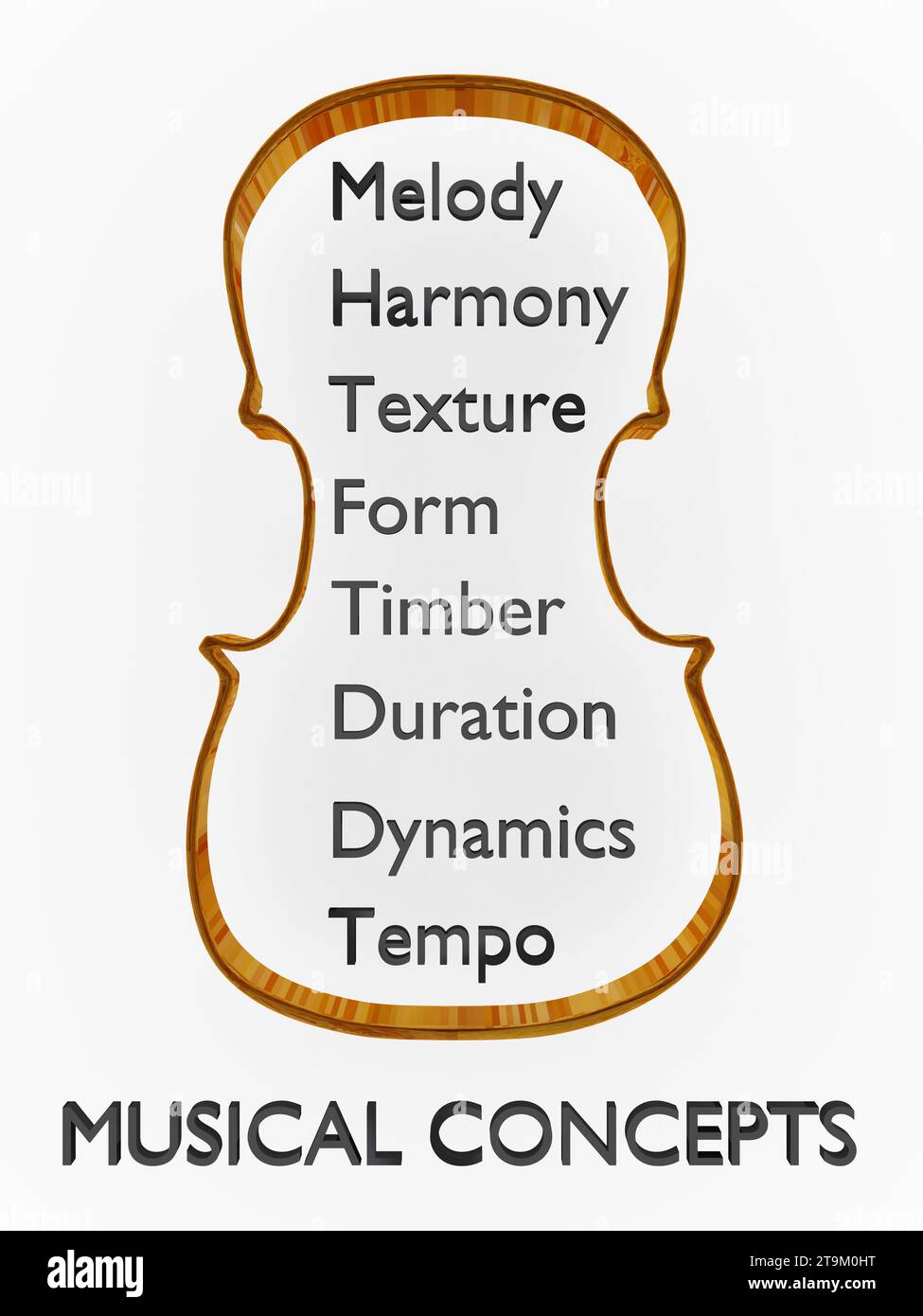
This article provides a checklist of the very elements we've been studying. Now, let's assemble them into our definitive guide.
The Curator's Rulebook
Here is the synthesized framework, combining everything from this module. This is your master checklist for evaluating music. It's designed to be a living document that you can refine as you listen and curate.
| Musical Element | Deep Focus | Relaxation | Sleep |
|---|---|---|---|
| Tempo | 50-80 BPM. Steady, consistent pulse that entrains but doesn't distract. Often aligned with a calm heartbeat. | < 60 BPM. Very slow, often with a sense of suspended time. Rhythm may be implied rather than stated. | No discernible tempo. If a pulse exists, it's extremely slow, subtle, and unchanging. Feels static. |
| Rhythm & Meter | Simple & Repetitive. 4/4 or 3/4 meter. Predictable patterns (e.g., ostinatos). Avoids syncopation or complex polyrhythms that demand cognitive processing. | Free & Amorphous. Often unmetered (rubato). Rhythmic events are sparse and feel intuitive or "breath-like" rather than metric. | Static. Essentially no rhythmic events. A continuous, unchanging sonic field. |
| Harmony | Non-Functional & Cyclical. Static drones, pedal points, simple modal vamps (e.g., i-iv). Avoids strong V-I resolutions. Consonant with occasional gentle dissonance. | Ambiguous & Suspended. Quartal/quintal harmony, sus chords, open voicings. Strong emphasis on creating a "liminal" or "in-between" feeling. | Dronal & Tonally Simple. Pure drones, open fifths. Stripped of all harmonic tension and movement. A single, stable tonal center. |
| Melody | Present but Subtle. Simple, repetitive melodic fragments. Often in the mid-range. Avoids dramatic leaps or complex contours. | Sparse or Absent. If present, melody is slow, atmospheric, and dissolves into the texture. Often long, sustained notes. | Absent. No melodic content to engage the mind. |
| Texture | Sparse to Moderate. Clear separation between layers. Often built on a drone or pad with 1-2 other elements. Polyphony is simple and non-imitative. | Open & "Washed." Dominated by sustained pads, reverberant sounds. A sense of vast, open space. Can be multi-layered but blended. | Amorphous & Unified. A single, dense "wash" of sound. No distinct layers or elements. A sonic fog. |
| Timbre | Soft Attacks & Consistent. Smooth synths, soft piano, plucked strings with reverb. Timbres are chosen for their non-percussive, pleasing quality. Consistency is key. | Ethereal & Blended. Filtered sounds, "airy" pads, instruments with long decays (bowls, gongs). High frequencies are often attenuated. | Extremely Smooth & Dark. Dominated by low and mid-range frequencies. All sharp attacks and bright overtones are filtered out (e.g., brown noise). |
| Dynamics | Very Narrow Range (pp-mp). Essentially flat or with very slow, subtle crescendos over long periods. No sudden changes. | Minimal Range. Slow, gentle swells ("breathing" dynamics). Any changes are gradual and predictable. | Completely Flat. No perceptible change in volume. |
| Structure & Form | Cyclical & Predictable. AABA, verse-chorus (if instrumental), or simple looping structures. Gradual addition/subtraction of layers. No dramatic climax. | Through-Composed or Static. A very slow, non-narrative unfolding. Feels "timeless" or like a single, extended moment. | Static. A single, unbroken sonic event. No beginning, middle, or end. |
| Emotional Landscape | Pensive, Neutral, Introspective, Grounded, Gently Optimistic. (e.g., Dorian, Aeolian, Mixolydian modes) | Wondrous, Suspended, Ethereal, Weightless, Calm, Liminal. (e.g., Lydian mode, quartal harmony, sus chords) | Empty, Neutral, Stable, Formless, Unconscious. (e.g., Pure drones, open fifths) |
Case Study: A Holistic System
Some musical traditions have an inherent "curator's rulebook" built into their very structure. Indian Classical Music is a prime example, where Ragas are far more than just scales; they are complex melodic frameworks designed to evoke specific moods (rasas), often associated with a particular time of day. This system is a perfect real-world synthesis of all the elements we've just organized.
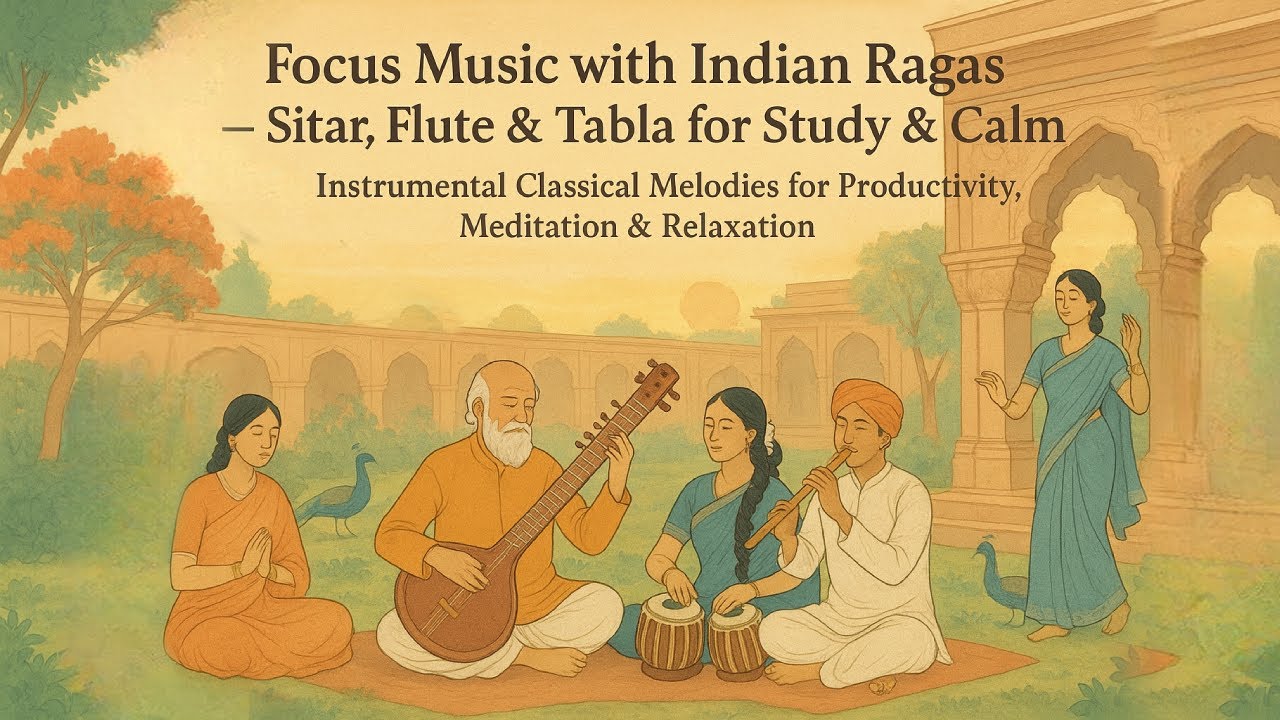
A fascinating article explores the link between the structure of Ragas and their postulated psycho-physiological effects, providing a model for how a musical system can be intentionally functional.
Raga: The connecting link between psyche and soma
This paper details the system of Ragas within Indian Classical Music, linking their musical structures to the Yogic concept of energy centers (Chakras).
Please read these sections to see a fully-formed "curator's rulebook" in action: The definition of a Raga: Note that it includes not just the notes, but their order, emphasis, and microtonal use. Nada Yoga and Raga Therapy: This introduces the concept of music as a technology for integrating mind and body through vibration. Table 1: This is the heart of the article for our purposes. It's a pre-made rulebook linking specific Ragas (like Bhairavi or Yaman) to specific qualities (like "Spiritual Enlightenment" or "Creativity"). This is a model for how we can associate specific musical DNA with specific functional outcomes. Mechanisms of Activation: This explains how the music works within this system, through both the specific notes (Swaras) and the overall Raga structure.
The Raga system demonstrates that a deep, analytical understanding of music can coexist with—and in fact, enable—a profound, targeted emotional and physiological impact. This is the ultimate goal of your curation practice.
Conclusion
In this lesson, you have consolidated your knowledge of music theory into a powerful, practical tool: the Curator's Rulebook. This framework provides a systematic way to analyze any piece of music and predict its suitability for your focus, relaxation, and sleep playlists.
Your key takeaways are:
- Analysis is for Prediction: For a curator, analyzing music is not an academic exercise but a method for predicting the listener's experience.
- A Multi-Faceted Approach: Effective analysis combines technical knowledge (harmony, form, meter) with descriptive, felt-sense vocabulary (colors, moods, landscapes).
- The Rulebook is Your Compass: The comprehensive table we've built is your master guide for evaluating music across all its core elements, from tempo to timbre to structure.
- Holistic Systems Exist: Traditions like Indian Classical Ragas show that the systematic linking of musical structure to functional outcomes has deep historical roots.
This lesson concludes our deep dive into music theory. You now have a robust framework for understanding the "how" and "why" behind functional music. In our next module, we will turn our attention from musical structures to the sounds of the natural world, exploring how soundscapes of rain, oceans, and forests can be used for restoration and calm. You will find that your new rulebook is surprisingly effective for analyzing these sounds as well.