Bonjour ! Welcome to our new lesson.
Introduction
In our previous lessons, you've done excellent work mastering the passé composé. You learned how to form it with both avoir and être, and you tackled the crucial rule of past participle agreement with être. Now, it's time to put all those pieces together.
Today's learning outcome is to narrate a sequence of events from a past workday or weekend. This is one of the most common and practical uses of the past tense in daily conversation, whether you're chatting with colleagues on a Monday morning ("Comment était ton week-end ?") or telling a friend about your day.
This lesson will equip you with the structure and vocabulary to tell a simple, coherent story about past events, moving you one step closer to your goal of engaging in everyday professional and social conversations.
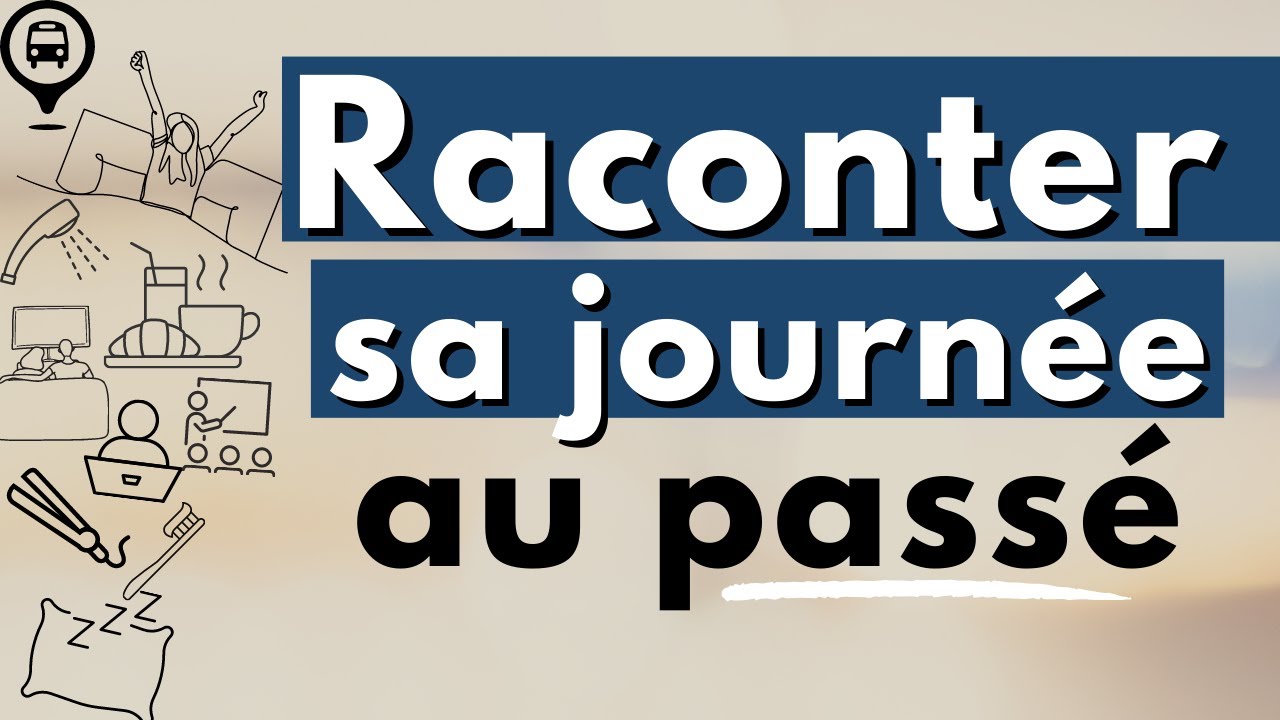
1. Structuring Your Story: Connectors and Sequence
A story is essentially a series of actions that happen one after another. In French, we use the passé composé to talk about these completed, sequential actions. To link them together smoothly, we use time connectors, or connecteurs temporels.
Here are some of the most essential ones to structure your narrative:
- D'abord / Premièrement - First / Firstly
- Ensuite / Puis - Then / Next
- Après (ça) - After (that)
- Plus tard - Later
- Finalement / Enfin - Finally / At last
Using these words will make your story much clearer and more natural. For example, instead of just listing sentences, you can create a flow: "D'abord, je me suis levé. Ensuite, j'ai pris un café. Après, je suis allé au travail."
2. Example 1: Narrating a Weekend
Let's start by analyzing a real-world example. The following text is from a podcast for French learners where the speaker recounts her weekend.
This text from 'LanguaTalk Slow French' provides a perfect model for narrating a busy weekend. It uses a mix of verbs with 'avoir' and 'être'.
Please read the transcript section describing the speaker's weekend. It starts with 'Le week end dernier, j'ai fait plein de choses.' and ends with '...je suis allée me coucher avec une bonne série sur mon ordinateur.' Pay attention to how she uses connectors and how she forms the passé composé for different actions.
As you read, notice the sequence:
Le samedi matin... je suis allée...(action withêtre)Après, je suis rentrée... et je suis sortie...(sequence withêtre)...on a discuté... et on a organisé...(sequence withavoir)Le dimanche, je suis allée...(another event)
She combines verbs of movement (aller, rentrer, sortir) with other common verbs (discuter, organiser, manger) to build a clear narrative.
3. Example 2: Narrating a Workday
Now, let's look at an example that is directly relevant to your professional life. Telling a colleague about your previous workday is very common. This next text provides a fantastic model with relevant vocabulary.
Let's continue with the same resource, 'LanguaTalk Slow French', this time focusing on a typical workday.
Read the section that begins 'Hier matin, c'était vraiment la catastrophe...' and ends with '...enfin me déconnecter.' Notice the work-specific vocabulary and the sequence of professional activities.
This example is packed with useful vocabulary for your context:
il y avait beaucoup de **bouchons**(there was a lot of traffic)je suis **arrivée en retard**(I arrived late)j'ai **travaillé très dur**(I worked very hard)j'ai retrouvé mes **collègues**(I met up with my colleagues)j'ai eu plusieurs **réunions**(I had several meetings)
The structure is the same: a sequence of actions in the passé composé linked by logic and time.
4. Listening Practice: Hearing the Narrative in Action
Reading is great, but listening is key to fluency. The following video features a natural conversation between two people talking about their "yesterday."
🇫🇷 Hier en français ? Facile ! ✨ | Découvre comment raconter ta journée
In this video from the 'Simply French Podcast', you'll hear a dialogue about what someone did yesterday. This will help you get used to the rhythm and flow of a spoken narrative.
Watch the segments from 02:04 to 07:42. Listen for the sequence of actions. For example: 'Je me suis levée... J'ai ouvert la fenêtre... J'ai préparé mon café.' Notice how they list the events of the day one by one.
You might have heard them use words like j'étais or il faisait. This is another past tense called the imparfait, which is used for descriptions, feelings, and ongoing states (j'étais de bonne humeur - I was in a good mood; il faisait beau - the weather was nice). We will study the imparfait in detail in Module 7. For now, just focus on how the passé composé is used to list the main actions.
5. Mise en Pratique (Practice Exercise)
Now it's your turn! Let's build a narrative of a typical workday for a software engineer. Fill in the blanks below using the passé composé of the verbs in parentheses. Feel free to change the details to reflect your actual day.
Racontez votre journée de travail d'hier. (Narrate your workday from yesterday.)
- Hier matin, je ____ (se réveiller) à 8h.
- D'abord, j'____ (prendre) un café et j'____ (lire) mes emails.
- Ensuite, je ____ (se connecter) à la réunion stand-up.
- Après la réunion, j'____ (travailler) sur un nouveau ticket.
- À midi, j'____ (déjeuner) devant mon ordinateur.
- L'après-midi, j'____ (corriger) un bug et j'____ (participer) à une revue de code (code review).
- Finalement, je ____ (finir) ma journée et je ____ (fermer) mon ordinateur vers 18h.
Corrigé (Answer Key):
je **me suis réveillé(e)**(Remember to add the-eif you are female)j'**ai pris** ... j'**ai lu**je **me suis connecté(e)**j'**ai travaillé**j'**ai déjeuné**j'**ai corrigé** ... j'**ai participé**j'**ai fini** ... j'**ai fermé**
Try reading your completed story out loud. This is how you start building conversational fluency.
Conclusion
Excellent work today! You have successfully combined everything you've learned about the passé composé to achieve a practical and important communication goal.
Key Takeaways:
- The
passé composéis used to narrate a sequence of completed actions in the past. - Temporal connectors like
d'abord,ensuite,après, andfinalementare essential for structuring your story. - You can talk about a weekend by describing leisure activities and social events.
- You can talk about a workday by describing professional tasks like meetings, emails, and specific projects.
In our next lesson, we will build directly on this skill. We will focus on how to describe a past project or technical task using the passé composé. This will allow you to apply your narrative skills to an even more specific and technical professional context, bringing you closer to your goal of discussing your work in French.
À bientôt !