Bonjour !
In our last lesson, we focused on the problème-solution-bénéfice framework, a powerful tool for structuring a short, persuasive pitch. This gave you the high-level narrative for presenting a technical solution.
Today, we'll zoom in and equip you with the specific French phrases needed to expand that short pitch into a full, professional proposal or presentation. The learning outcome for this lesson is to use key phrases for introducing, transitioning, and concluding sections of a proposal. Think of these phrases as the essential "glue" that connects your ideas, guiding your audience smoothly from one point to the next. For a software engineer or project manager, this skill is critical for ensuring your technical recommendations are understood and accepted.
1. The Blueprint of a Professional Proposal
Before diving into specific phrases, let's look at the typical structure of a project proposal. While our last lesson used the problème-solution-bénéfice model, a formal proposal often breaks this down into more detailed sections.
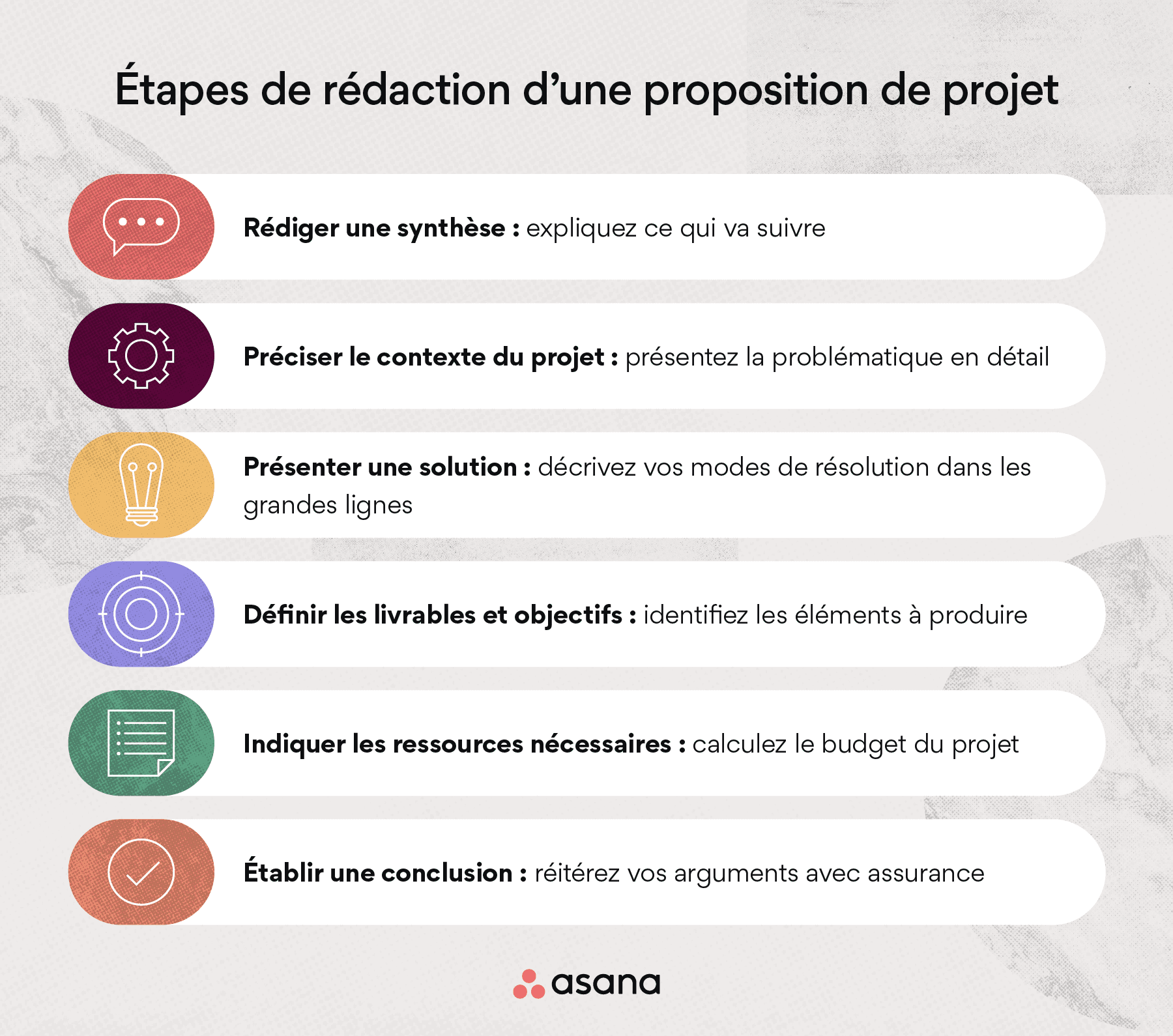
As you can see, a proposal has a clear, logical flow. At its core, it follows a classic three-part structure: Introduction, Développement (Development/Body), et Conclusion. Mastering the language for each part is key to sounding professional and being persuasive.
To start, let's get an overview of this structure and its purpose.
Le vocabulaire pour structurer un exposé en français
The video 'Le vocabulaire pour structurer un exposé en français' from the Français Authentique channel provides an excellent explanation of this fundamental three-part structure.
Watch from the beginning until 02:22. The presenter, Johan, outlines the purpose of the introduction, development, and conclusion. This will set the stage for the vocabulary we'll learn next.
Now that we have the blueprint, let's learn the specific phrases to build each section.
2. L'Introduction : Setting the Stage
The goal of your introduction is to grab the audience's attention, state the topic, and outline the structure of your presentation. You are essentially providing a roadmap for your listeners.
In the video you just watched, Johan mentions a few verbs for introducing a topic. Let's explore those and add more to your toolbox.
Le vocabulaire pour structurer un exposé en français
Let's continue with the same video to learn specific verbs and phrases for a strong introduction.
Watch the segment from 02:33 to 03:52. Pay close attention to the verbs used with the future tense (e.g., 'je traiterai', 'j'aborderai', 'j'analyserai') to announce what you are going to discuss.
To give you even more options, here is a list of common introductory phrases.
50 mots de transition pour structurer vos présentations orales
The article '50 mots de transition pour structurer vos présentations orales' provides a handy list of phrases to begin your presentation.
Read the section titled 'Phrases d’introduction'. These are excellent alternatives to start your proposal.
Putting it into practice (Tech Scenario):
Imagine you are presenting a proposal to migrate a client's legacy system to a new cloud-based architecture. Your introduction could sound like this:
Bonjour à tous. Aujourd'hui, j'aimerais vous présenter notre proposition pour la modernisation de votre infrastructure. Mon objectif est de vous démontrer comment nous pouvons améliorer la performance et la sécurité de votre système. Dans un premier temps, j'aborderai les défis actuels. Ensuite, je décrirai l'architecture cible que nous recommandons. Enfin, je conclurai par les bénéfices concrets pour votre entreprise.
Notice how this short paragraph clearly states the purpose and outlines the three main parts of your presentation.
3. Le Développement : Connecting Your Ideas
This is the main body of your proposal where you present your arguments, evidence, and details (e.g., the context, the problem, your solution). To keep your audience engaged and ensure your logic is easy to follow, you need to use transition words, known as mots de liaison or connecteurs logiques.
These words act as signposts, telling your audience, "Okay, we've finished point one, now we are moving to point two."
Le vocabulaire pour structurer un exposé en français
Let's return to the Français Authentique video to see how to structure the development section.
Watch the section from 03:52 to 06:07. Note the phrases used to introduce the first point ('Premièrement', 'En premier lieu'), transition to the next ('Ensuite', 'Deuxièmement'), and introduce the final point ('Enfin', 'En dernier lieu').
For a more comprehensive list and a great visual reference, these resources are very helpful.
50 mots de transition pour structurer vos présentations orales
The article '50 mots de transition' also has a great section on linking phrases to make your presentation more dynamic.
Review the list under 'Mots de transition pour une présentation dynamique'. Phrases like 'Ceci nous amène à...' or 'Je vais maintenant passer au point suivant' are extremely useful in a professional context.

Putting it into practice (Tech Scenario):
Continuing your presentation on the system migration:
"Tout d'abord, parlons des problèmes de performance. Le temps de réponse moyen du système actuel est de 3 secondes, ce qui impacte l'expérience utilisateur."
... (You provide details and data) ...
"Ceci nous amène à aborder le deuxième point : les risques de sécurité. Le framework actuel n'est plus maintenu, ce qui expose le système à des vulnérabilités connues."
... (You explain the risks) ...
"Je vais maintenant passer à la solution que nous proposons : une architecture microservices sur AWS..."
4. La Conclusion : Summarizing and Closing
The conclusion has two main jobs: to summarize your key messages and to leave your audience with a clear final thought or a call to action. It’s your last chance to reinforce your main point.
Le vocabulaire pour structurer un exposé en français
Finally, let's learn how to wrap up your presentation effectively with the same video.
Watch the concluding segment from 06:07 to 07:01. Phrases like 'Pour résumer' or 'Pour conclure' are standard and professional ways to signal the end of your presentation.
Here are some more options for a strong closing.
50 mots de transition pour structurer vos présentations orales
The '50 mots de transition' article provides a list of phrases for concluding your presentation.
Read the final section, 'Mots de conclusion'. 'En somme', 'En bref', and 'L’essentiel à retenir est...' are all excellent choices.
Putting it into practice (Tech Scenario):
To finish your proposal presentation:
“Pour résumer, la migration vers une architecture cloud moderne résoudra non seulement vos problèmes de performance et de sécurité, mais elle offrira également une scalabilité accrue pour le futur. L'essentiel à retenir est que ce projet réduira vos coûts de maintenance de 40% d'ici un an. Je vous remercie de votre attention et je suis maintenant disponible pour répondre à vos questions.”
Conclusion
Excellent work! You've now learned the essential vocabulary to structure a complete, professional presentation in French. By combining the problème-solution-bénéfice framework with these key phrases, you can guide your audience logically and persuasively through even complex technical topics.
Key Takeaways:
- Structure is your friend: Always think in terms of Introduction, Développement, Conclusion.
- Signpost your transitions: Use
mots de liaisonlikepremièrement,ensuite, andenfinto guide your audience. - Master the key phrases:
- To introduce:
Aujourd'hui, je vais vous parler de...,Mon objectif est de... - To transition:
Passons maintenant à...,Ceci nous amène à... - To conclude:
Pour conclure...,En résumé...,L'essentiel à retenir est...
- To introduce:
In our next lesson, we will tackle what comes immediately after your presentation: the Q&A session. You will learn how to "Respond to client questions and requests for clarification during a meeting," a crucial skill for handling technical discussions and building client trust.
À très bientôt