Hello. Earlier modules distinguished feeling detached from yourself or your surroundings from ordinary distraction, and considered why distress, daily functioning, and alternative explanations matter. This module turns that understanding into decisions about seeking help. In this lesson, the task is not to decide whether a fictional person has a particular disorder; it is to decide how quickly they need professional assessment.
Choose the level of help before choosing a label
A feeling of unreality can be frightening without being an emergency. Equally, a person who describes feeling “detached” might also have a separate medical or safety concern that needs immediate attention. The safest approach is to attend first to immediate danger and sudden changes, then to how persistent or disruptive the experience has become.
| Situation | Appropriate next step |
|---|---|
| Immediate risk of harm, sudden severe confusion, or sudden neurological signs | Seek emergency help now. |
| No emergency signs, but symptoms are persistent, recurrent, distressing, or interfering with daily life | Arrange an assessment with a health-care or mental-health professional. |
| A brief experience has passed, daily functioning is intact, and there are no warning signs | An emergency visit is generally not indicated. Seek advice if it recurs, worsens, or causes concern. |
These are routing decisions, not diagnoses. You do not need to establish the cause of an experience before asking for help, and you do not need to wait a set number of days before seeking an assessment.
When to use the emergency room - adult: MedlinePlus Medical Encyclopedia
Read MedlinePlus’s guidance to see how emergency services, urgent care, and a regular provider or advice line serve different needs.
In “Signs of an Emergency,” read the emergency signs, starting with the explanation of an emergency and ending at the “Sudden confusion” bullet. Focus on sudden difficulty speaking, seeing, walking, or moving; one-sided weakness; and confusion. Later in the same section, read the safety guidance. Then, in “When to go to an Urgent Care Clinic,” read the urgent-care threshold. In “If you are not Sure, Talk to Someone,” read the advice options.
MedlinePlus’s urgent-care examples are mostly physical illnesses and injuries; they do not mean every urgent-care clinic is equipped for a mental-health assessment. The useful principle is that a concerning, non-emergency problem should not simply be left unattended because a regular appointment is unavailable. A clinician’s office, nurse advice line, or local urgent service can help determine where to be seen.
Recognize when “detached” describes more than one problem
A fictional person might say, “The room feels unreal, but I know where I am and I know it is real.” That description differs from someone who suddenly cannot work out where they are or cannot think or speak clearly. The second situation needs urgent medical evaluation, even if the person also uses the word unreal. Sudden confusion can have many causes; it is not something to sort out by matching experiences to online accounts.
Sudden confusion (delirium) - NHS
Read the NHS guidance to sharpen the distinction between a disturbing sensation of unreality and a sudden loss of orientation or clear thinking.
In “How to tell if someone is confused,” read the recognition clues, beginning with the first bullet and ending after the paragraph about getting medical help. Compare the sections “Non-urgent advice: See a GP if” and “Immediate action required: Go to A&E or call 999 if.” In the former, read gradual changes; in the latter, read why sudden confusion is urgent. The named services and numbers are UK-specific; use the corresponding services where you are.
The same emergency principle applies to new, sudden neurological signs, such as one-sided weakness, a drooping face, or a new inability to speak, see, or walk normally. Do not dismiss those signs as anxiety or dissociation, and do not wait to see whether an unreality feeling passes. Seek emergency help; a person with sudden confusion or neurological symptoms should not drive themselves.
Immediate safety risk is another separate route to emergency care. If someone may act on an urge to hurt themselves or another person, or cannot remain safe, emergency services are appropriate now. A crisis line can provide immediate support for thoughts of self-harm; it is not a reason to delay emergency help when danger is imminent. The MedlinePlus reading gives 988 for the United States. Elsewhere, use the local crisis or emergency service.
Apply the distinction to fictional situations
Consider how the same descriptive word can lead to different decisions.
A passing episode. After a poor night’s sleep, a person briefly feels as though their surroundings are distant. The sensation passes, they remain oriented, and they carry on with their day. Nothing in this account calls for emergency care. If it keeps happening or becomes troubling, a routine professional conversation is reasonable.
An ongoing, disruptive experience. Another person repeatedly feels detached from themselves, knows the sensation is a feeling rather than a literal change in reality, but has begun missing ordinary activities and is frightened by its return. They should arrange a professional assessment. Preserved reality testing does not cancel out distress or impairment, and the account alone does not establish its cause.
A problem that cannot wait for a distant appointment. A third person’s symptoms are rapidly becoming harder to manage. There are no signs of immediate danger, sudden confusion, or new neurological difficulty, but the next regular appointment is far away. Contacting a provider or advice line promptly for triage—and using an available urgent service if advised or if timely care is otherwise unavailable—is more appropriate than simply waiting.
An abrupt change in orientation or movement. Someone who has previously described derealization suddenly does not know where they are and develops new difficulty speaking or moving one arm. This is an emergency, regardless of their earlier experiences. Their history of feeling unreal does not explain away a new warning sign.
A safety crisis. A person reports an immediate intention to hurt themselves and says they cannot stay safe. Seek emergency help now. If someone reports thoughts of self-harm without immediate danger, prompt support through a crisis service or health-care professional is still warranted; it should not be postponed until the thoughts meet a duration threshold.
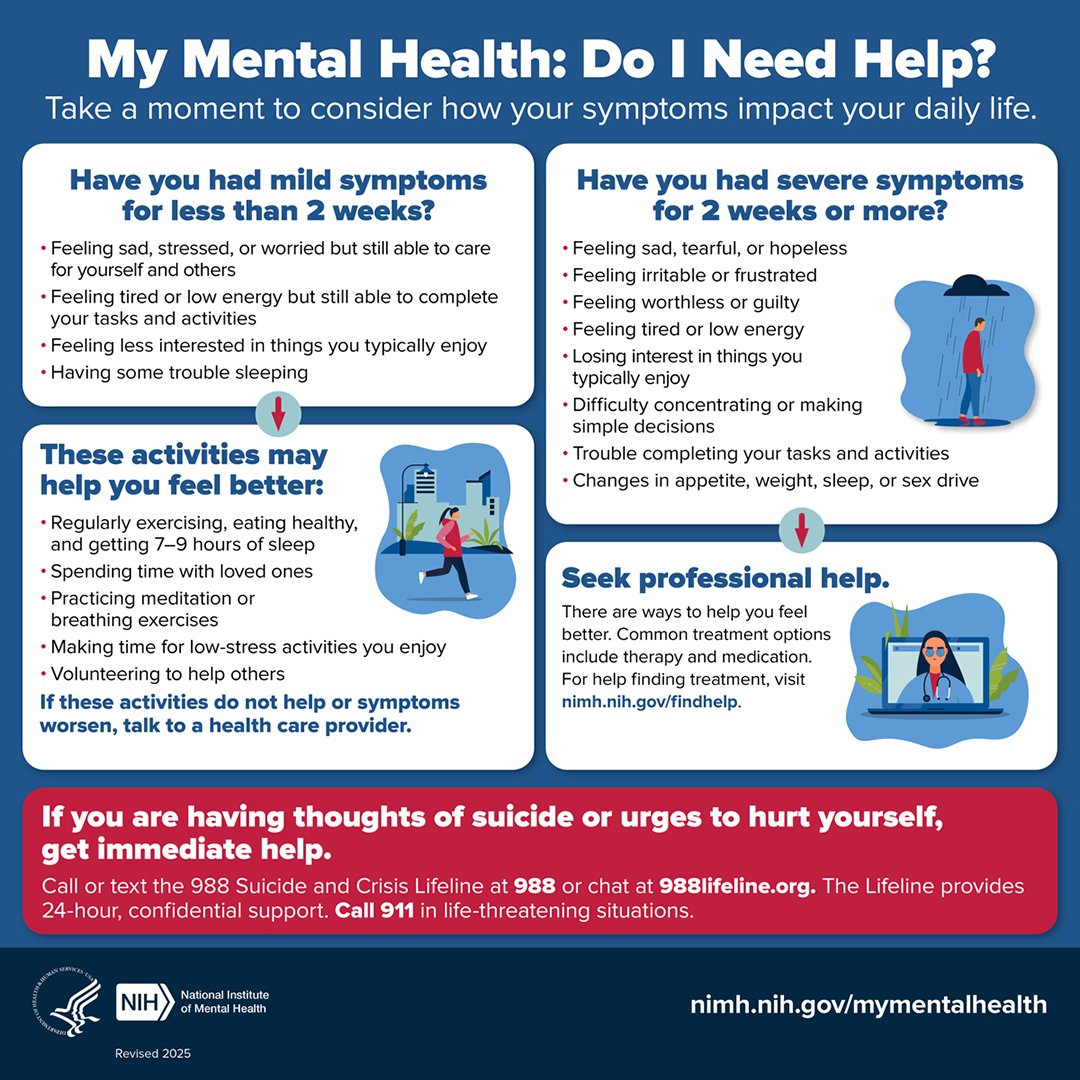
The infographic is a broad guide, not a timer. Distress, impaired functioning, or a rapid change can justify contacting a professional earlier than two weeks. Immediate safety or medical warning signs call for immediate action, however long they have been present.
What a professional decision involves
For non-emergency depersonalization or derealization experiences, a primary-care clinician or mental-health professional can assess the pattern, its effect on daily life, and possible explanations. The first contact need not begin with a proposed diagnosis. A factual description—what happened, when it began, what changed, and whether there are safety or medical concerns—gives the professional more to work with than an online label.
When the right service is unclear and no emergency sign is present, a provider or nurse advice line can help route the concern. When an emergency sign is present, uncertainty about the diagnosis is not a reason to delay emergency care.
Key takeaways
Seek emergency help for immediate safety risk, sudden severe confusion, or sudden neurological signs. Seek a timely professional assessment for detachment experiences that persist, recur, cause distress, or interfere with daily life; there is no mandatory waiting period. A brief, resolved experience without warning signs generally does not require emergency care, but a change in its pattern may change the appropriate response.
The next lesson will turn that routing decision into a concise, factual account to bring to an assessment—without assigning yourself a diagnosis.