In our last lesson, we journeyed deep into the caves of Paleolithic Europe and discovered a world of sophisticated and mysterious art. We saw how our ancient ancestors used the natural canvas of the rock to give life to animal forms, likely for spiritual and social purposes. But this incredible explosion of creativity wasn't limited to one corner of the globe. The impulse to make meaningful marks on the world is a fundamental human trait.
This lesson expands our map, fulfilling your goal to build a non-Eurocentric understanding of art history from the very beginning. We will explore other, equally ancient and significant artistic traditions from the prehistoric era. Our focus will be on identifying the unique characteristics of rock art in Australia and India, and explaining its profound cultural importance. You will see that while the locations and styles differ, the art often speaks to similar human needs: to understand the cosmos, to record history, and to connect with the spiritual world.
A World of Ancient Art
The practice of creating art on rock surfaces, known as rock art, is a global phenomenon. From the Americas to Africa, Asia to Australia, prehistoric peoples left their mark on the landscape. These sites are our most direct connection to the worldviews of our distant ancestors. The map below, showing UNESCO World Heritage sites featuring rock art, gives you a sense of just how widespread this practice was.
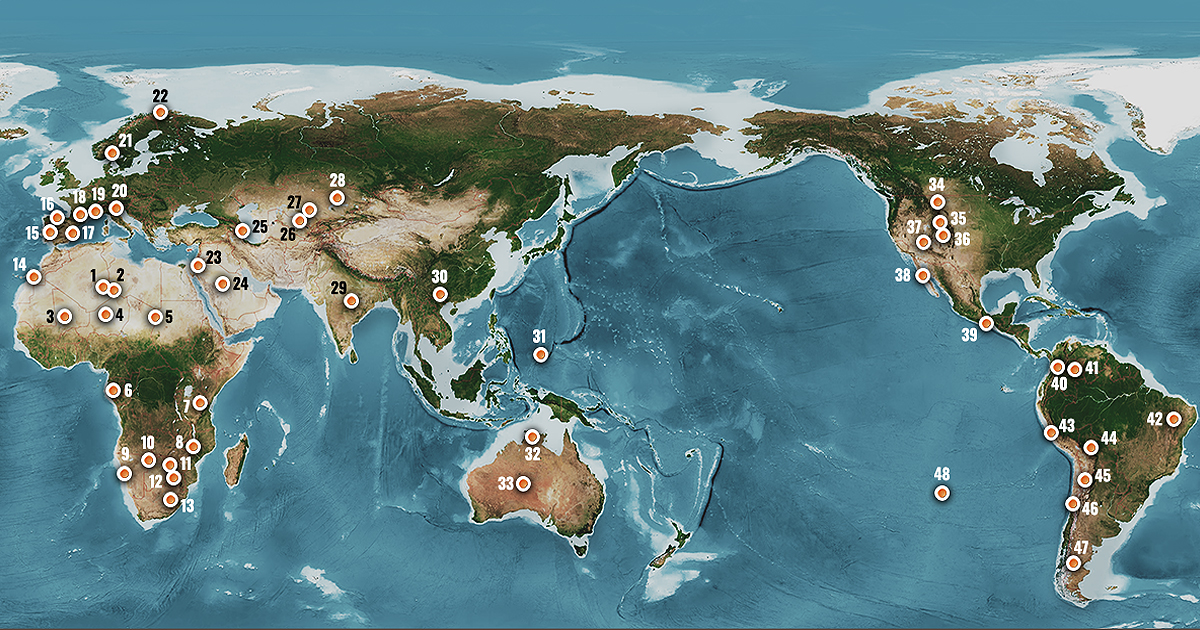
Today, we will visit three of these remarkable locations: one in Australia, one in India, and a special stop in your home country of Colombia.
Australia: The Longest Continuous Story
Aboriginal Australian culture is the oldest living culture on Earth, and its art provides one of the longest continuous historical records of any people. While European cave art largely ceased around 10,000 years ago, rock art in Australia has been a living, evolving tradition for tens of thousands of years, right up to the present day.
The following video provides an excellent introduction to the rock art of Arnhem Land in Northern Australia. As you watch, pay close attention to the incredible variety of subjects and the idea of the art as a historical chronicle.
The Mystical Discoveries of the Aboriginal Rock Art of Australia
This video from The Lost History Channel TKTC, "The Mystical Discoveries of the Aboriginal Rock Art of Australia," explores the immense timeline and rich narrative content of this tradition.
Watch from the beginning to the overview section. Focus on how the art functions as a record, documenting everything from creation myths (the Dreamtime) and ancient laws to contact with outside visitors.
As the video explains, this art is not just a collection of images but a library of knowledge. Let's break down its significance:
- The Dreamtime: Much of the art relates to the foundational creation stories of Aboriginal spirituality. Ancestral Beings like the Rainbow Serpent are said to have shaped the landscape and laid down the law for human society during a period called the "Dreamtime." The paintings are not just illustrations of these stories; they are a living link to the power and presence of these ancestral spirits.
- A Living Record: Unlike European cave art, which focuses almost exclusively on large animals, Australian rock art depicts a vast range of subjects. It records social activities, ceremonies, laws, and historical events. We see images of hunting, dancing, and even contact with Indonesian traders and European settlers, with their ships, guns, and unfamiliar clothing. It is a dynamic visual history.
- "X-ray" Style: A distinctive feature of some Aboriginal art is the "X-ray" style, where the artist depicts not only the outside of a creature but also its internal organs and skeleton. This reflects a deep, holistic knowledge of the natural world and a belief that the inner essence of a being is as important as its external appearance.

This tradition underscores that art was a primary technology for information storage and cultural transmission, a strategic tool for ensuring continuity across millennia.
India: A 30,000-Year Timeline at Bhimbetka
Half a world away, in the sandstone hills of central India, another epic of human creativity was unfolding. The Bhimbetka rock shelters contain one of the planet's most extensive collections of prehistoric art.
This short video from Storytrails beautifully summarizes the discovery and importance of Bhimbetka. It highlights a key feature: the incredible layering of paintings over vast stretches of time.
Prehistoric Cave Paintings of Bhimbetka | Madhya Pradesh
The video "Prehistoric Cave Paintings of Bhimbetka" will walk you through this incredible UNESCO World Heritage site.
Please watch the entire video. It's only about two and a half minutes long. Notice how the style and subject matter change from the earliest layers to the more recent ones.
Bhimbetka offers a unique window into the evolution of life and art in the Indian subcontinent. Here’s what makes it so significant:
- Generations on a Single Canvas: The site contains over 750 rock shelters, with paintings layered one on top of another. The oldest, from the Paleolithic period (up to 30,000 years ago), are simple line drawings of giant animals. Later, Mesolithic-era paintings (around 10,000 years ago) become more dynamic, showing communal dances, hunting parties with bows and arrows, and even conflict between groups. The most recent layers, from the historic era, depict warriors on horseback, indicating a shift to a more complex society.
- From Survival to Society: By studying these layers, we can trace a narrative of human development. The focus shifts from individual large animals—reminiscent of Lascaux—to groups of people interacting with each other. We see the beginnings of social structure, ritual, and warfare.
- Glimpses of Mythology: Bhimbetka also contains some of the earliest evidence of spiritual or mythological thought in India. The video mentions the giant mythical boar and figures that resemble later Hindu deities. This art doesn't just show what people saw; it shows what they believed. It is, as the video concludes, a conversation with our ancestors about their dreams and stories.
Colombia: The Sistine Chapel of the Ancients
For our final example, we travel to the Amazon rainforest in your home country of Colombia. The Serranía de La Lindosa is home to a recently revealed, monumental work of rock art—an eight-mile-long "canvas" of cliffs covered in tens of thousands of paintings. Dated to around 12,600 years ago, it was created by some of the very first people to enter the Amazon.
This discovery is particularly exciting because, much like the Australian art, it has connections to living indigenous cultures. Let's start with a brief, breathtaking look at the site itself.
This short video from NOVA on PBS offers a stunning aerial and close-up view of the massive scale of the La Lindosa murals. It will give you a feel for the sheer ambition of this artwork.
Please watch the short video clip within the Facebook post.
The scale is staggering. To understand the meaning behind this "painted forest," we'll turn to a wonderful interactive resource from Google Arts & Culture, created in partnership with the Colombian Institute of Anthropology and History.
La Lindosa — Google Arts & Culture
This project provides a detailed look at the meaning, creation, and cultural context of the La Lindosa paintings.
Start by reading the introductory section, A painted forest. Then, scroll down and read the entire section titled Far from being purely ancient relics. This part is crucial as it explains the art's role as a living tradition and a form of knowledge.
The La Lindosa art provides a powerful link between the deep past and the present. Here are the key points of its significance:
- Humanizing the Landscape: The art was made as people first entered and explored the Amazon. By painting the animals, plants, and themselves, they were mapping their new world, transforming an unfamiliar territory into a human landscape. This is a brilliant example of how creativity and storytelling are core strategies for adaptation.
- Recording a Lost World: The paintings depict not only familiar Amazonian creatures like tapirs and snakes but also what appear to be extinct Ice Age megafauna, such as giant sloths and mastodons. They are a priceless record of a vanished ecosystem.
- A Living Tradition: Crucially, as the reading explains, this art is not just a relic. It is part of living Amazonian cultures. Local peoples see it as a source of vital knowledge passed down from the beginning of time, used for everything from storytelling and map-making to shamanic rituals that maintain the ecological balance of the forest.
Conclusion
In this lesson, we have expanded our view of the prehistoric world, moving beyond Europe to see that the drive to create art was a universal human endeavor. From Australia to India to Colombia, ancient peoples used rock surfaces to create complex, meaningful works that served vital functions in their societies.
Here are the key takeaways:
- A Global Phenomenon: Rock art is found across the globe, demonstrating a shared human need to make lasting marks on the landscape.
- Australian Rock Art: This is the world's longest continuous artistic tradition, functioning as a dynamic visual history that records everything from creation myths (the Dreamtime) to social laws and contact with other cultures.
- Bhimbetka Rock Shelters: The layered paintings at this Indian site provide a remarkable timeline of human evolution, showing a shift from depictions of large animals to complex scenes of human society, ritual, and conflict.
- La Lindosa Murals: These monumental paintings in the Colombian Amazon serve as a record of the first human inhabitants, their worldview, and the Ice Age animals they lived alongside. It remains a living tradition connected to the spiritual practices of contemporary indigenous groups.
Across these diverse sites, we see a common thread: art as a powerful tool for structuring society, storing knowledge, and making sense of the world.
In our next module, we will witness a dramatic shift in human history: the rise of the first agricultural empires in Mesopotamia and Egypt. With this change comes a new kind of art, one that leaves the caves and rock shelters behind to build monumental cities, serve powerful gods, and glorify kings.