Welcome to the next lesson in our exploration of games on networks. In our previous session, we drew a crucial distinction between game-theoretic stability—the property of an equilibrium where no player has an incentive to deviate—and network-theoretic resilience, which measures a system's ability to withstand shocks and structural changes. We saw that a relationship could be stable yet fragile.
Today, we transition from identifying these properties to actively choosing the right analytical tools. The world of game and network theory offers a vast arsenal of models, each with its own assumptions and best use cases. This lesson provides a systematic framework to help you select and, importantly, justify the use of specific models for analyzing a given vee relationship scenario. Your background in statistics has already instilled the discipline of choosing an appropriate statistical test based on the data's nature and the research question; we will apply a similar logic here to the selection of theoretical models.
Guiding Principles for Model Selection
Before diving into the models themselves, it's essential to understand the principles of good modeling in a social context. A model is an abstraction, a simplification of reality designed to illuminate a specific mechanism. The goal is not to capture every nuance of a relationship but to isolate and understand a particular dynamic.
A helpful perspective on this comes from the idea of an "academic division of labour." Rather than inventing a new model from scratch for every problem, it is often more rigorous and efficient to apply well-understood, general models that have been developed and vetted by theorists. Your task as an analyst is to choose the right established tool for the job and justify why its assumptions fit the scenario you're examining.
The following reading provides an excellent overview of the successes and failures of applying game theory in sociological research. It highlights the importance of rigor, the value of using pre-established frameworks, and the pitfalls of creating ad-hoc models that lack theoretical grounding.
Practical Applications of Game Theory in Sociological Research
This paper evaluates several case studies where game theory was applied to sociological problems, offering valuable lessons on best practices.
Please focus on the following sections: Read the section discussing the "academic division of labour" under the heading Methodological advantages. It begins with the core idea and explains its benefits. Review the Evaluation of the Schroeder and Rojas model on HIV transmission. Pay attention to the critique regarding a lack of rigor and building a model to fit a conclusion, which serves as a cautionary tale. Contrast this with the Evaluation of the Ginkel and Smith model of revolution, which is praised for its use of logical tests and effective simplification. Finally, read the concluding Discussion, particularly the subsections on Mathematical rigour and ensuring accessibility, which reinforce the main principles.
The key takeaway is that justifying a model involves more than just picking one that seems plausible. It requires a deliberate evaluation of its assumptions against the reality of the situation and a clear articulation of why that particular abstraction is useful.
A Decision Framework for Analyzing Vee Scenarios
To systematically select a model, we can ask a series of questions about the specific vee relationship scenario we wish to analyze. The answers will guide us to the most appropriate class of models from the "Games on Networks" literature, which provides the theoretical foundation for our framework.
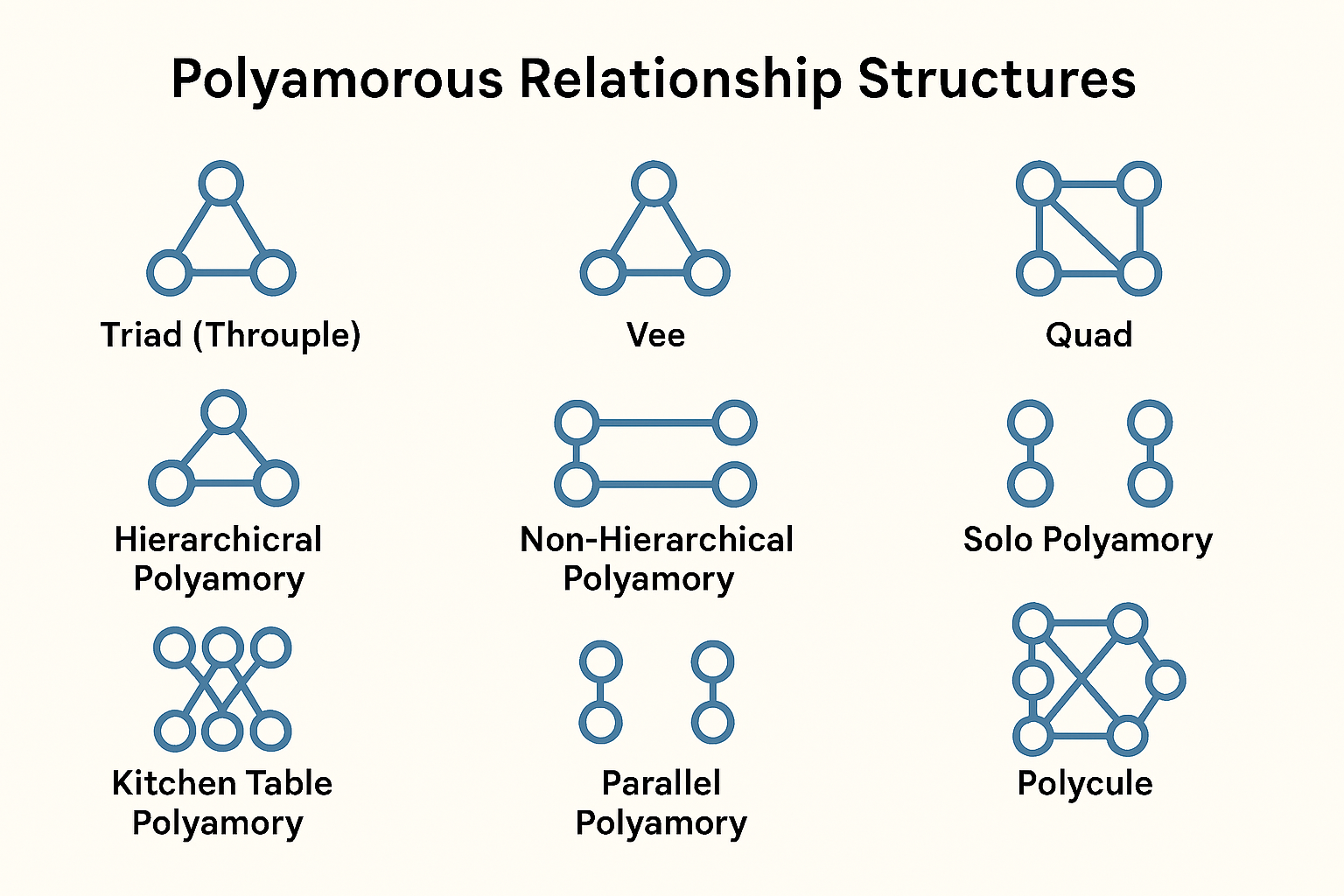
Here is a four-question framework to guide your selection:
1. What is the nature of the strategic interaction?
The first step is to identify how one person's actions affect the incentives of others. The most fundamental distinction is between strategic complements and substitutes. The survey "Games on Networks" by Jackson and Zenou provides formal definitions for these concepts.
This section formally defines the two most prominent classes of games on networks.
Read the introduction to Section 3, the overview, and then the formal definitions in Subsection 3.1, Strategic Complements and Substitutes.
-
Strategic Complements: Your incentive to take an action increases as others take that same action. The actions are mutually reinforcing.
- Vee Scenario: Building emotional security. If the hinge (H) and one partner (P1) both increase their efforts in communication and reassurance, the incentive for the other partner (P2) to also invest in open communication might increase, as the overall relationship system feels more stable and rewarding.
- Appropriate Model: Games of Strategic Complements.
-
Strategic Substitutes: Your incentive to take an action decreases as others take that same action. The actions are mutually offsetting.
- Vee Scenario: Providing logistical support. If P1 is highly involved in managing the household schedule, the need (and thus the incentive) for P2 to do the same is reduced. Time allocation is another classic example: the more weekend time H allocates to P1, the less is available for P2, potentially diminishing the utility of P2's attempts to plan activities.
- Appropriate Model: Games of Strategic Substitutes.
2. What do the players' choices look like?
Are the decisions binary, or do they involve choosing a level of effort or resources?
-
Binary or Discrete Actions: Choices are "either/or" (e.g., 'yes'/'no', 'attend'/'don't attend').
- Vee Scenario: The decision to disclose a new health status to both partners; the choice to either accept or reject a proposed change to a relationship agreement.
- Appropriate Model: Two-Action Games, as discussed in Section 3.3 of "Games on Networks." These models often use thresholds to determine behavior.
-
Continuous Actions: Choices involve a quantity or level (e.g., how much time, how much money, how much effort).
- Vee Scenario: Deciding how much time to spend with each partner over a month; deciding how much personal income to contribute to a shared household budget.
- Appropriate Model: Games with continuous action spaces. A particularly tractable and powerful variant is the Linear-Quadratic Model (Section 4 of "Games on Networks"). This model assumes payoffs are quadratic in a player's own action (capturing diminishing returns) and linear in the interaction with others. A major advantage is that it yields a unique, explicit equilibrium solution where each player's action is proportional to their Katz-Bonacich centrality in the network.

3. What information do the players have?
The realism of a model often hinges on its informational assumptions.
-
Complete Information: All players know the structure of the game and the payoff functions of all other players. This is a strong assumption but useful for establishing a baseline understanding.
- Vee Scenario: Analyzing a financial decision where all incomes and preferences for shared goods are openly declared and known to all three partners.
-
Incomplete Information: Players have private information; they are uncertain about some aspect of the other players (e.g., their true preferences, their outside options, their emotional state). This is captured by assigning players "types."
- Vee Scenario: P1 is unsure if H is a "high commitment" or "low commitment" type. H is uncertain about P2's true level of jealousy, which could be "low" or "high." Actions can then serve as signals to reveal or conceal this private information.
- Appropriate Model: Bayesian Games or Signaling Games, as discussed in Section 5 of "Games on Networks" ("Network Games with Incomplete Information").
4. Is the relationship structure itself subject to change?
Is the focus on behavior within the vee, or on the stability of the vee structure itself?
-
Fixed Network: The analysis assumes the vee structure is stable and focuses on the strategic interactions within it. This is the default for most models.
- Vee Scenario: Analyzing how the three partners will coordinate their holiday schedules, taking the vee relationship as a given.
-
Evolving Network: The analysis is about the formation, evolution, or potential dissolution of the relationships (links).
- Vee Scenario: Under what conditions might P1 and P2 decide to form a friendship, turning the vee into a triad? What outside pressures or internal conflicts might cause H to end the relationship with P2, collapsing part of the network?
- Appropriate Model: Strategic Network Formation Games, where players choose both their actions and their links, as discussed in Section 6 of "Games on Networks" ("Choosing both actions and links").
Summary of the Framework
This table summarizes the decision framework:
| Question | Options | Example Vee Scenario | Relevant Model Class |
|---|---|---|---|
| 1. Nature of Interaction? | Strategic Complements vs. Substitutes | Emotional investment (complements) vs. Time allocation (substitutes) | Games of Strategic Complements/Substitutes |
| 2. Nature of Choices? | Discrete vs. Continuous | Disclosing information (discrete) vs. Allocating effort (continuous) | Two-Action Games vs. Linear-Quadratic Models |
| 3. Nature of Information? | Complete vs. Incomplete | All preferences known (complete) vs. Uncertainty about a partner's jealousy type (incomplete) | Standard Games vs. Bayesian/Signaling Games |
| 4. Nature of Network? | Fixed vs. Evolving | Decisions within the vee (fixed) vs. Formation/dissolution of relationships (evolving) | Games on Fixed Networks vs. Network Formation Games |
Justifying Your Model Choice
Choosing a model is only half the battle; justifying it is what makes the analysis rigorous. A justification is a concise argument that explains why your chosen model's assumptions represent a reasonable and insightful simplification of the real-world scenario.
Let's walk through a mini-example.
-
Scenario: Analyze the stability of a newly formed vee where the hinge (H) is trying to foster a sense of shared community. H believes that if each partner sees the others making an effort to participate in group activities, they will be more likely to participate themselves. However, H is unsure of each partner's intrinsic enthusiasm for polyamory (P1 and P2 could be "enthusiastic" or "hesitant" types).
-
Model Selection & Justification:
- Interaction: The "participation breeds participation" dynamic suggests Strategic Complements.
- Choices: The decision to participate in a given group event is a discrete choice (attend/don't attend).
- Information: The uncertainty about partners' enthusiasm points to Incomplete Information.
- Network: The analysis is about encouraging behavior within the new vee, so a Fixed Network is a reasonable starting point.
-
Justification Statement: "To model the challenge of fostering community in a new vee, a two-action game of strategic complements with incomplete information is appropriate. The assumption of strategic complements captures the desired snowball effect of participation. Using discrete actions maps directly to the attend/decline choice for events. Crucially, modeling this as a Bayesian game allows us to incorporate the hinge's uncertainty about the partners' underlying 'types' (enthusiastic vs. hesitant), which is a central feature of navigating new relationships. The network is assumed to be fixed, as the immediate problem concerns behavior within the existing structure, not its formation."
Conclusion
Today, we have developed a structured methodology for selecting and justifying theoretical models to analyze vee relationships. By asking a series of targeted questions about the nature of the interaction, choices, information, and network structure, you can navigate the complex landscape of game and network theory to find the right tool for your specific analytical goal.
Key Takeaways:
- Good modeling practice involves leveraging established, robust frameworks rather than inventing ad-hoc solutions.
- A four-question framework can guide model selection:
- Is the interaction one of strategic complements or substitutes?
- Are the choices discrete or continuous?
- Is information complete or incomplete?
- Is the network fixed or evolving?
- A strong justification clearly links the assumptions of the chosen model to the key features of the real-world scenario being analyzed.
In our next lesson, we will put this framework into practice. We will take a detailed, narrative case study of a vee relationship facing a complex challenge and apply our integrated game-theoretic and network-theoretic lens to assess its dynamics and long-term sustainability.